
Paget’s Disease of Bone (PDB) is a chronic bone disorder that affects the normal process of bone remodeling, in which old bone tissue is broken down and replaced with new bone. In people with PDB, this process becomes abnormal, causing the bones to become enlarged, weak, misshapen, and more prone to fractures. The condition commonly affects the pelvis, spine, skull, and long bones of the legs. Symptoms may include bone pain, joint stiffness, deformities, hearing loss (when the skull is affected), and an increased risk of fractures. While the exact cause of Paget’s Disease remains unknown, genetic and environmental factors are believed to play a role. Early diagnosis and appropriate treatment are important to help manage symptoms, reduce complications, and maintain bone health.
At Spiritual Homeopathy, we believe in treating the root cause of Paget’s Disease of Bone rather than simply suppressing the symptoms. Our experienced homeopathic doctors carefully evaluate each patient’s symptoms, medical history, family history, lifestyle, nutritional status, and overall health before preparing an individualized treatment plan. Our holistic approach focuses on providing natural treatment for Paget’s Disease of Bone, supporting bone health, reducing pain and inflammation, improving mobility, and promoting long-term musculoskeletal wellness through safe and personalized homeopathic care. We specialize in homeopathic treatment for Paget’s Disease of Bone, bone disorders, chronic bone pain, joint conditions, and other musculoskeletal diseases.
We provide personalized homeopathic treatment for Paget’s Disease of Bone in Hyderabad to patients of all age groups through our clinics in KPHB, Dilsukhnagar, Chandanagar, and Nallagandla, as well as online homeopathy consultations for patients across India and in more than 100 countries worldwide. If you are looking for the best homeopathy doctor for Paget’s Disease of Bone, natural treatment for bone disorders, or long-term bone and joint wellness, Spiritual Homeopathy is committed to delivering expert, patient-centered care wherever you are.
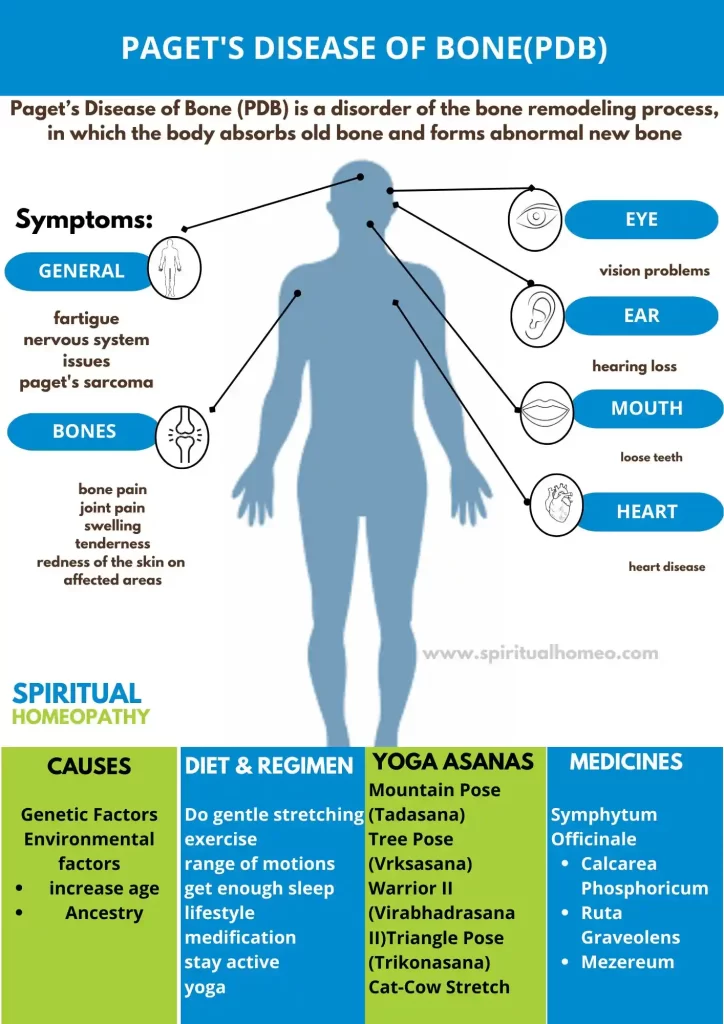
Paget’s disease of bone is a chronic disorder that causes bones to become enlarged, weakened, and deformed. It most commonly affects the pelvis, spine, skull, and long bones of the legs. The condition disrupts the normal bone remodeling process, creating an imbalance between bone breakdown and formation. As a result, affected bones may become thicker yet more fragile, increasing the risk of pain, fractures, and other complications.
Early diagnosis and individualized management can help reduce discomfort and prevent long-term skeletal problems. Spiritual Homeopathy Clinic offers consultations across multiple branches in Hyderabad, as well as online and international appointments, allowing patients to receive professional guidance regardless of location.
The exact cause of Paget’s disease of bone is not fully understood, but it is thought to arise from a combination of genetic and environmental factors. Key contributors include:
Genetic Factors:
Family History: The condition often runs in families, indicating a genetic predisposition. Individuals with a first-degree relative affected may have a higher risk.
Genetic Mutations: Changes in the SQSTM1 gene, which helps regulate bone metabolism, can disrupt normal osteoclast function and contribute to abnormal bone remodeling.
Viral Infection:
Some studies suggest that viral infections, particularly paramyxoviruses such as measles or mumps, might trigger Paget’s disease in genetically susceptible individuals, though this remains under investigation.
Age and Gender:
Age: Paget’s disease is more common in people over 50, and the likelihood increases with age.
Gender: Men are slightly more prone to develop the condition, though the difference is not substantial.
Environmental Factors:
Geographic Influence: The disease occurs more frequently in individuals of European descent, especially from the UK or Northern Europe, suggesting environmental contributions such as diet or exposure to infections.
Nutritional Factors: Deficiencies in calcium or vitamin D may influence bone metabolism in those already genetically predisposed, though they are not direct causes.
Understanding these factors helps guide individualized care and management for each patient. Spiritual Homeopathy Clinic provides professional assessment and guidance through in-clinic, online, and international consultations to support a personalized approach.
Monostotic Paget’s Disease
Definition: Involves only a single bone.
Characteristics: Occurs in approximately 15% of cases, typically affecting one bone such as the pelvis, skull, or long bones like the femur.
Prognosis: Usually has a more favorable outlook than the polyostotic form, with fewer complications.
Polyostotic Paget’s Disease
Definition: Affects multiple bones throughout the body.
Characteristics: This is the more common type, often involving the pelvis, spine, skull, and long bones.
Prognosis: May lead to more significant complications, including fractures, joint problems, or nerve compression, due to widespread bone changes.
Paget’s Disease of the Skull
Definition: Involves bones of the skull.
Characteristics: Often seen in polyostotic cases; can cause skull enlargement, hearing difficulties (ear bone involvement), and headaches.
Prognosis: Untreated cases may result in neurological symptoms or facial nerve issues due to nerve compression.
Paget’s Disease of the Spine
Definition: Affects the vertebrae.
Characteristics: Frequently involved in polyostotic disease, leading to back pain, spinal deformities (such as kyphosis), and possible nerve compression causing numbness or weakness.
Prognosis: Early management can reduce deformity progression and functional limitations.
Paget’s Disease of the Pelvis
Definition: Involves pelvic bones.
Characteristics: One of the most common sites, especially in polyostotic disease, causing pain, difficulty walking, and hip joint issues.
Prognosis: Chronic pain and potential osteoarthritis of the hip may affect mobility.
Paget’s Disease with Osteosarcoma
Definition: A rare complication where Paget’s disease progresses to osteosarcoma (bone cancer).
Characteristics: Occurs in less than 1% of cases; osteosarcoma causes severe pain and requires aggressive treatment.
Prognosis: Significantly worsens outlook, often necessitating surgery, chemotherapy, or radiation.
Asymptomatic Paget’s Disease
Definition: No noticeable symptoms.
Characteristics: Often discovered incidentally via imaging such as X-rays or bone scans. Bone changes are present, but pain or deformities are absent.
Prognosis: Many remain symptom-free and may not require treatment unless complications arise later.
For evaluation and individualized guidance on Paget’s disease, consultations are available at Spiritual Homeopathy Clinic’s multiple Hyderabad branches, as well as online and international consultations.
The symptoms of Paget’s disease of bone can vary widely, depending on which bones are affected and the severity of the condition. Some individuals may experience noticeable signs, while others remain asymptomatic and are diagnosed incidentally through imaging.
Common Symptoms Include:
Bone pain, often described as aching or tenderness, typically affecting the pelvis, spine, skull, or legs.
Bone deformities, such as bowing of the legs or an enlarged skull.
Joint stiffness or discomfort near affected bones.
Increased risk of fractures due to weakened bones.
Nerve compression symptoms, such as tingling, numbness, or weakness, especially if the spine or skull is involved.
Headaches or hearing changes when the skull is affected.
Fatigue or general discomfort in some cases.
If symptoms are frequent, persistent, or interfere with daily activities, it is important to seek evaluation from a qualified healthcare provider.
At Spiritual Homeopathy Clinic, our specialists offer consultations at multiple Hyderabad branches as well as online and international sessions. Early assessment supports individualized care and long-term management strategies tailored to each patient’s needs.
A well-balanced diet and regular physical activity are important for managing Paget’s disease of bone (PDB). Nutrient-rich foods support bone strength, while appropriate exercise helps maintain mobility, reduce fracture risk, and enhance overall quality of life. Guidance may vary based on individual health status, so consultation with a healthcare professional is recommended. At Spiritual Homeopathy Clinic, we offer in-clinic, online, and international consultations to provide tailored care.
Calcium-Rich Foods
Calcium is essential for maintaining bone strength, particularly when bone remodeling is affected in PDB. Adequate intake helps preserve bone density and reduce fracture risk.
Sources:
Dairy: Milk, cheese, yogurt
Leafy greens: Kale, broccoli, collard greens
Fortified plant-based milk: Almond, soy, oat milk
Fish with bones: Sardines, canned salmon
Tofu (calcium-fortified)
Almonds
Vitamin D-Rich Foods
Vitamin D supports calcium absorption and overall bone health, which may be particularly important for individuals with PDB.
Sources:
Fatty fish: Salmon, mackerel, sardines
Fortified foods: Milk, cereals, orange juice
Egg yolks
Sun-exposed mushrooms (e.g., shiitake)
Magnesium-Rich Foods
Magnesium contributes to healthy bone structure and calcium metabolism.
Sources:
Nuts and seeds: Almonds, sunflower seeds, cashews
Whole grains: Brown rice, quinoa, oats
Leafy greens: Spinach, Swiss chard
Legumes: Beans, lentils, chickpeas
Protein-Rich Foods
Protein supports bone repair, maintains muscle mass, and helps with mobility.
Sources:
Lean meats: Chicken, turkey
Fish: Cod, salmon, trout
Eggs
Plant-based proteins: Tofu, tempeh, quinoa, beans
Anti-Inflammatory Foods
Some inflammation may occur in PDB-affected bones; anti-inflammatory foods may help support overall bone health.
Sources:
Omega-3s: Fatty fish, flaxseeds, walnuts
Fruits and vegetables: Berries, cherries, tomatoes, leafy greens, broccoli, cauliflower
Spices: Turmeric, ginger
Limit Sodium and Processed Foods
Excess sodium may lead to calcium loss from bones, so it is advisable to reduce high-sodium and heavily processed foods.
Examples:
Processed snacks and meats
Packaged cookies or crackers
High-sodium condiments: Soy sauce, ketchup
Hydration
Adequate water intake supports metabolism and overall bone and muscle function.
Exercise: Regular low-impact activity like walking, swimming, or yoga maintains joint mobility, strengthens muscles, and improves balance.
Weight-Bearing Activities: Help maintain bone density and prevent bone loss.
Rest: Aim for 7–8 hours of sleep per night to support healing and recovery.
Stress Management: Relaxation techniques such as meditation or deep breathing may help reduce stress, which can affect bone health.
Individualized guidance is important; a consultation at Spiritual Homeopathy Clinic can help tailor diet and exercise plans based on your symptoms and overall health.
Yoga can be a supportive practice for individuals with Paget’s disease of bone (PDB). It helps improve flexibility, strengthen muscles, maintain joint mobility, and reduce tension in the spine and hips. These exercises should be performed gently, within your comfort range, and are not a replacement for professional medical care. Consultation with a healthcare provider is recommended before starting any new exercise routine.
Tadasana (Mountain Pose)
Benefits: Improves posture, strengthens legs and core, promotes balance.
How to do it: Stand tall with feet together, ground through your heels, engage your thighs, lift your chest, and relax your shoulders. Reach arms overhead, palms facing each other. Hold 30 seconds with deep breathing.
Caution: Keep knees soft and avoid locking them if you have joint issues.
Adho Mukha Svanasana (Downward-Facing Dog)
Benefits: Stretches spine, hamstrings, and calves; relieves back tension.
How to do it: Start on hands and knees, wrists under shoulders, knees under hips. Lift hips back and up, straightening legs as much as comfortable. Hold 20–30 seconds.
Caution: Slight bend in knees if leg or back discomfort exists.
Bhujangasana (Cobra Pose)
Benefits: Strengthens spine and arms, opens chest, relieves back stiffness.
How to do it: Lie face down, hands under shoulders. Lift chest gently, elbows slightly bent. Hold 15–30 seconds.
Caution: Avoid overextending if you have spinal issues.
Setu Bandhasana (Bridge Pose)
Benefits: Strengthens back, glutes, legs; stretches chest and spine.
How to do it: Lie on back, knees bent, feet hip-width apart. Press feet into floor, lift hips toward ceiling. Hold 20–30 seconds.
Caution: Engage core to protect lower back.
Viparita Karani (Legs Up the Wall)
Benefits: Relieves lower back tension, promotes circulation, reduces fatigue.
How to do it: Sit beside a wall, swing legs up while lying back. Rest arms by sides, palms up. Hold 5–10 minutes.
Caution: Ensure lower back comfort; avoid if neck issues are present.
Virabhadrasana II (Warrior II)
Benefits: Strengthens legs, improves balance, opens hips.
How to do it: Stand with feet wide apart, turn one foot outward 90°, bend knee aligned with ankle. Extend arms parallel. Hold 20–30 seconds each side.
Caution: Avoid overstretching and keep knee aligned with ankle.
Supta Baddha Konasana (Reclining Bound Angle Pose)
Benefits: Opens hips, stretches inner thighs, relaxes lower back.
How to do it: Sit with knees bent, feet together. Slowly lower torso to floor, soles together, arms relaxed. Hold 1–2 minutes.
Caution: Avoid if severe hip discomfort exists.
Trikonasana (Triangle Pose)
Benefits: Stretches sides, improves spinal flexibility, strengthens legs.
How to do it: Stand wide, extend one leg, hinge at hips, reach hand toward floor (or block), other arm up. Hold 20–30 seconds each side.
Caution: Keep legs straight but not locked; use support if needed.
Ananda Balasana (Happy Baby Pose)
Benefits: Releases lower back tension, relaxes hips and thighs.
How to do it: Lie on back, bring knees toward chest, hold outsides of feet. Open knees wider than torso, soles facing ceiling. Hold 30 seconds.
Caution: Avoid with knee or hip injuries.
Savasana (Corpse Pose)
Benefits: Promotes full-body relaxation, reduces stress and tension.
How to do it: Lie flat, legs extended, arms at sides, palms up. Close eyes, focus on deep breathing. Hold 5–10 minutes.
Caution: None; ideal for relaxation.
Note: These poses support bone and joint health but should be adapted based on individual condition. A consultation at Spiritual Homeopathy Clinic can provide guidance tailored to your mobility and symptoms.
Homeopathy offers an individualized approach to managing Paget’s disease of bone, focusing on long-term support and overall bone health rather than just addressing symptoms. The treatment plan is tailored to each patient, taking into account the extent of bone involvement, associated symptoms, age, lifestyle, and overall health.
Key aspects of the homeopathic approach include:
Individualized Care: Remedies and management strategies are selected specifically for each patient’s condition and health profile.
Long-Term Management: Homeopathy supports ongoing monitoring and adjustment of treatment to help manage bone changes and prevent complications over time.
Addressing Contributing Factors: The approach considers factors such as nutrition, activity level, and overall well-being, aiming to support bone strength and reduce discomfort.
Generally Well-Tolerated: Homeopathic management is typically gentle and suitable for patients across different age groups when supervised by a qualified professional.
At Spiritual Homeopathy Clinic, we provide in-clinic consultations across multiple Hyderabad branches as well as online and international consultations. A professional assessment ensures a personalized treatment plan tailored to your needs and the progression of Paget’s disease.
You should consult a healthcare professional if acidity symptoms become frequent, persistent, or begin to affect daily activities or sleep. Early evaluation helps identify contributing factors and reduces the risk of complications.
Seek consultation if you experience:
Recurrent or long-lasting heartburn
Difficulty or pain while swallowing
Persistent chest discomfort or burning sensation
Symptoms that worsen at night or disturb sleep
Unexplained weight loss or reduced appetite
Symptoms not improving with dietary and lifestyle measures
At Spiritual Homeopathy Clinic, consultations are available at multiple branches in Hyderabad, including Kukatpally, Chandanagar, Dilsukhnagar, and Nallagandla. Online and international consultations are also available for patients who cannot visit in person. A professional assessment supports an individualized care approach based on symptoms and overall health status.
For appointments or guidance, contact 9069 176 176.
Paget's disease of the bone often causes no symptoms, but when it does, the most common signs include persistent deep bone pain, joint stiffness, and bone deformities like bowed legs, an enlarged skull, or a curved spine. Symptoms depend heavily on which part of your skeleton is affected.
Whether Paget's disease is cancer depends entirely on which part of the body it affects. There are three distinct conditions that share the name "Paget's disease," ranging from a skin manifestation of breast cancer to a chronic bone disorder.
The hallmark of Paget's disease of bone is a localized disruption of bone remodeling where excessive bone resorption (by overactive osteoclasts) is followed by chaotic, disorganized bone formation (by osteoblasts). This continuous cycle results in structurally enlarged, weakened, and deformed bones.
Paget’s disease of bone is not classified as an autoimmune disease. Instead, it is considered a metabolic bone disorder. It is primarily caused by an underlying defect in how bones break down and rebuild themselves.
Paget’s disease of bone is diagnosed using a combination of blood tests, imaging scans, and physical exams. Because it is often asymptomatic, it is typically discovered incidentally during routine X-rays or blood work performed for other conditions.