
Cluster Headache is a severe neurological headache disorder characterized by sudden, intense pain that usually affects one side of the head, often around or behind one eye. The pain occurs in repeated attacks or “clusters,” with each episode lasting between 15 minutes and 3 hours. Common symptoms include severe one-sided headache, watery or red eye, nasal congestion or runny nose, drooping eyelid, facial sweating, and restlessness during an attack. These headaches can occur several times a day and significantly affect daily life. While cluster headaches are not life-threatening, frequent or recurring episodes should not be ignored. Early diagnosis and appropriate treatment can help reduce the frequency and severity of attacks and improve quality of life.
At Spiritual Homeopathy, we believe in addressing the underlying factors contributing to cluster headaches rather than simply masking the pain. Our experienced homeopathic doctors carefully assess each patient’s symptoms, headache pattern, medical history, lifestyle, stress levels, sleep habits, and overall health before developing an individualized treatment plan. Our holistic approach focuses on reducing the recurrence of headache attacks, improving overall neurological balance, supporting the body’s natural healing response, and promoting long-term wellness through safe and personalized homeopathic care. We provide homeopathic treatment for cluster headaches, recurrent headaches, migraine-related conditions, and other chronic neurological complaints.
We offer personalized homeopathic treatment for cluster headaches in Hyderabad through our clinics, along with online homeopathy consultations for patients across India and in more than 100 countries worldwide. If you are looking for the best homeopathy doctor for cluster headaches, natural headache management, or long-term neurological wellness, Spiritual Homeopathy is committed to providing compassionate, patient-centered care tailored to your individual health needs.
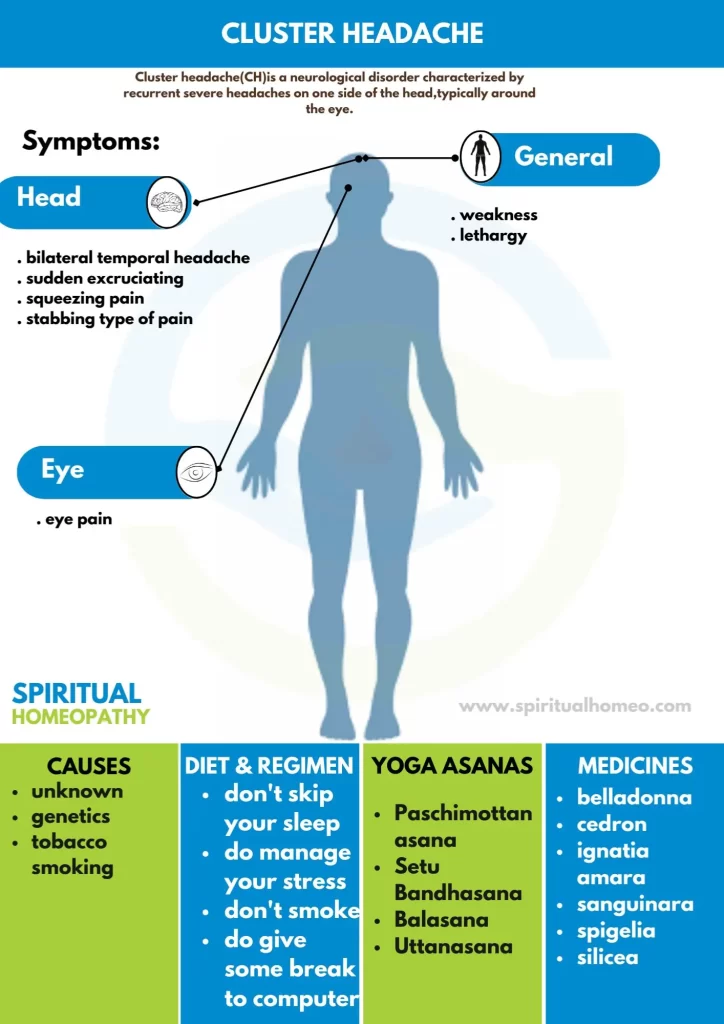
Cluster headaches are a primary headache disorder classified under Trigeminal Autonomic Cephalgias (TACs). They typically begin between the ages of 20 and 40, with men being affected about four times more often than women. The term “cluster headache” refers to the tendency for multiple headache attacks to occur in groups or clusters over a period of days to weeks.
These headaches are extremely painful and may be associated with autonomic symptoms such as watery eyes, nasal congestion, or eyelid drooping on the affected side. Due to the intensity of pain, they are sometimes called “suicide headaches.”
At Spiritual Homeopathy Clinic, consultations for cluster headaches are available at multiple branches across Hyderabad, as well as online and international consultations for patients unable to visit in person.
The exact cause of cluster headaches (CH) remains unknown, but several factors are believed to contribute to their development.
Nerve Involvement
The trigeminal nerve and the facial nerve are thought to play a key role in triggering cluster headache attacks. These nerves are responsible for transmitting pain and autonomic signals in the face and head.
Genetic Factors
Cluster headaches can run in families, often showing an autosomal dominant pattern. Individuals with a first-degree relative affected by CH have a higher likelihood—about 14–48 times—of developing the condition themselves. Around 8–10% of people with CH report a positive family history. Studies suggest that female relatives may be more frequently affected, though research is ongoing to clarify the genetic influence.
Tobacco Smoking
Approximately 65% of individuals with CH are current or former smokers. Smoking may act as a predisposing factor, and lifestyle habits like tobacco use are commonly observed in patients with this condition.
Hypothalamus Involvement
The hypothalamus, particularly the suprachiasmatic nucleus (the body’s internal clock), is implicated in CH. Cluster headaches often occur in a rhythmic pattern—at specific times of day or during certain seasons. Brain imaging, such as PET scans, shows activation in hypothalamic regions during attacks, and structural differences in the hypothalamus have been noted in affected individuals. However, the exact mechanisms remain under investigation.
Addressing these contributing factors through individualized homeopathic care can help manage symptoms and support long-term well-being. Consultations are available at Spiritual Homeopathy Clinic across multiple branches in Hyderabad, as well as online and international consultations for patients unable to visit in person.
Cluster headaches are primarily classified into two types based on the pattern and frequency of attacks:
1. Episodic Cluster Headaches
These headaches occur in cyclical patterns, typically lasting from one week to a year. Each cycle is followed by a headache-free period of at least one month or longer. Episodic cluster headaches often have predictable timing, which may help in planning management strategies.
2. Chronic Cluster Headaches
Chronic cluster headaches occur more frequently and persist for more than a year, with headache-free periods lasting less than one month or almost absent. This form can significantly affect daily activities and requires careful monitoring and individualized care.
Patients experiencing frequent or severe cluster headache attacks are encouraged to seek evaluation. Consultations are available at Spiritual Homeopathy Clinic across multiple branches in Hyderabad, as well as online and international consultations for those unable to visit in person.
Onset: Sudden and rapid
Duration: Typically lasts 50–180 minutes
Character: Recurrent and unilateral
Location: Usually around, above, or behind one eye; may extend to the temporal region
Pain: Often described as stabbing, burning, drilling, or squeezing
A hallmark feature of cluster headaches is their periodic nature. At least one daily attack tends to occur at the same time each day during a cluster period. Typically, individuals experience daily bouts of one to two short-duration attacks (lasting around 8–10 weeks each year), followed by a pain-free interval of almost a year.
If the pain-free period lasts less than one month, the headache is classified as chronic cluster headache. Between attacks, patients generally feel well but rarely experience complete relief without treatment.
Onset Timing: About 50% of patients experience nocturnal attacks, often waking them from sleep
Gender Prevalence: Men are affected approximately three times more often than women
Restlessness: During an attack, many patients exhibit pacing, rocking, or rubbing the head, unlike migraine sufferers who usually remain still
Autonomic Symptoms: Cluster headaches may be accompanied by one or more of the following:
Drooping eyelid
Pupil constriction
Redness of the eye (conjunctiva)
Tearing
Runny nose
Less commonly: facial sweating, blushing, or swelling on the affected side
Sensory Sensitivity: Sensitivity to light (photophobia) or sound (phonophobia) is common; nausea is rare
Behavioral Changes: Restlessness, agitation, confusion, and emotional effects like anxiety or low mood may occur due to the unpredictable nature of attacks
Impact on Daily Life: Individuals may adjust schedules around potential attacks, which can lead to social withdrawal, isolation, and emotional distress
Cluster headaches are often called “alarm clock headaches” because of their predictable recurrence at specific times of day, such as morning or night. Frequency often peaks during seasonal changes, suggesting a possible role of the hypothalamus, which regulates the biological clock.
Some patients experience predictable attacks, while others have irregular cycles. Approximately 10–15% of cluster headaches progress to chronic forms, with daily attacks persisting for years. Emerging research also suggests a possible link between cluster headaches and sleep disorders, such as obstructive sleep apnea, highlighting the complex relationship between sleep and headache cycles.
Patients experiencing frequent or severe attacks are advised to seek evaluation. Consultations are available at Spiritual Homeopathy Clinic across multiple branches in Hyderabad, as well as online and international consultations for those unable to visit in person.
Effective management of cluster headaches involves both dietary adjustments and supportive lifestyle habits. While individual triggers may vary, the following guidelines can help reduce headache frequency and severity. Always consult a healthcare professional for personalized advice.
Green Leafy Vegetables: Rich in vitamins and minerals, supporting overall health and potentially reducing inflammation.
Fresh, Whole Foods: Include a variety of unprocessed fruits and vegetables to maintain balanced nutrition.
Brightly Colored Fruits: Berries, oranges, and other antioxidant-rich fruits may help combat oxidative stress and inflammation.
Low-Fat Proteins: Lean options like fish, chicken, and legumes support overall health and may help minimize triggers.
Almonds: Provide magnesium and healthy fats, which can support nerve function and may reduce headache frequency.
Adequate Hydration: Drinking sufficient water throughout the day is important, as dehydration can trigger headaches.
Low-Sodium Foods: Choosing foods with moderate sodium levels can help regulate blood pressure and fluid balance.
Processed Foods: Additives, preservatives, and unhealthy fats may act as triggers.
Aged Cheeses, Smoked or Dried Fish, Cultured Dairy: These can contain tyramine, which may provoke headaches in some individuals.
High-Sodium Snacks: Such as chips, which can increase fluid retention and worsen headaches.
Refined Carbs and Sugary Foods: Blood sugar fluctuations from these foods may trigger headaches.
Alcohol and Caffeine: Limiting or avoiding these substances may reduce attack frequency.
Artificial Sweeteners: Some, like aspartame, have been linked to headache triggers in sensitive individuals.
Yoga and Meditation: Stress management through these practices may help reduce the frequency and intensity of attacks.
Adequate Sleep: Maintaining consistent, restful sleep is crucial. Irregular sleep patterns or insufficient rest can trigger headaches.
Regular Routine: Balanced meals, hydration, and stress reduction support overall well-being and may help prevent attacks.
Yoga can be a supportive approach for managing cluster headaches. It promotes relaxation, reduces stress, and may improve circulation, potentially helping to lessen the intensity and frequency of headaches. These practices are supportive and are not a replacement for professional medical care. Patients seeking guidance can consult experienced homeopathic practitioners at Spiritual Homeopathy Clinic, available at multiple branches in Hyderabad, as well as online and international consultations.
Purpose: Promotes relaxation and reduces stress, which may help prevent headache triggers.
How to Do It: Sit cross-legged with a straight spine, shoulders relaxed, and hands on your knees. Focus on slow, deep breathing with eyes closed.
Benefits: Calms the mind, reduces tension, and aids relaxation.
Purpose: Increases blood flow to the brain and relieves tension in the upper back and neck.
How to Do It: From a tabletop position, lift hips upward, straightening arms and legs to form an inverted V-shape. Hands shoulder-width apart, feet hip-width apart.
Benefits: Reduces tension in the head, neck, and shoulders.
Purpose: Opens the chest and reduces tension in the neck, shoulders, and upper back.
How to Do It: Lie on your back, knees bent, feet flat. Press feet into the floor and lift hips, keeping shoulders and arms grounded.
Benefits: Improves circulation and reduces upper body tension.
Purpose: Stretches the body and improves blood circulation to the brain.
How to Do It: Stand with feet wide apart, arms parallel. Reach right hand toward the right foot, left arm upward, keeping alignment. Repeat on the other side.
Benefits: Relieves neck and shoulder tension, supports circulation.
Purpose: Opens the chest and relieves tension in the upper back, neck, and shoulders.
How to Do It: Lie on your stomach, palms under shoulders. Inhale and lift your chest while extending arms, keeping elbows slightly bent.
Benefits: Improves posture and reduces upper body tension.
Purpose: Promotes relaxation and relieves head and neck tension.
How to Do It: Lie on your back with legs extended up a wall at 90 degrees. Arms by your sides, palms up, focusing on deep breathing.
Benefits: Reduces pressure in the head and calms the nervous system.
Purpose: Reduces stress and tension, common triggers for cluster headaches.
How to Do It: Sit comfortably, inhale deeply through the nose, hold briefly, exhale slowly through the mouth. Alternate nostril breathing (Nadi Shodhana) is also beneficial.
Benefits: Regulates the nervous system, calms the mind, and supports relaxation.
Purpose: Gently stretches the spine and relieves neck and back tension.
How to Do It: Lie on your back, knees toward chest. Hold the outside edges of your feet and gently press knees toward the floor.
Benefits: Reduces tension and promotes relaxation.
Purpose: Restorative pose to calm the mind and reduce stress.
How to Do It: From hands and knees, lower hips toward heels, arms extended forward, forehead on the mat. Focus on deep breathing.
Benefits: Relieves neck and back tension and supports nervous system relaxation.
Purpose: Final relaxation to calm body and mind.
How to Do It: Lie flat on your back, legs extended, arms by sides. Close eyes and focus on slow, deep breathing for 5–10 minutes.
Benefits: Reduces stress and encourages full-body relaxation.
Practice these asanas regularly to support stress management and relaxation.
Focus on deep, slow breathing to activate the parasympathetic nervous system.
Listen to your body; avoid forcing uncomfortable positions.
Beginners should consider guidance from a qualified instructor to ensure proper technique and alignment.
Homeopathy provides a holistic approach to managing health conditions, focusing on addressing the underlying causes rather than just alleviating symptoms. It supports the body’s natural defenses gently and can be suitable for individuals of all ages. Remedies are individualized to your specific needs and generally well-tolerated under professional guidance.
At Spiritual Homeopathy Clinic, we emphasize a holistic view of health, considering the connections between mind, body, and spirit. Our aim is to support patients in achieving overall wellness by focusing on the root causes of health concerns and restoring balance in daily life. Personalized care and professional guidance are central to our approach.
Our clinic integrates traditional homeopathic principles with a deeper understanding of the spiritual aspects of health. With multiple branches across Hyderabad and the option for online and international consultations, we ensure accessible care. Our practitioners combine expertise with empathy to provide treatment plans tailored specifically to each patient.
True healing occurs when physical, emotional, and spiritual aspects are in harmony. Our approach goes beyond symptom management to identify and address contributing factors behind your condition. By supporting the body’s natural healing processes, we aim for long-term health and improved quality of life.
Consultations: Experienced homeopathic practitioners at Spiritual Homeopathy Clinic offer in-clinic, online, and international consultations. We take the time to understand your symptoms, health history, and individual goals to design a personalized treatment plan.
Healing Remedies: We provide a range of natural remedies selected to support both acute and chronic conditions. These remedies are generally well-tolerated and focus on addressing contributing factors rather than just temporary relief.
Follow-Up Care: Continuous monitoring is key to long-term management. Our team provides regular follow-up care to track progress, adjust treatment plans, and ensure ongoing support for your health journey.
Your health and safety are our priorities. Spiritual Homeopathy Clinic is dedicated to offering compassionate care, individualized treatment, and professional guidance to help you manage your condition and improve overall well-being.
You should consult a healthcare professional if cluster headache symptoms become frequent, severe, or begin to affect daily activities or sleep. Early evaluation can help identify triggers and contributing factors, supporting more effective management.
Seek consultation if you experience:
Severe, recurrent, or unilateral head pain
Attacks that occur at predictable times or disturb sleep
Redness, tearing, or drooping eyelid on one side during attacks
Restlessness, agitation, or difficulty performing daily tasks during episodes
Headaches not improving with lifestyle adjustments, diet, or stress management
At Spiritual Homeopathy Clinic, consultations are available at multiple branches in Hyderabad, including Kukatpally, Chandanagar, Dilsukhnagar, and Nallagandla. Online and international consultations are also available for patients unable to visit in person. A professional assessment ensures an individualized care approach tailored to your symptoms and overall health.
For appointments or guidance, contact 9069 176 176.
Treating cluster headaches requires a two-part approach: stopping the acute attack as quickly as it starts and using preventive medications to suppress cycles. Because standard pain relievers take too long to work, you should consult a neurologist to build a personalized care plan.
While the exact cause of cluster headaches is unknown, experts believe they stem from abnormalities in the Hypothalamus—the brain's biological clock. This dysfunction triggers the sudden release of chemicals like histamine and serotonin, causing blood vessels in the brain to widen and press on the trigeminal nerve.
Migraine and cluster headache tend to differ in how long an attack lasts. Migraine attacks usually last between four hours and three days, while cluster headaches generally last between 15 minutes and three hours.
A single cluster headache attack typically lasts between 15 minutes and 3 hours. However, these attacks often strike multiple times a day—frequently at the same time and usually at night—during active "cluster periods" that can span anywhere from a few weeks to several months.
Vitamin D deficiency is common in patients with cluster headache, but the role of vitamin D deficiency is uncertain, except for its seasonal influence.
Cluster headaches are not life-threatening and do not cause permanent brain damage, but the extreme, one-sided pain is severely debilitating. The intense nature of these attacks often leads to significant emotional distress, and their cyclical recurrence heavily impacts daily life, sleep, and overall quality of life.