
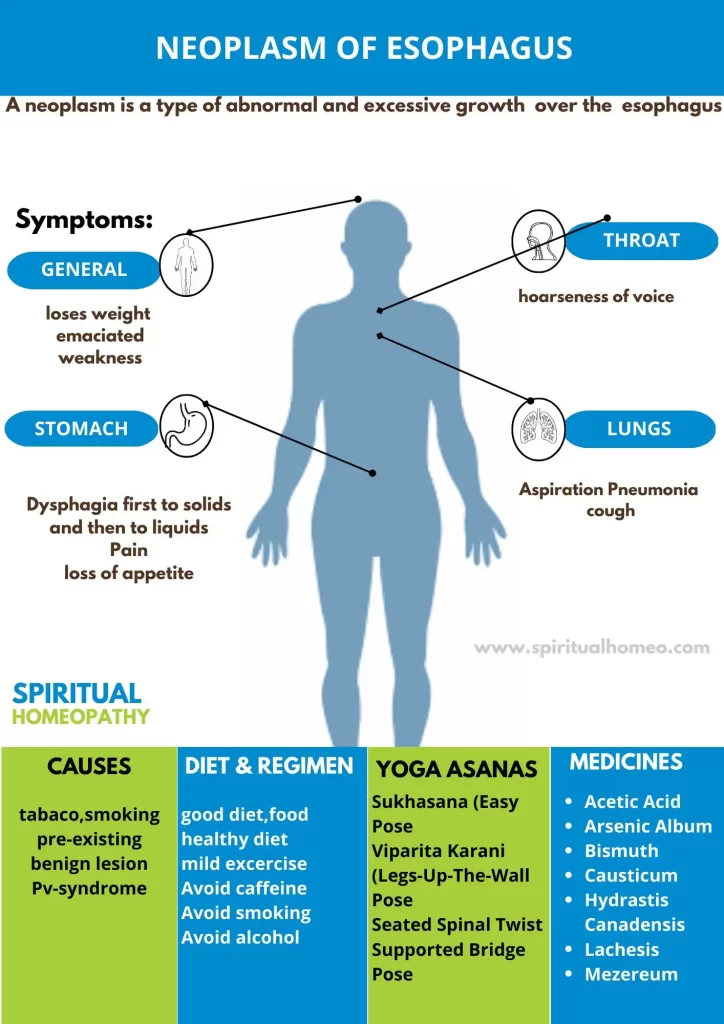
A neoplasm of the esophagus is an abnormal growth of cells that develops in the tissues of the esophagus, the muscular tube that carries food from the mouth to the stomach. These growths may be benign (noncancerous) or malignant (cancerous), with malignant neoplasms requiring prompt medical diagnosis and treatment. Common symptoms may include difficulty swallowing (dysphagia), pain while swallowing, persistent chest discomfort, unexplained weight loss, chronic cough, hoarseness, acid reflux, and the sensation of food getting stuck in the throat. While some esophageal neoplasms may not cause symptoms in the early stages, persistent swallowing difficulties or unexplained digestive symptoms should never be ignored. Seeking early medical evaluation is essential for accurate diagnosis and appropriate treatment.
At Spiritual Homeopathy, we believe in providing holistic, individualized care that focuses on supporting the patient’s overall health and well-being alongside conventional medical management. Our experienced homeopathic doctors carefully evaluate each patient’s symptoms, medical history, nutritional status, emotional well-being, lifestyle, and overall health before preparing a personalized supportive care plan. Our holistic approach aims to improve overall wellness, enhance quality of life, support digestive comfort, and help patients manage treatment-related symptoms through safe and individualized homeopathic care. We provide supportive homeopathic care for patients with esophageal neoplasms and related digestive health concerns as part of a comprehensive treatment approach.
We provide personalized homeopathic supportive care for patients with esophageal neoplasms in Hyderabad through our clinics, as well as online homeopathy consultations for patients across India and in more than 100 countries worldwide. If you are looking for experienced homeopathy doctors to complement your ongoing medical care with holistic, patient-centered support, Spiritual Homeopathy is committed to providing compassionate and individualized care wherever you are.
Esophageal Cancer: Causes, Spread, and Metastasis
Esophageal cancer develops when DNA changes in the cells of the esophagus lead to uncontrolled growth and division. Over time, these abnormal cells accumulate, forming a tumor that can invade nearby tissues and, in some cases, spread to other parts of the body.
Direct Spread
Infiltration: The tumor may block the esophagus lumen and invade the esophageal wall and surrounding tissues.
Adjacent Structures: Nearby organs such as the trachea, left bronchus, aorta, or pericardium may be affected.
Recurrent Laryngeal Nerve Involvement: Damage to these nerves can lead to swallowing difficulties and aspiration issues.
Lymphatic Spread
Lymph Node Involvement: Cancer can reach cervical, mediastinal, or coeliac lymph nodes, depending on tumor location.
Supraclavicular Nodes: Cervical and thoracic tumors may also spread to the supraclavicular lymph nodes.
Skip Lesions: Spread through submucosal lymphatics can result in non-adjacent “skip lesions.”
Hematogenous (Blood-Borne) Spread
Metastasis: Cancer cells may travel through the bloodstream to distant organs such as the liver, lungs, bones, and brain.
Several factors can increase the risk of developing esophageal cancer. The most significant include smoking, alcohol consumption, and certain dietary habits. These factors may damage the cells of the esophagus over time, contributing to abnormal growth and tumor formation.
Tobacco Use: Smoking and chewing tobacco are strongly associated with higher rates of esophageal cancer. These habits can damage esophageal cells and increase the risk of mutations.
Excessive Alcohol Consumption: Frequent heavy drinking can irritate the lining of the esophagus, making it more vulnerable to cancerous changes.
Pre-existing Esophageal Conditions: Approximately 5% of esophageal cancers develop in individuals with underlying esophageal disorders, such as:
Benign strictures (narrowing of the esophagus)
Hiatus hernia (part of the stomach pushes into the chest)
Cardiac achalasia (difficulty moving food into the stomach)
Esophageal diverticula (pouches in the esophagus wall)
Plummer-Vinson Syndrome: This rare condition, characterized by iron deficiency anemia, esophageal webs, and difficulty swallowing, is also a recognized risk factor.
Esophageal neoplasms are abnormal growths in the esophagus, classified as benign (non-cancerous) or malignant (cancerous). They are categorized based on the type of cells involved and whether the tumor can spread. Understanding the types helps in early detection and appropriate management. Consultations are available at Spiritual Homeopathy Clinic in multiple Hyderabad branches, as well as online and international options, to assess individual risk and symptoms.
Malignant tumors are cancerous and can spread (metastasize) to other parts of the body. Common types include:
Esophageal Squamous Cell Carcinoma (ESCC)
Origin: Arises from squamous cells lining the upper and middle esophagus.
Risk Factors: Smoking, alcohol, poor diet, and conditions like achalasia.
Symptoms: Difficulty swallowing (dysphagia), weight loss, chest pain, hoarseness.
Esophageal Adenocarcinoma (EAC)
Origin: Forms in the glandular cells of the lower esophagus, often linked to Barrett’s esophagus caused by chronic acid reflux.
Risk Factors: GERD, obesity, smoking, age.
Symptoms: Difficulty swallowing, weight loss, acid reflux, chest discomfort.
Small Cell Carcinoma of the Esophagus
Origin: Rare, aggressive cancer from neuroendocrine cells.
Symptoms: Rapid weight loss, fatigue, chest pain, and swallowing difficulties.
Other Rare Malignant Tumors
Sarcomas: Arise from connective tissues like smooth muscle.
Lymphoma: Originates in lymphoid tissues.
Melanoma: Arises from pigment-producing cells in the esophagus.
Benign tumors generally do not spread but may cause symptoms depending on size or location:
Esophageal Leiomyoma
Origin: Most common benign tumor from smooth muscle cells.
Symptoms: Often asymptomatic; may cause swallowing difficulty or chest pain.
Esophageal Papilloma
Origin: Papillary growths, sometimes linked to HPV infection.
Symptoms: Usually asymptomatic; removal recommended if symptomatic.
Esophageal Hemangioma
Origin: Tumor of blood vessels.
Symptoms: Rarely causes bleeding or swallowing issues; may need surgical management.
Esophageal Fibroma
Origin: Composed of fibrous tissue.
Symptoms: Large tumors may cause dysphagia or chest fullness; surgery may be required.
Certain conditions increase the risk of developing esophageal cancer:
Barrett’s Esophagus
Normal squamous cells are replaced by columnar cells, often due to chronic acid reflux.
Raises the risk of esophageal adenocarcinoma.
Dysplasia
Abnormal cell growth that can occur in Barrett’s esophagus or other esophageal conditions.
Considered a precursor to invasive carcinoma and requires monitoring.
Esophageal neoplasms, particularly cancerous growths, often begin with subtle symptoms that may gradually worsen. Early recognition is important for timely evaluation and management. Patients experiencing these symptoms can consult Spiritual Homeopathy Clinic at multiple Hyderabad branches, or via online and international consultations for professional assessment.
One of the earliest signs may be a sensation of discomfort or mild pain behind the breastbone. This can be mistaken for heartburn or indigestion, but persistent discomfort should prompt evaluation.
As the tumor grows, swallowing solid foods can become difficult. Many patients naturally prefer soft or liquid foods to reduce discomfort caused by dysphagia (difficulty swallowing).
Dysphagia is a key symptom. Initially, difficulty may be limited to solid foods. With tumor progression, swallowing liquids can also become challenging, indicating increased obstruction.
Unintended weight loss is common, often accompanied by reduced appetite and general weakness. Limited food intake due to dysphagia can lead to noticeable weight reduction over time.
Chest pain, sometimes radiating to the back, can occur if the tumor affects surrounding tissues. Pain severity may vary and could indicate more extensive local invasion.
Advanced tumors may involve nearby structures, leading to hoarseness, chronic cough, difficulty speaking, or aspiration pneumonia. Fistula formation and inflammation of the chest (mediastinitis) can further complicate breathing and swallowing.
Proper nutrition plays a crucial role in managing esophageal neoplasms. Difficulty swallowing, nausea, or treatment-related side effects can affect food intake, making a tailored diet important for maintaining strength, hydration, and overall health. Patients can consult Spiritual Homeopathy Clinic at multiple Hyderabad branches, or via online and international consultations, for personalized dietary guidance.
Esophageal neoplasms often make swallowing solid foods difficult. Soft, moist, and easy-to-chew foods help reduce discomfort and the risk of choking.
Examples:
Smooth soups
Mashed potatoes
Scrambled eggs
Oatmeal
Blended smoothies
Reduced food intake may lead to weight loss. Including calorie-dense and protein-rich foods can help maintain energy and body weight.
Examples:
Full-fat dairy products
Nut butters
Avocados
Creamy soups
Protein smoothies
Eating smaller meals more frequently (5–6 times per day) can ease swallowing and improve nutrient intake.
Choose fluids that are easy to swallow and do not irritate the esophagus.
Examples:
Water
Clear broths
Herbal teas
Smoothies
Diluted fruit juices
Avoid:
Carbonated drinks
Caffeinated beverages
Alcohol
Incorporating sauces, gravies, and broths helps soften food and makes swallowing easier.
Examples:
Mashed potatoes with gravy
Moist meatballs
Pureed soups
Yogurt or custards
Certain foods can worsen symptoms like heartburn, reflux, or irritation of the esophagus.
Avoid:
Spicy foods (chili, hot peppers)
Acidic foods (citrus fruits, tomatoes)
Dry, hard foods (crackers, chips)
Extremely hot or cold foods
Smoothies and Shakes:
High in calories and protein, easy to swallow, and nutrient-rich.
Blended fruits
Yogurt
Almond milk
Nut butters or avocado
Pureed or Soft-Cooked Vegetables:
Pureed carrots, sweet potatoes, squash
Well-cooked spinach
Soft Proteins:
Scrambled eggs
Tofu
Soft fish (salmon, cod)
Tender chicken
Well-cooked beans and lentils
Creamy Soups and Broths:
Pureed potato-leek soup
Creamy tomato soup
Chicken broth with soft vegetables
Dairy Products:
Full-fat yogurt
Cottage cheese
Milkshakes or smoothies
Soft Grains:
Cream of wheat
Oatmeal
White rice
Soft pasta
Breakfast:
Smoothie: banana, spinach, Greek yogurt, protein powder, almond milk
Scrambled eggs with soft mashed avocado
Lunch:
Pureed carrot soup with mashed potatoes
Soft tofu with well-cooked spinach
Snack:
Greek yogurt with honey and blended berries
Protein shake with almond butter
Dinner:
Baked tender salmon with pureed butternut squash
Creamy mashed sweet potatoes with mild gravy
Evening Snack:
Custard or pudding
Soft scrambled eggs or rice pudding
Yoga and mindful practices can be supportive for overall well-being, helping reduce stress, improve posture, and enhance digestion. These practices complement medical care but are not a substitute for professional treatment. Patients with esophageal neoplasms should consult their healthcare provider before starting new exercises or yoga routines.
Tadasana (Mountain Pose)
Benefits: Improves posture, strengthens the body, enhances breath awareness, and supports stress management.
How to do it: Stand tall with feet hip-width apart, engage your thighs, lift your chest, and extend your arms overhead with palms inward. Breathe deeply and hold for a few breaths.
Setu Bandhasana (Bridge Pose)
Benefits: Opens the chest, relieves back and neck tension, and supports digestion.
How to do it: Lie on your back with knees bent and feet flat on the floor. Lift hips toward the ceiling while pressing feet and arms into the ground. Keep chest open, breathe deeply, and hold for a few breaths.
Uttanasana (Standing Forward Bend)
Benefits: Stretches hamstrings, relieves neck and back tension, and improves circulation.
How to do it: Stand with feet hip-width apart and hinge at the hips to fold forward. Let the head hang down. Slightly bend knees if needed and breathe deeply.
Viparita Karani (Legs Up the Wall Pose)
Benefits: Reduces swelling and fatigue, promotes relaxation, and soothes the nervous system.
How to do it: Sit with one side against a wall, swing legs up, and lie back. Relax arms by your sides and breathe deeply for several minutes.
Balasana (Child’s Pose)
Benefits: Gently stretches the back, hips, and neck, and calms the mind.
How to do it: Kneel with big toes touching and knees apart. Lower hips toward heels and stretch arms forward. Rest your forehead on the floor and breathe deeply.
Supta Baddha Konasana (Reclining Bound Angle Pose)
Benefits: Opens chest and hips, reduces stress, and encourages deep breathing.
How to do it: Lie on your back with soles of feet together, knees apart. Use pillows under knees for support. Relax arms by your sides and focus on slow, deep breathing.
Marjaryasana-Bitilasana (Cat-Cow Pose)
Benefits: Increases spinal flexibility, promotes posture, and enhances breath control.
How to do it: Start on all fours. Inhale as you drop the belly and lift head/tailbone (cow), exhale rounding the back and tucking chin (cat). Flow with your breath for several rounds.
Pranayama (Breath Control)
Benefits: Reduces stress, supports relaxation, and encourages better lung and diaphragm function.
How to do it: Practice Nadi Shodhana (Alternate Nostril Breathing) or Ujjayi breath. Sit comfortably, close right nostril with thumb, inhale through left, close left with ring finger, exhale through right, and repeat alternating.
Ardha Matsyendrasana (Seated Twist)
Benefits: Stimulates digestion, improves spinal flexibility, and stretches chest and shoulders.
How to do it: Sit with legs extended. Bend right knee and cross over left leg. Place right hand behind, twist torso right. Hold, then repeat on the other side.
Savasana (Corpse Pose)
Benefits: Promotes deep relaxation, relieves stress, and restores energy.
How to do it: Lie flat on your back with legs extended and arms by your sides, palms up. Close eyes and focus on slow, deep breathing, allowing full relaxation.
Homeopathy is a gentle, natural system of healing that focuses on addressing the root cause of illness rather than only managing symptoms. It works in harmony with the body’s innate healing mechanisms. Homeopathic care is individualized, generally well-tolerated under professional guidance, and can support both acute and chronic health concerns.
Whether managing long-term conditions or alleviating acute symptoms, homeopathy offers a holistic, personalized approach to health.
At Spiritual Homeopathy Clinic, we provide compassionate, individualized care by combining classical homeopathy with clinical expertise. Our approach focuses on identifying underlying imbalances that may contribute to illness, promoting overall health and well-being.
We offer consultations at multiple Hyderabad branches, as well as online and international consultations for patients who cannot visit in person.
Root-Cause Focus: We aim to understand and address the underlying factors contributing to your condition.
Personalized Treatment: Each care plan is tailored to your body, lifestyle, and emotional state.
Experienced Practitioners: Our qualified homeopathy doctors guide your treatment through both in-clinic and remote consultations.
Safe and Supportive: Remedies are gentle, non-addictive, and designed to support long-term management.
Holistic Perspective: Emotional and spiritual well-being is considered alongside physical health in every treatment plan.
We conduct a detailed assessment of your health history, lifestyle, symptoms, and emotional state to create a customized care plan.
Treatment focuses on addressing contributing factors and supporting long-term health. Care is adjusted based on your progress and unique needs.
Regular follow-ups allow us to monitor improvement, adjust treatment as necessary, and provide guidance on diet, lifestyle, and supportive practices.
Note: Homeopathy is supportive and should be guided by trained practitioners, especially for serious conditions.
You should consult a healthcare professional if you notice symptoms that are frequent, persistent, or affecting daily life, as early evaluation can help identify underlying causes and support timely management.
Seek consultation if you experience:
Difficulty or pain while swallowing (especially solids initially, progressing to liquids)
Persistent chest discomfort or pain behind the breastbone
Unexplained weight loss or reduced appetite
Frequent regurgitation, choking, or a sensation of food sticking in the throat
Hoarseness, chronic cough, or breathing difficulties
Symptoms that do not improve with dietary or lifestyle adjustments
At Spiritual Homeopathy Clinic, consultations are available at multiple branches in Hyderabad, including Kukatpally, Chandanagar, Dilsukhnagar, and Nallagandla. Online and international consultations are also offered for patients who cannot visit in person.
A professional assessment helps develop an individualized care plan based on your symptoms, overall health, and lifestyle.
For appointments or guidance, contact 9069 176 176.
Esophageal cancer is difficult to cure primarily because it usually causes no symptoms until it has reached an advanced stage. By the time patients notice difficulty swallowing or pain, the tumor is often large, has invaded deep into the esophageal wall, or has spread to nearby lymph nodes and distant organs.
Oesophagectomy may carry the significant potential side effects of surgical site infection, the narrowing and breakdown of tissue where the cut end of the oesophagus is joined to the bowel, pneumonia, and difficulty swallowing. The death rate may also be higher, particularly when performed in smaller centres.
Yes, many people survive esophageal cancer. The five-year relative survival rate is 23% overall, but it varies significantly depending on how early it is caught. Survival rates jump to 43% for localized tumors, whereas metastatic (Stage 4) cases are much harder to treat.
Advanced oesophageal cancer means that a cancer that began in the food pipe (gullet or oesophagus) has spread to another part of the body. Unfortunately advanced cancer can't usually be cured.
If caught early enough, oesophageal cancer may be treated with surgery, chemotherapy, radiotherapy or immunotherapy. If undiagnosed or left untreated too long, oesophageal cancer can spread to other parts of the body and this makes it much harder to cure.
For esophageal cancer, radiation is typically given once a day, five days a week, for 5 to 6 weeks. Patients usually receive a total of 25 to 30 treatments (fractions), which is almost always combined with chemotherapy.