
Corn is a common skin condition that develops when repeated pressure or friction causes the skin to thicken as a protective response. Corns are usually small, well-defined, and have a hard, yellowish-white central core of dead skin that can press into deeper tissues, making them painful to touch or walk on. They most commonly occur on the feet and toes due to tight footwear, prolonged standing, abnormal foot structure, or repeated rubbing. Symptoms may include pain while walking, tenderness, thickened skin, and discomfort when pressure is applied. Although corns are generally not serious, recurring or painful corns should not be ignored, especially in people with diabetes or poor circulation. Early evaluation and appropriate treatment can help relieve pain, prevent recurrence, and improve foot health.
At Spiritual Homeopathy, we believe in treating the underlying cause of corns rather than simply removing the thickened skin temporarily. Our experienced homeopathic doctors carefully assess each patient’s symptoms, medical history, footwear habits, foot structure, lifestyle, and overall health before preparing an individualized treatment plan. Our holistic approach focuses on providing natural corn treatment, reducing pain and inflammation, preventing recurrent corns, improving skin health, and supporting long-term foot comfort through safe and personalized homeopathic care. We specialize in homeopathic treatment for corns, painful foot corns, recurring corns, and other chronic skin conditions.
We provide personalized homeopathic treatment for corns in Hyderabad through our clinics, as well as online homeopathy consultations for patients across India and in more than 100 countries worldwide. If you are looking for the best homeopathy doctor for corns, natural treatment for painful foot corns, or long-term skin and foot wellness, Spiritual Homeopathy is committed to delivering expert, patient-centered care wherever you are.
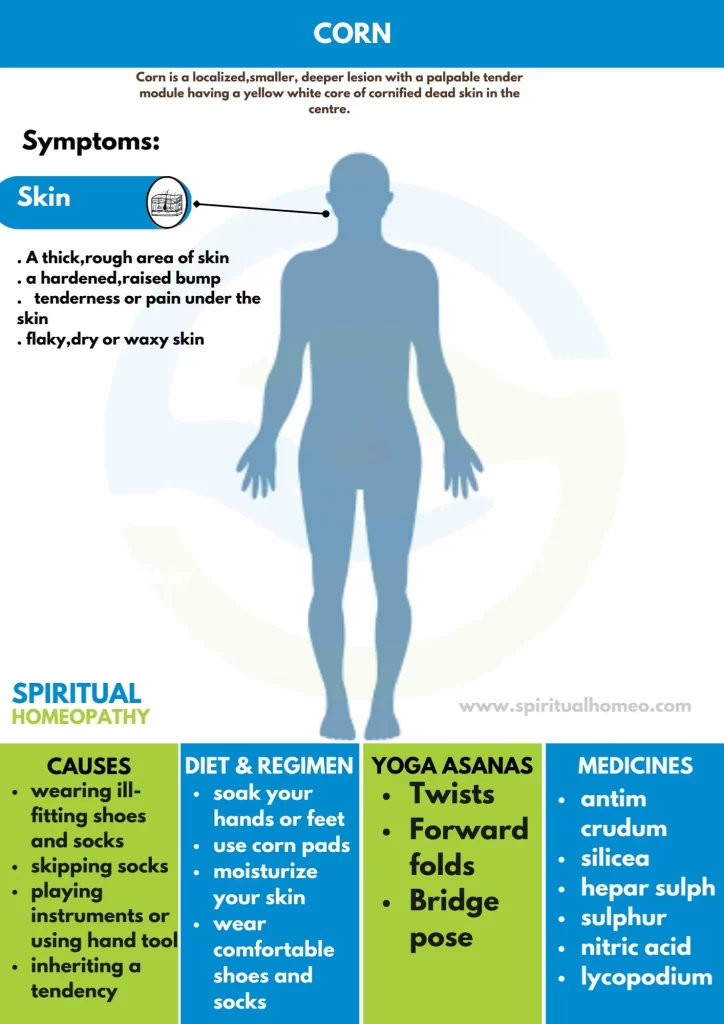
A corn is a localized thickening of the skin that develops due to repeated friction or pressure. It is usually more pronounced than a callus and may cause discomfort, especially when walking or wearing tight shoes. Corns most often appear in areas subjected to frequent rubbing or pressure, and they may improve once the source of irritation is reduced or eliminated.
Corns can develop on one or both feet, and they may vary in size and severity. Hard corns are commonly found on the soles, while soft corns often occur between the 4th and 5th toes, where skin rubs against neighboring toes.
At Spiritual Homeopathy Clinic, patients in Hyderabad and internationally can consult in-clinic or online to discuss individualized care and management strategies for corns.
Corns are primarily caused by repeated friction and pressure on the skin. Common sources include:
Wearing ill-fitting shoes and socks: Tight shoes, such as high heels, can compress parts of the feet, while loose shoes may allow the feet to slide and rub against the interior. Seams or stitches in shoes, as well as improperly fitting socks, can also contribute to friction.
Skipping socks: Wearing shoes or sandals without socks can expose the skin to direct friction, increasing the likelihood of corn formation.
Playing instruments or using hand tools: Repeated pressure from activities such as playing musical instruments, using hand tools, or prolonged writing can lead to corns on the hands.
Genetic predisposition: Some individuals may inherit a tendency to develop corns, especially on the soles or palms. Conditions like keratosis punctata can cause corns in non-weight-bearing areas and are often linked to genetics.
Corns can be classified into two main types:
Hard Corns:
Hard corns usually develop over bony areas, such as the heads of the metatarsals in the foot. They are marked by thickened skin with a central core of hardened cells. The pressure from hard corns can irritate nearby nerves, leading to notable discomfort or pain. In some cases, if the area becomes irritated or infected, pain may increase and walking can become uncomfortable.
Soft Corns:
Soft corns commonly form between the 4th and 5th toes, where friction occurs between adjacent toes. These corns are softer and more pliable than hard corns but can still cause irritation, tenderness, and discomfort during walking or wearing tight shoes.
Corns can present with several noticeable signs and symptoms, including:
Thick, rough skin: The affected area develops hardened, thickened skin due to repeated friction or pressure.
Raised, hardened bump: Corns typically form a raised, firm bump on the skin, which may be more pronounced and noticeable compared to surrounding areas.
Tenderness or pain: Pressure on the corn, such as when walking or wearing shoes, can cause discomfort or localized pain.
Flaky, dry, or waxy skin: The surrounding skin may appear dry, flaky, or waxy due to the accumulation of thickened layers.
If corns cause frequent discomfort or persistent pain, it is advisable to consult a healthcare professional for proper assessment and individualized care, available at Spiritual Homeopathy Clinic through in-clinic, online, or international consultations.
To help manage and prevent corns, consider the following steps:
Soak your hands or feet: Regularly soaking in warm water can soften corns, reduce discomfort, and make the thickened skin easier to manage.
Moisturize your skin: Keeping the skin hydrated helps prevent dryness, cracking, and irritation around corns. Use a gentle, nourishing lotion or cream for the affected area.
Wear comfortable shoes and socks: Opt for well-fitting shoes that provide support and cushioning. Avoid tight shoes, high heels, or restrictive socks, as these can increase friction and aggravate corns.
Guidance may vary for each individual, so it is advisable to seek personalized advice from Spiritual Homeopathy Clinic through in-clinic, online, or international consultations.
While yoga asanas do not directly treat corns, certain postures can help reduce pressure on the feet, improve circulation, and relieve discomfort. Regular practice may support foot health alongside proper care and footwear.
Yoga Asanas for Corns Relief
Tadasana (Mountain Pose)
Benefits: Enhances posture, alignment, and circulation in the feet, which can help reduce pressure caused by improper footwear.
How to Perform: Stand with feet together, legs straight, and arms by your sides. Engage the legs, lift the chest, and reach your arms overhead. Hold for a few breaths.
Adho Mukha Svanasana (Downward-Facing Dog)
Benefits: Improves circulation to the feet and stretches calves and hamstrings, reducing lower-body tension.
How to Perform: Start on hands and knees, lift hips up and back into an inverted V-shape, keep feet hip-width apart, and press heels toward the floor. Hold for several breaths.
Viparita Karani (Legs Up the Wall Pose)
Benefits: Relieves foot pressure, improves blood circulation, and promotes relaxation.
How to Perform: Sit sideways against a wall, lie down, and extend legs up the wall. Relax arms by your sides and hold for several minutes.
Supta Baddha Konasana (Reclining Bound Angle Pose)
Benefits: Opens the hips and relaxes the lower body, easing tension in feet and legs.
How to Perform: Lie on your back, bring the soles of the feet together, allow knees to drop outward, and rest hands on the belly or sides.
Utthita Trikonasana (Extended Triangle Pose)
Benefits: Strengthens legs and stretches the feet, alleviating tension from prolonged standing or walking.
How to Perform: Stand with feet wide apart, turn one foot out, stretch arms to the sides, hinge at hips, and reach hand toward shin or block while extending the other arm upward.
Ankle and Foot Rotations
Benefits: Improves flexibility and reduces stiffness in feet and ankles.
How to Perform: Sit comfortably, lift one foot, and rotate clockwise and counterclockwise. Repeat with the other foot.
Additional Tips:
Practice yoga regularly to enhance foot strength, flexibility, and circulation.
Focus on poses that release tension and encourage proper posture.
Always wear comfortable footwear, particularly during yoga, to avoid aggravating corns.
At Spiritual Homeopathy Clinic, we follow a holistic approach by combining traditional homeopathic principles with a comprehensive understanding of overall well-being. Our team of qualified homeopathic practitioners provides compassionate care and develops personalized treatment plans tailored to each patient’s needs.
True healing occurs when the body, mind, and spirit are in balance. We focus not only on alleviating symptoms but also on addressing the underlying factors contributing to health concerns. By supporting the body’s natural healing processes and restoring overall balance, we aim to improve long-term health and well-being.
Consultations:
Our practitioners in Hyderabad provide detailed in-clinic consultations, listening carefully to your health concerns, medical history, and personal goals. Online and international consultations are also available for patients who cannot visit in person.
Personalized Treatment Plans:
We design individualized care plans to address a variety of health conditions. These plans are generally well-tolerated and focus on long-term management while minimizing discomfort often associated with other treatment approaches.
Ongoing Support and Follow-Up:
Continuous support is an integral part of our care. We monitor progress, adjust treatment plans as needed, and provide guidance to help patients maintain overall wellness.
We prioritize patient safety, individualized care, and informed guidance. Whether you are seeking relief from a specific health concern or guidance for overall well-being, our team at Spiritual Homeopathy Clinic supports you through every step of your health journey.
You should consult a healthcare professional if corns cause persistent discomfort, pain, or interfere with walking or daily activities. Early evaluation helps prevent complications and allows for proper management.
Seek consultation if you experience:
Persistent or worsening pain when walking or standing
Corns that bleed, become infected, or show signs of inflammation
Recurring corns despite changes in footwear or care
Difficulty wearing shoes or performing daily tasks due to foot discomfort
At Spiritual Homeopathy Clinic, consultations are available at multiple branches in Hyderabad, including Kukatpally, Chandanagar, Dilsukhnagar, and Nallagandla. Online and international consultations are also offered for patients who cannot visit in person. A professional assessment ensures individualized care based on the type, location, and severity of corns.
For appointments or guidance, contact 9069 176 176.
Corn diseases are primarily caused by four types of pathogens: fungi, bacteria, viruses, and nematodes, often exacerbated by environmental conditions. Fungi (such as those causing Northern Corn Leaf Blight and Tar Spot) thrive in warm, humid weather. Bacteria (like Goss's wilt) spread through wounds caused by wind or hail.
To safely remove corns, soak your foot or hand in warm, soapy water for 5–10 minutes to soften the skin. Gently file the corn using a pumice stone or foot file in one direction, then apply a moisturizer containing salicylic acid, urea, or ammonium lactate to continue breaking down the dead tissue.
Corn disease symptoms vary widely depending on the pathogen but universally include abnormal leaf lesions, stalk rots, or discolored kernels. Common fungal and bacterial infections often start with distinct spots or wilting, ultimately stunting overall crop development.
Yes, corns on your feet frequently hurt. Unlike larger and flatter calluses, corns have a hardened, knobby inner core that points inward. When you press on them, this core pushes into deeper tissue and presses on nerves, causing sharp, localized pain.
No, a foot corn is not a fungal infection. Corns are patches of hardened, dead skin that form as a protective response against repeated friction or pressure from tight footwear. Fungal infections, like athlete's foot, are entirely different and are caused by a contagious fungus.
Vitamin A deficiency: A lack of Vitamin A can cause the skin to become dry and less elastic, making it more likely for calluses to form under pressure.