
Cryptomenorrhea is a menstrual condition in which normal menstrual bleeding occurs inside the uterus, but the blood cannot flow out of the body because of a blockage in the reproductive tract. The obstruction may be caused by conditions such as an imperforate hymen, a vaginal septum, cervical abnormalities, or other congenital or acquired structural problems. Women with cryptomenorrhea often experience severe lower abdominal or pelvic pain, cyclical cramps without visible menstrual bleeding, abdominal swelling, and discomfort during the expected menstrual period. If left untreated, the trapped menstrual blood can lead to complications such as infection, endometriosis, or damage to the reproductive organs. Early diagnosis and appropriate medical evaluation are essential to identify the underlying cause and prevent long-term reproductive health complications.
At Spiritual Homeopathy, we understand that cryptomenorrhea caused by a physical blockage requires appropriate gynecological evaluation and, in many cases, surgical correction to remove the obstruction. Homeopathy is not a substitute for treating anatomical abnormalities. However, after appropriate medical or surgical management, our experienced homeopathic doctors provide individualized supportive care by carefully assessing each patient’s symptoms, menstrual health, hormonal balance, medical history, emotional well-being, and overall health. Our holistic approach focuses on supporting recovery, promoting menstrual wellness, improving general health, and complementing conventional treatment through safe and personalized homeopathic care.
We provide personalized homeopathic supportive care for menstrual health in Hyderabad through our clinics, along with online homeopathy consultations for patients across India and in more than 100 countries worldwide. If you are looking for the best homeopathy doctor for supportive menstrual care, hormonal wellness, or holistic care after treatment for cryptomenorrhea, Spiritual Homeopathy is committed to providing compassionate, patient-centered care that complements your ongoing medical management.
In cryptomenorrhea, menstrual blood accumulates within the uterine cavity, leading to a condition called hematometra. In more severe or prolonged cases, if left unaddressed, the blood may flow into the fallopian tubes, causing the fimbrial ends to become blocked. This can result in the tubes becoming distended with blood, a condition known as hematosalpinx.
Early evaluation and individualized care are important to manage complications effectively. At Spiritual Homeopathy Clinic, consultations are available at multiple branches in Hyderabad, as well as online and international consultations for patients who cannot visit in person.
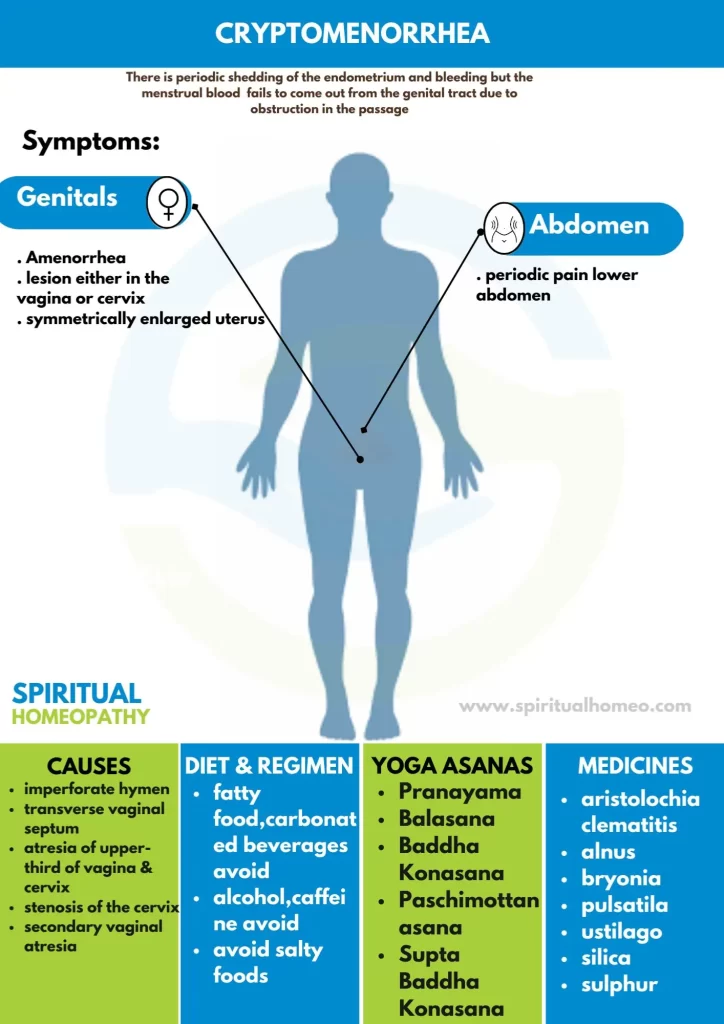
Cryptomenorrhea can arise due to congenital or acquired factors:
Congenital Causes:
Imperforate hymen
Transverse vaginal septum
Atresia of the upper third of the vagina or cervix
Acquired Causes:
Cervical stenosis following procedures such as amputation, deep cauterization, or conization
Secondary vaginal atresia due to neglected or complicated vaginal delivery
Understanding the underlying cause is essential for planning appropriate care. At Spiritual Homeopathy Clinic, patients can receive individualized evaluation and management through consultations at multiple Hyderabad branches, as well as online and international consultations.
Cryptomenorrhea is a condition in which menstrual bleeding occurs internally, but the blood cannot exit the body due to an obstruction in the reproductive tract, resulting in hidden or undetectable periods. It is broadly classified into two main types:
1. Primary Cryptomenorrhea
This type is observed in adolescent girls who have never experienced visible menstruation, despite having normal hormonal cycles. Menstrual blood is produced but becomes trapped due to congenital structural abnormalities such as:
Imperforate hymen
Transverse vaginal septum
Vaginal or cervical atresia
These obstructions prevent menstrual flow from leaving the body, leading to symptoms such as pelvic pain, abdominal bloating, and a sensation of fullness. Early evaluation can help prevent complications and preserve reproductive health.
2. Secondary Cryptomenorrhea
Secondary cryptomenorrhea occurs in women who previously had normal menstrual cycles but later develop an obstruction. Common causes include:
Cervical stenosis following surgical procedures
Endometrial adhesions (Asherman’s syndrome)
Scarring from infections, trauma, or childbirth
Women with secondary cryptomenorrhea may experience cyclical pelvic pain, absence of visible menstruation, and potential fertility concerns if left unaddressed.
Conclusion:
Both primary and secondary cryptomenorrhea may lead to significant reproductive health issues if not diagnosed and managed timely. Diagnosis typically involves pelvic examinations and imaging studies. At Spiritual Homeopathy Clinic, individualized consultation is available at multiple Hyderabad branches, as well as online and international consultations, to guide proper evaluation and supportive care.
Cryptomenorrhea occurs when menstrual blood is retained internally due to an obstruction in the reproductive tract. Although hormonal cycles continue normally, the blood cannot exit the body. This condition typically presents with the following signs and symptoms:
Common Signs and Symptoms:
Lower abdominal pain or cramping: Caused by the accumulation of menstrual blood behind the obstruction, often intensifying during expected periods.
Absence of visible menstruation (Amenorrhea): No external menstrual flow despite normal hormonal activity, especially in adolescents with congenital blockages.
Pelvic fullness or bloating: A feeling of heaviness or pressure in the lower abdomen due to retained blood in the uterus or vagina.
Painful periods (Dysmenorrhea): Menstrual pain without bleeding may be more intense because of the pressure from trapped blood.
Primary amenorrhea: In primary cryptomenorrhea, the individual has never had a visible period, usually noticed during puberty.
Difficulty with fertility: If untreated, cryptomenorrhea can contribute to complications such as infertility or recurrent pelvic infections.
Additional Symptoms:
Lower back pain
Bladder or rectal pressure
Visible swelling in the lower abdomen in advanced cases
Early evaluation through pelvic exams and imaging is essential to identify the obstruction and prevent complications. At Spiritual Homeopathy Clinic, consultations are available at multiple Hyderabad branches, as well as online and international consultations, to guide individualized care and supportive management.
If symptoms are frequent, severe, or associated with additional discomfort, it is important to seek professional assessment promptly.
Managing cryptomenorrhea involves more than medical intervention—supportive diet and lifestyle practices can promote hormonal balance and overall reproductive wellness.
Recommended Diet for Cryptomenorrhea
A nutrient-rich diet may help maintain menstrual health, support energy levels, and reduce complications related to internal blood retention:
Iron-Rich Foods: Spinach, lentils, beans, red meat, and tofu help maintain healthy iron levels and combat fatigue.
Vitamin C: Citrus fruits, bell peppers, strawberries, and broccoli enhance iron absorption and support immune function.
Healthy Fats: Sources like salmon, flaxseeds, chia seeds, and walnuts may reduce inflammation and support hormone production.
Fiber-Rich Foods: Whole grains such as oats, brown rice, and quinoa aid in hormone regulation and digestive health.
Antioxidants: Berries, nuts, seeds, and green leafy vegetables protect reproductive cells and reduce oxidative stress.
Lifestyle Regimen for Better Menstrual Health
Alongside a balanced diet, healthy daily habits can improve circulation, reduce stress, and support hormonal function:
Hydration: Drink adequate water and herbal teas, such as chamomile or ginger, to support detoxification and reduce inflammation.
Regular Physical Activity: Engage in moderate exercise like walking, swimming, or yoga to improve blood flow and overall well-being.
Stress Management: Mindfulness techniques such as meditation, deep breathing, or gentle yoga can help reduce stress, which influences reproductive health.
Medical Guidance: Individual recommendations may vary; consult a healthcare provider or gynecologist for personalized guidance.
A combination of proper nutrition and supportive lifestyle measures can complement professional care at Spiritual Homeopathy Clinic, where consultations are available at multiple Hyderabad branches, as well as online and international consultations, to ensure individualized management.
Yoga can help improve pelvic blood circulation, reduce congestion, support hormonal balance, and ease stress—factors that may complement care in cases like cryptomenorrhea. While yoga cannot resolve anatomical blockages, it can be a helpful supportive practice alongside professional medical management. Consultations are available at Spiritual Homeopathy Clinic through in-clinic, online, and international modes for individualized guidance.
Recommended Yoga Asanas for Cryptomenorrhea:
Baddha Konasana (Butterfly Pose)
Opens the pelvic region
Improves blood flow to reproductive organs
Relieves menstrual discomfort
Supta Baddha Konasana (Reclining Bound Angle Pose)
Relaxes abdominal and pelvic muscles
Reduces stress and supports hormonal balance
Bhujangasana (Cobra Pose)
Stimulates pelvic organs
Enhances flexibility and circulation in the lower abdomen
Setu Bandhasana (Bridge Pose)
Strengthens lower back and pelvic muscles
Supports proper uterine positioning
Paschimottanasana (Seated Forward Bend)
Calms the nervous system
Aids digestion and hormone regulation
Viparita Karani (Legs Up the Wall Pose)
Improves circulation
Reduces fatigue and pelvic heaviness
Practice Tips:
Perform these asanas under guidance, especially if managing a gynecological condition or after surgical treatment.
Avoid intense abdominal contractions if experiencing discomfort.
Combine with proper diet, hydration, and professional care for optimal support.
Yoga can serve as a complementary tool to support overall reproductive health while following the individualized management plan recommended by your healthcare provider at Spiritual Homeopathy Clinic.
At Spiritual Homeopathy Clinic, we combine classical homeopathic principles with a careful understanding of the mind-body-spirit connection. Our holistic approach focuses on individualized care, aiming to support the body’s natural healing processes safely and responsibly.
Our Approach to Healing
We prioritize treating the whole person—not just symptoms. By identifying and addressing underlying imbalances—whether physical, hormonal, or emotional—we help promote long-term well-being and overall reproductive health.
Services We Offer
Comprehensive Consultations: Our experienced practitioners provide detailed one-on-one consultations across multiple Hyderabad branches and via online or international appointments. We review your medical history, lifestyle, and health goals to develop a personalized care plan.
Individualized Treatment Plans: Each plan is tailored to your specific symptoms, health profile, and long-term wellness needs, supporting the body’s natural regulation and recovery.
Ongoing Support and Follow-Ups: Continuous monitoring and follow-up consultations ensure your treatment is adjusted as needed, helping maintain progress and address new concerns.
Our Commitment to You
Your health and well-being are central to our care. Whether addressing chronic or acute concerns, or supporting reproductive health, we provide professional, gentle, and patient-focused homeopathic guidance, empowering you physically, emotionally, and spiritually.
You should consult a healthcare professional if you experience symptoms of cryptomenorrhea, especially if menstrual blood is not visible despite regular cycles or if abdominal discomfort becomes frequent or severe. Early evaluation helps identify the underlying obstruction and prevents complications such as pelvic pain, infections, or fertility issues.
Seek consultation if you notice:
Absence of visible menstruation despite normal hormonal cycles
Cyclical lower abdominal or pelvic pain
Bloating, pelvic fullness, or abdominal swelling
Painful periods without bleeding
Difficulty with fertility or repeated reproductive health concerns
At Spiritual Homeopathy Clinic, consultations are available at multiple branches in Hyderabad, including Kukatpally, Chandanagar, Dilsukhnagar, and Nallagandla. Online and international consultations are also offered for patients who cannot visit in person. A professional assessment ensures an individualized care plan based on your symptoms and overall health.
For appointments or guidance, contact 9069 176 176.
Cryptomenorrhea (hidden menstruation) is typically treated with minor, fertility-preserving surgery to remove the anatomical obstruction, allowing the trapped menstrual blood to drain.
Cryptomenorrhea may be diagnosed using ultrasound. The vagina is commonly seen filled with blood and the uterus usually appears pushed upward. Imperforate hymen may be diagnosed clinically in an adolescent showing a blue, protruding mass within the vaginal canal.
The most common cause of cryptomenorrhea—a condition where menstrual bleeding occurs but is hidden due to an obstructed outflow tract—is an imperforate hymen. This congenital anomaly prevents the normal flow of blood, leading to its accumulation.
Yes, you can have a period with a hymen. The hymen is a thin piece of tissue surrounding the vaginal opening. Because it typically has at least one opening, menstrual blood flows through it normally. However, the type of hymen you have determines how your period flows.
Hematometra is a collection or retention of blood in the uterus most commonly due to an imperforate hymen or transverse vaginal septum. 1 Acquired causes leading to cervical stenosis include radiation treatment, ablation, cervical conization, or malignancies.