
Chronic Obstructive Pulmonary Disease (COPD) is a long-term lung disease that makes it difficult to breathe due to persistent narrowing and damage of the airways. It is most commonly caused by long-term exposure to cigarette smoke, air pollution, dust, or other harmful airborne irritants. COPD includes conditions such as chronic bronchitis and emphysema and usually develops gradually over time. Common symptoms include a persistent cough, excess mucus production, wheezing, chest tightness, shortness of breath, and reduced ability to perform daily activities. Although COPD cannot be cured, early diagnosis, appropriate medical treatment, smoking cessation, pulmonary rehabilitation, and lifestyle modifications can help manage symptoms, slow disease progression, and improve quality of life.
At Spiritual Homeopathy, we believe in treating the individual as a whole rather than simply managing symptoms. Our experienced homeopathic doctors carefully evaluate each patient’s symptoms, medical history, lifestyle, environmental exposures, respiratory health, and overall well-being before preparing a personalized treatment plan. Our holistic approach focuses on supporting respiratory health, improving overall wellness, reducing the frequency of recurring respiratory symptoms, and providing safe, individualized homeopathic care. Homeopathy may be used as supportive care alongside standard medical treatment, pulmonary rehabilitation, and healthy lifestyle changes for individuals living with COPD.
We provide personalized homeopathic supportive care for chronic obstructive pulmonary disease (COPD) in Hyderabad to patients of all age groups through our clinics in Hyderabad, as well as online homeopathy consultations for patients across India and in more than 100 countries worldwide. If you are looking for supportive homeopathic care for COPD, respiratory wellness, or individualized patient-centered care, Spiritual Homeopathy is committed to providing compassionate support wherever you are. Patients with COPD should continue regular follow-up with their pulmonologist and seek immediate medical attention if they experience severe breathing difficulty or sudden worsening of symptoms.
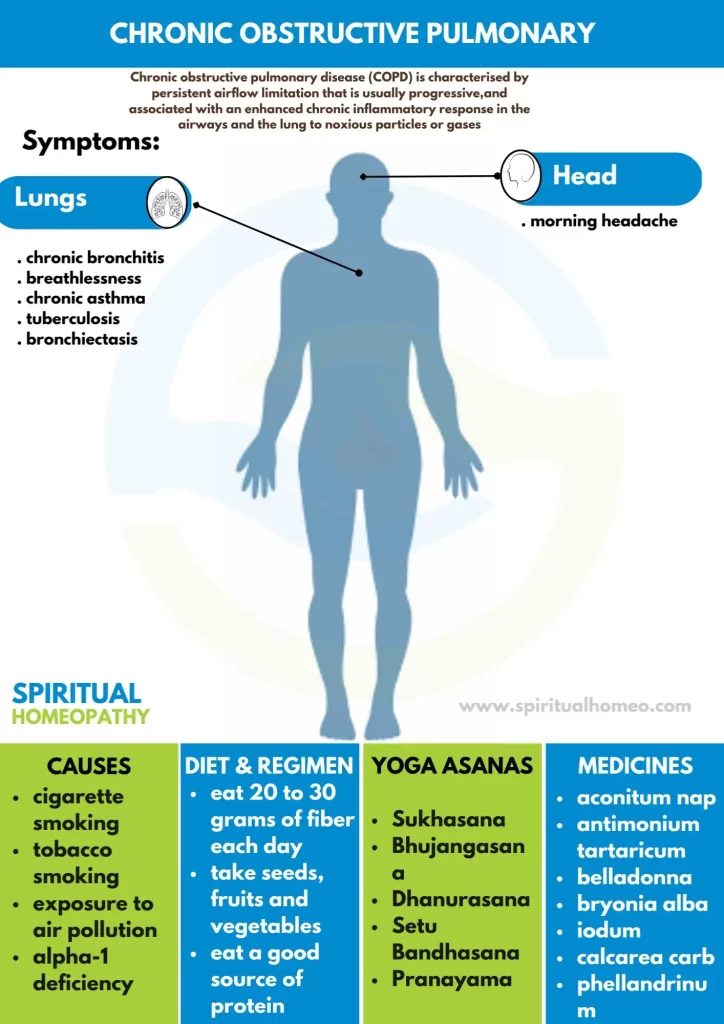
Chronic Obstructive Pulmonary Disease (COPD) is a progressive lung condition that affects not only the respiratory system but also overall health. Patients may experience frequent flare-ups (exacerbations) and associated health conditions, such as heart disease, stroke, metabolic syndrome, osteoporosis, depression, and lung cancer, which can increase the severity of the disease.
Beyond breathing difficulties, COPD often leads to weight loss and muscle weakness, further impacting daily activities and quality of life. Tobacco smoking is the leading risk factor, while long-term exposure to indoor air pollution from biomass fuels used for cooking or heating also contributes, particularly in low- and middle-income countries.
Globally, more than 80 million people live with moderate to severe COPD, highlighting its significance as a public health concern.
Cigarette smoking is the primary cause of COPD and the most significant risk factor. The likelihood of developing COPD rises with both the number of cigarettes smoked daily and the total years of smoking. Individuals with more than 10 pack-years of smoking history are particularly at higher risk.
However, not all smokers develop COPD, highlighting the role of genetic and environmental factors in determining susceptibility. Some people may be more vulnerable to lung damage from smoking or long-term exposure to harmful airborne particles, including industrial fumes, dust, or indoor air pollution.
Pulmonary Emphysema
Emphysema is a chronic lung condition in which the alveoli—the tiny air sacs in the lungs—undergo structural damage. This may include destruction, narrowing, collapse, stretching, or over-inflation of the alveoli. Such changes reduce the lungs’ ability to exchange oxygen and carbon dioxide efficiently, causing shortness of breath. The structural changes are irreversible, leading to permanent areas of reduced lung function.
Asthma
Asthma is a chronic inflammatory condition of the lungs that can contribute to airway obstruction. In asthma, several factors affect breathing:
Swelling and inflammation of the airway lining
Constriction of the muscles surrounding the airways
Increased mucus production, sometimes forming plugs that block airflow
These changes can result in recurrent symptoms such as wheezing, coughing, chest tightness, and shortness of breath.
At Spiritual Homeopathy Clinic, understanding the type of COPD helps guide an individualized treatment approach. Consultations are available at multiple Hyderabad branches, as well as online and international options, to tailor care according to the patient’s condition and overall health.
COPD should be suspected in individuals over 40 years of age who present with chronic bronchitis and/or breathlessness. The following signs and symptoms are commonly observed:
Chronic Cough and Sputum Production: Often referred to as a “smoker’s cough,” this involves a persistent cough with mucus or phlegm, especially in the morning.
Breathlessness: Shortness of breath, initially during physical activity, may progress over time and affect daily functioning.
Physical Signs: These signs may be subtle in early stages and typically become more noticeable as the disease advances.
Breath Sounds: Breath sounds may appear quieter due to reduced airflow.
Crackles: Crackling sounds, especially during infections, may indicate additional conditions like bronchiectasis and may require further assessment.
Wheezing: Narrowing of the airways can cause a wheezing sound during breathing.
If these symptoms are frequent, worsening, or affecting daily activities, it is important to seek professional evaluation. At Spiritual Homeopathy Clinic, consultations are available at multiple Hyderabad branches, as well as online and international options, to provide individualized guidance and long-term management.
Maintaining a healthy, balanced diet is important for individuals with Chronic Obstructive Pulmonary Disease (COPD). Proper nutrition can support lung function, reduce inflammation, and improve overall quality of life.
Increase Fiber Intake: Aim for 20–30 grams of fiber daily. Good sources include whole grains (bread, pasta), nuts, seeds, fruits, and vegetables. Fiber supports digestive health and may help reduce complications associated with COPD.
Protein-Rich Foods: Include protein at least twice a day to maintain strong respiratory muscles. Protein also aids in muscle repair and supports the immune system. Sources include milk, eggs, cheese, lean meat, fish, poultry, nuts, and legumes.
Healthy Fats and Lean Proteins: Incorporate healthy fats and lean proteins to maintain energy and support lung health. Include fish, poultry, and lean meat, along with plenty of fruits and vegetables for essential vitamins, minerals, and antioxidants.
Hydration: Staying well-hydrated helps thin mucus, making it easier to clear from the lungs. Drink sufficient water, and consider herbal teas or broths to maintain fluid balance.
Yoga can be supportive for individuals with Chronic Obstructive Pulmonary Disease (COPD) by helping improve lung capacity, ease breathlessness, and enhance overall physical and mental well-being. While yoga is not a replacement for medical care, certain asanas and breathing exercises may complement overall COPD management.
1. Anulom Vilom (Alternate Nostril Breathing)
Benefits: Improves oxygen intake, supports lung cleansing, reduces stress, and enhances breath control.
How to Perform: Sit comfortably with a straight spine. Close the right nostril with your thumb and inhale deeply through the left nostril. Close the left nostril with your ring finger and exhale through the right. Alternate for several minutes, focusing on slow, deep breaths.
2. Tadasana (Mountain Pose)
Benefits: Encourages chest expansion and better posture, promoting improved lung capacity.
How to Perform: Stand with feet hip-width apart. Press into the ground and raise arms overhead, palms facing each other. Stretch the body upward, keeping the chest open, and breathe deeply.
3. Setu Bandhasana (Bridge Pose)
Benefits: Opens the chest, improves circulation, and enhances lung function.
How to Perform: Lie on your back, knees bent, feet flat on the floor. Inhale and lift hips toward the ceiling, pressing feet into the floor. Hold for 20–30 seconds while breathing deeply, then lower gently.
4. Bhujangasana (Cobra Pose)
Benefits: Expands the chest, promotes deeper breathing, and relieves back tension.
How to Perform: Lie face down, palms under shoulders. Press palms into the floor and lift the chest while keeping elbows slightly bent. Breathe deeply and hold for a few breaths, then lower gently.
5. Ujjayi Pranayama (Victorious Breath)
Benefits: Supports oxygenation, reduces breathlessness, and increases stamina.
How to Perform: Sit with a straight spine. Inhale through the nose, exhale slowly while constricting the back of the throat, producing a gentle “ocean wave” sound. Lengthen inhalations and exhalations progressively.
6. Viparita Karani (Legs Up the Wall Pose)
Benefits: Encourages relaxation, improves circulation, and reduces breathlessness.
How to Perform: Lie on your back with legs raised against a wall. Keep arms relaxed at your sides and focus on steady, deep breathing for 5–10 minutes.
7. Adho Mukha Svanasana (Downward-Facing Dog Pose)
Benefits: Expands the chest, strengthens the upper body, and improves posture.
How to Perform: Start on hands and knees, lift hips to form an inverted “V.” Press hands and feet into the floor, keeping the body extended, and breathe deeply. Hold for 30 seconds.
8. Savasana (Corpse Pose)
Benefits: Promotes deep relaxation, reduces stress, and helps manage COPD symptoms.
How to Perform: Lie on your back with legs extended and arms relaxed. Close eyes and focus on slow, steady breathing, releasing tension throughout the body.
Important Notes:
Yoga should be practiced gently and progressively, especially for those with respiratory concerns. Avoid overexertion and stop if you experience discomfort. Always consult a healthcare provider or homeopath at Spiritual Homeopathy Clinic before starting a new exercise or breathing routine, particularly if you have COPD or other chronic conditions.
Regular yoga practice may support better breathing, reduce stress, and complement COPD management as part of a holistic care plan. Spiritual Homeopathy Clinic provides guidance through in-clinic, online, and international consultations to tailor lifestyle recommendations to each patient.
At Spiritual Homeopathy Clinic, we provide a holistic approach to healing that combines traditional homeopathic practices with an understanding of the physical, emotional, and spiritual aspects of health. Our experienced and compassionate practitioners ensure care is tailored to each patient’s unique needs, supporting long-term wellness and overall vitality.
Our Approach to Treatment
We focus on treating the whole person, not just symptoms. By identifying and addressing underlying imbalances, we support the body’s natural healing ability and promote lasting health improvements. Our approach emphasizes individualized care, helping patients manage chronic conditions such as COPD effectively while enhancing overall quality of life.
Services We Offer
Personalized Consultations: Our practitioners provide detailed consultations to understand your symptoms, medical history, and lifestyle. Online and international consultations are also available for patients unable to visit our Hyderabad branches. Each session aims to develop a tailored treatment plan suited to your health goals.
Natural Healing Remedies: We offer a range of homeopathic remedies to support respiratory health, manage chronic conditions, and promote overall well-being. These treatments are generally well-tolerated and designed to support the body’s natural healing mechanisms.
Ongoing Support and Follow-Up: Healing is a gradual process. We provide continuous follow-up to monitor progress, adjust treatment plans, and ensure that patients receive ongoing guidance and support throughout their care journey.
Our Commitment to You
Your health and well-being are our top priority. At Spiritual Homeopathy, we are dedicated to delivering compassionate care, individualized treatment, and consistent support. Whether managing COPD or other health concerns, our team works with you to promote better lung health and overall vitality.
You should consult a healthcare professional if COPD symptoms become frequent, persistent, or begin to interfere with daily activities, exercise tolerance, or sleep. Early evaluation helps identify contributing factors, monitor lung function, and guide individualized care.
Seek consultation if you experience:
Persistent or worsening shortness of breath, especially during routine activities
Chronic cough with increased mucus production
Wheezing, chest tightness, or frequent respiratory infections
Bluish lips or fingers (cyanosis) or fatigue with minimal exertion
Unexplained weight loss or muscle weakness
Symptoms not improving with lifestyle changes or supportive care
At Spiritual Homeopathy Clinic, consultations are available at multiple branches in Hyderabad, including Kukatpally, Chandanagar, Dilsukhnagar, and Nallagandla. Online and international consultations are also offered for patients unable to visit in person. Professional assessment helps create a tailored care plan based on your symptoms and overall health.
For appointments or guidance, contact 9069 176 176.
Chronic obstructive pulmonary disease (COPD) is a progressive respiratory condition that makes breathing difficult. It is an umbrella term encompassing two main diseases: emphysema (damaged air sacs) and chronic bronchitis (inflamed airways). The primary cause is long-term exposure to lung irritants, with cigarette smoke being the most common trigger.
Yes, you can live a long and fulfilling life with Chronic Obstructive Pulmonary Disease (COPD). While the lung damage from COPD is permanent, the disease is highly manageable. Many people maintain active, normal lives for decades with early treatment, proper medical care, and targeted lifestyle adjustments.
Asthma is not a type of COPD. They are two distinct chronic lung diseases that both cause airway inflammation and breathing difficulties, but they differ significantly in their underlying causes, symptom patterns, and treatment responses.
The gold standard diagnostic test for COPD is spirometry. This breathing test measures the total amount of air you can exhale and how quickly you can empty your lungs. It confirms airflow obstruction and determines the severity of the disease.
Unfortunately, existing lung damage from COPD (Chronic Obstructive Pulmonary Disease) is permanent and cannot be reversed. Once the airways and air sacs in your lungs are destroyed, they do not grow back. However, the condition can be highly effectively managed.
For individuals with COPD, a safe and target blood oxygen saturation (SpO₂) level is typically between 88% and 92%. This differs from healthy individuals who usually range from 95% to 100%. Always follow the exact target range prescribed by your physician, as individual needs can vary.