
Menopause is a natural stage in a woman’s life that marks the permanent end of menstrual periods and the conclusion of her reproductive years. It occurs when the ovaries gradually stop producing eggs and the levels of hormones such as estrogen and progesterone decline. Menopause is officially diagnosed after a woman has gone 12 consecutive months without a menstrual period. During this transition, many women experience symptoms such as hot flashes, night sweats, mood changes, sleep disturbances, vaginal dryness, fatigue, reduced libido, and difficulty concentrating. While menopause is a normal biological process, severe or persistent symptoms can significantly affect daily life and overall well-being. Seeking timely evaluation and appropriate menopause treatment can help women manage symptoms effectively and maintain a better quality of life.
At Spiritual Homeopathy, we believe in addressing the root cause of hormonal imbalance rather than simply managing symptoms. Our experienced homeopathic doctors carefully evaluate each patient’s symptoms, medical history, hormonal changes, emotional well-being, lifestyle, and overall health before creating an individualized treatment plan. Our holistic approach focuses on providing natural menopause treatment, supporting hormonal balance, reducing the frequency and intensity of menopausal symptoms, and promoting long-term physical and emotional wellness through safe and personalized homeopathic care. We specialize in homeopathic treatment for menopause, hormonal imbalance, hot flashes, mood swings, sleep disturbances, and other menopause-related health concerns.
We provide personalized homeopathic treatment for menopause in Hyderabad to women of all age groups through our clinics in Hyderabad, as well as online homeopathy consultations for patients across India and in more than 100 countries worldwide. If you are looking for the best homeopathy doctor for menopause, natural menopause symptom management, hormonal balance, or comprehensive women’s health care, Spiritual Homeopathy is committed to delivering expert, patient-centered care wherever you are.
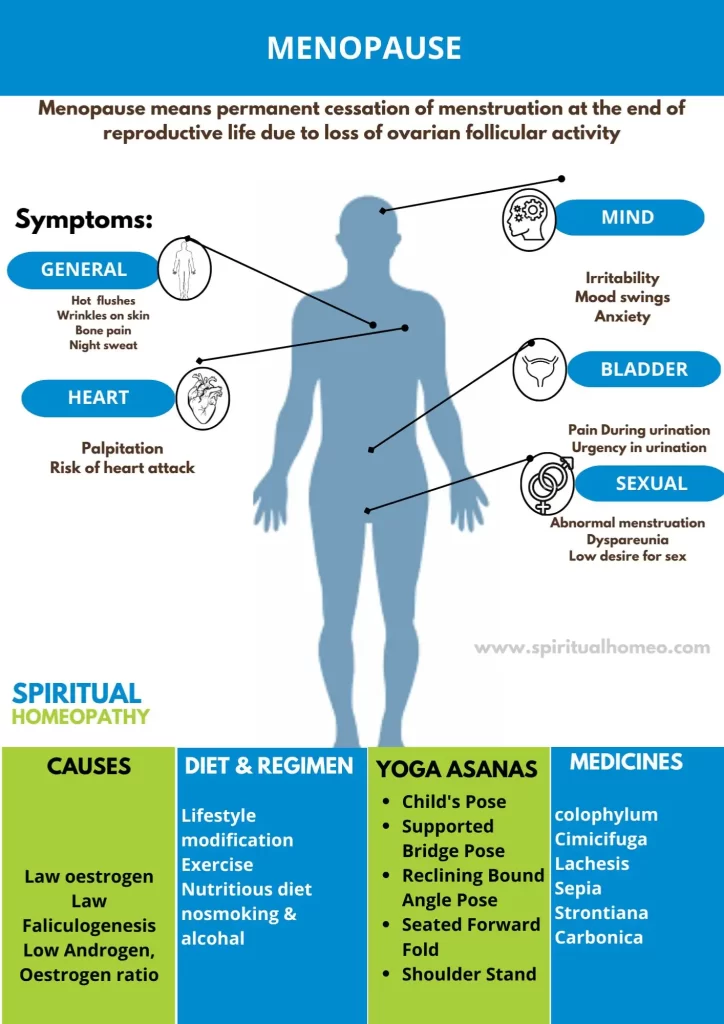
Menopause is defined as the permanent cessation of menstruation, marking the end of a woman’s reproductive life. It occurs due to the loss of ovarian follicular activity and corresponds to the final menstrual period. Clinically, menopause is diagnosed after twelve consecutive months without menstruation, provided no other medical condition is responsible for the absence of periods.
Premenopause: The reproductive phase before the onset of menopausal transition.
Perimenopause: The transitional period around menopause, usually occurring between 40 and 55 years of age, during which menstrual cycles may become irregular.
Postmenopause: The stage following menopause, beginning after twelve months of amenorrhea.
Climacteric: A broader phase encompassing the transition from the reproductive to the non-reproductive stage of life, typically lasting 5–10 years before and after menopause.
The age of menopause is largely genetically determined and generally occurs between 45 and 55 years, with an average age of around 50 years. Factors such as age at menarche, number of pregnancies, lactation, or use of oral contraceptives do not significantly influence menopausal timing. However, women with lower body weight may experience menopause earlier, while cigarette smoking and severe malnutrition are associated with earlier onset.
With increasing life expectancy, many women spend nearly one-third of their lives in the postmenopausal period. Estrogen deficiency during this phase is associated with long-term physiological and metabolic changes, including effects on bone health, cardiovascular function, and overall quality of life.
The menopausal transition involves progressive changes in the hypothalamic–pituitary–gonadal axis. As ovarian follicles decline, their responsiveness to pituitary gonadotropins decreases, leading to impaired folliculogenesis and reduced estradiol production.
The decline in estrogen removes negative feedback on the hypothalamic–pituitary axis, resulting in elevated levels of follicle-stimulating hormone (FSH). Reduced inhibin production from granulosa cells further contributes to this hormonal imbalance. These changes commonly lead to irregular menstrual cycles, anovulation, and, in some cases, endometrial hyperplasia during the perimenopausal phase. Menstrual cycles often shorten due to a reduced follicular phase, while the luteal phase generally remains unchanged. Ultimately, when ovarian follicles are depleted or become unresponsive, estradiol levels fall significantly, leading to cessation of menstruation.
After menopause, ovarian stromal cells continue to produce androgens such as androstenedione and testosterone under the influence of increased luteinizing hormone (LH). Peripheral conversion of these androgens to estrone in adipose tissue partially contributes to circulating estrogen levels. As a result, the estrogen-to-androgen ratio declines, which may lead to physical changes such as increased facial hair or voice changes.
Women with higher body weight may have a relatively lower risk of osteoporosis due to greater conversion of androgens to estrone. However, they may have a higher risk of endometrial hyperplasia and endometrial carcinoma.
Clinical evaluation and guidance are recommended to assess symptoms and long-term health considerations during menopause. Consultations at Spiritual Homeopathy Clinic are available across multiple branches in Hyderabad, as well as through online and international consultation options.
Menopause marks the natural end of a woman’s menstrual cycles and typically occurs between the ages of 45 and 55. It is defined as the permanent cessation of menstruation for twelve consecutive months and results from a gradual decline in ovarian function, leading to reduced production of reproductive hormones such as estrogen and progesterone. Menopause may occur due to several natural or medical factors, and understanding these causes helps guide appropriate care and monitoring.
Description:
The most common cause of menopause is the age-related decline in ovarian function. As women approach their late 40s and early 50s, the ovaries produce fewer eggs and lower levels of estrogen and progesterone, eventually leading to the cessation of menstruation.
Onset:
Natural menopause usually occurs between 45 and 55 years of age, with an average age of around 51.
Process:
The transition phase, known as perimenopause, is gradual and may last several years. During this time, women often experience changes in menstrual regularity and symptoms related to hormonal fluctuations.
Description:
Premature menopause occurs when menopause begins before the age of 40. It is often associated with medical conditions or interventions that affect ovarian function.
Causes include:
Genetic factors: Family history or inherited conditions may increase the risk.
Autoimmune disorders: Conditions such as rheumatoid arthritis or lupus may lead to immune-mediated ovarian damage.
Chromosomal abnormalities: Disorders like Turner syndrome can result in early ovarian failure.
Idiopathic causes: In some cases, no specific cause is identified.
Description:
Surgical menopause occurs following procedures that remove ovarian tissue, leading to an immediate reduction in hormone production.
Causes include:
Oophorectomy: Surgical removal of one or both ovaries due to cysts, tumors, or malignancy.
Hysterectomy with oophorectomy: When both the uterus and ovaries are removed, menopause occurs immediately, regardless of age.
Description:
Cancer treatments such as chemotherapy and radiation therapy may damage ovarian tissue and impair hormone production.
Mechanism:
The effect on ovarian function may be temporary or permanent, depending on the treatment type, dosage, and the individual’s age at the time of therapy.
Description:
Primary ovarian insufficiency, also referred to as premature ovarian failure, occurs when the ovaries lose normal function before the age of 40, leading to menopause-like changes.
Possible causes include:
Genetic disorders such as Fragile X syndrome
Autoimmune conditions affecting ovarian tissue
Certain infections, including mumps
Associated endocrine or metabolic disorders
Description:
Lifestyle and environmental factors may influence the timing of menopause, although they are not direct causes.
Influencing factors include:
Smoking: Associated with earlier menopause due to its impact on ovarian health
Body mass: Lower body weight may be linked to earlier menopause, while higher body weight may delay onset
Diet and nutrition: Nutritional deficiencies can affect hormonal balance
Physical stress: High physical exertion or chronic stress may contribute to hormonal disruption
Description:
Certain gynecological conditions can affect ovarian function and influence menopausal timing.
Examples include:
Endometriosis: May damage ovarian tissue and alter hormone production
Polycystic Ovary Syndrome (PCOS): While not a direct cause of menopause, PCOS can affect menstrual patterns and reproductive aging
Description:
Disorders involving endocrine glands can influence menstrual regularity and menopausal timing.
Causes include:
Thyroid disorders: Both hypo- and hyperthyroidism can disrupt menstrual cycles
Pituitary disorders: As the pituitary gland regulates ovarian hormones, dysfunction may affect ovarian activity
Since the causes and onset of menopause vary widely, evaluation and care are usually individualized based on age, symptoms, and overall health. Consultation services at Spiritual Homeopathy Clinic are available across multiple branches in Hyderabad, as well as through online and international consultations.
Menopause is a natural biological process that marks the end of a woman’s reproductive years. It is clinically diagnosed after twelve consecutive months without a menstrual period. Depending on age, cause, and timing, menopause may present in different forms. Understanding these types helps in recognizing patterns and planning appropriate care.
Definition:
Natural menopause is the most common type and occurs as a part of the normal aging process, when ovarian function gradually declines and the production of estrogen and progesterone reduces.
Key Features:
Age of onset: Usually between 45 and 55 years, with an average age of around 51
Transition period: Includes perimenopause, during which hormonal fluctuations may cause cycle irregularities
Duration: The transition can span several years, and symptoms such as hot flashes, irregular periods, and mood changes may occur
Definition:
Early menopause refers to menopause occurring before the age of 40. It may be associated with genetic, autoimmune, or environmental factors.
Key Features:
Age of onset: Earlier than the typical age range
Causes: May be linked to premature ovarian dysfunction
Health considerations: Reduced estrogen levels may influence bone health, cardiovascular health, and fertility
Common contributing factors:
Genetics: Family history of early menopause
Autoimmune disorders: Conditions such as rheumatoid arthritis or lupus
Lifestyle factors: Smoking, low body weight, and prolonged physical or emotional stress
Definition:
Premature menopause occurs when menstrual cycles stop before the age of 40, often due to medical conditions or interventions.
Key Features:
Age of onset: Before 40 years, sometimes unexpectedly
Causes: Can include surgery, chemotherapy, or radiation therapy
Impact on fertility: Ovarian hormone levels decline significantly, affecting reproductive potential
Common causes:
Surgical factors: Removal of ovaries for medical reasons
Cancer treatments: Therapies that damage ovarian tissue
Genetic or autoimmune causes: In some cases, the cause may remain unclear
Definition:
Surgical menopause occurs when both ovaries are removed, often during a hysterectomy, leading to an immediate cessation of ovarian hormone production.
Key Features:
Abrupt onset: Symptoms appear suddenly following bilateral oophorectomy
Symptom intensity: The rapid drop in estrogen may result in more pronounced menopausal symptoms
Permanent: Hormonal changes are irreversible due to ovarian removal
Causes:
Hysterectomy with oophorectomy: Removal of the uterus along with both ovaries
Bilateral oophorectomy: Performed for conditions such as ovarian disease or high genetic risk
Since the type and timing of menopause vary, assessment is usually individualized. Consultation support is available at Spiritual Homeopathy Clinic through its Hyderabad branches, as well as via online and international consultations.
Menopause brings a variety of physical, emotional, and cognitive changes due to hormonal fluctuations. The onset and intensity of symptoms can vary from woman to woman, and some may experience only mild changes, while others may face more noticeable effects. Recognizing these signs can help in managing the transition effectively.
Hot Flashes and Night Sweats
Sudden sensations of heat, often accompanied by sweating, flushing, or a rapid heartbeat. Night sweats can disrupt sleep and affect daily functioning.
Irregular Periods
Cycles may become shorter, longer, lighter, or heavier before stopping completely. This is common during the perimenopause transition.
Sleep Disturbances
Difficulty falling asleep, staying asleep, or waking up too early can result from hormonal changes and associated symptoms like night sweats.
Mood Changes
Irritability, anxiety, and mood swings may occur. Some women also experience low motivation or depressive feelings.
Cognitive Changes
Mild difficulties with memory, concentration, or focus are sometimes reported during menopause.
Vaginal and Urinary Changes
Reduced estrogen can lead to vaginal dryness, discomfort during intercourse, or urinary urgency and infections.
Physical Changes
Weight gain, especially around the abdomen
Decreased muscle mass and bone density
Thinning hair or changes in skin elasticity
Reduced Libido
Hormonal fluctuations may lead to decreased sexual desire or arousal.
Note: Symptoms can differ in severity and duration. Frequent, persistent, or severe symptoms may require professional assessment to manage health and quality of life effectively.
At Spiritual Homeopathy Clinic, women experiencing menopausal symptoms can consult our experts at multiple branches in Hyderabad, including Kukatpally, Chandanagar, Dilsukhnagar, and Nallagandla. Online and international consultations are also available, allowing individualized care based on overall health, lifestyle, and symptom profile.
Navigating menopause can be challenging, but a balanced diet and lifestyle regimen can help alleviate many common symptoms, such as hot flashes, mood swings, sleep disturbances, weight gain, and bone health issues. The key to managing menopause through diet is focusing on foods that support hormonal balance, cardiovascular health, bone strength, and overall well-being. Here’s an effective diet and regimen plan to help you transition through menopause more comfortably:
Phytoestrogens are plant-based compounds that mimic the action of estrogen in the body. They can help balance hormone levels and reduce symptoms like hot flashes and night sweats.
Best Sources of Phytoestrogens:
Soy Products: Tofu, tempeh, edamame, soy milk, and miso.
Flaxseeds: Ground flaxseeds are among the richest plant sources of phytoestrogens.
Legumes: Chickpeas, lentils, and beans help support hormonal balance.
Sesame Seeds: High in lignans, a type of phytoestrogen.
Regimen Tip: Incorporate these foods into your meals a few times per week, such as adding soy milk to smoothies, sprinkling flaxseeds on your oatmeal, or adding beans to salads and stews.
During menopause, the decline in estrogen increases the risk of osteoporosis (bone density loss). It’s crucial to include calcium and vitamin D-rich foods to help maintain strong bones.
Calcium-Rich Foods:
Dairy products: Milk, yogurt, and cheese.
Leafy Greens: Kale, bok choy, collard greens.
Fortified Plant-Based Milks: Almond milk, soy milk, and oat milk.
Tofu (calcium-set) and fortified cereals.
Vitamin D-Rich Foods:
Fatty Fish: Salmon, mackerel, sardines.
Fortified Foods: Fortified orange juice, cereals, and dairy.
Eggs and mushrooms (especially those exposed to sunlight).
Regimen Tip: Aim for calcium and vitamin D through meals daily, such as enjoying yogurt with berries for breakfast or grilled salmon for dinner.
Omega-3 fatty acids are essential for managing inflammation and protecting against heart disease, which becomes a higher risk post-menopause.
Best Sources of Omega-3s:
Fatty Fish: Salmon, mackerel, sardines, and tuna.
Plant-Based Sources: Chia seeds, flaxseeds, walnuts, and hemp seeds.
Regimen Tip: Aim for at least two servings of fatty fish per week, or add chia seeds or flaxseeds to smoothies, yogurt, or salads.
Fiber aids in digestion, supports weight management, and may lower the risk of certain cancers.
Best Fiber Sources:
Whole Grains: Brown rice, quinoa, oats, barley, and whole wheat bread.
Fruits and Vegetables: Apples, pears, berries, leafy greens, sweet potatoes, and broccoli.
Legumes: Beans, lentils, and peas.
Regimen Tip: Include fiber-rich foods with each meal, such as adding vegetables to salads, snacking on fruits, or having a whole-grain wrap for lunch.
Magnesium can help manage sleep disturbances and anxiety, which are common symptoms during menopause.
Best Sources of Magnesium:
Leafy Greens: Spinach, Swiss chard, and kale.
Nuts and Seeds: Almonds, sunflower seeds, and pumpkin seeds.
Whole Grains: Brown rice, quinoa, oats.
Regimen Tip: Add magnesium-rich foods like spinach to salads or smoothies, or enjoy a small handful of nuts as a bedtime snack.
Antioxidants help combat oxidative stress and reduce inflammation, improving skin elasticity and overall health during menopause.
Best Antioxidant Sources:
Berries: Blueberries, strawberries, raspberries, and blackberries.
Nuts and Seeds: Almonds, walnuts, and sunflower seeds.
Green Tea: Rich in antioxidants and metabolism-boosting properties.
Regimen Tip: Incorporate antioxidant-rich foods into snacks and meals, such as berries with breakfast or green tea in the afternoon.
While focusing on nutrient-dense foods, certain items can exacerbate menopause symptoms and should be limited or avoided.
Excessive caffeine intake can disrupt sleep and trigger hot flashes. Limit coffee, tea, and caffeinated beverages.
Alcohol can worsen hot flashes, night sweats, and sleep issues. It is best to drink in moderation or avoid alcohol altogether.
Spicy foods can trigger hot flashes in some women. If you experience this symptom, consider reducing spicy food intake.
Processed foods high in sodium and sugar can contribute to weight gain, bloating, and increased risk of chronic conditions like hypertension and diabetes.
Refined sugars can cause blood sugar fluctuations, leading to weight gain and increased hunger. Opt for natural sweeteners or fruits to satisfy sweet cravings.
Managing menopause through a well-balanced diet and regimen is an effective way to ease the symptoms and support overall well-being. By focusing on phytoestrogens, calcium, omega-3 fatty acids, fiber, magnesium, and antioxidants, you can maintain a healthy hormonal balance, protect your heart, strengthen your bones, and enhance your skin health. Additionally, avoiding certain foods like caffeine, alcohol, and processed items can help prevent symptom flare-ups.
With the right dietary and lifestyle adjustments, you can navigate menopause with greater comfort and confidence.
Yoga can be a supportive complementary practice during menopause by promoting relaxation, improving flexibility, and supporting overall physical and emotional well-being. Certain asanas may help ease common menopausal concerns such as stiffness, stress, fatigue, and sleep disturbances. Yoga also supports circulation and mindful breathing, which can contribute to better daily functioning during this phase.
Bhujangasana (Cobra Pose) – Helps gently open the chest, improve posture, and support spinal flexibility.
Setu Bandhasana (Bridge Pose) – Assists in opening the chest and hips, supports circulation, and encourages relaxation.
Anulom Vilom (Nadi Shodhana Pranayama) – A breathing practice that helps calm the nervous system, supports emotional balance, and encourages mindful breathing.
Ustrasana (Camel Pose) – Gently stretches the chest and front body, supporting breathing capacity and flexibility when practiced carefully.
Important Note:
These practices should be performed gently and within individual comfort limits. Yoga is intended as a supportive measure and should not replace medical evaluation or treatment. Consultation with a healthcare professional is advised if symptoms are severe or persistent.
Homeopathy is a gentle, natural system of healing that focuses on treating the root cause of illness, not just the symptoms. It works in harmony with your body’s innate ability to heal itself—without causing side effects. Safe for all ages and tailored to each individual, homeopathy supports long-term health and well-being.
Whether you’re managing a chronic condition or seeking relief from acute symptoms, homeopathy offers a holistic, personalized path to recovery.
At Spiritual Homeopathy, we are deeply committed to helping you achieve true wellness—physically, emotionally, and spiritually. Our mission is to provide compassionate, individualized care using time-tested homeopathic principles and modern clinical insight.
We don’t just treat symptoms; we focus on identifying and resolving the underlying imbalances that cause illness, so you can enjoy lasting health and vitality.
At the heart of our practice is a unique approach that blends classical homeopathy with a deep respect for the spiritual and emotional dimensions of healing. Here’s what sets us apart:
✅ Root-Cause Healing: We look beyond surface symptoms to identify and treat the root cause.
✅ Personalized Treatment: Every remedy and plan is uniquely tailored to your body, lifestyle, and emotional needs.
✅ Experienced Team: Our skilled and empathetic homeopathy doctors in Hyderabad offer both in-clinic and online consultations for your convenience.
✅ Safe & Non-Toxic: Our remedies are gentle, non-addictive, and free from harmful chemicals.
✅ Spiritual Care: We understand the mind-body-spirit connection and integrate it into every treatment.
We take time to listen—really listen. During your initial session, our experts assess your health history, lifestyle, emotional state, and current symptoms to develop a treatment plan that’s customized just for you.
We offer a wide range of homeopathic medicines, carefully selected to suit your individual condition—whether you’re dealing with an acute illness like bronchitis or a long-standing issue like digestive problems, skin disorders, or allergies.
Healing is a journey, and we’re with you every step of the way. Regular follow-ups help us monitor your progress, fine-tune your treatment, and ensure you’re getting the best possible outcome.
At Spiritual Homeopathy, your well-being is our highest priority. Whether you’re seeking relief from specific health issues or aiming to boost your overall vitality, we’re here to guide you with care, empathy, and clinical excellence.
Ready to experience the power of natural, root-cause healing?
Book your consultation with Spiritual Homeopathy now — in person or online — and take the first step toward balanced, vibrant health.
It is advisable to consult a healthcare professional if menopausal symptoms become frequent, severe, or begin to affect daily activities, sleep, or emotional well-being. Early evaluation can help identify contributing factors and support individualized care.
Seek consultation if you experience:
Hot flashes or night sweats that disrupt sleep
Mood swings, anxiety, or depression affecting daily life
Irregular or heavy bleeding during perimenopause
Vaginal dryness, discomfort, or urinary changes
Sudden weight changes, fatigue, or sleep disturbances
Symptoms not improving with lifestyle or dietary adjustments
At Spiritual Homeopathy Clinic, consultations are available at multiple branches across Hyderabad, including Kukatpally, Chandanagar, Dilsukhnagar, and Nallagandla. Online and international consultations are also offered for patients unable to visit in person. A professional assessment ensures a personalized care plan tailored to your overall health and menopausal stage.
For appointments or guidance, contact 9069 176 176.
Menopause is the stage in a woman's life when menstrual periods stop permanently, meaning she can no longer get pregnant. It is a natural biological process diagnosed after 12 consecutive months without a period, typically occurring between ages 45 and 55.
After menopause—defined as 12 consecutive months without a period—a woman cannot get pregnant naturally. The ovaries stop releasing eggs and hormone levels no longer support natural conception.
Menopause is primarily caused by the natural aging of the ovaries, which produce fewer reproductive hormones—mainly estrogen and progesterone—over time. This natural decline means the ovaries no longer release eggs, eventually stopping menstruation altogether. It is confirmed when a person has gone 12 consecutive months without a period.
Treating menopause naturally involves simple yet impactful lifestyle adjustments and dietary changes to manage hot flashes, mood swings, and bone health. Key steps include incorporating phytoestrogen-rich foods like soy and flaxseed, exercising regularly, avoiding hot flash triggers like caffeine and alcohol, and taking calcium and vitamin D supplements.
You can't control the genetic timeline, but you can support it. Dietary patterns have been associated with menopause arriving up to 3.3 years later (oily fish) or up to 1.5 years earlier (refined carbohydrates) in large-scale research. Lifestyle factors — exercise, not smoking, healthy weight — add further influence.
Menopause is a point in time when you've gone 12 consecutive months without a menstrual period. It happens, on average, at age 52. It's a natural process that occurs when your ovaries stop producing reproductive hormones.