
Coma is a life-threatening medical emergency in which a person remains unconscious for a prolonged period and is unable to respond to their surroundings. It can result from serious conditions such as traumatic brain injury, stroke, brain tumors, lack of oxygen to the brain, severe infections, uncontrolled diabetes, poisoning, or drug and alcohol overdose. A person in a coma cannot be awakened, does not respond to pain, light, or sound in a normal way, and requires immediate medical evaluation and intensive care. Early diagnosis and prompt treatment of the underlying cause are essential to improve the chances of recovery and reduce the risk of long-term neurological complications.
At Spiritual Homeopathy, we recognize that a coma requires immediate emergency medical treatment in a hospital. Homeopathy is not a substitute for emergency or critical care. However, after the patient has been medically stabilized, homeopathic care may be considered as a complementary approach during the recovery and rehabilitation phase. Our experienced homeopathic doctors carefully evaluate each patient’s medical history, neurological status, recovery progress, and overall health before preparing an individualized treatment plan. Our holistic approach focuses on supporting overall well-being, promoting recovery, improving quality of life, and complementing conventional rehabilitation through safe and personalized homeopathic care.
We provide personalized homeopathic supportive care for post-coma recovery in Hyderabad through our clinics, along with online homeopathy consultations for patients across India and in more than 100 countries worldwide. If you are looking for the best homeopathy doctor for post-coma supportive care or a holistic approach to neurological rehabilitation, Spiritual Homeopathy is committed to providing compassionate, patient-centered care that complements your ongoing medical treatment.
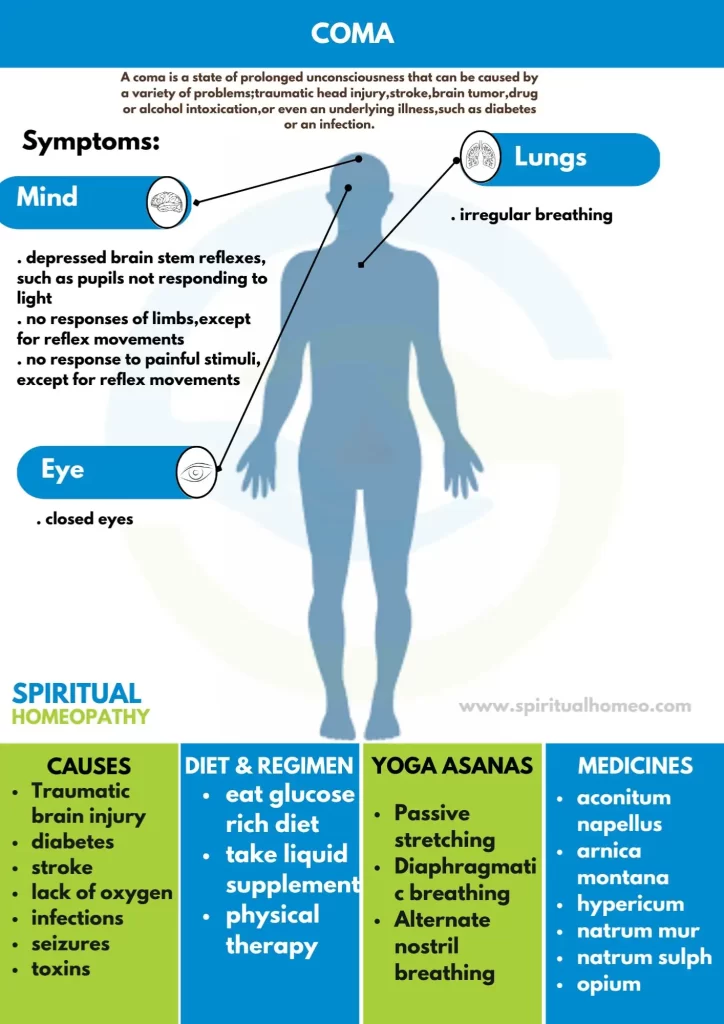
A coma is a prolonged state of unconsciousness in which a person cannot be awakened. Unlike sleep, an individual in a coma does not respond to the surrounding environment in a usual or purposeful manner. It is important to understand that coma is not the same as brain death. In a coma, the person is alive, but unable to respond or interact normally.
The level of consciousness during a coma can vary, and medical research continues to explore how much awareness may be present in such states. The duration of a coma may range from a few days or weeks to several years, depending on the severity and nature of the underlying cause.
At Spiritual Homeopathy Clinic, consultations are available across multiple branches in Hyderabad, as well as through online and international consultation services, for supportive guidance alongside standard medical care.
A coma is considered a medical emergency that requires immediate medical attention. Prompt action is often essential to protect life and support brain function. Individuals in a coma do not respond to external stimuli such as pain, light, or sound in the typical way and do not perform voluntary actions.
Although the person remains unconscious, the body continues to follow basic physiological processes. Breathing and circulation are maintained, but higher cognitive functions are suppressed. According to the National Institutes of Neurological Disorders and Stroke (NINDS), people in a coma may show reflexive movements such as grimacing, laughing, or crying; however, these responses are involuntary and not a sign of conscious awareness.
A coma can be triggered by a variety of medical conditions and external factors. Some of the common causes include:
Accidents such as road traffic collisions, sports injuries, or violent assaults that result in a blow to the head can lead to coma.
When the brain swells due to trauma, it increases pressure within the skull. This pressure may cause the brain to shift downward toward the brain stem, potentially damaging the Reticular Activating System (RAS), which plays a key role in arousal and awareness.
A stroke, caused by blocked arteries or rupture of a blood vessel, can interrupt blood flow to the brain and may result in coma, depending on the area and severity of damage.
Brain tumors or tumors affecting the brain stem can exert pressure on vital brain structures, potentially leading to loss of consciousness and coma.
Severe fluctuations in blood sugar levels, either very high (hyperglycemia) or very low (hypoglycemia), can result in a diabetic coma. This condition may improve once blood sugar levels are medically stabilized.
Adequate oxygen supply is essential for brain function. Conditions such as cardiac arrest, drowning, choking, or severe respiratory failure can reduce oxygen delivery to the brain (hypoxia or anoxia), leading to coma. In some cases, individuals are placed in a medically induced coma following resuscitation.
Serious infections such as encephalitis (inflammation of the brain) or meningitis (inflammation of the tissues surrounding the brain and spinal cord) can cause brain swelling and may lead to coma.
Bleeding within the brain, often related to high blood pressure, aneurysms, or tumors, can increase intracranial pressure. This pressure may shift brain structures and impair the RAS, contributing to coma.
While a single seizure usually does not cause coma, prolonged or repeated seizures (status epilepticus) can prevent the brain from recovering, leading to unconsciousness or coma.
Toxic substances can accumulate in the body due to medical conditions or environmental exposure. Elevated levels of substances such as ammonia (liver disease), carbon dioxide (severe asthma), or urea (kidney failure) may impair brain function and result in coma.
Excessive intake of drugs or alcohol can interfere with normal neuronal activity, leading to depressed consciousness or coma.
Understanding the underlying cause is essential, as management and supportive care are guided by individual medical factors and clinical evaluation.
Coma can present in various forms, depending on the underlying cause and the extent of brain function affected. The primary types include:
This condition refers to brain dysfunction commonly associated with confusion or delirium. It is often reversible and arises from systemic illnesses, infections, organ failure, or other medical conditions that interfere with normal brain function. Symptoms may range from mild confusion to severe impairment of mental status.
A persistent vegetative state is a condition of profound unconsciousness in which the individual remains unaware of the surroundings and is unable to perform voluntary movements. Although higher brain functions are absent, basic bodily functions such as breathing, circulation, and sleep-wake cycles may continue. In some cases, limited recovery of wakefulness may occur; however, higher cognitive functions generally do not return.
A medically induced coma is a temporary and carefully controlled state of unconsciousness used in critical care settings. It is commonly applied to protect the brain from swelling or further injury, particularly following severe trauma. Brain activity is intentionally suppressed under close monitoring in an intensive care unit to support stabilization and recovery.
Understanding the type of coma is important, as clinical management and supportive care are guided by the underlying condition and individual patient factors.
The signs and symptoms of coma can vary depending on the underlying cause. Common indicators include:
A person in a coma usually has the eyes closed and is unable to open them voluntarily.
There may be reduced or absent brainstem responses, such as pupils failing to react normally to light.
The individual does not demonstrate purposeful movement of the limbs, although involuntary or reflex movements may still be present.
There is typically no conscious response to painful stimuli, apart from reflexive movements that occur without awareness.
Breathing patterns may become irregular, shallow, or abnormal compared to normal respiratory rhythms.
In the period leading up to coma, individuals may show signs such as agitation or confusion, particularly in cases related to hypoglycemia (low blood sugar) or hypercapnia (elevated carbon dioxide levels). Without timely medical intervention, cognitive function may progressively decline, resulting in loss of consciousness and the onset of coma.
If these symptoms are observed or worsen, immediate medical evaluation is essential to determine the cause and initiate appropriate care.
To support overall well-being and help maintain healthy brain function, the following diet and lifestyle measures may be considered:
Avoid overeating, as large portions may lead to drowsiness. Choose moderate servings and pay attention to hunger and fullness cues.
Include a variety of foods to support nutritional balance. Meals should contain appropriate portions of lean proteins, whole grains, fruits, and vegetables.
Excessive alcohol consumption can interfere with sleep patterns and cognitive function. Moderation is advised.
Adequate fluid intake throughout the day is important, as dehydration may affect both physical and mental performance.
Regular, restful sleep supports overall health and helps maintain alertness during waking hours.
Exposure to natural or bright light during the day may help regulate circadian rhythm and support alertness.
Brief naps of 10–20 minutes can help restore focus without disturbing nighttime sleep.
Water and non-caffeinated herbal beverages may be preferred to maintain hydration and reduce excessive stimulation.
Activities such as walking, jogging, or cycling may support circulation, energy levels, and general well-being.
Consuming smaller, frequent meals instead of heavy meals may help maintain stable energy levels.
Probiotic-rich foods such as yogurt or fermented foods may support digestive health.
Carbohydrates with a low glycemic index, including whole grains and legumes, can help sustain energy levels.
Dietary and regimen guidance may vary based on individual health status, underlying conditions, and clinical advice.
Conducted by a trained therapist, passive yoga therapy involves gentle movements and positioning intended to:
Prevent muscle atrophy
Improve blood circulation
Reduce joint stiffness
Encourage neuromuscular response
This approach is typically considered during early recovery phases when voluntary movement is limited.
Once the patient is awake and responsive, simple breathing techniques may be introduced under guidance, such as:
Anulom Vilom (Alternate Nostril Breathing): May support oxygen balance and promote calmness
Bhramari (Bee Breath): Often used to help soothe the nervous system
These practices should only be initiated when medically appropriate.
With adequate strength and medical approval, selected gentle postures may support coordination and emotional well-being, including:
Balasana (Child’s Pose): Promotes relaxation and grounding
Supta Baddha Konasana (Reclining Bound Angle Pose): Encourages physical and mental relaxation
Setu Bandhasana (Bridge Pose): May help support circulation
Tadasana (Mountain Pose): Assists with posture and body awareness
Yoga practices should be performed only under professional supervision, such as a physiotherapist, neurorehabilitation specialist, or medically trained yoga therapist
Yoga is supportive in nature and does not replace standard medical or neurological care
Each patient’s condition is different, and plans should be individualized based on medical assessment
At Spiritual Homeopathy Clinic, lifestyle and supportive care guidance may be discussed as part of an individualized consultation plan, alongside conventional medical management.
A coma is a state of prolonged unconsciousness resulting from severe illness or injury affecting brain function. It may occur due to conditions such as trauma, stroke, infections, metabolic disturbances, or lack of oxygen to the brain. Management of coma primarily requires emergency and specialized medical care. Homeopathy is considered only as a supportive approach, alongside conventional medical treatment, during recovery or stabilization phases when clinically appropriate.
Homeopathy follows an individualized care approach that takes into account the person’s medical history, underlying causes, and overall health status. Rather than addressing unconsciousness alone, supportive homeopathic care focuses on factors that may influence neurological balance and general well-being. This approach is generally well-tolerated under professional guidance and does not replace standard medical care.
Supportive homeopathic care in coma-related conditions focuses on overall regulation rather than direct intervention in emergency states. The aim is to complement long-term management plans guided by treating physicians.
Personalized Assessment:
A detailed review of medical history, triggering factors, neurological status, and recovery stage helps guide individualized care planning.
Support for Systemic Balance:
Homeopathic care considers the interaction between neurological function and other body systems, with the intention of supporting overall balance during recovery.
Addressing Contributing Factors:
Factors such as metabolic imbalance, infections, trauma history, or prolonged illness are considered as part of a broader supportive framework.
Emotional and Caregiver Support:
Long-term unconsciousness can impact both patients and caregivers. Homeopathic consultations may include supportive guidance addressing emotional and psychological aspects within a holistic care plan.
Homeopathy is used only as a complementary and supportive modality in coma-related care, particularly during rehabilitation or recovery phases, and always alongside ongoing medical supervision. The focus remains on consistency, individualized planning, and long-term support rather than immediate neurological intervention.
Supportive measures may be discussed as part of an overall care plan, depending on medical advice and recovery stage:
Maintaining appropriate nutrition and hydration as advised by healthcare professionals
Ensuring regular monitoring and follow-up
Supporting sleep–wake regulation when consciousness improves
Stress management and emotional support for caregivers
For coma-related conditions, medical evaluation and neurological care are essential. At Spiritual Homeopathy Clinic, supportive consultations are available through multiple branches in Hyderabad, as well as online and international consultation options, to discuss individualized supportive care in coordination with standard medical treatment.
Homeopathy, when used responsibly, aims to support overall balance and recovery under professional supervision, without replacing essential medical or emergency care.
Immediate medical consultation is essential if a person shows signs of altered consciousness or does not respond normally to their surroundings. Early evaluation helps identify the underlying cause and supports timely medical management.
Seek urgent medical attention if you observe:
Loss of consciousness or inability to awaken
No response to verbal commands, touch, or pain
Abnormal or irregular breathing patterns
Sudden confusion progressing to unresponsiveness
Seizures followed by prolonged unconsciousness
Head injury associated with loss of awareness
Any delay in assessment may increase the risk of complications and affect neurological outcomes.
At Spiritual Homeopathy Clinic, consultations are available across multiple branches in Hyderabad, along with online and international consultation options. Supportive guidance may be discussed alongside standard medical and neurological care, based on individual clinical status.
For consultation-related guidance, contact 9069 176 176.
A coma typically lasts a few days to a few weeks, rarely extending beyond four weeks. However, with advanced life support, some individuals can remain in a coma or transition into a vegetative state for months or even years.
A coma is a state of deep unconsciousness that occurs when there is severe disruption or damage to the brain's arousal systems, often the reticular activating system (RAS). A medical emergency, it is typically caused by traumatic brain injuries (TBIs), strokes, lack of oxygen, severe infections, drug overdoses, or extreme metabolic imbalances.
In a coma, a person enters a state of deep unconsciousness where they cannot be awakened, do not respond to pain, light, or sound, and show no voluntary actions. Caused by brain injuries, strokes, or drug overdoses, the brain's arousal systems are shut down, though basic involuntary functions like breathing and heart rate usually continue.
Yes, a person can come out of a coma. Recovery usually happens gradually over days to weeks, though some can take months. Many people make a full recovery, while others may experience lasting physical or cognitive disabilities that require ongoing therapy and support.
Their brains often show no signs of the normal sleep-wakefulness cycle, which means they are unlikely to be dreaming. Yet many people who have recovered from comas report dreams into which something of the outside world penetrated. Others recall nightmares that seemed to go on and on.
A coma is a deep state of unconsciousness where the brain is injured but still alive. In contrast, brain death is the permanent, irreversible cessation of all brain activity, meaning the person is legally and medically deceased.
WhatsApp us