
Cushing’s Syndrome is a hormonal disorder that occurs when the body is exposed to high levels of the hormone cortisol for a prolonged period. This may result from long-term use of corticosteroid medications or because the body produces too much cortisol due to conditions affecting the pituitary gland, adrenal glands, or other hormone-producing tissues. Common symptoms include weight gain around the abdomen and face (moon face), a fatty hump between the shoulders, thinning of the skin, easy bruising, muscle weakness, fatigue, high blood pressure, elevated blood sugar, mood changes, and irregular menstrual cycles in women. If left untreated, Cushing’s syndrome can increase the risk of diabetes, osteoporosis, heart disease, and other serious health complications. Early diagnosis and appropriate medical evaluation are essential for effective treatment and long-term health.
At Spiritual Homeopathy, we understand that Cushing’s syndrome requires proper medical evaluation and management by an endocrinologist, especially when it is caused by hormone-producing tumors or prolonged corticosteroid use. Homeopathy is not a replacement for conventional medical treatment in such cases. However, our experienced homeopathic doctors provide individualized supportive care by carefully evaluating each patient’s symptoms, medical history, hormonal health, lifestyle, stress levels, and overall well-being. Our holistic approach focuses on supporting overall wellness, improving quality of life, promoting general health, and complementing conventional treatment through safe and personalized homeopathic care.
We provide personalized homeopathic supportive care for Cushing’s syndrome in Hyderabad through our clinics, along with online homeopathy consultations for patients across India and in more than 100 countries worldwide. If you are looking for the best homeopathy doctor for supportive care in Cushing’s syndrome, hormonal wellness, or holistic health management, Spiritual Homeopathy is committed to delivering compassionate, patient-centered care that complements your ongoing medical treatment.
Overview
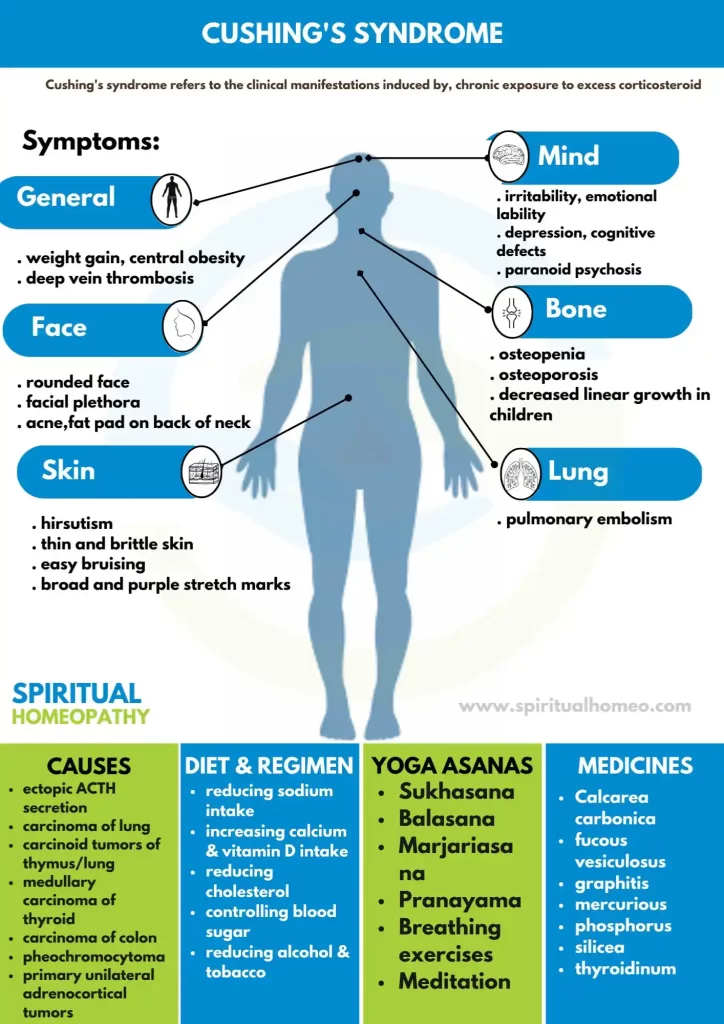
Pituitary corticotrope adenomas account for approximately 70% of endogenous Cushing’s syndrome cases. However, the most common overall cause of Cushing’s syndrome is iatrogenic hypercortisolism, which results from prolonged use of corticosteroid medications.
Cushing’s syndrome is characterized by prolonged exposure to elevated cortisol levels, leading to a range of metabolic, cardiovascular, and musculoskeletal effects. Early evaluation and proper diagnosis are important for managing symptoms and preventing complications.
At Spiritual Homeopathy Clinic, patients can receive guidance and individualized care through in-clinic consultations across multiple Hyderabad branches, as well as online and international consultations for those unable to attend in person.
Causes of Cushing’s Syndrome
Cushing’s syndrome can result from either ACTH-dependent or ACTH-independent mechanisms, reflecting different underlying causes. Understanding these causes helps guide appropriate evaluation and individualized care.
ACTH-Dependent Causes
Cushing’s Disease: Pituitary adenomas that produce excess ACTH, leading to overstimulation of the adrenal glands.
Ectopic ACTH Secretion: Tumors outside the pituitary that secrete ACTH, including:
Small cell carcinoma of the lung
Carcinoid tumors of the thymus or lung
Medullary carcinoma of the thyroid
Colon carcinoma
Pheochromocytoma
ACTH-Independent Causes
Primary Unilateral Adrenocortical Tumors: Adenomas or carcinomas in a single adrenal gland producing excess cortisol.
McCune-Albright Syndrome: A genetic disorder that can cause bilateral adrenal tumors, often due to Gsα mutations.
Primary Pigmented Nodular Adrenocortical Disease: Rare bilateral adrenal gland condition leading to cortisol overproduction.
Macronodular Adrenal Hyperplasia: Enlargement of adrenal glands due to abnormal cell growth, causing excess cortisol.
Spontaneous Cushing’s Syndrome: Cases occurring without external triggers or tumors, where the body produces excess cortisol through endogenous mechanisms.
At Spiritual Homeopathy Clinic, patients can receive professional assessment and individualized guidance through in-clinic, online, or international consultations, ensuring care tailored to the underlying cause and overall health status.
Types of Cushing’s Syndrome
Cushing’s syndrome can be broadly categorized into Exogenous and Endogenous forms, based on whether the cause originates outside or within the body.
1. Exogenous Cushing’s Syndrome
Exogenous Cushing’s syndrome occurs when cortisol-like effects are introduced from outside the body, most commonly due to long-term use of high-dose corticosteroid medications (glucocorticoids).
These medications are often prescribed for conditions such as rheumatoid arthritis, lupus, asthma, or after organ transplants. Injectable corticosteroids used for joint pain, back pain, or bursitis may also contribute.
Some forms of steroid treatment carry minimal risk of causing Cushing’s syndrome, including:
Topical steroid creams for skin conditions like eczema
Inhaled steroids for asthma
According to the National Institute of Diabetes and Digestive and Kidney Diseases (NIDDK), over 10 million people in the United States use glucocorticoids annually, though the exact number who develop Cushing’s syndrome is not clearly known.
2. Endogenous Cushing’s Syndrome
Endogenous Cushing’s syndrome occurs when the body produces excess cortisol internally. Key causes include:
Cushing’s Disease: Excess ACTH production due to a pituitary tumor, overstimulating the adrenal glands.
Adrenal Gland Tumors: Benign or malignant tumors directly producing excess cortisol.
Other Tumors: Rare tumors in organs such as the pancreas, thyroid, thymus, or lungs can trigger excess cortisol production.
Endogenous Cushing’s syndrome arises from internal disruptions of hormone regulation, distinguishing it from exogenous forms caused by external medication.
At Spiritual Homeopathy Clinic, individuals can receive professional evaluation and personalized guidance through in-clinic, online, or international consultations, supporting a tailored approach to symptom management and overall health.
Signs and Symptoms of Cushing’s Syndrome
Cushing’s syndrome affects multiple body systems, leading to a variety of physical, metabolic, and psychological changes. Symptoms can vary depending on the severity and duration of cortisol excess. Early recognition and consultation are important, especially if symptoms are frequent or worsening.
1. Body Fat Distribution:
Weight gain, particularly in the abdominal area (central obesity)
Rounded face (moon face)
Fat pad on the upper back or neck (“buffalo hump”)
2. Skin Changes:
Facial redness (plethora)
Thin, fragile skin prone to bruising
Broad, purple stretch marks (striae)
Acne and excessive hair growth (hirsutism) in women
3. Bone Health:
Osteopenia and osteoporosis, particularly affecting the spine
Increased risk of fractures, especially vertebral
Reduced linear growth in children
4. Muscle Effects:
Muscle weakness, particularly in the upper legs and gluteal region
Difficulty climbing stairs or rising from a seated position (proximal myopathy)
5. Cardiovascular Symptoms:
High blood pressure (hypertension)
Low potassium levels (hypokalemia)
Fluid retention (edema)
Increased risk of atherosclerosis
6. Metabolic Effects:
Glucose intolerance or diabetes
Dyslipidemia, including elevated cholesterol and triglycerides
7. Reproductive System Changes:
Reduced libido
Women may experience absent or irregular menstruation (amenorrhea)
8. Central Nervous System Effects:
Mood changes, including irritability or emotional lability
Depression and occasional cognitive difficulties
In severe cases, psychiatric symptoms such as paranoid psychosis
9. Blood and Immune System Changes:
Higher susceptibility to infections
Elevated white blood cell count with low eosinophils
Increased risk of blood clots (DVT, pulmonary embolism)
Because symptoms can affect multiple organs, professional evaluation is essential for proper diagnosis and to guide individualized treatment. At Spiritual Homeopathy Clinic, patients can receive in-clinic, online, or international consultations, allowing for a tailored approach to long-term symptom management.
Diet and Regimen for Managing Cushing’s Syndrome
Managing Cushing’s syndrome involves careful attention to diet and lifestyle to help control symptoms, support overall health, and reduce complications. Recommendations may vary based on individual needs, so professional guidance is essential.
1. Reduce Sodium Intake:
Lowering sodium helps manage high blood pressure and fluid retention, which are common in Cushing’s syndrome. Focus on fresh, unprocessed foods and limit high-sodium processed foods.
2. Increase Calcium and Vitamin D:
Cushing’s syndrome can weaken bones and increase the risk of osteoporosis. Adequate calcium and vitamin D intake supports bone strength. Include dairy products, leafy greens, and fortified foods in your diet.
3. Maintain Healthy Cholesterol Levels:
Dyslipidemia is a common feature of Cushing’s syndrome. A heart-healthy diet rich in fruits, vegetables, whole grains, and lean proteins can help maintain balanced cholesterol and reduce cardiovascular risk.
4. Control Blood Sugar:
Glucose intolerance or diabetes may occur due to elevated cortisol levels. Focus on high-fiber, whole-grain, and low-glycemic index foods to support stable blood sugar levels.
5. Limit Alcohol and Tobacco:
Alcohol and tobacco can worsen complications related to heart, liver, and respiratory health. Reducing or avoiding these substances supports overall well-being.
Additional Lifestyle Measures:
Engage in moderate physical activity, such as walking or yoga, to improve circulation and maintain muscle strength.
Practice stress management techniques, including meditation or deep-breathing exercises, as cortisol levels are influenced by stress.
Consulting a healthcare provider, dietitian, or homeopathy practitioner at Spiritual Homeopathy Clinic—available at multiple Hyderabad branches or through online and international consultations—can help tailor a personalized diet and lifestyle plan for long-term management.
Yoga and Lifestyle for Cushing’s Syndrome
Yoga can be a helpful complementary practice for individuals managing Cushing’s syndrome. It supports stress reduction, improves strength, and promotes overall well-being. While yoga does not directly treat the condition, it can support physical and emotional health, addressing areas often affected by Cushing’s syndrome, such as weight gain, muscle weakness, and emotional stress.
Recommended Yoga Asanas:
Tadasana (Mountain Pose)
Benefits: Improves posture, strengthens legs, and enhances focus.
How to Perform: Stand tall with feet together and arms at your sides. Lift your chest, engage your thighs, and reach arms overhead. Hold for 30 seconds, breathing deeply.
Bhujangasana (Cobra Pose)
Benefits: Strengthens the spine, improves posture, and stretches the chest and abdomen.
How to Perform: Lie on your stomach, palms under shoulders. Lift your chest slowly, arching your back. Keep elbows slightly bent. Hold 20–30 seconds.
Setu Bandhasana (Bridge Pose)
Benefits: Strengthens glutes and lower back, stretches the chest, and helps reduce stress.
How to Perform: Lie on your back, knees bent, feet flat. Lift hips toward the ceiling, keeping thighs parallel. Hold 20–30 seconds.
Adho Mukha Svanasana (Downward-Facing Dog)
Benefits: Strengthens arms, legs, and core, improves circulation, and reduces stress.
How to Perform: Begin on hands and knees, lift hips, straighten arms and legs. Head between arms. Hold 30 seconds.
Virabhadrasana II (Warrior II Pose)
Benefits: Builds leg strength and stability, opens the chest.
How to Perform: Stand with legs wide, arms extended. Bend one knee, keeping the other straight. Turn head to face the bent knee. Hold 20–30 seconds each side.
Trikonasana (Triangle Pose)
Benefits: Stretches legs, spine, and hips, strengthens lower body.
How to Perform: Stand with legs apart, extend arms to sides. Tilt torso to one side, reaching one hand toward ankle or shin, the other upward. Hold 30 seconds each side.
Uttanasana (Forward Fold)
Benefits: Stretches back, hamstrings, and legs; promotes relaxation.
How to Perform: Stand tall, hinge at hips, fold forward as you exhale. Let head and neck relax. Hold 30 seconds.
Anulom Vilom Pranayama (Alternate Nostril Breathing)
Benefits: Reduces stress, balances the nervous system, supports emotional well-being.
How to Perform: Sit comfortably. Close right nostril, inhale through left. Close left, exhale through right. Repeat 5–10 minutes.
Savasana (Corpse Pose)
Benefits: Promotes deep relaxation, calms the nervous system.
How to Perform: Lie flat, legs extended, arms at sides. Close eyes and focus on breath for 5–10 minutes.
Additional Tips:
Practice deep breathing regularly to reduce emotional and physical stress.
Avoid high-intensity or strenuous exercises that may strain muscles or joints.
Consult your healthcare provider before starting yoga, and consider guidance from a certified yoga instructor for safe modifications.
Spiritual Homeopathy Clinic offers guidance on supportive lifestyle measures and personalized homeopathy consultations for patients with Cushing’s syndrome, available at multiple Hyderabad branches, online, and internationally.
Why Choose Homeopathy for Your Health?
At Spiritual Homeopathy Clinic, we provide a holistic approach to health by combining classical homeopathic practices with an understanding of the mind-body-spirit connection. Our team of experienced practitioners offers personalized care tailored to your individual needs, supporting overall well-being and long-term balance.
Our Unique Approach to Healing
True healing involves more than managing symptoms—it means restoring balance in the physical, emotional, and spiritual aspects of health. At Spiritual Homeopathy, we focus on identifying the root causes of health concerns, supporting the body’s natural ability to heal, and creating an individualized care plan that addresses contributing factors rather than just temporary relief.
Comprehensive Services
Consultations: We provide in-depth consultations at multiple branches across Hyderabad, as well as online and international consultations for patients who cannot visit in person. Each session includes a thorough assessment of your health history, lifestyle, and goals to guide a customized plan.
Homeopathic Care: Our treatments are designed to support long-term management of various health conditions. Homeopathic care at Spiritual Homeopathy is generally well-tolerated under professional guidance and aims to restore balance naturally.
Follow-Up Support: Healing is a process. We offer continuous follow-up care to track progress, provide guidance, and adjust treatments as needed, ensuring your care plan remains aligned with your health status.
Our Commitment to Your Health
At Spiritual Homeopathy, your health and safety are priorities. Whether addressing chronic conditions, acute discomfort, or seeking overall wellness, our goal is to support your body’s natural processes through individualized, compassionate care.
Consultations are available at multiple Hyderabad branches, including Kukatpally, Chandanagar, Dilsukhnagar, and Nallagandla, with online and international consultations for those who cannot attend in person.
When to Consult a Doctor
It is important to seek medical consultation if you notice persistent or worsening signs of Cushing’s syndrome. Early evaluation can help identify the underlying cause and guide appropriate management.
Consult a healthcare professional if you experience:
Unexplained weight gain, especially around the abdomen, face, or neck
Rounded face, “buffalo hump,” or fat accumulation in unusual areas
Muscle weakness or difficulty performing daily activities
High blood pressure, frequent bruising, or fragile skin
Irregular or absent menstrual cycles in women, or reduced libido in men
Mood changes, irritability, or symptoms of depression
Symptoms that persist despite lifestyle adjustments
At Spiritual Homeopathy Clinic, consultations are available at multiple branches in Hyderabad, including Kukatpally, Chandanagar, Dilsukhnagar, and Nallagandla. Online and international consultations are also available for patients who cannot visit in person. Professional assessment allows for individualized care tailored to your health status and symptoms.
For appointments or guidance, call 9069 176 176.
Cushing's syndrome occurs when the body has abnormally high levels of the hormone cortisol. Three classic signs are rapid weight gain in the trunk with thin arms and legs, a rounded "moon face," and a fatty hump between the shoulders (buffalo hump).
Cushing's disease causes an excess of the stress hormone cortisol, making you feel chronically fatigued, physically weak, and emotionally unstable. People often describe severe exhaustion, intense mood swings, anxiety, "brain fog", and irritability, alongside the physical discomfort of rapid weight gain and fragile, easily bruised skin.
There is no specific diet that treats Cushing's disease, but the optimal eating approach focuses on mitigating severe symptoms like weight gain, bone loss, hypertension, and high blood sugar. A balanced plan that restricts sodium and simple sugars while boosting calcium and protein is essential.
Yes, Cushing's syndrome is curable in the majority of cases, though the exact treatment and outlook depend on the underlying cause.
Cushing disease is caused by a tumor or excess growth (hyperplasia) of the pituitary gland. The pituitary gland is located just below the base of the brain. A type of pituitary tumor called an adenoma is the most common cause. An adenoma is a benign tumor (not a cancer).
Only a doctor can diagnose Cushing's syndrome, a rare condition caused by excess cortisol. Consider if you have hallmark signs: rapid weight gain around the face ("moon face") and upper back ("buffalo hump"), purple stretch marks, or if you take glucocorticoid medications (like prednisone).