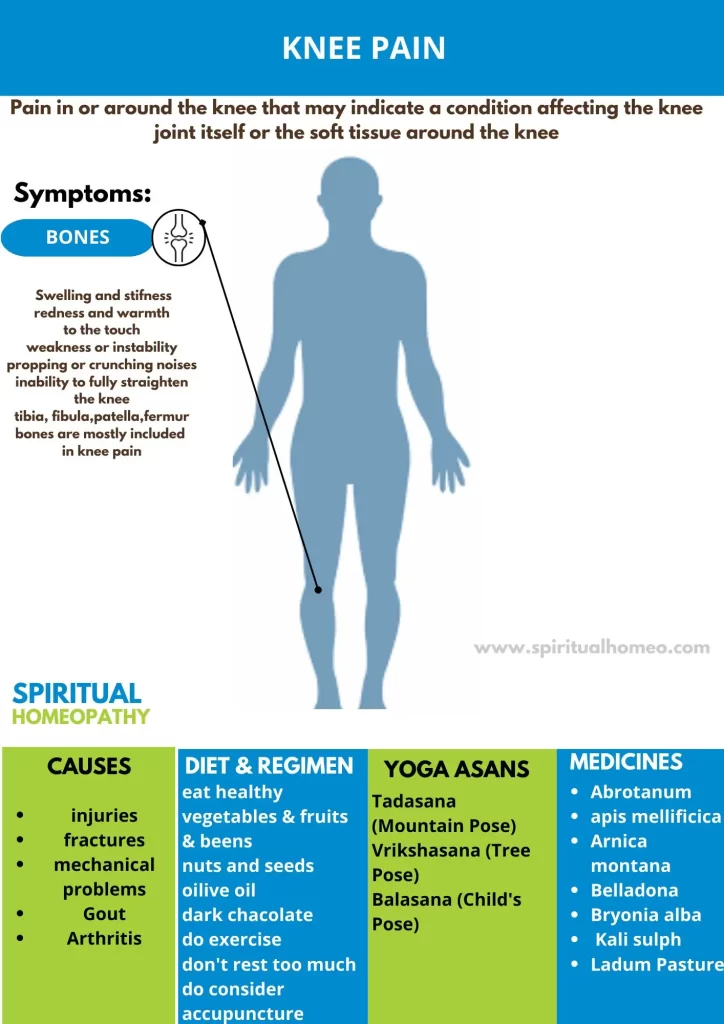
Knee Pain

Effective Solutions for Knee Pain Relief: Causes, Treatments, and Prevention

Knee Pain

Effective Homeopathic Treatment for Knee Pain

Knee pain can occur due to various reasons, affecting both the knee joint and surrounding soft tissues. It may stem from injuries, overuse, or underlying conditions such as arthritis, ligament damage, or tendonitis. Common symptoms include swelling, stiffness, and difficulty moving the knee. Understanding the cause is key to effective treatment. Seeking early intervention through proper diagnosis and tailored treatment options can help manage pain and restore mobility for long-term knee health.

Everything You Need to Know

Overview

The knee joint is formed by the articulation of four bones: the femur, tibia, fibula, and patella. It consists of four main compartments: the medial and lateral tibiofemoral compartments, the patellofemoral compartment, and the superior tibiofibular joint. Each compartment may be affected by repetitive strain, injury, or underlying disease.

Knee pain can arise from intra-articular conditions such as osteoarthritis (OA) or rheumatoid arthritis (RA), or from periarticular issues like anserine bursitis or collateral ligament strain. Pain may also be referred from the hip or surrounding structures. A detailed medical history—including trauma, predisposing factors, and medications—is essential to determine the underlying cause.

At Spiritual Homeopathy Clinic, consultations are available at multiple branches in Hyderabad, as well as online and international consultations, enabling a comprehensive evaluation and individualized care plan tailored to your specific symptoms and overall health.

Causes

Knee pain can result from a variety of factors, including injuries, mechanical problems, arthritis, and other underlying conditions.

Injuries:

  • ACL Injury: A tear of the anterior cruciate ligament (ACL), often occurring in sports that involve sudden changes in direction, such as basketball or soccer.

  • Fractures: Bone fractures in the knee, including the patella (kneecap), may result from falls or accidents. Conditions like osteoporosis can increase the risk of fractures even with minor movements.

  • Torn Meniscus: A tear in the cartilage that cushions the knee joint, commonly caused by sudden twisting motions while bearing weight.

  • Knee Bursitis: Inflammation of the bursae, the small fluid-filled sacs that reduce friction around the knee.

  • Patellar Tendinitis: Inflammation of the tendon connecting the kneecap to the shinbone, often caused by repetitive activities like running or jumping.

Mechanical Problems:

  • Loose Body: Fragments of bone or cartilage can break off and float in the knee joint, causing movement restrictions.

  • Iliotibial Band Syndrome: Tightness in the iliotibial band can cause pain on the outer side of the knee, common in runners and cyclists.

  • Dislocated Kneecap: A patella that slips out of place, causing pain and visible displacement.

  • Hip or Foot Pain: Altered gait due to hip or foot issues can increase stress on the knee, leading to discomfort.

Arthritis:

  • Osteoarthritis: Degeneration of knee cartilage over time due to wear and tear.

  • Rheumatoid Arthritis: An autoimmune condition causing joint inflammation, which can affect the knees.

  • Gout: Uric acid crystals accumulating in the knee joint, leading to pain and swelling.

  • Pseudogout: Calcium crystals in the joint causing symptoms similar to gout, with knees being commonly affected.

  • Septic Arthritis: Infection in the knee joint causing swelling, redness, pain, and often fever; requires immediate medical attention.

Other Conditions:

  • Patellofemoral Pain Syndrome: Pain between the kneecap and thighbone, often seen in athletes and young adults.

  • Patellofemoral Disease: Pain at the front of the knee, frequently due to arthritis or misalignment of the kneecap.

  • Bony Swelling: Enlargement of the knee joint, often resulting from osteoarthritis or other joint disorders, which may cause visible changes in the knee structure.

Understanding the underlying cause is essential for effective management. At Spiritual Homeopathy Clinic, experienced homeopathy doctors provide individualized evaluation and care through in-clinic, online, and international consultations to address each patient’s unique condition.

Types of Knee Pain (By Cause)

Osteoarthritis (OA)

  • Cause: Gradual wear-and-tear of cartilage over time.

  • Pain: Achy and stiff knees, often worse after activity or in the morning.

  • Common in: Older adults.

  • Management Approach: Focus on weight management, low-impact exercises, and an anti-inflammatory diet. Individualized guidance can help support joint function and reduce discomfort.

Rheumatoid Arthritis (RA)

  • Cause: Autoimmune disorder causing joint inflammation.

  • Pain: Swelling, warmth, and stiffness, especially in the morning.

  • Common in: Middle-aged women, though it may affect any age.

  • Management Approach: Anti-inflammatory and immune-supporting dietary measures, combined with personalized care strategies to manage symptoms effectively.

Patellofemoral Pain Syndrome (Runner’s Knee)

  • Cause: Misalignment or overuse of the kneecap.

  • Pain: Pain in the front of the knee, aggravated by stairs, running, or prolonged sitting.

  • Common in: Runners and physically active individuals.

  • Management Approach: Strengthening exercises for quads and hips, stretching, and supportive footwear; individualized plans improve outcomes.

Meniscus Tear

  • Cause: Sudden twisting movements or age-related degeneration.

  • Pain: Sharp pain, swelling, or a “catching”/“locking” sensation.

  • Management Approach: Physical therapy, avoiding twisting motions, and personalized strategies to restore knee function. Severe cases may require medical evaluation.

Ligament Injuries (ACL, MCL, etc.)

  • Cause: Trauma or sports-related injuries.

  • Pain: Sudden, severe pain with swelling and instability.

  • Common in: Athletes.

  • Management Approach: Rest, ice, compression, elevation (RICE), and tailored physiotherapy plans. Some cases may need specialist intervention.

Bursitis

  • Cause: Inflammation of fluid-filled sacs (bursae) around the knee.

  • Pain: Swelling and tenderness, often on the front or inner side of the knee.

  • Management Approach: Ice, anti-inflammatory dietary measures, and avoiding prolonged pressure on the knees; individualized advice helps prevent recurrence.

Tendinitis (Jumper’s Knee)

  • Cause: Overuse of the tendon connecting kneecap to shin, especially in jumping activities.

  • Pain: Pain below the kneecap, worsening with jumping or running.

  • Management Approach: Rest, stretching, strengthening exercises, and personalized guidance to reduce strain and support recovery.

Gout

  • Cause: Buildup of uric acid crystals in the joint.

  • Pain: Sudden, intense flare-ups with redness and warmth.

  • Management Approach: Avoid purine-rich foods (red meat, alcohol), maintain hydration, and follow individualized care recommendations to manage symptoms.

At Spiritual Homeopathy Clinic, knee pain management is tailored to each patient’s condition. Consultations are available across multiple Hyderabad branches, as well as online and international consultations for those unable to visit in person. Professional assessment ensures a customized approach based on pain type, severity, and overall health.

Symptoms of Knee Pain

  • Swelling: Noticeable swelling around the knee joint may indicate inflammation, injury, or underlying joint conditions.

  • Visible Trauma: Bruising, cuts, or other visible signs of injury to the knee area.

  • Pain Affecting Daily Activities: Persistent pain or the need for medication to manage discomfort may suggest a more serious issue.

  • Difficulty Weight-Bearing or Walking: Struggling to put weight on the knee or experiencing instability can affect mobility and gait.

  • Limited Range of Motion: Difficulty bending or fully extending the knee may result from stiffness, ligament damage, or joint problems.

  • Instability or Locking Sensation: Feeling the knee give way or catch during movement can indicate meniscus or ligament involvement.

If these symptoms are frequent, severe, or interfere with daily activities, consulting a healthcare professional is advised. Spiritual Homeopathy Clinic offers personalized evaluation and care at multiple Hyderabad branches, as well as online and international consultations for patients unable to visit in person.

Diet and Lifestyle Guide for Relieving Knee Pain Naturally

Knee pain is a common joint issue affecting people of all ages, often caused by injury, wear and tear, inflammation, or chronic conditions like arthritis. Alongside medical care and therapy, adopting a supportive diet and lifestyle can play a key role in managing discomfort and promoting long-term joint health. Consultations are available at Spiritual Homeopathy Clinic’s Hyderabad branches, as well as online and international consultations.

Best Diet for Knee Pain Relief

Eating the right foods can help reduce inflammation and support joint function, improving mobility and overall knee health.

Foods to Include

  1. Omega-3 Fatty Acids – Known for anti-inflammatory benefits, helping reduce stiffness and discomfort.
    Sources: Fatty fish (salmon, sardines), flaxseeds, chia seeds, walnuts.

  2. Antioxidant-Rich Fruits and Vegetables – Neutralize inflammation and oxidative stress that can damage joints.
    Sources: Berries, spinach, kale, broccoli, sweet potatoes, bell peppers.

  3. Whole Grains – Provide fiber and are less inflammatory than refined carbs.
    Sources: Brown rice, oats, quinoa, barley.

  4. Nuts and Seeds – Contain healthy fats and antioxidants to support joint tissue.
    Sources: Almonds, walnuts, flaxseeds, chia seeds.

  5. Legumes – Plant-based protein and fiber without promoting inflammation.
    Sources: Lentils, chickpeas, black beans.

  6. Anti-Inflammatory Spices – Traditional spices may help ease stiffness and improve circulation.
    Examples: Turmeric, ginger, cinnamon.

  7. Collagen-Rich Foods – Support cartilage and joint integrity.
    Ideas: Bone broth, collagen powder in smoothies.

  8. Low-Fat Dairy (if tolerated) – Provides calcium and vitamin D to strengthen bones.
    Sources: Yogurt, kefir, cheese, or fortified plant-based alternatives.

Foods to Limit or Avoid

  • Processed and fried foods

  • Sugary foods and drinks

  • Refined carbohydrates (white bread, pastries)

  • Excess red meat

  • Trans and saturated fats (fast food, baked goods)

  • High salt intake

Dietary guidance may vary depending on individual health status and underlying conditions.

Lifestyle Habits to Support Knee Health

  1. Low-Impact Exercise (3–5 Times per Week)
    Strengthens muscles, maintains flexibility, and reduces joint stress.
    Examples: Swimming, cycling, walking on flat surfaces, yoga, or Tai Chi.

  2. Maintain a Healthy Weight
    Reduces pressure on the knees; even a 5–10% weight reduction can improve joint comfort.

  3. Daily Stretching & Mobility Work
    Improves flexibility and circulation; focus on hamstrings, quadriceps, calves, and IT band.

  4. Supportive Gear
    Knee braces or compression sleeves and orthopedic footwear can enhance alignment and reduce strain.

  5. Hot & Cold Therapy
    Cold packs reduce swelling; warm compresses ease stiffness, especially in the morning.

  6. Stay Hydrated
    Water supports joint lubrication and nutrient transport to cartilage.

Natural, Homeopathy-Inspired Support

Homeopathy-inspired approaches focus on the body’s natural ability to rebalance and heal. These gentle, non-invasive methods can help ease stiffness, support mobility, and complement conventional care. Individualized guidance from a qualified practitioner at Spiritual Homeopathy Clinic ensures the plan suits your specific knee condition.

Conclusion

Managing knee pain naturally involves a combination of anti-inflammatory nutrition, consistent movement, and supportive lifestyle habits. Small, sustainable changes in daily routines can enhance joint function, reduce discomfort, and support overall knee health.

Yoga Asanas for Knee Pain Relief

Yoga is a gentle and effective way to strengthen the muscles around the knee, improve flexibility, and reduce discomfort. Regular practice can support joint health and complement other treatments. For individualized guidance based on your knee condition, consultations are available at Spiritual Homeopathy Clinic’s Hyderabad branches, as well as online and international consultations.

Recommended Yoga Poses

  1. Tadasana (Mountain Pose)
    Benefits: Improves posture, strengthens legs, and enhances balance.
    How to: Stand tall with feet together, arms at your sides. Engage your thighs, lift your kneecaps, press your feet into the floor, and lengthen your spine. Hold for 20–30 seconds, breathing deeply.

  2. Virabhadrasana I (Warrior I Pose)
    Benefits: Strengthens legs, stretches hips, and opens the chest.
    How to: Step one foot back, bend the front knee to 90°, keep the back leg straight, raise arms overhead, and gaze forward. Hold for 20–30 seconds, then switch sides.

  3. Virabhadrasana II (Warrior II Pose)
    Benefits: Strengthens thighs, knees, and ankles while improving stability.
    How to: From Warrior I, open hips and shoulders to the side. Extend arms parallel to the floor, keep knees bent, and gaze over the front hand. Hold for 30–60 seconds, then switch sides.

  4. Setu Bandhasana (Bridge Pose)
    Benefits: Strengthens glutes, hamstrings, and lower back for better knee support.
    How to: Lie on your back with knees bent, feet hip-width apart. Press feet into the floor, lift hips, squeeze glutes, and keep knees aligned. Hold 20–30 seconds and lower slowly.

  5. Utthita Trikonasana (Extended Triangle Pose)
    Benefits: Stretches hips, hamstrings, and knees, improving flexibility.
    How to: Stand in a wide-legged stance, extend arms, bend over the front leg, and reach toward your ankle or floor. Keep legs straight and hips aligned. Hold 20–30 seconds per side.

  6. Baddha Konasana (Bound Angle Pose)
    Benefits: Opens hips and groin, stretches knees, and improves flexibility.
    How to: Sit with legs extended, bring feet together, bend knees outward, and gently press knees toward the floor. Hold 30–60 seconds.

  7. Anjaneyasana (Low Lunge)
    Benefits: Stretches hip flexors and quads, strengthens legs, improves knee flexibility.
    How to: Step one foot back, drop the back knee, keep front knee aligned over ankle, lift arms overhead, and stretch torso upward. Hold 20–30 seconds, then switch sides.

  8. Adho Mukha Svanasana (Downward-Facing Dog)
    Benefits: Stretches hamstrings, calves, and back; relieves knee tension.
    How to: Start on hands and knees, lift hips to form an inverted “V,” keep knees slightly bent, and engage thighs to reduce knee pressure. Hold 20–30 seconds.

  9. Supta Padangusthasana (Reclining Hand-to-Big-Toe Pose)
    Benefits: Stretches hamstrings, calves, and knees, improving joint mobility.
    How to: Lie on your back, extend one leg, bend the other, hold the extended leg’s big toe with a strap or hand, keeping hips grounded. Hold 20–30 seconds per side.

  10. Child’s Pose (Balasana)
    Benefits: Gently stretches knees, hips, and back, relieving tension.
    How to: Kneel with big toes touching, knees apart, lower torso to the floor, rest forehead down, and stretch arms forward or at sides. Hold 1–2 minutes, focusing on deep breathing.

Tips for Practicing Yoga with Knee Pain

  • Avoid Deep Bends: Minimize poses that place excessive pressure on the knees.

  • Use Props: Blocks, straps, or cushions can provide support and modify poses.

  • Listen to Your Body: Stop or modify poses if you feel discomfort or pain.

  • Warm Up Properly: Start with gentle stretches to prepare your joints for more intense poses.

Yoga can be a supportive part of knee care but should not replace medical evaluation or treatment. Professional guidance ensures safe practice and maximizes benefits.

Why Choose Homeopathy for Knee Pain

Homeopathy is a gentle, natural system of care that focuses on addressing the underlying factors contributing to joint discomfort rather than only managing symptoms. It works in harmony with the body’s natural healing processes and is suitable for patients of all ages. Homeopathy supports long-term joint health through individualized care and holistic management.

Whether dealing with acute knee pain from injury or chronic joint conditions like arthritis, homeopathy offers a personalized approach to reduce discomfort, improve mobility, and support overall well-being.


Spiritual Homeopathy Clinic: Individualized Care for Knee Health

At Spiritual Homeopathy Clinic, we provide comprehensive, patient-centered care for knee pain. Our approach combines classical homeopathic principles with modern clinical assessment to create a tailored plan for each patient.

  • Personalized Assessment: Each consultation considers your medical history, lifestyle, and knee condition to design a care plan suited to your needs.

  • Experienced Team: Skilled homeopathy doctors in Hyderabad offer in-clinic, online, and international consultations for your convenience.

  • Holistic Approach: Treatments aim to support joint function, reduce inflammation, and promote long-term mobility.

  • Safe & Gentle: Homeopathy provides a non-invasive, well-tolerated option that complements other therapies.


Our Knee Pain Treatment Process

  1. Detailed Consultation
    We evaluate your knee pain thoroughly, including its cause, severity, and impact on daily life. This helps in creating a personalized management plan.

  2. Individualized Homeopathic Care
    Remedies are selected based on your specific condition, aiming to address contributing factors and support natural recovery.

  3. Ongoing Monitoring & Guidance
    Regular follow-ups track progress, adjust treatment plans, and provide guidance on exercises, lifestyle, and diet for joint health.


Start Your Knee Pain Care

If knee discomfort is affecting your mobility or quality of life, Spiritual Homeopathy Clinic is here to help. Consult us at any of our Hyderabad branches—Nallagandla, Chandanagar, Dilsukhnagar, and KPHB—or book online and international consultations for remote guidance.

📞 Contact 9069 176 176 to schedule your appointment and receive an individualized plan for knee health and joint support.

When to Consult a Doctor

You should consult a healthcare professional if knee pain becomes frequent, severe, or interferes with daily activities or mobility. Early evaluation can help identify underlying causes and guide safe, individualized management.

Seek consultation if you experience:

  • Persistent or worsening knee pain

  • Difficulty walking, standing, or bearing weight

  • Swelling, redness, or warmth around the knee joint

  • Instability, locking, or inability to bend/straighten the knee fully

  • Pain that limits participation in regular activities or exercise

  • Knee discomfort not improving with rest, gentle exercises, or lifestyle measures

At Spiritual Homeopathy Clinic, consultations are available at multiple Hyderabad branches, including Nallagandla, Chandanagar, Dilsukhnagar, and KPHB. Online and international consultations are also offered for patients unable to visit in person. Professional assessment ensures an individualized care plan tailored to your knee condition and overall health.

For appointments or guidance, contact 9069 176 176.

Frequently Asked Questions (FAQs) about Knee Pain

  1. What are the most common causes of knee pain?
    Knee pain can arise from several factors, including:

  • Injuries such as ligament tears (ACL), meniscus tears, or fractures.

  • Arthritis, including osteoarthritis and rheumatoid arthritis.

  • Overuse or repetitive strain, especially in athletes or active individuals.

  • Bursitis, inflammation of the fluid-filled sacs around the knee.

  • Tendinitis, often seen in sports involving jumping or running.

Understanding the underlying cause is important for individualized care, which can be discussed during a consultation at Spiritual Homeopathy Clinic.


  1. How do I know if my knee pain is serious?
    Seek professional assessment if you notice:

  • Severe pain, swelling, or warmth around the knee.

  • Difficulty moving the knee or bearing weight.

  • Popping sounds, locking, or a sense of instability.

  • Redness, fever, or other signs of infection.

  • Chronic pain or worsening discomfort over time.

Early evaluation helps guide safe and effective management.


  1. What treatment options are available for knee pain?
    Treatment depends on the cause and severity and may include:

  • Physical therapy to strengthen muscles and improve flexibility.

  • Conservative care such as rest, ice, compression, and elevation (R.I.C.E.) for acute pain.

  • Braces or supports to stabilize the knee during activity.

  • Surgical options in severe or unresponsive cases, including arthroscopy or knee replacement.

Homeopathy can complement these approaches by supporting long-term joint health through individualized care.


  1. Can diet help relieve knee pain?
    Yes. An anti-inflammatory, nutrient-rich diet can support joint health and reduce discomfort. Consider including:

  • Omega-3 fatty acids (salmon, flaxseeds).

  • Antioxidant-rich fruits and vegetables (berries, spinach, kale).

  • Bone broth or collagen-supporting foods.

Avoid processed foods, excessive sugar, and refined carbohydrates. Dietary guidance may vary based on individual health status.


  1. Can yoga help with knee pain?
    Specific yoga poses can help strengthen supporting muscles, improve flexibility, and relieve tension around the knee. Beneficial poses include: Warrior I & II, Bridge Pose, Child’s Pose, and gentle stretching as described in the lifestyle section.

Always practice cautiously, avoid deep knee bends, and modify poses as needed.


  1. How can I prevent knee pain?
    Preventive measures include:

  • Maintaining a healthy weight to reduce stress on the knees.

  • Engaging in low-impact exercises like swimming, cycling, or walking.

  • Stretching regularly to maintain flexibility in the legs and knees.

  • Using proper technique during sports or physical activities.

  • Wearing supportive footwear to reduce strain.

Early assessment and guidance can further help prevent worsening of knee conditions.


  1. What is the role of knee surgery?
    Surgery may be considered when conservative treatments do not provide adequate relief. Common procedures include:

  • Arthroscopy for minimally invasive repair of tears or joint damage.

  • Partial or total knee replacement for advanced osteoarthritis or structural damage.

  • Ligament repair or reconstruction, such as ACL surgery.

Consultation with a healthcare professional helps determine the most appropriate option.


  1. How long does it take to recover from knee surgery?
    Recovery time varies by procedure and individual health:

  • Arthroscopic surgeries typically take 6–8 weeks with physical therapy.

  • Knee replacement or extensive repairs may take several months to regain full mobility.

Follow-up care and rehabilitation are important to restore function and strength.


  1. Is knee pain common with aging?
    Yes. Aging can lead to cartilage wear, often resulting in osteoarthritis. This may cause pain, stiffness, and reduced mobility. Maintaining an active lifestyle, following a joint-supportive diet, and managing weight can help reduce age-related knee discomfort.


  1. Can knee pain be related to other health conditions?
    Yes, knee pain may sometimes be linked to:

  • Hip pain or misalignment affecting walking mechanics.

  • Foot problems such as flat feet or improper footwear.

  • Obesity, increasing joint stress.

Persistent or severe knee pain should be evaluated by a professional to identify the root cause and create a personalized management plan.