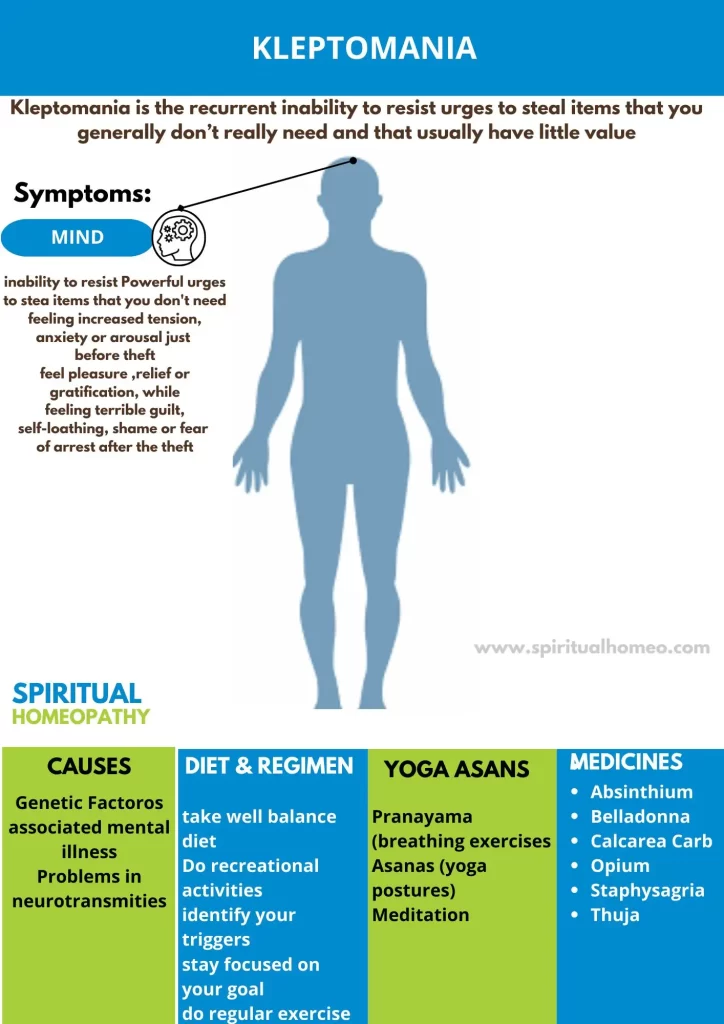
Kleptomania is a mental health condition and a type of impulse control disorder characterized by a recurring inability to resist the urge to steal items that are often of little value or not personally needed. Unlike ordinary theft, kleptomania is not motivated by financial gain, revenge, or personal necessity. People with this condition often experience increasing tension, anxiety, or emotional distress before stealing, followed by a temporary sense of relief or satisfaction after the act. However, these feelings are usually replaced by guilt, shame, or regret. If left untreated, kleptomania can affect personal relationships, work, emotional well-being, and may even lead to legal or social consequences. Seeking early evaluation and appropriate treatment can help improve emotional control and overall mental health.
At Spiritual Homeopathy, we believe in treating the root cause of kleptomania rather than simply suppressing the symptoms. Our experienced homeopathic doctors carefully evaluate each patient’s emotional health, personality, medical history, stress levels, lifestyle, and overall constitution before preparing an individualized treatment plan. Our holistic approach focuses on promoting emotional balance, reducing compulsive urges, improving impulse control, managing stress and anxiety, and supporting long-term mental wellness through safe and personalized homeopathic care. We specialize in homeopathic treatment for kleptomania, impulse control disorders, behavioral disorders, stress-related conditions, and other chronic emotional health concerns.
We provide personalized homeopathic treatment for kleptomania in Hyderabad to patients of all age groups through our clinics in KPHB, Dilsukhnagar, Chandanagar, and Nallagandla, as well as online homeopathy consultations for patients across India and in more than 100 countries worldwide. If you are looking for the best homeopathy doctor for kleptomania, natural treatment for impulse control disorders, or long-term emotional and behavioral wellness, Spiritual Homeopathy is committed to delivering expert, patient-centered care wherever you are.