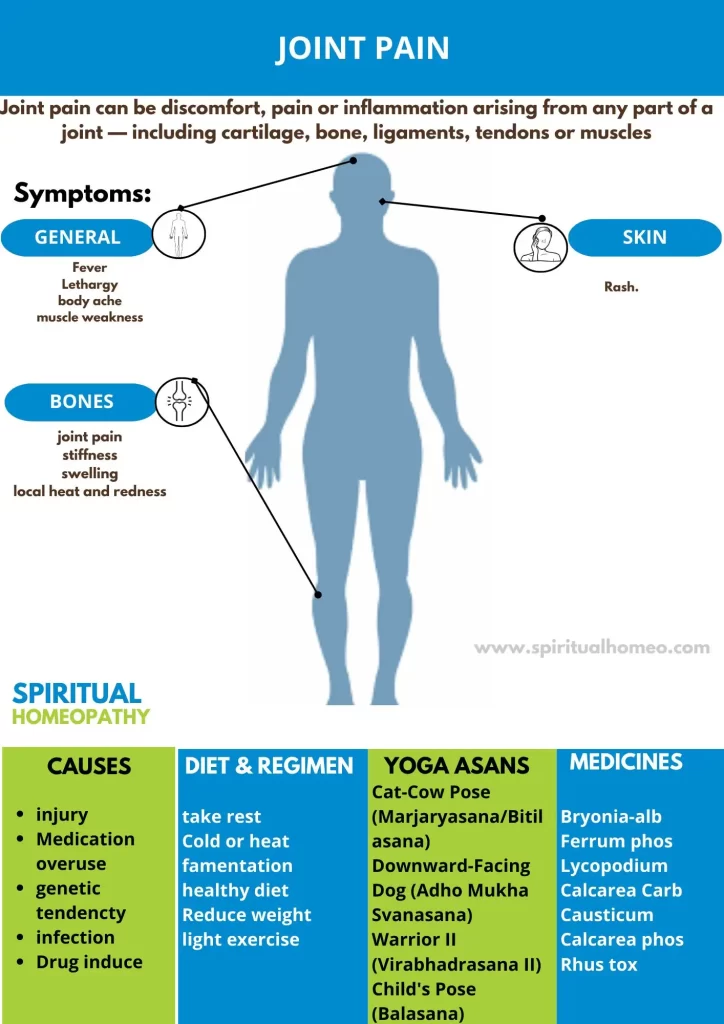
Joint pain is one of the most common musculoskeletal problems, affecting people of all ages and causing discomfort, stiffness, swelling, or inflammation in one or more joints. It may involve the bones, cartilage, ligaments, tendons, or surrounding muscles and can interfere with daily activities such as walking, climbing stairs, or performing routine tasks. Common symptoms include pain, joint stiffness, swelling, reduced range of motion, tenderness, and difficulty moving the affected joint. Joint pain may result from conditions such as osteoarthritis, rheumatoid arthritis, bursitis, gout, injuries, overuse, or age-related wear and tear. While occasional joint pain may improve with rest, persistent or recurring symptoms should not be ignored. Seeking early joint pain treatment and proper evaluation can help improve mobility and prevent long-term joint damage.
At Spiritual Homeopathy, we believe in treating the root cause of joint pain rather than simply suppressing the symptoms. Our experienced homeopathic doctors carefully evaluate each patient’s symptoms, medical history, lifestyle, physical activity, underlying health conditions, and overall constitution before preparing an individualized treatment plan. Our holistic approach focuses on providing natural treatment for joint pain, reducing inflammation, improving joint mobility, relieving stiffness, and promoting long-term musculoskeletal health through safe and personalized homeopathic care. We specialize in homeopathic treatment for joint pain, arthritis, osteoarthritis, rheumatoid arthritis, bursitis, and other chronic joint and musculoskeletal disorders.
We provide personalized homeopathic treatment for joint pain in Hyderabad to patients of all age groups through our clinics in KPHB, Dilsukhnagar, Chandanagar, and Nallagandla, as well as online homeopathy consultations for patients across India and in more than 100 countries worldwide. If you are looking for the best homeopathy doctor for joint pain, natural arthritis treatment, or long-term joint health and mobility, Spiritual Homeopathy is committed to delivering expert, patient-centered care wherever you are.