
Dwarfism is a condition characterized by short stature, typically defined as an adult height of 4 feet 10 inches (147 cm) or less. It is most commonly caused by genetic conditions that affect bone growth and development, although hormonal or medical disorders can also contribute to reduced growth in some individuals. Depending on the underlying cause, people with dwarfism may experience differences in body proportions, delayed growth, joint problems, spinal conditions, or other associated health concerns. Because the causes of dwarfism vary, early diagnosis, appropriate medical evaluation, and individualized care are important to support healthy growth, manage associated conditions, and improve overall quality of life.
At Spiritual Homeopathy, we believe in treating the individual rather than simply focusing on symptoms. Our experienced homeopathic doctors carefully evaluate each patient’s medical history, growth pattern, developmental milestones, lifestyle, nutritional status, and overall health before preparing an individualized treatment plan. Our holistic approach focuses on supporting overall health, promoting general well-being, and providing safe and personalized homeopathic care tailored to each individual’s unique needs while complementing conventional medical care. We encourage appropriate medical evaluation to identify the underlying cause and guide comprehensive management.
We provide personalized homeopathy consultations in Hyderabad to patients of all age groups through our clinics in Hyderabad, as well as online homeopathy consultations for patients across India and in more than 100 countries worldwide. If you are looking for an experienced homeopathy doctor in Hyderabad for supportive, patient-centered care, Spiritual Homeopathy is committed to delivering compassionate homeopathic consultations while working alongside appropriate medical care to support the overall health and well-being of individuals with dwarfism.
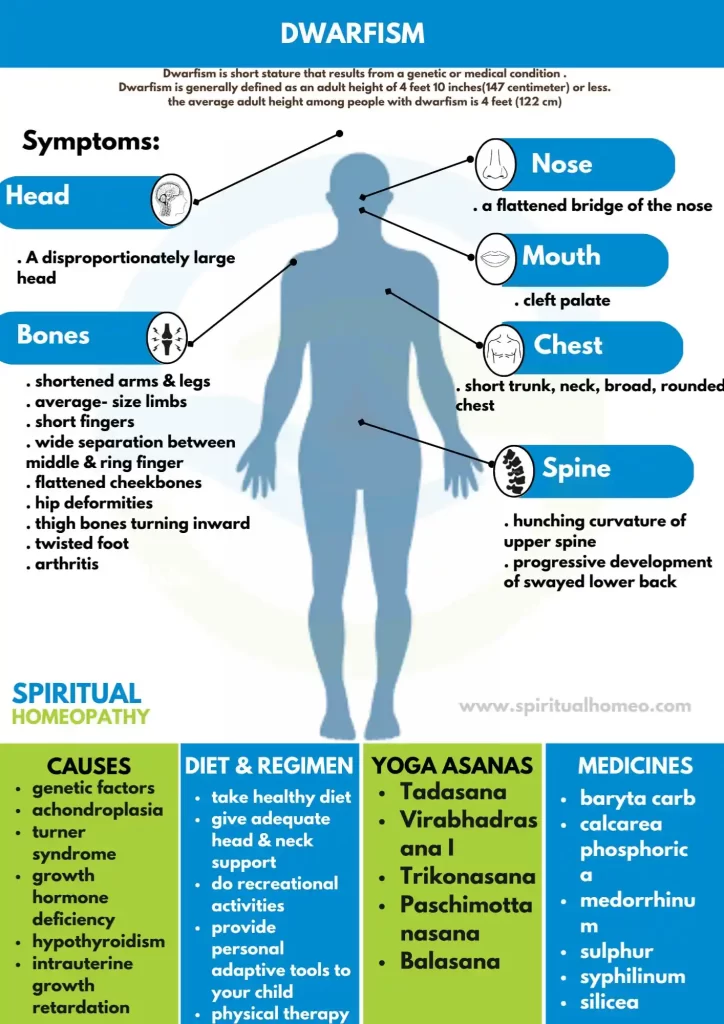
Dwarfism, also referred to as short stature, is a group of medical conditions characterized by shorter-than-average skeletal growth. This reduced growth may affect the arms, legs, torso, or the entire body, depending on the underlying condition and its pattern of development.
Although the term dwarfism is widely used in medical literature, many individuals prefer the terms short stature or little person, which are considered more respectful and inclusive.
Several organizations provide education and support for individuals with dwarfism, including Little People of America (LPA), which focuses on awareness, community resources, and advocacy.
Dwarfism can have multiple causes, most commonly genetic or medical in origin. In certain cases, it may be associated with additional health concerns such as joint stiffness, spinal curvature, or early-onset osteoarthritis. Evaluation by a qualified healthcare professional helps determine the type, contributing factors, and appropriate supportive care approach.
At Spiritual Homeopathy Clinic, consultations for growth-related concerns and associated health issues are available across multiple branches in Hyderabad, as well as through online and international consultation options, based on individual needs.
There are over 300 known conditions that can cause dwarfism, and most are genetic in origin. While the specific causes vary, the common outcome is shorter-than-average growth of the bones or overall body structure.
Achondroplasia is the most common form of dwarfism. Although it is a genetic condition, about 80% of individuals with achondroplasia are born to parents of average height. It occurs due to a mutation in the FGFR3 gene. Affected individuals typically inherit one altered gene and one normal gene, leading to disproportionately short arms and legs with a relatively normal-sized torso.
Turner syndrome affects only females and results from the partial or complete absence of one of the two X chromosomes. Since females usually inherit two X chromosomes, this chromosomal variation can lead to growth delays, short stature, and other associated health concerns.
Growth hormone deficiency occurs when the pituitary gland does not produce sufficient growth hormone. The cause is often unclear but may be linked to genetic mutations or developmental abnormalities. Children with this condition may show proportionate dwarfism but experience significantly slower growth compared to age-related norms.
An underactive thyroid gland, particularly when present from birth or early childhood, can interfere with normal growth and development. In addition to short stature, symptoms may include fatigue, delayed development, and facial puffiness. Routine newborn screening plays an important role in early identification.
IUGR develops during pregnancy when fetal growth does not occur at the expected rate. Babies born with IUGR may be smaller at birth, and if underlying factors persist, proportionate short stature may continue into childhood.
Most cases of dwarfism result from inherited or spontaneous genetic changes, including:
Dominant inheritance: A single altered gene from either parent can cause the condition.
Recessive inheritance: Both parents must carry and pass on the altered gene.
Spontaneous mutation: A new genetic change may occur at conception, even without a family history.
In certain situations, dwarfism may also be influenced by non-genetic factors, such as:
Severe malnutrition: Inadequate nutrition during critical growth periods can impair bone and muscle development, though improvement is possible with appropriate dietary support.
Hormonal imbalances: Some endocrine-related causes can be identified through medical evaluation and managed under professional care.
Understanding the underlying cause of dwarfism is essential, as it helps guide individualized care plans and long-term management strategies. At Spiritual Homeopathy Clinic, evaluations are available across multiple branches in Hyderabad, along with online and international consultations, to support personalized assessment and care.
Although there are many underlying causes of dwarfism, the condition is generally classified into two main types: proportionate dwarfism and disproportionate dwarfism. Each type affects physical growth in different ways and may be linked to distinct medical or genetic factors.
Proportionate dwarfism occurs when all parts of the body—head, trunk, and limbs—are smaller than average but remain in proportion to one another. This form is commonly associated with growth-related or endocrine conditions that affect overall development.
In proportionate dwarfism, body structure remains balanced, but overall growth is reduced.
It is often identified during childhood when growth patterns differ from age-related expectations.
Early medical evaluation helps determine contributing factors and supports appropriate long-term care planning based on individual needs.
Disproportionate dwarfism is the more commonly observed type. In this form, certain parts of the body are shorter while others remain average or relatively larger, resulting in uneven body proportions.
A well-known example is achondroplasia, a genetic condition in which the arms and legs are shorter than average while the torso remains closer to typical size.
Individuals may also have a relatively larger head with a prominent forehead.
This type of dwarfism is usually genetic and present from birth.
Understanding whether dwarfism is proportionate or disproportionate is important for diagnosis, monitoring, and long-term management. Early identification and appropriate medical guidance can help address associated health concerns and support overall quality of life. Consultations for assessment and guidance are available at Spiritual Homeopathy Clinic through its Hyderabad branches, as well as via online and international consultations.
The signs and symptoms of dwarfism can vary depending on the underlying cause and type (proportionate or disproportionate). Common features may include:
Short stature noticeable in early childhood
Disproportionate limb size, particularly in the arms and legs (in disproportionate dwarfism)
Larger head size with a prominent forehead
Delayed physical development and growth milestones
Spinal curvature issues, such as lordosis or scoliosis
Joint stiffness or pain, especially in the hips, knees, and elbows
Delayed motor skills, such as sitting, crawling, or walking
Frequent ear infections or hearing problems (due to structural differences in the ears)
Breathing difficulties, including sleep-related issues like sleep apnea
Symptoms can vary widely between individuals. Consultation with a healthcare professional is recommended if growth delays or other symptoms are frequent or severe. Spiritual Homeopathy Clinic provides assessments through its Hyderabad branches and via online and international consultations.
A balanced, nutrient-rich diet supports healthy growth, skeletal development, and overall well-being in individuals with dwarfism. Dietary guidance may vary based on age, health status, and individual needs.
Key Recommendations:
Protein-Rich Foods: Eggs, fish, lean meats, dairy, lentils, and nuts help support muscle development and tissue repair.
Calcium & Vitamin D: Essential for strong bones. Include milk, cheese, yogurt, leafy greens, and fortified cereals.
Zinc-Rich Foods: Important for cell growth and immunity. Sources include pumpkin seeds, beans, and cashews.
Healthy Fats: Support brain development and hormonal balance. Include avocados, olive oil, and moderate amounts of nuts.
Iron Sources: Prevent anemia with spinach, red meat, and legumes.
Fruits & Vegetables: Provide vitamins, minerals, and antioxidants to support immunity and overall health.
Whole Grains: Aid digestion and provide sustained energy; opt for brown rice, oats, and whole wheat products.
Hydration: Maintain adequate fluid intake with water and natural juices.
Foods to Limit: Excess sugar, fried foods, and heavily processed snacks may negatively impact growth, bone health, and overall metabolism.
Combining a well-balanced diet with ongoing medical guidance helps manage complications associated with dwarfism and supports optimal growth and development. Individualized diet plans can be provided during consultations at Spiritual Homeopathy Clinic, including in-clinic, online, and international options.
Regular, gentle yoga can support flexibility, posture, and overall well-being in individuals with dwarfism. Yoga should be practiced under supervision, adapted to individual needs, and does not replace medical care.
Benefits: Improves posture, promotes spinal alignment, and strengthens the legs.
How to Practice: Stand with feet hip-width apart, arms by the sides. Inhale and raise arms overhead, stretching the body upward while grounding the feet.
Adaptation: Can be performed with wall support if balance is a concern.
Benefits: Gently stretches the back and hips; relieves lower back tension.
How to Practice: Kneel on the floor, sit back on heels, stretch arms forward, and rest forehead on the mat.
Adaptation: Place a cushion or folded blanket under the chest or knees for comfort.
Benefits: Strengthens the spine, opens the chest, and enhances flexibility.
How to Practice: Lie on the stomach, hands under shoulders, gently lift the chest while keeping elbows close to the body.
Adaptation: Lift only as much as comfortable to avoid strain on the lower back.
Benefits: Strengthens the back and hips, improves posture, and supports circulation.
How to Practice: Lie on your back, bend knees, feet flat on the floor, lift hips while keeping shoulders and arms grounded.
Adaptation: Use a cushion under the hips if needed for support.
Benefits: Encourages calmness, focus, and deep breathing.
How to Practice: Sit cross-legged, keep the spine straight, and practice slow, deep breaths.
Adaptation: Sit on a cushion or folded blanket to ease hip or knee discomfort.
Benefits: Increases spinal flexibility and warms up back muscles.
How to Practice: On hands and knees, alternate between arching (cow) and rounding (cat) the back while coordinating movements with breath.
Adaptation: Move slowly and gently, focusing on comfort and range of motion.
Tip: Consistency is key. Practice in a calm, supportive environment and consult a healthcare professional or trained yoga therapist to tailor exercises safely.
At Spiritual Homeopathy Clinic, our approach to managing dwarfism focuses on individualized care and long-term management. While dwarfism is a genetic condition, homeopathy can help address contributing factors such as delayed growth, musculoskeletal discomfort, and developmental challenges, supporting overall well-being.
Individualized Care: Every treatment plan is tailored to the person’s growth patterns, overall health, and developmental needs.
Addresses Contributing Factors: Homeopathy works alongside lifestyle guidance, diet, and supportive therapies to enhance mobility, bone health, and general wellness.
Long-Term Management: Continuous monitoring and follow-ups help track progress and adjust care plans as required.
Generally Well-Tolerated: Treatments are gentle and designed to complement other medical interventions under professional guidance.
Our homeopathy doctors provide in-clinic consultations at multiple Hyderabad branches—including Kukatpally, Chandanagar, Dilsukhnagar, and Nallagandla—as well as online and international consultations for patients who cannot visit in person. A comprehensive assessment allows for an individualized treatment plan based on growth, health status, and lifestyle factors.
Consult a healthcare professional if you notice delayed growth, short stature, or other developmental concerns in your child or yourself. Early evaluation helps identify underlying causes, manage associated health issues, and guide supportive care.
Seek consultation if you observe:
Growth significantly below age-related norms
Disproportionate limb or body size
Delayed motor skills, such as sitting, standing, or walking
Joint stiffness, pain, or spinal curvature issues
Breathing difficulties, especially during sleep
Frequent ear infections or hearing problems
Any health concerns that affect daily activities or quality of life
At Spiritual Homeopathy Clinic, consultations are available at multiple branches in Hyderabad, including Kukatpally, Chandanagar, Dilsukhnagar, and Nallagandla. Online and international consultations are also offered for patients unable to visit in person. A professional assessment allows for an individualized care approach tailored to growth patterns, overall health, and developmental needs.
For appointments or guidance, contact 9069 176 176.
Dwarfism is primarily caused by genetic mutations or medical conditions affecting bone growth and hormone production. It is generally categorized into over 400 distinct conditions, with the most common being achondroplasia, a genetic disorder accounting for about 70% of all cases.
Dwarfism is typically present from birth or early infancy for disproportionate types, while proportionate types may not be evident until later childhood.
No, people with dwarfism do not age faster. The majority of individuals with conditions like achondroplasia have a normal or near-normal life expectancy. While some specific skeletal dysplasias carry unique medical complications, people with short stature generally do not undergo accelerated physical aging.
Dwarfism is not inherently painful, but many individuals experience chronic pain due to skeletal complications. The primary culprits are spinal stenosis (narrowing of the spinal canal putting pressure on nerves), severe curvature of the lower back, and osteoarthritis caused by uneven weight distribution on joints.
Yes, dwarfism can cause health issues, though the specific complications depend on the underlying cause (there are hundreds of conditions that cause short stature).