
Dysphagia is a condition that causes difficulty swallowing, making it hard for food, liquids, or even saliva to move from the mouth to the stomach. It can occur due to problems affecting the throat, esophagus, or nervous system and may be associated with conditions such as acid reflux, stroke, neurological disorders, or structural abnormalities. Common symptoms include pain while swallowing, the sensation of food getting stuck in the throat or chest, coughing or choking during meals, drooling, regurgitation of food, unexplained weight loss, and recurrent chest infections caused by aspiration. While occasional swallowing difficulty may occur, persistent or worsening dysphagia should not be ignored. Seeking early medical evaluation and appropriate treatment can help identify the underlying cause, improve swallowing function, and prevent complications such as malnutrition, dehydration, and aspiration pneumonia.
At Spiritual Homeopathy, we believe in treating the individual rather than simply suppressing symptoms. Our experienced homeopathic doctors carefully evaluate each patient’s symptoms, medical history, eating habits, lifestyle, stress levels, and overall health before preparing an individualized treatment plan. Our holistic approach focuses on providing personalized homeopathic care, supporting overall digestive and general health, and promoting long-term wellness through safe and individualized treatment while complementing conventional medical care. We encourage appropriate medical evaluation to determine the underlying cause of swallowing difficulties and guide comprehensive management.
We provide personalized homeopathy consultations in Hyderabad to patients of all age groups through our clinics in Hyderabad, as well as online homeopathy consultations for patients across India and in more than 100 countries worldwide. If you are looking for an experienced homeopathy doctor in Hyderabad for supportive, patient-centered care, Spiritual Homeopathy is committed to delivering compassionate consultations while encouraging timely medical assessment and evidence-based management for dysphagia.
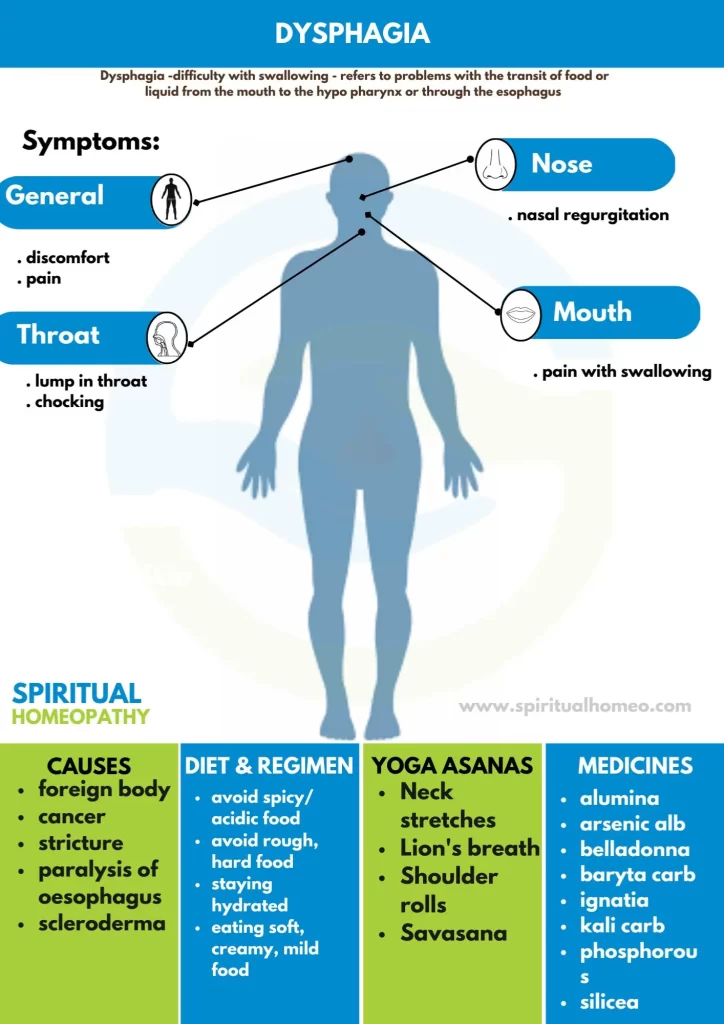
Dysphagia, or difficulty swallowing, can range from mild to severe and may significantly affect a person’s ability to eat or drink safely. If not properly managed, severe dysphagia can lead to nutritional deficiencies, aspiration (when food or liquids enter the airway), and a reduced quality of life.
Several terms are used to describe specific swallowing disorders or sensations associated with dysphagia:
Aphagia: Complete inability to swallow, often due to total blockage in the esophagus. This is commonly seen in acute cases such as a lodged food bolus or foreign body obstruction.
Odynophagia: Painful swallowing, usually caused by irritation or ulceration of the mucosal lining in the throat or esophagus. While it often occurs alongside dysphagia, it is possible to have dysphagia without pain.
Globus Pharyngeus: A sensation of a lump or foreign object in the throat, typically felt in the neck. Unlike dysphagia, it generally does not interfere with swallowing and may improve during the act of swallowing.
Transfer Dysphagia: Difficulty in the initial phase of swallowing. It may cause nasal regurgitation or aspiration into the lungs and is commonly associated with oropharyngeal dysphagia.
Phagophobia: Fear of swallowing, often stemming from psychological factors or previous experiences of pain, choking, or aspiration. This can lead to refusal to eat or drink due to anticipatory anxiety.
Understanding these related conditions is important for accurate diagnosis and effective management. Consulting a healthcare provider, such as at Spiritual Homeopathy Clinic, can help assess the underlying causes and plan individualized care. Our clinic offers in-person consultations across multiple Hyderabad branches, as well as online and international consultations for patients unable to visit in person.
Dysphagia, or difficulty swallowing, can result from various medical conditions affecting the muscles, nerves, or structure of the throat and esophagus. Since swallowing is a complex process involving multiple systems, any disorder that weakens these systems or leads to narrowing or obstruction can cause swallowing issues.
Dysphagia is generally categorized into two main types: esophageal dysphagia and oropharyngeal dysphagia, each with different underlying causes.
This type occurs when food or liquid feels stuck in the throat or chest after swallowing begins, typically originating from issues in the esophagus, which carries food from the mouth to the stomach.
Common Causes of Esophageal Dysphagia:
Achalasia: The lower esophageal sphincter fails to relax, preventing food from entering the stomach properly. Over time, esophageal muscles may weaken.
Esophageal Spasms: Uncoordinated, high-pressure contractions make swallowing painful and inefficient.
Esophageal Stricture: Narrowing of the esophagus, often caused by scar tissue or chronic acid reflux (GERD), making it hard to swallow solid foods.
Esophageal Tumors: Tumors can gradually narrow the esophagus, worsening swallowing difficulty.
Foreign Objects: Food or other items may become lodged, particularly in older adults or those with chewing difficulties.
Esophageal Ring: Thin narrowing in the lower esophagus causing intermittent difficulty with solid foods.
GERD (Gastroesophageal Reflux Disease): Chronic acid reflux can damage the esophageal lining, leading to inflammation, spasms, or strictures.
Eosinophilic Esophagitis: An inflammatory condition often linked to food allergies, involving a buildup of white blood cells (eosinophils) in the esophagus.
Scleroderma: Hardening of tissues, including the esophagus, weakening the lower esophageal sphincter and often causing acid reflux.
Radiation Therapy: Cancer treatments near the neck or chest can cause long-term inflammation or scarring, affecting swallowing.
This form occurs when the throat muscles are weakened or uncoordinated, making it difficult to move food from the mouth to the esophagus. It often leads to choking, gagging, or coughing during meals and increases the risk of aspiration, which may result in pneumonia.
Common Causes of Oropharyngeal Dysphagia:
Neurological Disorders: Conditions like Parkinson’s disease, multiple sclerosis, or muscular dystrophy can impair the nerves and muscles involved in swallowing.
Neurological Injuries: Stroke, brain injury, or spinal cord damage can disrupt brain signals to the throat muscles.
Pharyngoesophageal Diverticulum (Zenker’s Diverticulum): A pouch forms in the throat above the esophagus, trapping food and causing gurgling, coughing, bad breath, or repeated throat clearing.
Cancer and Cancer Treatments: Tumors in the throat or esophagus and therapies like radiation can damage swallowing structures or lead to inflammation and scarring.
Note: Identifying the underlying cause of dysphagia is crucial for effective management. A personalized consultation, such as those available at Spiritual Homeopathy Clinic across multiple Hyderabad branches, as well as online and international consultations, can help determine the appropriate care plan based on individual symptoms and health status.
Dysphagia, or difficulty swallowing, is generally classified into two main types based on the location where the swallowing process is disrupted:
Oropharyngeal dysphagia occurs when there is difficulty initiating a swallow or moving food from the mouth into the throat. This type often results from neurological conditions that weaken or impair the coordination of the muscles and nerves involved in swallowing. Individuals may experience choking, coughing, or a sensation of food getting stuck in the throat immediately after beginning to eat or drink.
Esophageal dysphagia happens when food or liquid gets stuck or slows down in the esophagus after swallowing has started. This is typically caused by blockages, inflammation, or narrowing within the esophagus. People may feel that food is stuck in the chest or experience discomfort when swallowing solids or liquids.
Note: Identifying the type of dysphagia is essential for accurate diagnosis and effective management. Personalized assessment at Spiritual Homeopathy Clinic—available at multiple Hyderabad branches, as well as through online and international consultations—helps guide appropriate care based on the specific type and underlying cause.
Dysphagia, or difficulty swallowing, can present with a range of symptoms, from mild discomfort to more serious complications. Recognizing these signs early supports timely evaluation and appropriate management.
Pain while swallowing (also known as odynophagia), especially with solid or liquid foods
Difficulty or inability to swallow foods, liquids, or even saliva
A sensation of food being stuck in the throat, chest, or behind the breastbone (sternum)
Drooling due to difficulty managing saliva
Hoarseness or changes in voice, often related to throat irritation during swallowing
Regurgitation of undigested food, sometimes shortly after eating
Frequent heartburn or acid reflux, particularly after meals
Food or stomach acid backing up into the throat, causing discomfort or a sour taste
Unexplained weight loss due to reduced food intake or impaired nutrition
Coughing or gagging while eating or drinking, which may indicate aspiration risk
Repeated throat clearing or choking episodes during meals
If these symptoms occur frequently, worsen over time, or interfere with eating and drinking, consultation with a healthcare professional is advised to identify the cause and reduce the risk of complications.
At Spiritual Homeopathy Clinic, evaluation is available at multiple branches in Hyderabad, along with online and international consultations, supporting individualized care based on symptom pattern and overall health status.
Managing dysphagia (difficulty swallowing) involves more than medical care. Lifestyle adjustments and dietary modifications play an important role in improving swallowing safety, comfort, and overall nutritional status. The following techniques and dietary tips are commonly recommended for individuals with swallowing difficulties.
Swallowing Exercises:
Practicing targeted swallowing exercises may help strengthen throat and esophageal muscles, supporting better coordination and control during swallowing.
Proper Head Positioning:
Adjusting head or neck posture while eating can make swallowing easier and may reduce the risk of choking or aspiration.
Mouth Care:
Rinsing the mouth with a salt and baking soda solution (do not swallow) can help maintain oral hygiene and soothe irritated tissues.
Choose soft, smooth-textured foods such as mashed potatoes, yogurt, pudding, and cheese, which are easier to swallow and less irritating.
Avoid rough, hard, or dry foods like chips, nuts, raw vegetables, and certain fruits, as they may increase choking risk or discomfort.
Consume lukewarm or cool foods; soothing options such as chilled fruits or ice pops may help reduce irritation.
Avoid acidic, spicy, or irritating foods including citrus fruits, tomatoes, hot spices, and alcohol-based mouthwashes, as these can worsen symptoms.
Using mild dairy products before meals may help coat and soothe the mucous membranes in some individuals.
Maintain hydration by sipping small amounts of fluids throughout the day rather than drinking large volumes at once.
Eat smaller, lighter meals
Maintain a healthy body weight
Avoid high-fat or greasy foods, especially close to bedtime
Limit chocolate, citrus fruits, and tomato-based products
Dietary needs and swallowing ability can vary between individuals, so guidance may be adjusted based on symptoms, underlying causes, and overall health status.
At Spiritual Homeopathy Clinic, dietary and lifestyle guidance is provided as part of an individualized care approach, with consultations available across multiple branches in Hyderabad, as well as through online and international consultations.
The following yoga practices may help support throat relaxation, posture, and breathing awareness in individuals experiencing dysphagia. These practices are supportive in nature and should be performed gently and under guidance when needed. Yoga is not a replacement for medical evaluation or professional care.
Benefits:
Strengthens throat muscles and vocal cords; improves blood flow to the face and neck.
How to Practice:
Sit in Vajrasana, inhale deeply, then open your mouth wide and stick out your tongue while exhaling with a roaring “ha” sound.
Benefits:
Opens the chest and throat, stretches the neck and spine, and improves posture.
How to Practice:
Lie on your stomach, place palms under shoulders, and lift your chest off the ground while keeping elbows slightly bent.
Benefits:
Expands the throat and chest area, helping relieve tension in the neck.
Note:
Use a bolster or cushion under your upper back for support if lying flat is difficult.
Benefits:
A breathing technique that engages the throat muscles and improves awareness of airflow.
How to Practice:
Inhale and exhale slowly through the nose while slightly constricting the throat to create a soft, ocean-like sound.
Benefits:
Increases flexibility and strength in neck muscles that are involved in swallowing.
How to Practice:
Gently rotate the head side to side, up and down, holding each stretch for a few seconds without strain.
Benefits:
Calms the nervous system and helps relax muscles around the throat.
How to Practice:
Close your eyes, inhale deeply, and exhale while making a soft humming sound.
Important Note:
These practices should be adapted to individual comfort levels. If swallowing difficulty is persistent, worsening, or associated with weight loss or pain, professional consultation is advised.
At Spiritual Homeopathy Clinic, we follow a holistic approach to care that integrates the principles of classical homeopathy with attention to emotional and mental well-being. Our practitioners focus on understanding the individual as a whole rather than addressing symptoms in isolation, supporting a balanced and patient-centred care process.
We recognize that health is influenced by the interaction between the mind, body, and overall lifestyle. Our approach emphasizes identifying contributing factors that may affect well-being and supporting the body’s natural regulatory processes. Care is planned with the aim of improving resilience, restoring balance, and supporting long-term health under professional supervision.
Our experienced homeopathic practitioners across multiple branches in Hyderabad provide structured consultations both in-clinic and through online platforms. Each consultation includes a detailed discussion of health history, daily habits, and individual concerns, allowing care to be tailored according to personal needs. International consultations are also available for patients outside India.
Care plans are designed to support the body’s natural response mechanisms and may be considered for a range of acute and chronic health concerns. Emphasis is placed on individualized care that aligns with overall health patterns and is generally well-tolerated when guided by a qualified professional.
Ongoing follow-up is an important part of the care process. Regular reviews help monitor progress, address changes in symptoms, and adjust guidance when required, ensuring continuity and clinical responsibility throughout the treatment journey.
At Spiritual Homeopathy Clinic, patient care is approached with responsibility, empathy, and clinical attention. Our goal is to support physical and emotional well-being through personalized care and informed guidance. Appointments are available across our Hyderabad branches, as well as through online and international consultation services.
You should consult a healthcare professional if dysphagia symptoms become frequent, persistent, or begin to interfere with eating, drinking, or daily activities. Early evaluation helps identify underlying causes and supports timely management to reduce the risk of complications.
Seek consultation if you experience:
Recurrent or ongoing difficulty in swallowing
Pain or discomfort while swallowing food or liquids
A sensation of food sticking in the throat or chest
Coughing or choking during meals
Symptoms that worsen over time or occur with both solids and liquids
Unexplained weight loss, reduced appetite, or dehydration
At Spiritual Homeopathy Clinic, consultations are available at multiple branches in Hyderabad, including Kukatpally, Chandanagar, Dilsukhnagar, and Nallagandla. Online and international consultations are also available for individuals unable to visit in person. Professional assessment supports an individualized care approach based on symptoms, contributing factors, and overall health status.
For appointments or guidance, contact 9069 176 176.
1. What is dysphagia?
Dysphagia is a medical condition characterized by difficulty swallowing food or liquids. It may lead to symptoms such as choking, coughing, or aspiration, where food or liquid enters the airway.
2. What are the common causes of dysphagia?
Dysphagia can occur due to neurological conditions such as stroke or Parkinson’s disease, esophageal disorders including gastroesophageal reflux disease (GERD) and strictures, or conditions affecting the muscles involved in swallowing. Identifying the cause helps guide individualized care.
3. What are the common symptoms of dysphagia?
Common symptoms include coughing or choking during meals, a sensation of food sticking in the throat or chest, drooling, unexplained weight loss, and recurrent respiratory infections such as pneumonia. Medical evaluation is advised if symptoms are frequent or progressive.
4. How is dysphagia diagnosed?
Diagnosis may involve clinical evaluation along with investigations such as a barium swallow study, endoscopy, or specialized swallowing assessments to determine the cause and severity.
5. What foods should dysphagia patients avoid?
Individuals with dysphagia are generally advised to avoid dry, hard, or sticky foods such as crackers, nuts, and tough meats. Thin liquids may also increase the risk of choking and should be taken cautiously.
6. What foods are considered safer for dysphagia patients?
Soft, moist foods such as pureed meals, thickened liquids, and nutrient-dense smoothies are often easier to swallow. Dietary recommendations may vary depending on individual swallowing ability.
7. Can dysphagia be treated?
Management of dysphagia may include swallowing therapy, dietary modifications, and treatment of underlying conditions. The approach depends on the cause and overall health status of the individual.
8. Can dysphagia lead to complications?
If not addressed, dysphagia may result in complications such as choking, aspiration pneumonia, malnutrition, dehydration, and general decline in health.
9. Is dysphagia permanent?
The outlook for dysphagia varies. Some individuals experience improvement with appropriate care, while others may have long-term or chronic swallowing difficulties depending on the underlying cause.
10. When should I see a doctor for dysphagia?
Medical consultation is recommended if there is persistent difficulty swallowing, frequent choking, unexplained weight loss, or recurrent chest infections. Evaluation is available at Spiritual Homeopathy Clinic through in-clinic consultations across Hyderabad, as well as online and international consultations.
Dysphagia, or difficulty swallowing, is typically caused by neurological conditions affecting the brain and nerves, muscular disorders, or physical blockages in the throat and esophagus. Because swallowing is a complex process.
There is no single "best" treatment for dysphagia, as the solution depends entirely on the specific cause, type, and severity of your swallowing difficulty. Treatment typically involves a combination of specialized therapy, dietary adjustments, medication, or medical procedures tailored to your condition.
The worst foods for dysphagia are those that are hard, dry, sticky, fibrous, or possess mixed consistencies (like soup with chunks). These create significant choking or aspiration risks. Always consult a Speech and Language Therapist or healthcare provider for dietary guidelines tailored to your specific swallowing capabilities.
The four-finger test (Logemann's palpation) is a clinical bedside method used by speech-language pathologists and healthcare professionals to evaluate swallowing function (dysphagia). It allows the clinician to manually assess the movement and coordination of the tongue, hyoid bone, and larynx while a patient swallows.
Many cases of dysphagia can be improved with treatment, but a cure isn't always possible. Treatments for dysphagia include: speech and language therapy to learn new swallowing techniques. changing the consistency of food and liquids to make them safer to swallow.