
Hepatitis B is a viral infection that affects the liver and is caused by the Hepatitis B virus (HBV). It spreads through contact with infected blood, unprotected sexual contact, or from an infected mother to her baby during childbirth. Many people with Hepatitis B may not notice symptoms in the early stages, while others may experience fatigue, fever, loss of appetite, nausea, abdominal pain, dark urine, and yellowing of the skin and eyes (jaundice). Although some people recover completely from an acute infection, others may develop chronic Hepatitis B, which can increase the risk of liver cirrhosis, liver failure, or liver cancer if left untreated. Early diagnosis, regular monitoring, and appropriate medical care are essential for protecting liver health and preventing long-term complications.
At Spiritual Homeopathy, we believe in treating the individual as a whole rather than focusing only on the disease. Our experienced homeopathic doctors carefully assess each patient’s symptoms, medical history, liver health, lifestyle, and overall well-being before developing an individualized treatment plan. Our holistic approach aims to support overall health, improve quality of life, and complement conventional medical care through safe, personalized homeopathic treatment. Homeopathy should not replace standard medical evaluation or antiviral treatment when these are recommended by a healthcare professional.
We provide personalized homeopathic care for Hepatitis B in Hyderabad through our clinics, along with online homeopathy consultations for patients across India and in more than 100 countries worldwide. If you are looking for experienced homeopathic doctors for supportive Hepatitis B care and a patient-centered, holistic approach to long-term wellness, Spiritual Homeopathy is committed to providing compassionate and individualized care wherever you are.
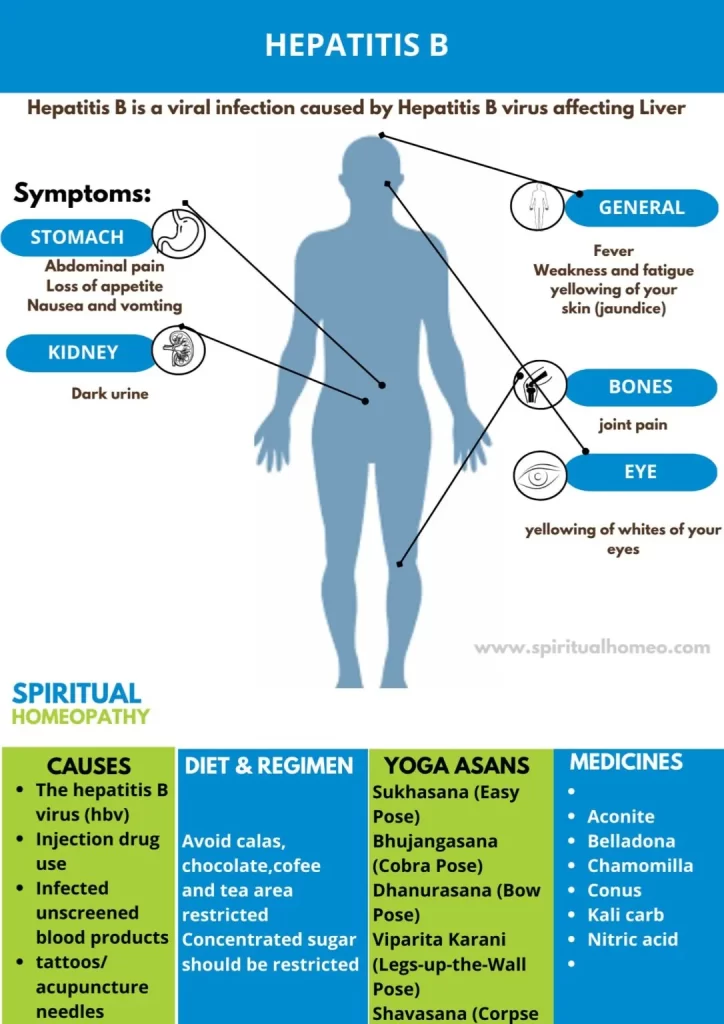
Hepatitis B is a viral infection that affects the liver, caused by the hepatitis B virus (HBV). It spreads through contact with infected blood, sexual fluids, or from mother to child at birth. The infection can present as acute (short-term) or chronic (long-term), with chronic cases potentially leading to significant liver complications if not monitored.
Vaccination is available for prevention, and early diagnosis helps guide effective management and reduce the risk of liver damage.
At Spiritual Homeopathy Clinic, patients can consult with experienced homeopathy doctors at multiple branches in Hyderabad or through online and international consultations for personalized guidance.
Hepatitis B is caused by the hepatitis B virus (HBV) and spreads primarily through contact with infected blood, semen, or other body fluids. Understanding how HBV is transmitted is crucial for effective prevention. Common routes of transmission include:
Unprotected sexual contact with someone who is infected.
Sharing needles or syringes, particularly among individuals who use injectable drugs.
Mother-to-child transmission during childbirth, especially if the mother is infected.
Needle-stick injuries in healthcare or laboratory settings.
Sharing personal items like razors or toothbrushes that may be contaminated with infected blood.
Blood transfusions, although this is rare today due to modern and rigorous blood screening procedures.
Hepatitis B infection is generally classified into acute and chronic forms, depending on how long the infection lasts and whether the body can clear the virus effectively.
A short-term infection that typically lasts less than 6 months.
The body often clears the virus naturally without causing lasting liver damage.
Common symptoms include fatigue, loss of appetite, nausea, and jaundice (yellowing of the skin or eyes).
Most frequently occurs in adults and only rarely progresses to a chronic state.
Early consultation at clinics like Spiritual Homeopathy Clinic can help manage symptoms and monitor liver health.
A long-term infection where the virus persists in the body for 6 months or more.
The immune system is unable to completely eliminate the virus, resulting in a persistent infection.
Carries a higher risk of serious liver complications, including cirrhosis, liver failure, or liver cancer.
More likely when infection occurs at birth or during early childhood.
Ongoing individualized care through homeopathy, alongside regular medical monitoring, may support long-term management.
Hepatitis B symptoms can differ depending on whether the infection is acute (short-term) or chronic (long-term). Some individuals, particularly children, may not show any noticeable symptoms early on. Recognizing warning signs is important for timely evaluation and management. Consultation at Spiritual Homeopathy Clinic is available in our Hyderabad branches as well as online and international modes.
Symptoms usually appear 1–4 months after exposure and may include:
Fatigue and weakness
Loss of appetite
Nausea and vomiting
Low-grade fever
Dark-colored urine
Pale or clay-colored stool
Abdominal pain, especially in the upper right side
Joint pain or discomfort
Jaundice – yellowing of the skin and eyes
Note: Many people, particularly children, may experience no symptoms during the acute phase.
Chronic infection lasts longer than 6 months and may initially be mild or symptom-free. Over time, symptoms can include:
Persistent fatigue
Mild upper abdominal discomfort or bloating
Reduced appetite
Occasional episodes of jaundice
In advanced stages, liver complications such as cirrhosis, liver failure, or hepatocellular carcinoma (liver cancer)
Advice: If you experience frequent or persistent symptoms, it is important to consult a healthcare professional promptly for evaluation and individualized care.
Maintaining a liver-friendly diet and a balanced lifestyle is important for individuals living with Hepatitis B. A nutritious diet can help support liver function, reduce inflammation, and enhance overall well-being. The following is a practical daily meal plan and routine designed to promote liver health. Guidance may vary depending on individual needs, and consultation at Spiritual Homeopathy Clinic (in-clinic, online, or international) can provide personalized advice.
Breakfast
Oatmeal topped with banana slices and chia seeds
Green tea or warm lemon water (supports digestion)
Optional: 1 boiled egg or a handful of raw almonds for protein and healthy fats
Mid-Morning Snack
One serving of fresh fruit: apple, papaya, or orange (moderation is recommended for citrus)
Herbal tea or cucumber-mint infused water
Lunch
Grilled chicken breast or tofu (lean protein)
Brown rice or quinoa (fiber-rich whole grains)
Steamed vegetables: spinach, carrots, or broccoli
Dressing: 1 teaspoon olive oil or fresh lemon juice
Afternoon Snack
Low-fat yogurt or a homemade smoothie with berries and flaxseeds
A few walnuts or sunflower seeds (rich in omega-3s and antioxidants)
Dinner
Steamed or baked fish such as salmon or tilapia (omega-3 and lean protein)
Sweet potato or lentil soup
Mixed salad with olive oil and apple cider vinegar dressing
Before Bed (Optional)
Warm chamomile or ginger tea (anti-inflammatory and calming)
Light fruit like papaya or pear (supports digestion)
| Time | Activity |
|---|---|
| 7:00 AM | Wake up and hydrate with warm water |
| 7:30 AM | Light exercise (yoga, stretching, or walking) |
| 8:00 AM | Nutritious breakfast |
| 10:30 AM | Healthy snack |
| 1:00 PM | Balanced lunch |
| 2:00 PM | Light activity or rest (avoid heavy naps) |
| 4:00 PM | Nutrient-rich snack |
| 6:30 PM | Early, light dinner |
| 8:00 PM | Short walk or relaxation routine |
| 9:30 PM | Herbal tea and wind-down time |
| 10:00 PM | Go to bed — aim for 7–9 hours of sleep |
Avoid alcohol completely — it can worsen liver damage.
Follow medications consistently as prescribed by your doctor.
Avoid over-the-counter medications like acetaminophen unless approved by a healthcare provider.
Regular monitoring: Get liver function tests and follow up with your healthcare provider.
Vaccination: Consider Hepatitis A vaccination if not already immune to prevent co-infection.
Yoga can be a supportive practice for individuals with Hepatitis B, promoting liver health, improving digestion, and reducing stress. These practices do not replace medical care, and professional guidance is recommended, especially if you are experiencing fatigue or other symptoms. Spiritual Homeopathy Clinic offers consultation to guide lifestyle and supportive care for patients.
Bhujangasana (Cobra Pose)
Stimulates liver and kidneys
Improves blood circulation to abdominal organs
Strengthens the spine
Dhanurasana (Bow Pose)
Enhances digestion and liver function
Stimulates internal organs and reduces stress
Improves flexibility of the spine and abdomen
Ardha Matsyendrasana (Half Spinal Twist Pose)
Promotes liver detoxification
Improves digestion and massages abdominal organs
Supports toxin release from the liver
Setu Bandhasana (Bridge Pose)
Strengthens abdominal organs
Stimulates liver and improves circulation
Helps reduce fatigue and tension
Pavanamuktasana (Wind-Relieving Pose)
Aids digestion and relieves bloating
Stimulates liver and intestines
Eases abdominal pressure
Uttanasana (Standing Forward Bend)
Promotes blood flow to liver and other organs
Calms the mind and reduces stress
Enhances metabolism
Anulom Vilom Pranayama (Alternate Nostril Breathing)
Detoxifies the body and balances internal energy
Supports immune function
Calms the nervous system and reduces liver-related stress
Shavasana (Corpse Pose)
Deeply relaxes the body and mind
Promotes recovery and stress reduction
Ideal for concluding a yoga session
Avoid intense or strenuous poses if you feel weak or fatigued.
Focus on gentle stretching and breathwork (pranayama).
Practice on an empty or light stomach and stay hydrated.
Listen to your body and rest when necessary.
Consult your healthcare provider or homeopathy consultant before starting any new fitness routine.
Homeopathy follows a holistic and individualized approach in the management of Hepatitis B. Rather than focusing only on laboratory findings or isolated symptoms, homeopathic care considers the overall health status, immune response, liver function, and associated physical or emotional factors of the individual.
The aim of homeopathic treatment is to support long-term management, help the body respond better to the infection, and address contributing factors that may influence disease progression. Care is tailored based on symptom pattern, duration of infection, and the patient’s general constitution.
At Spiritual Homeopathy Clinic, each person with Hepatitis B undergoes a detailed clinical assessment. This includes a review of symptoms, medical history, lifestyle habits, and any existing liver-related concerns. Based on this evaluation, a personalized care plan is designed to support liver health and overall well-being.
Homeopathic management is generally well-tolerated under professional guidance and may be used as a supportive approach alongside regular medical monitoring.
Hepatitis B often requires ongoing observation, especially in chronic cases. Periodic follow-ups help track symptom changes, general health, and response to care. This structured follow-up supports continuity of care and helps adjust management strategies when needed.
Spiritual Homeopathy Clinic provides consultations through multiple branches in Hyderabad, as well as online and international consultation options, making continued guidance accessible for patients regardless of location.
Homeopathic treatment for Hepatitis B is intended to support overall health and long-term management. It is not a substitute for medical evaluation, laboratory monitoring, or specialist care when required. Patients are advised to continue regular medical follow-ups as recommended by their healthcare provider.
You should consult a healthcare professional if Hepatitis B symptoms become persistent, worsen over time, or begin to affect daily activities. Early evaluation helps assess liver involvement, monitor disease progression, and reduce the risk of long-term complications.
Seek consultation if you experience:
Persistent or worsening fatigue and weakness
Jaundice (yellowing of the skin or eyes)
Dark-colored urine or pale stools
Ongoing upper abdominal pain or discomfort, especially on the right side
Loss of appetite, nausea, or unexplained weight loss
Symptoms lasting longer than six months or recurring episodes
Known exposure to Hepatitis B or abnormal liver test results
At Spiritual Homeopathy Clinic, consultations are available across multiple branches in Hyderabad, including Kukatpally, Chandanagar, Dilsukhnagar, and Nallagandla. Online and international consultations are also available for individuals who are unable to visit in person. A timely professional assessment supports individualized care and long-term monitoring based on symptoms and overall health status.
For appointments or guidance, contact 9069 176 176.
Hepatitis is an inflammation of the liver, most commonly caused by viral infections (Hepatitis A, B, C, D, and E). Non-viral causes include heavy alcohol use, drug toxicity (like acetaminophen), autoimmune reactions, and metabolic conditions such as fatty liver disease
Whether hepatitis can be cured depends entirely on the type you have. While Hepatitis A usually clears on its own, and Hepatitis C is curable in over 95% of cases using antiviral pills, Hepatitis B has no cure, though it can be highly managed.
Hepatitis is an inflammation of the liver, frequently caused by a viral infection, alcohol, or autoimmune issues. Early signs often mimic the flu and include extreme fatigue, loss of appetite, mild fever, nausea, joint pain, and upper right abdominal discomfort. Later, distinctive signs like dark urine, clay-colored stools, and jaundice (yellowing of the skin and eyes) may appear.
Hepatitis means inflammation of the liver. The liver is one of the largest and most important organs in a person's body. The liver is about the size of a football and, on average, weighs about 3 pounds. It is located on the upper right side of a person's body, behind the lower ribs.
Yes, the liver can repair itself after hepatitis, as it is the only organ capable of true regeneration. If the inflammation stops and the cause of the hepatitis is treated, the liver can replace damaged tissue with healthy cells. Complete recovery can happen within a few weeks to months, depending on the severity of the damage.
Hepatitis B & C: Stress can impair immunity, which makes it more difficult for the body to fight off viral infections like hepatitis B and C. Chronic stress may serve as a trigger for autoimmune hepatitis, intensifying the body's assault on liver cells.