
E. coli infection is a bacterial infection that can affect the digestive system, often resulting from contaminated food or water, poor hygiene, or exposure to infected sources. Depending on the strain, it may lead to symptoms such as diarrhea, abdominal cramps, nausea, vomiting, fever, weakness, and changes in bowel movements. Some infections are mild and resolve with supportive care, while certain strains can cause serious complications. Persistent or severe symptoms require proper medical evaluation and appropriate treatment.
At Spiritual Homeopathy, we take a personalized approach to digestive health by understanding the individual’s symptoms, health history, lifestyle, dietary patterns, and overall wellbeing. Homeopathic care may be considered as a complementary approach to managing certain digestive complaints, but E. coli infections should be medically evaluated, particularly when there is high fever, blood in the stool, severe abdominal pain, dehydration, or symptoms in vulnerable individuals. Our focus is on individualized care and supporting overall digestive wellness.
We offer personalized homeopathy consultations for digestive concerns in Hyderabad through our clinics in KPHB, Chandanagar, Dilsukhnagar, and Nallagandla, along with online consultations for patients across India and internationally. If you are experiencing recurring digestive discomfort following an infection or looking for guidance on maintaining better digestive health, Spiritual Homeopathy provides patient-focused consultations based on your individual needs.
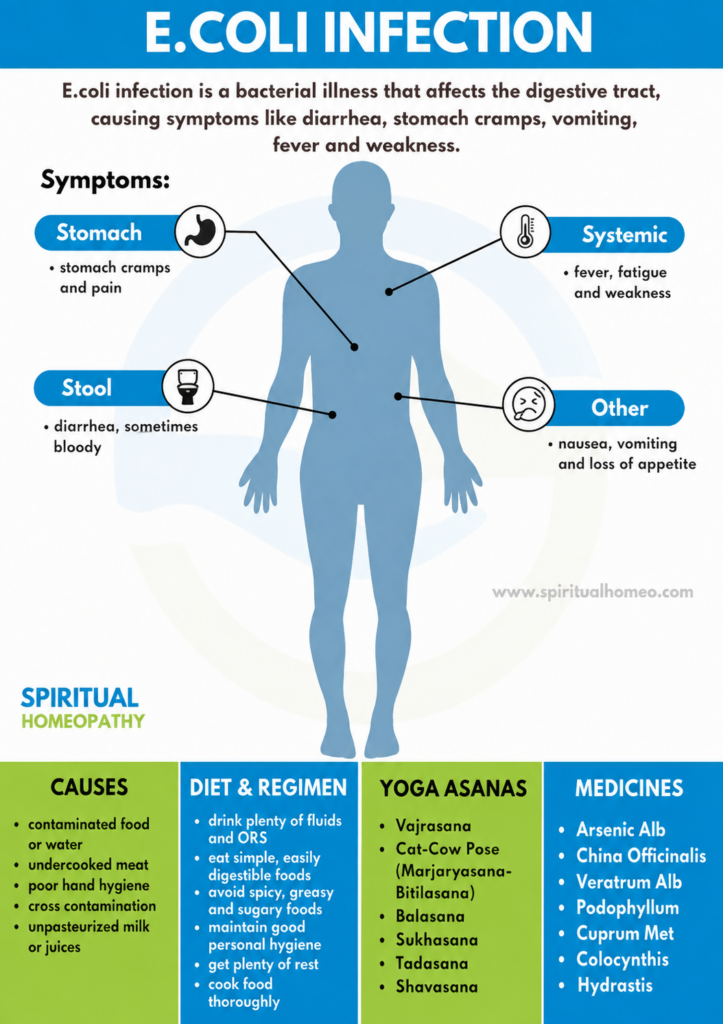
An E. coli infection is caused by certain strains of Escherichia coli, bacteria that can enter the body through contaminated food or water, inadequate hand hygiene, or contact with infected sources. While many E. coli bacteria normally live in the intestines without causing harm, some strains can produce toxins and lead to gastrointestinal illness.
The symptoms can vary depending on the type of E. coli involved. Common signs include loose stools or diarrhea, abdominal cramps, nausea, vomiting, fatigue, and fever. Some infections may cause bloody diarrhea and severe stomach pain. In particular, Shiga toxin-producing E. coli (STEC) infections can occasionally result in serious complications, so warning signs should be taken seriously.
E. coli infections are commonly associated with undercooked meat, unpasteurized milk or juices, contaminated vegetables or sprouts, unsafe drinking water, and poor food-handling practices. Preventive measures such as washing hands thoroughly, cooking food properly, avoiding cross-contamination, and using safe drinking water can significantly reduce the risk of infection.
When symptoms are persistent, severe, or accompanied by blood in the stool, significant dehydration, severe abdominal pain, or high fever, medical assessment is important. Treatment depends on the specific strain and severity of the infection, and certain E. coli infections require particular caution with medications such as antibiotics or anti-diarrheal drugs.
Spiritual Homeopathy Clinic provides personalized consultation support for individuals dealing with digestive health concerns through its Hyderabad branches, including KPHB, Chandanagar, Dilsukhnagar, and Nallagandla, along with online consultation options. For a suspected E. coli infection, appropriate medical evaluation should come first, while professional guidance can help address ongoing digestive wellness and recovery needs.
An E. coli infection develops when disease-causing strains of Escherichia coli enter the body, most commonly through contaminated food, water, or contact with infected people or animals. Although E. coli normally lives in the intestines, certain strains can cause intestinal infections and digestive illness.
Common Causes and Risk Factors of E. coli Infection:
1. Contaminated Food:
Eating undercooked ground meat, contaminated vegetables, sprouts, or other improperly handled foods can introduce harmful E. coli bacteria into the digestive system.
2. Unsafe Drinking Water:
Drinking water contaminated with fecal matter can be a source of infection, particularly where sanitation and water-treatment facilities are inadequate.
3. Poor Hand Hygiene:
Not washing hands properly after using the toilet, changing diapers, handling animals, or before preparing food can allow bacteria to spread.
4. Undercooked Meat:
Ground beef and other meats that are not cooked thoroughly may contain harmful E. coli bacteria. Proper cooking helps destroy these organisms.
5. Unpasteurized Foods and Drinks:
Raw milk, unpasteurized dairy products, and unpasteurized juices can sometimes carry disease-causing E. coli.
6. Cross-Contamination:
Bacteria can transfer from raw meat or contaminated surfaces to ready-to-eat foods through cutting boards, utensils, hands, or kitchen surfaces.
7. Contact With Infected Animals:
Handling cattle, goats, sheep, and other animals or visiting farms and petting zoos can increase exposure to certain E. coli strains.
8. Person-to-Person Transmission:
E. coli can spread between people when an infected individual does not wash their hands properly after using the bathroom and then handles food or objects.
9. Travel and Poor Sanitation:
Traveling to areas where food hygiene, sanitation, or drinking-water systems are inadequate may increase the likelihood of exposure.
10. Weakened Food-Safety Practices:
Improper refrigeration, inadequate cooking, poor food storage, and unsafe food preparation can create opportunities for harmful bacteria to spread.
If an E. coli infection is suspected, especially when there is bloody diarrhea, severe abdominal pain, high fever, or signs of dehydration, prompt medical evaluation is important. The appropriate management depends on the specific E. coli strain and severity of the infection.
E. coli infections are not all the same. Different strains of Escherichia coli can cause different illnesses, ranging from mild digestive symptoms to more serious intestinal complications. They are generally classified according to the toxins they produce and the way they affect the body.
1. Shiga Toxin-Producing E. coli (STEC):
These strains can cause severe diarrhea, abdominal cramps, and sometimes bloody stools. Certain STEC infections may lead to hemolytic uremic syndrome (HUS), a serious complication affecting the kidneys.
2. Enterotoxigenic E. coli (ETEC):
ETEC commonly causes watery diarrhea and is a frequent cause of traveler’s diarrhea, particularly after consuming contaminated food or water.
3. Enteropathogenic E. coli (EPEC):
EPEC primarily affects the intestinal lining and can cause prolonged watery diarrhea, especially in infants and young children.
4. Enteroaggregative E. coli (EAEC):
This type attaches to the intestinal surface and may result in persistent diarrhea, abdominal discomfort, nausea, and other digestive symptoms.
5. Enteroinvasive E. coli (EIEC):
EIEC can invade the intestinal lining and may produce symptoms resembling dysentery, including diarrhea, abdominal cramps, fever, and occasionally blood in the stool.
6. Diffusely Adherent E. coli (DAEC):
DAEC is associated with intestinal infections and may cause watery diarrhea, particularly among children.
Identifying the type of E. coli infection can be important because symptoms and potential complications vary between strains. Medical evaluation and appropriate testing can help determine the cause and guide suitable management, particularly when symptoms are severe or persistent.
An E. coli infection can affect the digestive system in different ways depending on the bacterial strain involved. Symptoms may appear within a few days of exposure and can range from mild digestive upset to more significant intestinal illness. Recognizing concerning symptoms early is important, particularly when diarrhea or dehydration becomes severe.
Common Signs and Symptoms of E. coli Infection:
1. Diarrhea
Frequent loose or watery stools are among the most common symptoms. In some infections, diarrhea may become severe or contain blood.
2. Abdominal Cramps
Strong stomach cramps or pain can develop as the intestines become irritated by the infection. The discomfort may come and go or remain persistent.
3. Nausea
Some people experience nausea, reduced appetite, or an unsettled feeling in the stomach during the infection.
4. Vomiting
Vomiting may occur in certain cases and can increase the risk of losing fluids and becoming dehydrated.
5. Fever
A mild to moderate fever may accompany some E. coli infections, although fever is not present in every case.
6. Fatigue and Weakness
Repeated diarrhea, reduced food intake, and fluid loss can leave a person feeling tired, weak, or lacking energy.
7. Bloody Stools
Certain toxin-producing E. coli strains can cause bloody diarrhea. This is an important warning sign that requires medical attention.
8. Dehydration
Frequent diarrhea or vomiting may result in dehydration. Signs can include excessive thirst, dry mouth, dizziness, reduced urination, and unusual tiredness.
9. Abdominal Tenderness
The abdomen may feel sensitive or painful to touch, particularly during more intense intestinal infections.
10. Reduced Urine Output
Significantly reduced urination can indicate substantial fluid loss and should not be overlooked, especially when accompanied by dizziness or weakness.
Symptoms differ according to the type of E. coli bacteria, age, overall health, and severity of infection. Blood in the stool, severe abdominal pain, significant dehydration, or worsening symptoms should be evaluated promptly by a healthcare professional. Certain E. coli infections can cause serious complications, so self-treatment should be avoided.
Diet and Daily Care During E. coli Infection: Practical Tips for Recovery
An E. coli infection can affect the digestive tract and may cause diarrhea, abdominal cramps, nausea, vomiting, and weakness. During recovery, appropriate food choices, adequate hydration, and good hygiene can help the body cope with fluid loss and digestive discomfort. Dietary needs may vary depending on the severity of the infection and the individual’s health.
Diarrhea and vomiting can cause considerable fluid and electrolyte loss. Take frequent small amounts of:
If dehydration is significant, medical treatment may be necessary.
Once you are able to eat, choose foods that are gentle on the digestive system, such as:
There is no need to follow a highly restrictive diet if you can tolerate a normal balanced diet.
While symptoms are active, it may be helpful to limit foods that are difficult to tolerate, including:
Some people may temporarily have difficulty digesting lactose after an intestinal infection. If milk or other dairy products make diarrhea or bloating worse, reducing them temporarily may help.
Instead of forcing large meals, try smaller portions at regular intervals according to your appetite. Gradually return to your usual balanced diet as digestive symptoms improve.
Preventing further exposure and transmission is important:
Use properly treated or bottled water when the safety of the local water supply is uncertain. Avoid drinking water from potentially contaminated sources.
Fatigue is common during gastrointestinal infections. Adequate rest, sufficient fluids, and gradual return to normal activities can support recovery.
Not every E. coli infection is managed in the same way. Certain E. coli infections require caution with antibiotics and anti-diarrheal medicines, particularly toxin-producing infections. Consult a healthcare professional before using these medications.
Seek prompt medical attention if there is:
Pro Tip: Keep track of fluid intake, bowel movements, and symptoms during recovery. This can help you recognize dehydration or worsening illness early.
Diet and recovery recommendations should be individualized according to the E. coli strain, severity of symptoms, age, and overall health. Suspected or confirmed E. coli infection should be appropriately evaluated by a healthcare professional, especially when symptoms are severe.
Yoga can be included as a gentle supportive practice during recovery from digestive infections, mainly by promoting relaxation, maintaining comfortable movement, and helping manage stress. However, yoga does not treat or eliminate E. coli bacteria, and it should not replace medical care, hydration, or prescribed treatment.
Vajrasana (Thunderbolt Pose):
Sitting comfortably in Vajrasana after meals, when tolerated, may encourage a calm digestive routine. Avoid the pose if it causes knee or ankle discomfort.
Cat-Cow Pose (Marjaryasana-Bitilasana):
This gentle movement alternates between rounding and extending the spine. It can provide light abdominal movement and may help maintain mobility when energy levels are low.
Balasana (Child’s Pose):
A relaxing posture that can help calm the body and reduce stress. It should only be practiced when abdominal discomfort is mild and the position feels comfortable.
Sukhasana (Easy Pose):
Sitting comfortably with slow, controlled breathing can promote relaxation and may be useful when recovering from digestive illness.
Tadasana (Mountain Pose):
This simple standing posture encourages upright alignment, gentle stretching, and mindful breathing without placing significant demands on the digestive system.
Shavasana (Corpse Pose):
A restful posture that encourages physical and mental relaxation. It may be particularly useful when recovering from weakness or fatigue.
Important: During active E. coli infection, especially when experiencing diarrhea, vomiting, fever, severe abdominal cramps, dehydration, or significant weakness, rest and medical care should take priority over exercise. Avoid strenuous yoga until recovery. Blood in the stool, severe abdominal pain, reduced urination, or signs of dehydration require prompt medical attention
An E. coli infection is a bacterial illness that can affect the gastrointestinal tract and may cause diarrhea, abdominal cramps, nausea, vomiting, fever, and weakness. Because some strains can lead to serious complications, suspected or confirmed infection should receive appropriate medical evaluation. Homeopathy should not be considered a replacement for medical treatment for an active bacterial infection.
Homeopathic consultations generally focus on the individual’s overall symptom picture rather than treating every person with the same approach. A practitioner may consider the person’s digestive complaints, general health, lifestyle, dietary habits, and recovery pattern when providing supportive care.
For individuals who continue to experience digestive sensitivity after an infection has been appropriately managed, a homeopathic consultation may be used as a complementary wellness approach.
Individual Symptom Assessment:
The practitioner may review the nature of digestive symptoms, bowel patterns, appetite, food tolerance, medical history, and overall health.
Post-Infection Digestive Support:
Some people experience temporary changes in digestion following gastrointestinal infections. Personalized wellness guidance may focus on supporting comfortable eating and healthy digestive routines.
Diet and Lifestyle Considerations:
Food choices, hydration, sleep, stress, and daily habits can be discussed as part of an overall digestive-wellness plan.
Whole-Person Consultation:
Homeopathic practice considers the person’s broader health picture rather than looking at one symptom in isolation.
Homeopathy should be viewed as complementary care rather than an antibacterial treatment. It should not delay appropriate testing, rehydration, medical assessment, or treatment when an E. coli infection is suspected. Particular caution is needed with infections involving bloody diarrhea or severe symptoms.
If you have persistent diarrhea, blood in the stool, severe abdominal pain, high fever, repeated vomiting, significant weakness, or signs of dehydration, seek prompt medical attention.
Spiritual Homeopathy Clinic provides personalized consultations through its Hyderabad branches and online consultation services. For individuals recovering from appropriately managed digestive infections, consultations can focus on individualized digestive wellness and overall health support.
Homeopathy has not been established as a treatment that eradicates E. coli infection. Active infection requires appropriate medical evaluation and management.
An E. coli infection can sometimes cause mild digestive symptoms, but certain signs may indicate a more serious infection or complication. Medical attention is especially important when diarrhea is severe, symptoms continue to worsen, or there are signs of dehydration. Some strains of E. coli can cause serious complications, so timely evaluation should not be delayed.
If an E. coli infection is suspected, a healthcare professional may recommend appropriate testing and management based on the symptoms and suspected bacterial strain. Avoid self-starting antibiotics or anti-diarrheal medicines without medical advice, as some E. coli infections require particular caution.
At Spiritual Homeopathy, our experienced practitioners provide individualized consultations based on your symptoms, medical history, lifestyle, and overall health. Consultations are available at our Hyderabad clinics in Kukatpally (KPHB), Chandanagar, Dilsukhnagar, and Nallagandla, as well as through online consultations across India and in more than 100 countries worldwide.
For suspected or confirmed E. coli infection, appropriate medical evaluation should come first. For consultation support, call 9069 176 176.
Escherichia coli (E. coli) bacteria can cause several distinct illnesses ranging from common digestive issues to severe organ damage.
Your body's natural immune system and digestive processes clear out harmful E. coli over time, while medical treatments like antibiotics are only used for specific, non-toxin-producing strains outside the gut.
Doctors treat E. coli infections with specific antibiotics depending on where the infection is located, but antibiotics are not used for standard food poisoning because they can increase the risk of severe complications.
When you have an E. coli infection, you should avoid foods that irritate your stomach or worsen diarrhea, as well as any items that could spread bacteria or cause further contamination.
E. coli bacteria are killed by high heat (cooking food above 70°C), proper disinfection using soap, bleach, or hydrogen peroxide, and specific antibiotics for non-toxin strains. Your body's own immune system also clears most mild infections on its own.