
Dysentery is a serious digestive infection that causes inflammation of the intestines, leading to diarrhea with blood or mucus in the stool. It is most commonly caused by bacterial or amoebic infections that spread through contaminated food, water, or poor hygiene. Common symptoms include frequent loose stools, abdominal cramps, fever, nausea, dehydration, and the urgent need to pass stools. Because dysentery can lead to significant fluid loss and other complications, especially in children and older adults, it should not be ignored. Seeking early medical evaluation and appropriate treatment is important to identify the underlying cause, prevent dehydration, and reduce the risk of serious complications.
At Spiritual Homeopathy, we believe in treating the individual rather than simply focusing on symptoms. Our experienced homeopathic doctors carefully evaluate each patient’s symptoms, medical history, eating habits, lifestyle, hydration status, and overall health before preparing an individualized treatment plan. Our holistic approach focuses on supporting digestive health, promoting overall well-being, and providing safe and personalized homeopathic care tailored to each patient’s unique needs while complementing appropriate conventional medical treatment. We encourage prompt medical evaluation for severe diarrhea, bloody stools, dehydration, or persistent symptoms.
We provide personalized homeopathy consultations in Hyderabad to patients of all age groups through our clinics in Hyderabad, as well as online homeopathy consultations for patients across India and in more than 100 countries worldwide. If you are looking for an experienced homeopathy doctor in Hyderabad for supportive digestive health care, Spiritual Homeopathy is committed to delivering compassionate, patient-centered consultations while encouraging timely medical treatment and evidence-based management for dysentery.
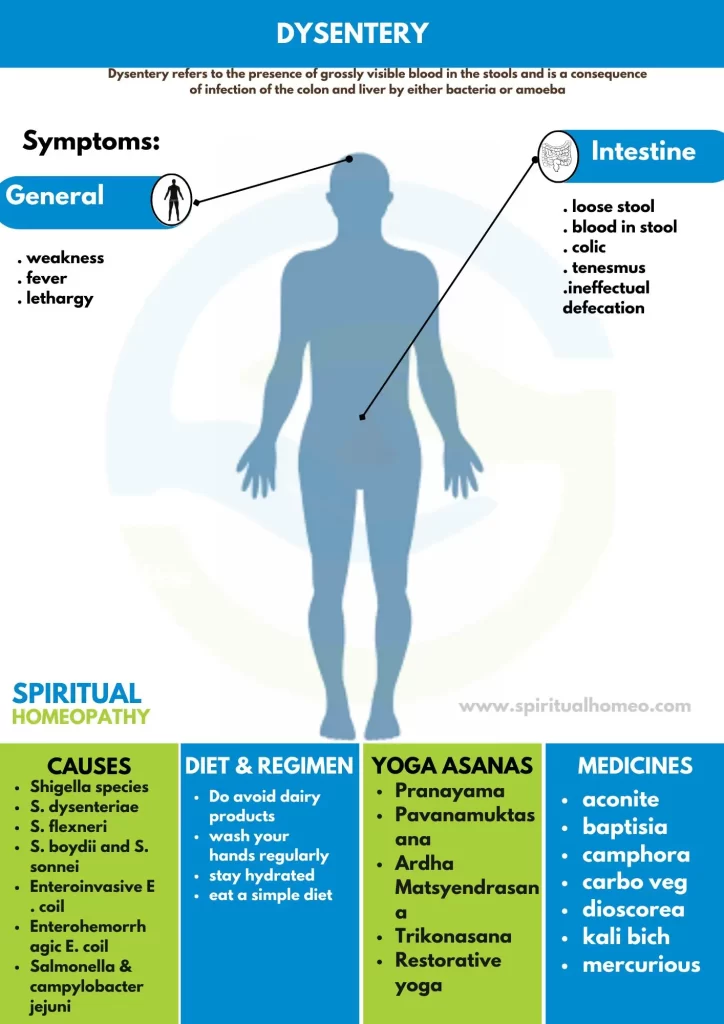
Bacillary dysentery is more commonly seen in children when compared to amebic dysentery.
Dysentery can be caused by a variety of pathogens, including bacteria, parasites, and viruses. The primary causes of dysentery include the following:
Shigella: The most common cause of bacterial dysentery, with Shigella dysenteriae being particularly virulent.
Salmonella: Although it mainly causes enterocolitis, certain strains of Salmonella may also lead to dysentery.
Campylobacter jejuni: This bacterium is often contracted through contaminated food or water.
Escherichia coli (E. coli): Specifically, enteroinvasive E. coli (EIEC) can produce dysentery-like symptoms.
Entamoeba histolytica: The protozoan parasite responsible for amoebic dysentery, which invades the colon wall and leads to ulcer formation.
Rotavirus and Norovirus: These viruses are commonly associated with gastroenteritis but may sometimes cause symptoms resembling dysentery, especially in young children.
These causes may result in symptoms such as severe diarrhea, blood in the stool, and abdominal pain. Understanding the underlying cause is important, as it helps guide an individualized and appropriate treatment approach.
Dysentery can be classified into two main types: Bacterial Dysentery and Amoebic Dysentery. Each type is caused by different pathogens and presents with distinct clinical characteristics.
Bacterial dysentery occurs when the intestines become infected with harmful bacteria such as Salmonella, Shigella, Campylobacter, or enterohemorrhagic E. coli.
Shigellosis: Caused by Shigella, this is the most common form of bacterial dysentery. The infection often leads to severe diarrhea with blood and mucus in the stool.
Symptoms: Diarrhea, fever, abdominal cramps, and in some cases, the presence of blood or mucus in the stool.
This type of dysentery is commonly contracted through contaminated food or water and is more prevalent in areas with poor sanitation. It usually presents as an acute condition, requiring timely medical attention.
Amoebic dysentery is caused by a parasitic infection, most commonly Entamoeba histolytica, which primarily affects the intestines.
Endemic in tropical areas: Amoebic dysentery is less common in developed regions but remains prevalent in tropical and subtropical areas with inadequate sanitation.
Transmission: Infection generally occurs through the consumption of contaminated food or water, as well as through poor hygiene practices.
Symptoms: Abdominal pain, diarrhea (often with blood), weight loss, and fatigue. In some cases, the condition may become chronic if left untreated.
Dysentery can be classified into two main types: Bacterial Dysentery and Amoebic Dysentery. Each type is caused by different pathogens and presents with distinct clinical characteristics.
Bacterial dysentery occurs when the intestines become infected with harmful bacteria such as Salmonella, Shigella, Campylobacter, or enterohemorrhagic E. coli.
Shigellosis: Caused by Shigella, this is the most common form of bacterial dysentery. The infection often leads to severe diarrhea with blood and mucus in the stool.
Symptoms: Diarrhea, fever, abdominal cramps, and in some cases, the presence of blood or mucus in the stool.
This type of dysentery is commonly contracted through contaminated food or water and is more prevalent in areas with poor sanitation. It usually presents as an acute condition, requiring timely medical attention.
Amoebic dysentery is caused by a parasitic infection, most commonly Entamoeba histolytica, which primarily affects the intestines.
Endemic in tropical areas: Amoebic dysentery is less common in developed regions but remains prevalent in tropical and subtropical areas with inadequate sanitation.
Transmission: Infection generally occurs through the consumption of contaminated food or water, as well as through poor hygiene practices.
Symptoms: Abdominal pain, diarrhea (often with blood), weight loss, and fatigue. In some cases, the condition may become chronic if left untreated.
Dysentery is characterized by a range of symptoms that primarily affect the digestive system. Common signs and symptoms include:
Frequent, loose, or watery stools
Presence of blood and mucus in the stool, which is a hallmark feature of dysentery
Severe, colicky abdominal pain
Cramping that is often relieved after passing stools
Moderate to high fever that commonly accompanies the onset of dysentery
Nausea may be present, sometimes accompanied by vomiting
A painful sensation of needing to pass stools even when the bowels are empty
Painful straining during bowel movements
Symptoms of dehydration such as dry mouth, reduced urine output, and dizziness
In severe cases, dehydration may progress to shock, which is a medical emergency
If these symptoms are frequent, severe, or persistent, especially in children or elderly individuals, timely medical consultation is advised to prevent complications.
Managing dysentery involves following an appropriate diet and maintaining proper hygiene. The following dietary measures and habits may help support recovery and symptom control:
Dairy products may aggravate symptoms, particularly in individuals with lactose intolerance. It is generally advisable to avoid dairy during episodes of dysentery to prevent worsening diarrhea.
Although fiber is usually an important part of a balanced diet, high-fiber foods can irritate the digestive tract during dysentery. Opt for easily digestible, low-fiber foods during this period.
The traditional BRAT diet (Bananas, Rice, Applesauce, and Toast) is commonly recommended during diarrhea. These bland foods are gentle on the digestive system and may help firm up stools.
Maintaining proper hand hygiene helps prevent further infection. Wash hands thoroughly, including palms, backs of hands, between fingers, and under nails, for at least 20 seconds, especially before eating or food preparation.
Diarrhea can lead to significant fluid loss, making hydration essential. Adequate intake of water, clear broths, or oral rehydration solutions helps replenish fluids and electrolytes.
Dietary and hygiene recommendations may vary depending on the individual’s age, severity of symptoms, and overall health, and should be adjusted accordingly.
Gentle yoga practices may help support digestion, reduce stress, and promote relaxation during recovery from dysentery. These practices should be performed only when symptoms are mild and under appropriate guidance.
Benefits: Helps release gas and bloating, reduces abdominal discomfort, and supports digestion.
How to do it:
Lie on your back, bend your knees, and draw them toward your chest.
Hug your knees with both hands and gently rock side to side if comfortable.
Hold for 20–30 seconds, then release.
Benefits: Strengthens abdominal muscles and improves circulation, which may aid digestive function.
How to do it:
Lie on your back with feet flat on the floor, hip-width apart.
Inhale and lift your hips while pressing your feet and arms into the floor.
Hold for 20–30 seconds, then slowly release.
Benefits: Improves circulation, relaxes the nervous system, and helps reduce fatigue.
How to do it:
Sit close to a wall and lie on your back.
Extend your legs up the wall, keeping them straight.
Relax and breathe deeply for 5–10 minutes.
Benefits: Stimulates digestive organs and strengthens the lower back.
How to do it:
Lie face down with hands under shoulders and elbows close to the body.
Inhale and gently lift your chest, extending the spine.
Hold briefly and slowly release.
Benefits: Gently massages abdominal organs, supports digestion, and reduces stress.
How to do it:
Begin on hands and knees with wrists under shoulders and knees under hips.
Inhale while arching the back (cow pose), exhale while rounding the spine (cat pose).
Continue gently for 1–2 minutes.
Benefits: Supports digestion, stretches the sides of the body, and improves flexibility.
How to do it:
Stand with feet wide apart and turn one foot outward.
Extend arms parallel to the floor and reach over the front leg.
Hold briefly, then repeat on the other side.
Benefits: Helps reduce stress, promotes relaxation, and supports overall digestive health.
How to do it:
Sit comfortably with the spine straight.
Inhale through the left nostril while closing the right, then exhale through the right.
Alternate for 5–10 minutes.
Benefits: Promotes deep relaxation and helps relieve physical and mental tension.
How to do it:
Lie flat on your back with arms relaxed at your sides.
Focus on slow, deep breathing.
Remain in the pose for 5–10 minutes.
Gentle Movement: During dysentery, avoid vigorous or intense yoga practices. Choose slow, gentle movements based on comfort levels.
Medical Guidance: Always consult a healthcare provider before starting yoga, especially during illness or recovery.
Hydration: Adequate fluid intake is essential, as dysentery can cause dehydration.
Yoga and lifestyle practices are supportive measures only and should not be considered a replacement for medical evaluation or treatment.
At Spiritual Homeopathy Clinic, care is guided by traditional homeopathic principles along with an understanding of physical and emotional well-being. The clinical approach focuses on individual assessment and personalized care, taking into account each patient’s symptoms, health history, and overall condition. Consultations are available across multiple branches in Hyderabad, as well as through online and international consultation options.
Homeopathic care is based on the concept of addressing the person as a whole rather than focusing only on isolated symptoms. At Spiritual Homeopathy Clinic, the approach emphasizes identifying contributing factors related to physical and emotional health. This method supports long-term management by aiming to restore balance and improve overall well-being under professional guidance.
Patients receive structured consultations that include a detailed review of symptoms, medical history, and lifestyle factors. Consultations are offered through in-clinic visits, online platforms, and international consultation services, allowing flexibility based on patient needs.
Homeopathic treatment focuses on individualized care, with remedies selected based on the patient’s unique presentation. This approach is generally well-tolerated under professional supervision and is intended to support the body’s natural healing processes without targeting symptoms alone.
Regular follow-up is an important part of care to assess progress and make adjustments when needed. Ongoing monitoring helps ensure continuity and supports effective long-term health management.
Spiritual Homeopathy Clinic is committed to providing responsible, patient-centered care through a structured and professional approach. Medical guidance is offered throughout the consultation process to support informed decision-making and appropriate care planning.
You should consult a healthcare professional if dysentery symptoms become frequent, severe, or persistent, or if they begin to affect daily activities. Early medical evaluation helps identify contributing factors and reduces the risk of dehydration and other complications.
Seek consultation if you experience:
Frequent or persistent diarrhea, especially with blood or mucus
Severe abdominal pain or continuous cramping
Fever that does not subside
Signs of dehydration such as reduced urine output, dizziness, or dry mouth
Symptoms that worsen or do not improve with dietary and hygiene measures
Weight loss, weakness, or fatigue, particularly in children or elderly individuals
At Spiritual Homeopathy Clinic, consultations are available at multiple branches in Hyderabad, including Kukatpally, Chandanagar, Dilsukhnagar, and Nallagandla. Online and international consultations are also available for patients unable to visit in person. Professional assessment supports an individualized care approach based on symptoms, severity, and overall health status.
For appointments or consultation guidance, contact 9069 176 176.
Dysentery usually gets better by itself within 7 days. The most important thing is to prevent dehydration. After seeing a GP, there are things you can do to help your recovery.
Dysentery is an intestinal inflammation characterized by severe diarrhea with blood and mucus, often accompanied by abdominal cramps and fever. It is primarily caused by infections from bacteria and parasites, which spread through contaminated food and water or poor hand hygiene.
The best treatment for dysentery depends on whether the infection is bacterial (bacillary dysentery) or parasitic (amoebic dysentery). In almost all cases, the most critical first step is fluid replacement using Oral Rehydration Solutions (ORS) or IV fluids to prevent dehydration.
Dysentery is still called dysentery, but today it is officially classified by its underlying causes: shigellosis (for bacterial) or amoebiasis (for parasitic). These are infectious conditions characterized by severe, bloody diarrhea and intestinal inflammation rather than a general diagnosis.
Dysentery primarily affects the intestines, specifically causing inflammation and ulceration in the lining of the large intestine (colon). This leads to severe abdominal cramps and diarrhea that frequently contains blood and mucus.
Drink Oral Rehydration Solution (ORS), coconut water, clear salty broths, and boiled rice water. These fluids rapidly replace the water and vital electrolytes (like sodium and potassium) lost from severe, bloody diarrhea. Sip small amounts continuously throughout the day rather than drinking large glasses at once.