


Stress is a common emotional and physical response to challenging situations, ongoing pressure, or major life changes. Short-term stress can be a normal part of life, but prolonged or excessive stress may affect sleep, concentration, mood, digestion, energy levels, and overall quality of life. Common experiences may include constant worry, irritability, restlessness, tiredness, difficulty concentrating, headaches, muscle tension, disturbed sleep, and changes in appetite. When stress continues for a long period or begins interfering with everyday activities, professional support may be helpful.
At Spiritual Homeopathy, consultations take an individualized approach to understanding stress-related concerns. Our homeopathic doctors consider the person’s symptoms, emotional experiences, lifestyle, sleep pattern, daily routine, and overall health before suggesting a personalized care plan. Our holistic approach focuses on supporting overall well-being and helping individuals develop healthier ways to manage stress alongside appropriate lifestyle measures. We provide homeopathic consultation for stress, stress-related concerns, sleep difficulties, and emotional well-being.
We offer personalized homeopathic treatment for stress in Hyderabad through our clinics in Kukatpally (KPHB), Chandanagar, Dilsukhnagar, and Nallagandla, along with online consultations across India and in more than 100 countries worldwide. If you are looking for stress management support, natural approaches for stress, or personalized homeopathic care, Spiritual Homeopathy provides patient-centered consultations based on individual needs and circumstances.
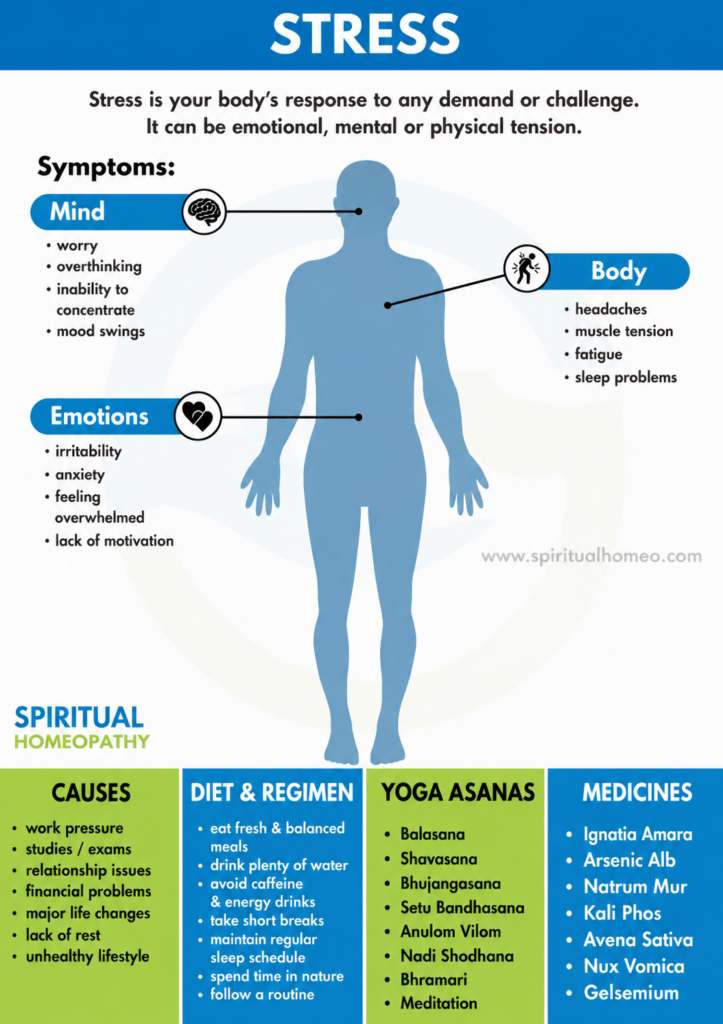
Stress: Causes, Symptoms, and Practical Ways to Support Emotional Well-Being
Stress is the body’s natural response to situations that feel demanding, uncertain, or overwhelming. A certain amount of stress can help a person stay alert and respond to challenges, but ongoing or excessive stress may affect both mental and physical well-being. It can influence sleep, mood, concentration, energy, digestion, and everyday functioning.
Stress may develop because of work pressure, academic demands, relationship difficulties, financial concerns, major life changes, lack of sleep, or prolonged emotional strain. Everyone responds differently, and the intensity of stress can vary depending on personal circumstances and coping abilities.
Common signs associated with stress include persistent worrying, irritability, restlessness, difficulty concentrating, tiredness, headaches, muscle tension, disturbed sleep, changes in appetite, and feeling emotionally overwhelmed. Long-standing stress may also contribute to unhealthy lifestyle habits and can affect overall quality of life.
Managing stress often involves a combination of healthy routines, adequate sleep, regular physical activity, relaxation techniques, social support, and professional guidance when needed. Identifying personal stressors and learning effective coping strategies can help support emotional resilience and daily well-being.
Spiritual Homeopathy Clinic provides personalized consultation support through its branches in Hyderabad, along with online consultations across India and international consultation options, for individuals seeking guidance for stress-related concerns and overall wellness.
What Can Lead to Stress? Common Causes and Everyday Triggers
Stress is the body’s natural response to challenging, demanding, or uncertain situations. Short-term stress can be a normal part of life, but frequent or prolonged stress may affect sleep, concentration, mood, energy levels, and overall well-being. Identifying common triggers can help a person understand their stress patterns and seek appropriate support.
Common Causes and Triggers of Stress:
1. Work or Academic Pressure:
Heavy workloads, deadlines, long working hours, examinations, or pressure to perform can contribute to ongoing mental strain.
2. Relationship Concerns:
Conflicts with partners, family members, friends, or colleagues may create emotional tension and persistent worry.
3. Financial Difficulties:
Debt, unexpected expenses, job insecurity, or concerns about financial stability can become significant sources of stress.
4. Major Life Changes:
Events such as changing jobs, moving to a new place, marriage, separation, bereavement, or other major transitions may require considerable emotional adjustment.
5. Lack of Sleep:
Poor-quality or insufficient sleep can make it harder to cope with everyday challenges and may increase feelings of irritability and tension.
6. Health-Related Concerns:
Living with an illness, caring for someone who is unwell, or worrying about personal health can contribute to emotional stress.
7. Social and Emotional Pressure:
Loneliness, social expectations, lack of support, or constantly comparing oneself with others can negatively affect emotional well-being.
8. Unhealthy Lifestyle Habits:
Irregular meals, excessive screen time, physical inactivity, and frequent consumption of caffeine or alcohol may influence how the body responds to stress.
9. Ongoing Worry and Overthinking:
Constantly anticipating negative outcomes or repeatedly thinking about past or future problems can maintain a state of mental tension.
10. Environmental Factors:
Noise, overcrowding, demanding surroundings, lack of personal space, or an unstable home or work environment may also contribute to stress.
The causes of stress differ from person to person. Understanding individual triggers, maintaining healthy routines, and seeking professional guidance when stress becomes persistent can support better emotional and overall well-being.
Types of Stress: Recognizing Different Forms of Stress
Stress does not affect everyone in the same way. It can differ depending on how long it lasts, what triggers it, and how strongly it influences a person’s daily life. Understanding the different forms of stress can help in recognizing patterns and choosing appropriate ways to manage them.
1. Acute Stress:
This is short-term stress that develops in response to an immediate challenge, such as an exam, presentation, argument, or sudden unexpected situation. It generally decreases once the stressful event has passed.
2. Episodic Acute Stress:
Some individuals experience acute stress repeatedly because of frequent deadlines, a demanding routine, or constant pressure. Recurrent episodes may leave a person feeling overwhelmed or mentally exhausted.
3. Chronic Stress:
Chronic stress continues for an extended period, often due to ongoing work pressure, financial concerns, relationship difficulties, or persistent life challenges. Prolonged stress may affect sleep, mood, concentration, and physical well-being.
4. Situational Stress:
This form develops around a particular circumstance or life event, such as moving to a new place, changing jobs, facing examinations, or dealing with a difficult personal situation.
5. Psychological or Emotional Stress:
Persistent worry, fear, overthinking, emotional conflict, or feeling unable to cope with daily responsibilities can contribute to this type of stress.
Recognizing the pattern and duration of stress is important because its effects can vary considerably between individuals. Persistent or overwhelming stress that interferes with everyday functioning should be discussed with a qualified healthcare professional.
Recognizing the Signs of Stress: Common Symptoms You Should Not Overlook
Stress can affect both the mind and body. While occasional stress is a normal response to challenging situations, ongoing stress may show up through changes in mood, sleep, energy, concentration, and physical comfort. The symptoms can differ from one person to another.
Common Signs and Symptoms of Stress:
1. Constant Worry or Nervousness
You may feel uneasy, restless, or continuously concerned about everyday situations, even when there is no immediate danger.
2. Irritability and Mood Changes
Frequent frustration, impatience, anger, or sudden emotional changes can sometimes accompany prolonged stress.
3. Difficulty Concentrating
Stress may make it harder to focus on work, studies, conversations, or routine tasks.
4. Sleep Problems
Trouble falling asleep, waking frequently during the night, or feeling unrefreshed after sleep can occur during periods of increased stress.
5. Headaches
Mental tension and muscle tightness may contribute to recurring tension-type headaches.
6. Muscle Tension
Stress can cause tightness or discomfort, particularly around the neck, shoulders, back, or jaw.
7. Changes in Appetite
Some people eat more when stressed, while others may experience reduced appetite or lose interest in food.
8. Digestive Discomfort
Stress can influence the digestive system and may be associated with symptoms such as stomach discomfort, bloating, nausea, or changes in bowel habits.
9. Tiredness and Low Energy
Persistent mental strain and disturbed sleep may leave you feeling physically or mentally exhausted.
10. Increased Heart Rate or Sweating
During stressful moments, the body’s natural stress response can temporarily cause a faster heartbeat, sweating, trembling, or a feeling of being on edge.
Stress affects individuals differently, and these symptoms can also occur with other physical or psychological conditions. If symptoms are persistent, severe, or interfere with daily life, seeking professional medical guidance is important for proper evaluation and support.
Diet and Lifestyle Tips for Managing Stress and Supporting Emotional Well-Being
Food, daily routines, sleep, and physical activity can all influence how the body responds to stress. A balanced lifestyle cannot remove every source of stress, but healthy habits may improve energy, sleep, mood, and the ability to cope with everyday challenges.
Regular, nourishing meals can help support steady energy throughout the day. Include:
Large amounts of coffee, energy drinks, and other caffeinated beverages may contribute to restlessness, sleep difficulties, or a racing heartbeat in some people. Consider reducing intake if you notice these effects.
Drink sufficient water throughout the day. Dehydration can contribute to tiredness and headaches, which may make it harder to cope with stress.
Skipping meals or eating irregularly may leave you feeling tired or irritable. Try to maintain consistent meal timings and avoid relying heavily on processed snacks.
A regular sleep schedule can support emotional resilience and concentration. Aim for adequate sleep and create a relaxing routine before bedtime by reducing screen exposure and stimulating activities.
Movement can be a useful part of stress management. Walking, stretching, cycling, swimming, or other enjoyable forms of exercise can help support physical and emotional well-being.
Set aside a few minutes each day for calming activities such as:
Constant notifications, excessive screen time, and continuous exposure to stressful information can add to mental fatigue. Taking regular digital breaks may create more opportunities for rest and relaxation.
Hobbies, music, reading, spending time outdoors, or connecting with supportive friends and family can provide healthy breaks from daily responsibilities.
Breaking large responsibilities into smaller tasks and setting realistic priorities can make demanding days feel more manageable. Allow yourself short breaks rather than trying to complete everything continuously.
Pro Tip: Keep a simple stress diary for a few days. Note your sleep, meals, workload, mood, and situations that increase tension. This can help you recognize personal patterns and make practical lifestyle changes.
Nutritional and lifestyle needs vary from person to person. If stress is persistent, overwhelming, or begins affecting sleep, work, relationships, or daily functioning, consider speaking with a qualified healthcare professional for appropriate support.
Yoga for Stress: Gentle Poses to Encourage Relaxation and Mental Well-Being
Yoga may be a useful complementary practice for managing everyday stress by encouraging controlled breathing, physical relaxation, and greater awareness of the body. Practicing gentle asanas consistently may help create a calmer routine.
Balasana (Child’s Pose):
A restful posture that gently relaxes the back, shoulders, and neck while encouraging slow, comfortable breathing.
Sukhasana (Easy Pose):
A simple seated position that can be combined with mindful breathing and meditation to promote relaxation and mental focus.
Vrikshasana (Tree Pose):
This balancing posture encourages concentration and body awareness, helping shift attention away from stressful thoughts.
Marjaryasana-Bitilasana (Cat-Cow Pose):
The gentle movement between these two positions helps release tension around the spine, shoulders, and neck while coordinating movement with breathing.
Paschimottanasana (Seated Forward Bend):
A gentle forward stretch that may encourage physical relaxation and provide a quiet opportunity to focus on slow breathing.
Shavasana (Corpse Pose):
A deeply restful posture commonly practiced at the end of a yoga session. It allows the body to relax while encouraging calm, steady breathing.
Yoga should be viewed as a supportive wellness practice, not a replacement for professional care. If stress is persistent, overwhelming, affects sleep or daily functioning, or is accompanied by significant emotional or physical symptoms, consider speaking with a qualified healthcare professional.
Homeopathic Approach to Stress: A Personalized Path Toward Emotional Well-Being
Stress is a common response to demanding situations, but ongoing stress can affect sleep, concentration, energy levels, digestion, mood, and everyday functioning. A holistic approach considers the different factors that may be contributing to a person’s stress rather than looking at one symptom alone.
Homeopathic consultations are based on the individual pattern of symptoms and overall well-being. During an assessment, a practitioner may consider emotional responses, sleep patterns, daily routine, lifestyle, stress triggers, and general health before suggesting an individualized approach.
The focus is on understanding the person as a whole and identifying factors that may be associated with ongoing stress.
Individual Assessment:
The consultation considers the person’s symptoms, emotional state, lifestyle, sleep habits, and relevant health history.
Emotional and Mental Well-Being:
Factors such as persistent worry, irritability, difficulty concentrating, or feeling overwhelmed can be discussed as part of the overall assessment.
Sleep and Daily Routine:
Irregular sleep, demanding schedules, and inadequate rest may contribute to feeling stressed. These areas can be addressed alongside overall care.
Lifestyle Factors:
Work pressure, relationship concerns, lack of relaxation, and limited physical activity may all influence stress levels and are considered when appropriate.
Homeopathic care may be used as a complementary approach alongside healthy lifestyle practices. It should not replace evidence-based psychological or medical treatment when these are needed. Persistent or severe stress deserves proper professional evaluation.
Simple daily habits may support emotional well-being:
If stress continues for several weeks, interferes with work or relationships, affects sleep, or feels difficult to manage, consider consulting a qualified healthcare professional. If you experience thoughts of self-harm or feel unable to stay safe, seek urgent professional help immediately.
Spiritual Homeopathy Clinic provides personalized consultations through its Hyderabad branches in Kukatpally (KPHB), Chandanagar, Dilsukhnagar, and Nallagandla, along with online consultations for patients across India and internationally.
Homeopathic care can be considered within a broader wellness plan that emphasizes individual assessment, healthy routines, emotional support, and appropriate professional guidance.
Stress is a normal response to challenges, but when it becomes ongoing or starts affecting your emotional and physical well-being, professional guidance may be helpful. Persistent stress can sometimes contribute to sleep difficulties, headaches, digestive complaints, low energy, changes in mood, and problems with concentration.
If stress feels overwhelming or you have thoughts of harming yourself, seek immediate support from a qualified mental-health professional or local emergency service.
At Spiritual Homeopathy, our homeopathic doctors offer individualized consultations by considering your symptoms, lifestyle, sleep pattern, emotional concerns, and overall health. Consultations are available at our Hyderabad clinics in Kukatpally (KPHB), Chandanagar, Dilsukhnagar, and Nallagandla, as well as through secure online consultations across India and in more than 100 countries worldwide.
For consultation enquiries, call 9069 176 176.
Stress is the physical and mental response your body has when it faces a challenge, threat, or sudden change.
Healing chronic stress requires a combination of daily nervous system regulation, lifestyle changes, and addressing root-cause stressors over time.
Stress happens when your brain and body react to demands, pressures, or perceived threats.
Controlling stress involves simple daily actions like moving your body, breathing deeply, and setting clear limits. You can follow basic routines to calm your mind and body when you feel overwhelmed.
You can check your mental stress level using validated self-assessment questionnaires or physical tracking methods like heart rate monitoring.
Yes, a lack of sleep directly causes and increases stress in the body and mind.