
A Deviated Nasal Septum (DNS) is a common condition in which the thin wall (nasal septum) that separates the two nasal passages is displaced to one side. This can make breathing through the nose difficult and may lead to symptoms such as persistent nasal blockage, difficulty breathing, snoring, frequent sinus infections, nosebleeds, facial pressure, headaches, or disturbed sleep. While some people with a deviated septum have no symptoms, others may experience ongoing nasal discomfort that affects their quality of life. Seeking early evaluation by a qualified healthcare professional can help determine the severity of the condition and identify the most appropriate treatment options.
At Spiritual Homeopathy, we believe in treating the individual rather than simply focusing on symptoms. Our experienced homeopathic doctors carefully evaluate each patient’s symptoms, medical history, allergy history, lifestyle, environmental triggers, and overall health before preparing an individualized treatment plan. Our holistic approach focuses on supporting overall respiratory health, reducing the frequency of recurring nasal and sinus complaints, and improving general well-being through safe and personalized homeopathic care. We provide individualized homeopathic care for patients experiencing chronic nasal congestion, recurrent sinus discomfort, and related respiratory concerns while encouraging appropriate medical evaluation for structural nasal conditions.
We provide personalized homeopathy consultations in Hyderabad to patients of all age groups through our clinics, as well as online homeopathy consultations for patients across India and in more than 100 countries worldwide. If you are looking for an experienced homeopathy doctor in Hyderabad for personalized supportive care for chronic nasal and sinus concerns, Spiritual Homeopathy is committed to delivering expert, patient-centered care while working alongside appropriate medical management whenever needed.
The nasal septum is the structure of bone and cartilage that separates the nasal cavity into two nostrils. The cartilage, called the quadrangular cartilage, is supported by bones including the maxillary crest, vomer, and the perpendicular plate of the ethmoid. Normally, the septum lies near the center, making the nasal passages largely symmetrical.
A deviated septum occurs when the cartilaginous ridge shifts to one side, partially obstructing the affected nasal passage. This deviation can interfere with sinus drainage and may cause difficulty breathing, headaches, nosebleeds, or sleep-related issues such as snoring or sleep apnea.
Minor deviations are common and often go unnoticed. A septum is considered clinically significant only when the deviation is substantial enough to cause symptoms or functional problems. Many individuals remain unaware of a deviation until discomfort or complications arise.
At Spiritual Homeopathy Clinic, consultations for nasal and sinus concerns are available at multiple branches in Hyderabad, as well as online and international consultations for patients who cannot visit in person.
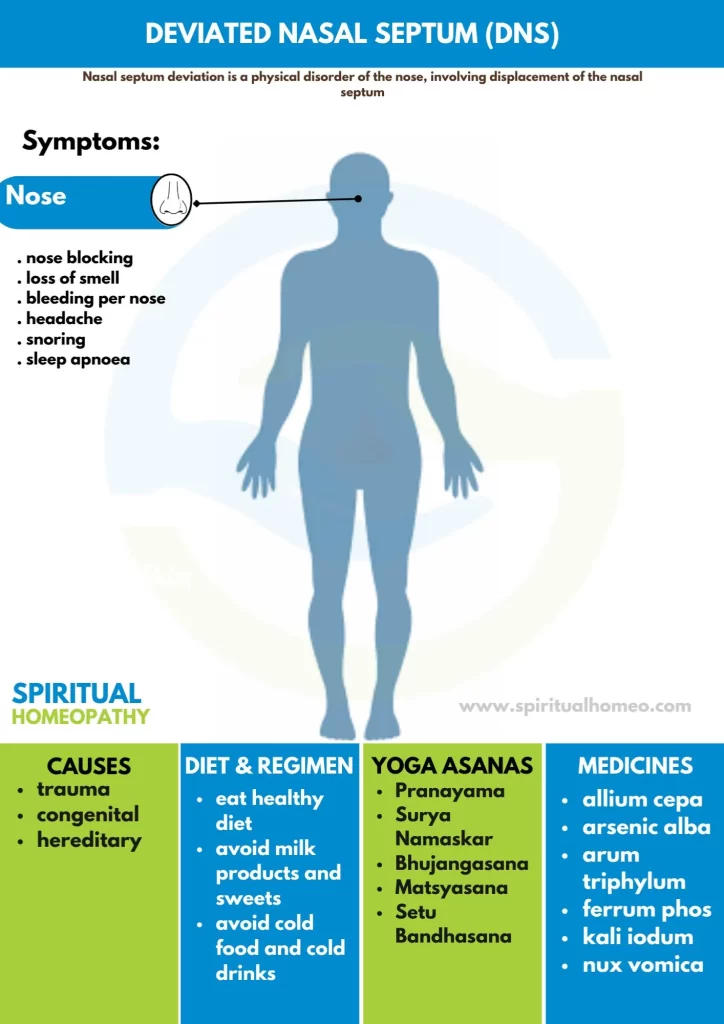
A Deviated Nasal Septum (DNS) can develop due to various factors, most commonly linked to trauma or structural differences in facial development. Understanding the causes helps in early recognition and supports individualized care planning.
Nasal Trauma
Physical injury is a leading cause of DNS. This can occur from:
Accidental falls
Sports-related injuries
Car accidents
Birth trauma, especially during difficult or assisted deliveries
Even minor childhood trauma, which may go unnoticed at the time, can result in septal deviation later in life.
Developmental Abnormalities
In some individuals, the septum deviates during natural facial growth, often in adolescence. The deviation may gradually worsen over time, even without a history of injury.
Hereditary or Genetic Factors
Family history can influence the likelihood of DNS. If close relatives have a deviated septum, an individual may have a higher predisposition.
Racial Predisposition
Studies suggest that septal deviations may be more common in certain populations. For example, Caucasians are observed to have a higher frequency of DNS compared to some other groups.
Congenital Conditions
Some people are born with a deviated septum due to abnormal fetal development or pressure on the nose during childbirth.
Associated Genetic Disorders
Certain connective tissue disorders can affect nasal structure, potentially contributing to DNS. Examples include:
Marfan Syndrome
Homocystinuria
Ehlers–Danlos Syndrome
By understanding the underlying cause, healthcare providers can recommend a personalized approach—ranging from symptom management and lifestyle guidance to medical or surgical interventions.
A Deviated Nasal Septum (DNS) can present in different forms depending on which part of the septum is affected and the nature of the deviation. Recognizing the type of DNS is important for accurate diagnosis and planning individualized care.
Anterior Dislocation
In this type, the septal cartilage shifts into one nasal passage, causing a noticeable displacement at the front of the nose.
Often visible when the patient tilts the head backward.
May lead to significant nasal blockage and aesthetic concerns.
C-Shaped Deformity
One of the most common forms of DNS, where the septum curves to one side, resembling the letter “C.”
The nasal passage on the concave side appears wider.
The turbinate on that side may enlarge as a compensatory response, sometimes worsening obstruction.
Can result in breathing difficulties, sinus pressure, and chronic congestion.
S-Shaped Deformity
The septum bends in two opposing directions, forming an “S” shape.
May occur vertically or in an anteroposterior (front-to-back) plane.
Often causes bilateral nasal obstruction, affecting airflow on both sides.
More complex cases may require medical or surgical intervention.
Septal Spur
A sharp, shelf-like bony projection at the junction of bone and cartilage.
Can press on the lateral nasal wall, causing frequent headaches.
May stretch nearby blood vessels, increasing the risk of repeated nosebleeds (epistaxis).
Deviation Due to Hematoma or Fracture
Occurs after trauma, such as:
Formation of an organized hematoma (blood clot)
Improper healing of dislocated or fractured septal fragments
Can lead to long-term obstruction or cosmetic changes
Each type of DNS can impact nasal airflow, sinus drainage, and overall respiratory health. Proper evaluation—including clinical examination and imaging—is essential for determining the most appropriate treatment plan.
A deviated nasal septum occurs when the thin wall between the nasal passages is displaced to one side, which can affect airflow and sinus function. While mild deviations often go unnoticed, more significant deviations can lead to noticeable symptoms and impact daily life.
Nasal Congestion and Breathing Difficulty
Chronic nasal blockage, often more pronounced on one side.
Difficulty breathing through the nose, especially during exercise or sleep.
Frequent Sinus Infections
Obstructed sinus drainage can lead to repeated or chronic sinus infections.
May cause facial pressure, nasal discharge, and persistent congestion.
Snoring and Sleep Disturbances
Restricted airflow can result in snoring and, in severe cases, obstructive sleep apnea.
Disrupted sleep may contribute to daytime fatigue.
Nosebleeds (Epistaxis)
Deviation can dry or irritate the nasal lining, increasing the risk of frequent nosebleeds.
Headaches and Facial Pain
Pressure from the deviated septum or associated septal spur may cause recurrent headaches or facial discomfort, particularly around the eyes and forehead.
Repetitive Sneezing and Nasal Irritation
Structural irregularities may increase nasal sensitivity, resulting in persistent sneezing or irritation.
Mouth Breathing
Some individuals breathe through the mouth, especially during sleep, leading to dry mouth, bad breath, or throat discomfort.
Reduced Sense of Smell (Anosmia)
Severe nasal obstruction can partially or completely reduce the sense of smell.
Note: Not all cases of DNS cause symptoms. Moderate to severe deviations are more likely to affect breathing, sleep, and sinus health.
Limit Dairy Intake
Excessive dairy products such as milk, cheese, and yogurt may increase mucus production in some individuals, potentially leading to nasal blockage. Reducing dairy intake can help improve airflow in sensitive cases.
Include Magnesium- and Calcium-Rich Foods
Mineral-rich foods support muscle relaxation and nerve function, which may aid overall respiratory health. Incorporate leafy greens, nuts, seeds, legumes, and whole grains into your diet.
Steam Inhalation
Inhaling steam daily can help loosen mucus and relieve nasal congestion. Adding a few drops of essential oils like eucalyptus or peppermint may enhance the effect.
Practice Deep Breathing Exercises
Daily pranayama or deep breathing techniques can improve lung capacity and help open nasal airways. Practices such as Anulom Vilom and Bhramari are particularly beneficial.
Avoid Mucus-Forming Foods
Limit sweets, bakery items, heavy or oily foods, as they may contribute to nasal blockages or inflammation. These foods are harder to digest and can worsen symptoms in some individuals.
Mindful Eating and Regular Meal Timings
Eating in tune with your body’s hunger cues and maintaining consistent meal times may reduce digestive stress and inflammation that could aggravate nasal congestion.
Avoid Cold Foods and Drinks
Ice creams, refrigerated items, and cold beverages can trigger nasal congestion or sinus discomfort, especially in those with sensitive nasal passages.
Yoga and targeted breathing exercises can support nasal airflow, reduce sinus congestion, and improve overall respiratory function. These practices are supportive and should not replace medical evaluation or treatment.
Anulom Vilom Pranayama (Alternate Nostril Breathing)
Benefits: Balances nasal airflow, clears nasal passages, and may reduce stress-related congestion.
How to Practice:
Sit comfortably with a straight spine.
Close the right nostril with your thumb and inhale through the left.
Close the left nostril with your ring finger and exhale through the right.
Inhale through the right, close it, and exhale through the left.
Repeat for 5–10 minutes daily.
Bhramari Pranayama (Humming Bee Breath)
Benefits: Soothes the nervous system, improves sinus ventilation, and may reduce nasal inflammation.
How to Practice:
Sit in a quiet place.
Close your eyes and gently cover your ears with fingers.
Inhale deeply, then exhale making a gentle humming sound.
Perform 5–7 rounds daily.
Bhujangasana (Cobra Pose)
Benefits: Opens the chest and sinuses, supporting better respiratory function.
How to Practice:
Lie on your stomach with hands under shoulders.
Inhale and lift your chest, keeping elbows slightly bent.
Hold for a few breaths, then slowly release.
Setu Bandhasana (Bridge Pose)
Benefits: Improves circulation to the nasal area and helps open airways.
How to Practice:
Lie on your back, bend your knees, and place feet flat on the floor.
Lift your hips while keeping shoulders grounded.
Hold for 20–30 seconds, then slowly lower down.
Sarvangasana (Shoulder Stand)
Benefits: Enhances blood flow to the sinuses and may relieve nasal congestion.
Note: Avoid if you have neck or spine issues.
How to Practice:
Lie on your back, lift legs and hips upward, supporting the back with hands.
Hold with feet pointing upward for several breaths.
Jala Neti (Nasal Cleansing with Saline Water)
Benefits: Physically clears nasal passages and supports sinus hygiene.
How to Practice:
Use a neti pot with lukewarm saline water to gently rinse each nostril.
Follow safety and hygiene guidelines; consult a practitioner if unsure.
Tips for Safe Practice:
Beginners should practice yoga and pranayama under guidance.
Perform exercises on an empty stomach in a clean environment.
Consistent practice may support nasal airflow, sinus health, and overall respiratory function.
Note: Yoga and nasal cleansing complement medical care but do not replace professional evaluation or treatment. For personalized guidance, consult specialists at Spiritual Homeopathy Clinic across Hyderabad branches or via online and international consultations.
At Spiritual Homeopathy Clinic, we follow a holistic healing approach that integrates classical homeopathic principles with attention to the mind-body-spirit connection. Our focus is on personalized care, supporting the body’s natural healing process to restore balance, resilience, and overall wellness. Consultations are available at multiple Hyderabad branches as well as online and internationally.
We aim to address not just the symptoms but the underlying causes of illness. By evaluating physical signs, emotional patterns, lifestyle factors, and overall health, we create a complete picture that guides individualized care. This approach helps patients move toward long-term wellness while maintaining natural, generally well-tolerated methods.
1. Expert Homeopathy Consultations
Our qualified homeopathic doctors provide in-depth consultations both in-person and online. We carefully review your health history, symptoms, and lifestyle to design a treatment plan tailored to your unique constitution.
2. Natural, Safe Homeopathic Support
We offer remedies that are gentle, non-toxic, and supportive of the body’s innate healing mechanisms. These options are suited for both acute and chronic conditions and are integrated into a comprehensive wellness plan.
3. Ongoing Guidance & Follow-Up
Healing is a continuous process. Our team ensures regular follow-ups to track progress, adjust treatment if needed, and provide guidance for maintaining overall health.
Holistic, individualized care addressing the whole person
Experienced and empathetic practitioners
Non-invasive, natural treatment methods
Flexible online consultations for patients worldwide
Transparent support and consistent communication
Whether managing a specific health concern, like a deviated nasal septum, or improving general well-being, Spiritual Homeopathy provides professional, compassionate care designed to support natural healing.
You should consult a healthcare professional if nasal obstruction or related symptoms become frequent, persistent, or interfere with daily activities and sleep. Early evaluation helps identify contributing factors and supports appropriate management.
Seek consultation if you experience:
Chronic or worsening nasal congestion, especially on one side
Difficulty breathing through the nose during rest or exercise
Frequent sinus infections or facial pressure
Recurrent nosebleeds (epistaxis)
Persistent headaches or facial pain associated with nasal blockage
Snoring or symptoms of obstructive sleep apnea
Loss of smell or frequent nasal irritation
At Spiritual Homeopathy Clinic, consultations are available at multiple branches in Hyderabad, including Kukatpally, Chandanagar, Dilsukhnagar, and Nallagandla. Online and international consultations are also available for patients who cannot visit in person. A professional assessment allows for individualized care based on symptom severity and overall health.
For appointments or guidance, contact 9069 176 176.
A deviated nasal septum—when the wall of cartilage and bone dividing your nostrils is off-center—restricts airflow. This narrowing commonly causes nasal blockage, difficulty breathing (usually worse on one side), recurring sinus infections, frequent nosebleeds, headaches, and sleep disturbances like snoring.
The only permanent way to fix a deviated septum is through a surgical procedure called a septoplasty. However, if your symptoms are mild, you can often manage them without surgery using medications or at-home remedies.
Yes, you can absolutely live with a deviated septum. Up to 80% of people have some degree of septal deviation, often without even realizing it. In most cases, it is not life-threatening and requires no treatment at all.
Unless the symptoms are very severe, septoplasty is usually not indicated in a child that is still growing, as the septum contains the “growth center” of the nose. Therefore, septoplasty is more commonly performed in adolescence or adulthood (at least 16 years of age in girls and 17 to 18 years of age in boys).
You cannot physically straighten or fix a deviated septum without surgery. Because the condition is a structural issue involving bone and cartilage, exercises or manual pressure cannot realign it. However, you can manage the symptoms—like congestion and breathing difficulties—using at-home remedies and non-surgical treatments.