


WhatsAppCall

Halitosis

Halitosis: Causes, Symptoms, Diagnosis & Effective Treatment Options

Halitosis

Can Homeopathy Help in the Treatment of Halitosis?

Halitosis, commonly known as bad breath, is a condition characterized by an unpleasant odor from the mouth that may persist despite regular brushing. It can result from poor oral hygiene, bacteria buildup on the tongue, gum disease, tooth decay, dry mouth, smoking, or certain foods. In some cases, halitosis may be associated with sinus infections, tonsil stones, acid reflux, or other underlying health conditions. Along with unpleasant breath, some individuals may experience a coated tongue, a dry mouth, or an unpleasant taste. Although halitosis is common, it can affect self-confidence, social interactions, and emotional well-being. Identifying the underlying cause and receiving appropriate dental or medical care can help improve breath freshness and oral health.

At Spiritual Homeopathy, we emphasize understanding an individual’s symptoms, medical history, oral hygiene habits, dietary patterns, lifestyle, and overall well-being. Our practitioners take an individualized approach when discussing supportive care options for people experiencing halitosis. However, homeopathy has not been shown by reliable scientific evidence to effectively treat bad breath or its underlying causes. Good oral hygiene and appropriate dental evaluation remain essential, particularly when bad breath persists or is associated with gum disease, tooth decay, or other health concerns.

Spiritual Homeopathy offers consultations in Hyderabad through its branches in KPHB, Dilsukhnagar, Chandanagar, and Nallagandla, as well as online consultations for patients in India and internationally. If you are experiencing persistent bad breath, consider consulting a qualified dentist or healthcare professional to identify the cause and discuss suitable treatment options. Spiritual Homeopathy aims to provide compassionate, patient-centered guidance while encouraging appropriate evidence-based dental and medical care.
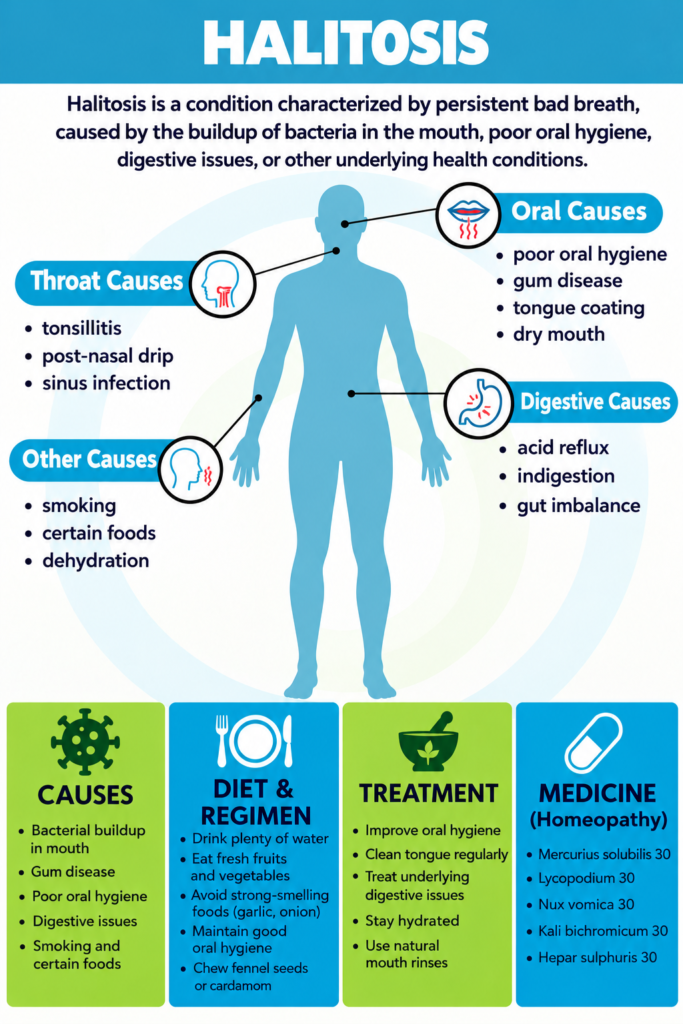
Everything You Need to Know


Overview

Halitosis (Bad Breath)
Halitosis is a condition characterized by an unpleasant odor coming from the mouth. It may be temporary, often related to certain foods, morning breath, or inadequate oral hygiene, or persistent, due to underlying dental or medical conditions. Common causes include bacterial buildup on the tongue, gum disease, tooth decay, dry mouth, smoking, and certain dietary habits. In some cases, halitosis may be associated with tonsil stones, sinus infections, or acid reflux.

Oral Halitosis
Oral halitosis refers to bad breath that originates within the mouth. It is commonly caused by bacteria that accumulate on the tongue, between teeth, and around the gums. These bacteria break down food particles and release foul-smelling compounds. Poor oral hygiene, gum inflammation, untreated cavities, and reduced saliva production can contribute to this condition. Regular brushing, flossing, tongue cleaning, and professional dental care can help manage many oral causes of bad breath.

Extraoral Halitosis
Extraoral halitosis refers to unpleasant breath caused by factors outside the mouth. Possible causes include sinus or respiratory infections, tonsil stones, acid reflux, and certain systemic health conditions. Some medications may also contribute to dry mouth, which can worsen breath odor. Persistent bad breath that does not improve with good oral hygiene should be evaluated by a dentist or healthcare professional to identify the underlying cause and determine appropriate treatment.


Causes of Halitosis

Halitosis is a condition characterized by persistent or recurring unpleasant breath odor. It commonly develops due to bacteria in the mouth, poor oral hygiene, gum disease, or reduced saliva production. In some cases, halitosis may be associated with infections, digestive conditions, or other underlying health issues. Identifying the cause is important for choosing appropriate treatment.

1. Poor Oral Hygiene

  • Bacterial Buildup: Bacteria accumulating on the tongue, between teeth, and around the gums can release foul-smelling compounds.

  • Food Particles: Trapped food particles can break down and contribute to unpleasant breath.

  • Tooth Decay: Untreated cavities may harbor bacteria and contribute to persistent bad breath.

2. Gum Disease

Gingivitis and periodontitis can cause inflammation, bleeding gums, and persistent breath odor. Bacterial deposits around the gums and teeth may worsen the problem if left untreated.

3. Dry Mouth

Saliva helps wash away food particles and bacteria. Reduced saliva production can lead to dry mouth and unpleasant breath. Dehydration, mouth breathing, certain medications, and some medical conditions may contribute to dryness.

4. Dietary and Lifestyle Factors

  • Strong-Smelling Foods: Garlic, onions, and certain spices may temporarily affect breath odor.

  • Smoking and Tobacco: Tobacco use can contribute to bad breath, dry mouth, and gum disease.

  • Alcohol and Caffeine: These may contribute to oral dryness in some individuals.

  • Irregular Eating Habits: Fasting or skipping meals can sometimes cause temporary changes in breath odor.

5. Oral and Respiratory Conditions

Tonsil stones, sinus infections, nasal congestion, and certain throat infections may contribute to halitosis. These conditions can lead to bacterial buildup or unpleasant-smelling secretions in the mouth and throat.

6. Digestive and Other Medical Conditions

Acid reflux may sometimes contribute to unpleasant breath. Less commonly, certain systemic conditions, including diabetes-related complications, liver disease, and kidney disease, may affect breath odor. Persistent symptoms should be evaluated by a qualified healthcare professional.

7. Medications and Other Contributing Factors

Certain medications can reduce saliva production and contribute to dry mouth. Dentures, dental appliances, and poorly cleaned oral devices may also retain food particles and bacteria, leading to unpleasant breath.

Understanding the underlying cause is essential for appropriate halitosis management. Spiritual Homeopathy Clinic offers consultations through its Hyderabad branches, online consultations, and international sessions. Homeopathy has not been shown by reliable scientific evidence to effectively treat halitosis; persistent bad breath should be assessed by a dentist or healthcare professional to identify and address the cause.


Types of Halitosis

Halitosis, commonly known as bad breath, is characterized by an unpleasant odor originating from the mouth or, less commonly, from other parts of the body. It can be classified according to its severity, source, and underlying causes.

1. Genuine Halitosis
Genuine halitosis refers to noticeable bad breath that can be identified by others. It may be physiological or pathological.

  • Physiological Halitosis: Temporary bad breath, such as morning breath, may occur due to reduced saliva production during sleep or after consuming strong-smelling foods.

  • Pathological Halitosis: Persistent bad breath may result from gum disease, tooth decay, bacterial buildup on the tongue, dry mouth, or certain medical conditions.

2. Oral Halitosis
Oral halitosis originates within the mouth and is the most common form of persistent bad breath. It is often associated with bacterial activity and inadequate oral hygiene. Common contributing factors include:

  • Tongue Coating: Bacteria and debris accumulate on the tongue’s surface and release unpleasant-smelling compounds.

  • Gum Disease: Gingivitis and periodontitis can contribute to persistent odor.

  • Dental Problems: Cavities, food trapped between teeth, and poorly cleaned dental appliances may worsen bad breath.

  • Dry Mouth: Reduced saliva flow allows bacteria and food particles to accumulate.

3. Extraoral Halitosis
Extraoral halitosis refers to bad breath originating outside the mouth, including the nose, throat, respiratory tract, or, less commonly, other body systems. Potential causes include:

  • ENT Conditions: Sinus infections, tonsil stones, and certain throat infections may contribute to unpleasant breath.

  • Gastroesophageal Reflux: Acid reflux may sometimes be associated with breath odor.

  • Systemic Conditions: Certain metabolic disorders, including complications related to diabetes, kidney disease, or liver disease, may affect breath odor.

  • Respiratory Infections: Some infections of the respiratory tract can produce unpleasant-smelling breath.

4. Pseudohalitosis and Halitophobia
These terms describe situations in which a person is concerned about having bad breath even when it cannot be objectively confirmed.

  • Pseudohalitosis: A person believes they have bad breath, but assessment does not identify a noticeable odor.

  • Halitophobia: Persistent fear or belief that bad breath remains despite appropriate evaluation and reassurance.

These concerns should be addressed sensitively, and professional support may be helpful when the worry affects daily life.

Identifying the type and underlying cause of halitosis is important for appropriate care. Spiritual Homeopathy Clinic offers consultations through its Hyderabad branches, online appointments, and international sessions. Homeopathy has not been shown by reliable scientific evidence to effectively treat halitosis. Persistent bad breath should be evaluated by a qualified dentist or healthcare professional to determine the cause and appropriate treatment.


Signs and Symptoms of Halitosis

Halitosis, commonly known as bad breath, is characterized by an unpleasant or persistent odor coming from the mouth. It may occur temporarily after consuming certain foods or waking up in the morning, or it may persist due to poor oral hygiene, dental problems, dry mouth, or underlying medical conditions.

Key Symptoms:

  • Persistent Bad Breath: An unpleasant odor that continues despite regular brushing and oral hygiene.

  • Unpleasant Taste in the Mouth: A lingering bitter, sour, or metallic taste.

  • Coated Tongue: A white or yellowish coating on the tongue caused by accumulated bacteria and debris.

  • Dry Mouth: Reduced saliva production that allows bacteria and food particles to accumulate.

  • Gum Problems: Red, swollen, or bleeding gums that may indicate gingivitis or other gum disease.

  • Dental Issues: Tooth decay, cavities, or food trapped between teeth may contribute to unpleasant breath.

  • Throat or Sinus Symptoms: Nasal congestion, postnasal drip, or tonsil stones may sometimes be associated with bad breath.

  • Unpleasant Breath After Eating: Certain foods, including garlic and onions, may temporarily affect breath odor.

If bad breath is persistent, worsening, or accompanied by bleeding gums, tooth pain, or other concerning symptoms, consult a qualified dentist or healthcare professional to identify the underlying cause. Spiritual Homeopathy Clinic offers consultations through its Hyderabad branches, online appointments, and international consultations. Homeopathy has not been proven effective for treating halitosis, so appropriate dental or medical care is essential.


Halitosis Diet Plan & Daily Regimen

For individuals experiencing halitosis, commonly known as bad breath, daily oral hygiene practices, balanced nutrition, and healthy lifestyle habits can help maintain oral health and fresher breath. Halitosis is often associated with bacterial buildup on the tongue, gum disease, tooth decay, dry mouth, or certain foods. These guidelines can support breath freshness, but persistent bad breath requires professional evaluation to identify and treat the underlying cause. Spiritual Homeopathy Clinic offers consultations through its Hyderabad branches, online, and internationally.

General Dietary Guidelines

  • Eat balanced meals that include vegetables, fruits, whole grains, and adequate protein.

  • Drink water regularly throughout the day to help prevent dry mouth.

  • Include crunchy fruits and vegetables, such as apples and carrots, as part of a balanced diet.

  • Limit sugary foods and beverages, which can contribute to tooth decay.

  • Reduce foods that temporarily cause strong breath odor, such as garlic and onions, if they are a concern.

  • Limit tobacco and alcohol, as they can contribute to unpleasant breath and oral dryness.

  • Avoid excessive caffeine if it worsens dry mouth.

  • Do not rely on mints or chewing gum to mask persistent bad breath.

Sample Halitosis-Friendly Daily Plan

Morning Routine + Breakfast (8:00 AM)

  • Drink a glass of water after waking up.

  • Brush your teeth with fluoride toothpaste.

  • Clean your tongue gently to remove accumulated coating and debris.

  • Have a balanced breakfast, such as oatmeal with fruit or whole-grain toast with eggs.

  • If desired, choose unsweetened tea or water instead of sugary drinks.

Mid-Morning Snack (10:30 AM)

  • Have an apple, pear, or another fresh fruit.

  • Drink water to maintain hydration.

  • Choose unsweetened beverages when possible.

Lunch (1:00 PM)

  • Include a balanced meal with vegetables, whole grains, and a protein source such as lentils, beans, fish, or chicken.

  • Add fresh vegetables, such as cucumber and carrots.

  • Drink water with your meal.

Afternoon Snack (4:00 PM)

  • Choose plain yogurt, nuts, or fresh fruit.

  • Drink water regularly.

  • If you chew gum to stimulate saliva, choose a sugar-free option.

Dinner (7:00 PM)

  • Choose a balanced meal with vegetables, whole grains, and adequate protein.

  • Avoid excessive consumption of foods that you notice temporarily worsen your breath.

  • Drink water according to your needs.

  • If you experience acid reflux, avoid lying down immediately after eating and discuss persistent symptoms with a healthcare professional.

Evening Oral Hygiene Routine

  • Brush your teeth thoroughly with fluoride toothpaste before bed.

  • Clean between your teeth using dental floss or an appropriate interdental cleaner.

  • Clean your tongue gently.

  • Clean dentures, retainers, or other dental appliances according to professional instructions.

  • Use mouthwash if appropriate, preferably following advice from your dentist.

Lifestyle Tips for Fresher Breath

  • Oral Hygiene: Brush twice daily, clean between your teeth every day, and gently clean your tongue.

  • Hydration: Drink water regularly, especially if you experience a dry mouth.

  • Regular Dental Visits: Attend routine dental check-ups to identify cavities, gum disease, and other oral problems.

  • Avoid Tobacco: Smoking and tobacco use can worsen breath odor and increase the risk of gum disease.

  • Manage Dry Mouth: Review possible medication side effects with your healthcare professional rather than stopping prescribed medicines yourself.

  • Address Underlying Conditions: Seek medical evaluation if bad breath persists despite good oral hygiene, particularly if you also experience sinus symptoms, acid reflux, or other health concerns.

Dietary and lifestyle changes can support oral health, but they may not resolve halitosis caused by dental disease or an underlying medical condition. Persistent bad breath should be evaluated by a qualified dentist or healthcare professional. Homeopathy has not been shown by reliable scientific evidence to effectively treat halitosis and should not replace appropriate dental or medical care.

Add a clear consultation call to actionClarify Spiritual Homeopathy’s role
 

Yoga / Lifestyle for Halitosis

Yoga and healthy lifestyle habits may help support stress management, hydration, and general well-being, which can contribute to better oral health. However, yoga does not directly treat halitosis (persistent bad breath). Good oral hygiene and identifying the underlying cause are essential. Spiritual Homeopathy Clinic encourages healthy daily routines alongside appropriate dental or medical consultation.

  1. Sukhasana (Easy Pose)

    • Benefits: Encourages relaxation and mindful breathing, which may help manage stress.

    • How to do: Sit comfortably with legs crossed, keep your spine upright, relax your shoulders, and breathe slowly for 3–5 minutes.

  2. Balasana (Child’s Pose)

    • Benefits: Promotes relaxation and may help reduce stress.

    • How to do: Kneel, sit back on your heels, and gently fold forward with your arms extended or resting beside your body.

  3. Marjaryasana-Bitilasana (Cat-Cow Pose)

    • Benefits: Improves spinal flexibility and encourages coordinated breathing.

    • How to do: Start on your hands and knees. Slowly alternate between gently arching and rounding your back while breathing steadily.

  4. Sukhasana with Deep Breathing

    • Benefits: Supports relaxation and awareness of breathing patterns.

    • How to do: Sit comfortably, inhale gently through your nose, and exhale slowly without forcing your breath. Continue for a few minutes.

  5. Tadasana (Mountain Pose)

    • Benefits: Encourages upright posture and mindful breathing.

    • How to do: Stand with your feet comfortably apart, lengthen your spine, relax your shoulders, and breathe naturally.

  6. Anulom Vilom (Alternate Nostril Breathing)

    • Benefits: May promote calmness and relaxation.

    • How to do: Sit comfortably and gently alternate breathing through each nostril, without holding your breath or straining. Avoid this practice if it causes discomfort.

  7. Gentle Walking

    • Benefits: Supports general health, stress management, and an active lifestyle.

    • How to do: Walk at a comfortable pace for around 20–30 minutes, adjusting the duration to your fitness level.

  8. Mindfulness Meditation

    • Benefits: Helps manage stress and encourages consistent self-care habits.

    • How to do: Sit in a quiet place, relax your body, and focus on your natural breathing for 5–10 minutes.

Daily Lifestyle Tips for Managing Halitosis:

  • Brush your teeth twice daily using fluoride toothpaste.

  • Clean your tongue gently each day to remove odor-causing buildup.

  • Floss or clean between your teeth daily.

  • Drink enough water to help prevent dry mouth.

  • Limit tobacco use and excessive alcohol consumption.

  • Avoid skipping oral hygiene after meals, and clean dentures or dental appliances as directed.

  • Visit a dentist regularly to check for gum disease, tooth decay, or other oral causes of bad breath.

Important: Yoga and lifestyle changes can support general well-being but do not replace dental treatment. If bad breath persists despite good oral hygiene, consult a dentist to identify the cause. A medical evaluation may be needed if the problem is related to another health condition. Homeopathy has not been shown by reliable scientific evidence to effectively treat halitosis and should not replace appropriate dental or medical care.

Add a Clear Halitosis WarningReduce Repetitive Breathing Practices
 

Why Choose a Professional Approach to Halitosis?

Halitosis, commonly known as bad breath, can develop due to several factors, including poor oral hygiene, gum disease, tooth decay, dry mouth, and certain medical conditions. Effective management begins with identifying the underlying cause rather than focusing only on temporarily masking unpleasant breath.

Maintaining a consistent oral hygiene routine, staying hydrated, and receiving appropriate dental or medical care can help manage bad breath. Homeopathy has not been shown by reliable scientific evidence to effectively treat halitosis, so it should not replace proven dental treatment or medical evaluation.

Spiritual Homeopathy Clinic: Individualized Care for Your Health

At Spiritual Homeopathy Clinic, we emphasize compassionate, individualized attention to patients’ health concerns. For people experiencing persistent bad breath, understanding their symptoms, daily habits, and relevant health history can help guide appropriate next steps.

Key Features of Our Care:

  • Individual Attention: We consider each patient’s symptoms, health history, and lifestyle concerns.

  • Personalized Guidance: Recommendations are tailored to individual needs and may include guidance on healthy daily routines.

  • Consultation Options: Our team offers in-clinic, online, and international consultations.

  • Oral Health Awareness: We encourage appropriate dental evaluation to identify potential causes such as gum problems, tooth decay, or dry mouth.

  • Holistic Well-Being: Healthy hydration, balanced nutrition, stress management, and consistent oral hygiene can support overall well-being.

Our Consultation Process

  1. Initial Consultation

    We discuss your symptoms, their duration, oral hygiene practices, lifestyle habits, and relevant health history.

  2. Guidance on Appropriate Care

    Persistent halitosis may require assessment by a dentist or healthcare professional. Recommendations depend on the suspected cause and may include professional dental cleaning, treatment for gum disease, or evaluation for other medical conditions.

  3. Follow-Up and Support

    Follow-up consultations can help review ongoing concerns and encourage consistent health and oral hygiene practices.

At Spiritual Homeopathy Clinic, consultations are available through multiple Hyderabad branches, including KPHB, Dilsukhnagar, Chandanagar, and Nallagandla, as well as online and international consultation options. For persistent bad breath, professional dental assessment remains an important first step.

Add a Clear Appointment Call to ActionClarify Homeopathy’s Role and Limits
 

When to Consult a Doctor

You should consult a dentist or healthcare professional if bad breath (halitosis) persists, worsens, or affects your confidence and daily life. Early evaluation can help identify the underlying cause and guide appropriate treatment.

Seek professional advice if you experience:

  • Persistent bad breath even after brushing and cleaning your tongue regularly.

  • Bleeding, swollen, or tender gums.

  • Tooth pain, cavities, or loose teeth.

  • A dry mouth or a persistent unpleasant taste.

  • White patches, throat discomfort, or recurring tonsil problems.

  • Bad breath accompanied by other unexplained symptoms, such as difficulty swallowing or ongoing digestive discomfort.

If you develop difficulty breathing or swallowing, seek urgent medical attention.

At Spiritual Homeopathy Clinic, consultations are available at multiple Hyderabad branches, including Kukatpally, Chandanagar, Dilsukhnagar, and Nallagandla. Online and international consultations are also offered for patients who cannot visit in person. For persistent halitosis, a dental assessment is an important first step to check for gum disease, tooth decay, and other oral health concerns.

For appointments or guidance, contact 9069 176 176.

Note: Homeopathy has not been shown by reliable scientific evidence to effectively treat halitosis. It should not replace professional dental care or necessary medical treatment.

Clarify the urgent warning signsMake the clinic paragraph more neutral

Frequently Asked Questions – Homeopathy Treatment for Halitosis (Bad Breath)

To reduce halitosis (bad breath), maintain good oral hygiene and address its underlying cause. Brush your teeth twice daily with fluoride toothpaste, clean your tongue, floss daily, and drink enough water to prevent dry mouth. Avoid tobacco and limit foods or drinks that worsen your breath. If bad breath persists, consult a dentist to check for gum disease, tooth decay, or other oral health problems. Appropriate treatment depends on the cause.

Halitosis, commonly known as bad breath, is characterized by an unpleasant odor from the mouth. It is most often caused by odor-producing bacteria on the tongue and between the teeth, poor oral hygiene, gum disease, tooth decay, or dry mouth. Other possible causes include certain foods, tobacco use, tonsil problems, sinus conditions, and some medical conditions. The underlying cause varies from person to person, so persistent bad breath should be evaluated by a dentist or healthcare professional.

Halitosis (bad breath) can often be reduced or eliminated by identifying and treating its underlying cause. Occasional bad breath may improve with proper oral hygiene, tongue cleaning, and adequate hydration. However, persistent halitosis caused by gum disease, tooth decay, dry mouth, or other health conditions may require professional treatment. Regular dental check-ups and consistent oral care can help manage bad breath and prevent it from returning.

53 Halitosis is associated with unpleasant breath odor, which may occur due to poor oral hygiene, tongue coating, gum disease, tooth decay, or dry mouth. The appropriate management depends on identifying the underlying cause. Homeopathy has not been proven effective for treating halitosis, so persistent bad breath should be evaluated by a dentist or healthcare professional.

Some research suggests that certain vitamin deficiencies, including vitamin B12 and vitamin C deficiencies, may be associated with oral health problems that can contribute to bad breath. However, halitosis is not usually caused by a vitamin deficiency alone. Common causes include poor oral hygiene, tongue coating, gum disease, tooth decay, and dry mouth. If bad breath persists, consult a dentist to identify the underlying cause and seek appropriate treatment.

The primary cause of halitosis (bad breath) is the buildup of odor-producing bacteria in the mouth, particularly on the tongue and between the teeth. Other common causes include poor oral hygiene, gum disease, tooth decay, and dry mouth. In some cases, tonsil or sinus problems and certain medical conditions may also contribute to persistent bad breath.