
Fever is one of the most common signs that the body is responding to an infection or another underlying health condition. It occurs when the body’s temperature rises above its normal range, usually as part of the immune system’s natural defense against viruses, bacteria, or other illnesses. Fever may be accompanied by symptoms such as chills, sweating, headache, body aches, fatigue, loss of appetite, and dehydration. While mild fever often resolves as the underlying illness improves, persistent, high-grade, or recurrent fever should not be ignored, as it may indicate a more serious medical condition. Seeking early medical evaluation and appropriate treatment can help identify the underlying cause and prevent potential complications.
At Spiritual Homeopathy, we believe in treating the individual rather than simply suppressing symptoms. Our experienced homeopathic doctors carefully evaluate each patient’s symptoms, medical history, lifestyle, nutritional status, stress levels, and overall health before preparing an individualized treatment plan. Our holistic approach focuses on supporting overall health, promoting recovery, and providing safe and personalized homeopathic care tailored to each patient’s unique needs while complementing appropriate conventional medical treatment. We encourage prompt medical evaluation for persistent fever, very high fever, or fever accompanied by severe symptoms.
We provide personalized homeopathy consultations in Hyderabad to patients of all age groups through our clinics in Hyderabad, as well as online homeopathy consultations for patients across India and in more than 100 countries worldwide. If you are looking for an experienced homeopathy doctor in Hyderabad for personalized supportive care, Spiritual Homeopathy is committed to delivering expert, patient-centered consultations while encouraging timely medical assessment and evidence-based management for fever and related health conditions.
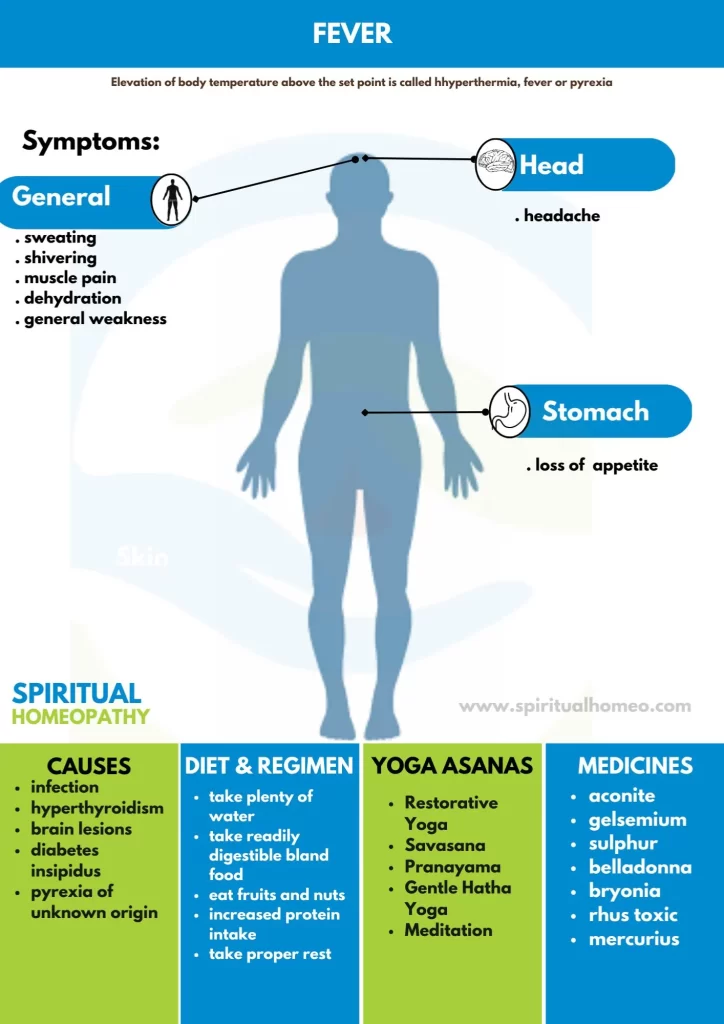
Fever is not a disease by itself but a symptom indicating that the body is responding to an underlying condition. It is a natural defense mechanism that often signals the presence of infection or other health issues.
While fever can cause discomfort, it also plays a key role in supporting the immune system, helping the body fight off pathogens and recover from illness.
Consultation Note: At Spiritual Homeopathy Clinic, patients can receive professional evaluation and guidance for managing fever at our multiple Hyderabad branches or through online and international consultations. A personalized approach helps address contributing factors and supports overall recovery.
Infection: Fever often occurs in response to infections. Substances called pyrogens, released by bacteria, viruses, or parasites, act on the hypothalamus—the brain’s temperature-regulating center—causing an increase in body temperature.
Hyperthyroidism: Elevated basal metabolic rate in hyperthyroidism can lead to a rise in body temperature, sometimes resulting in fever.
Brain Lesions: Damage or lesions in areas of the brain that control temperature can disrupt normal thermoregulation, leading to fever.
Diabetes Insipidus: In certain cases, fever may appear without a clearly identifiable cause, as seen in conditions like diabetes insipidus.
Pyrexia of Unknown Origin (PUO): PUO refers to fevers that persist despite thorough medical evaluation, where the exact cause cannot be determined.
Note: Understanding the underlying cause is essential for effective management. At Spiritual Homeopathy Clinic, individualized assessment—available at multiple Hyderabad branches as well as online and international consultations—helps guide appropriate care based on the patient’s overall health and symptoms.
Fever is generally classified based on the level of body temperature:
Low-Grade Fever: Body temperature rises between 38°C to 39°C (100.4°F to 102.2°F). This may indicate mild infections or early stages of illness.
Moderate-Grade Fever: Body temperature ranges from 39°C to 40°C (102.2°F to 104°F), often associated with more pronounced infections or inflammatory responses.
High-Grade Fever: Body temperature exceeds 40°C (104°F) and can reach up to 42°C (107.6°F). High-grade fever may be serious and requires prompt medical evaluation.
Note: Persistent or unusually high fevers should be assessed by a healthcare professional. At Spiritual Homeopathy Clinic, consultations are available at multiple Hyderabad branches as well as online and international options to guide individualized care and management.
Fever intensity is classified based on body temperature:
Low-Grade Fever: 38°C to 39°C (100.4°F to 102.2°F)
Moderate-Grade Fever: 39°C to 40°C (102.2°F to 104°F)
High-Grade Fever: 40°C to 42°C (104°F to 107.6°F)
The signs and symptoms of fever may vary depending on the underlying cause. Common symptoms include:
Headache
Sweating
Shivering or chills
Muscle aches or pain
Dehydration
Loss of appetite
General weakness or fatigue
In cases of hyperpyrexia (extremely high fever), additional symptoms may appear:
Confusion or disorientation
Hallucinations
Irritability or agitation
Convulsions or seizures
Note: Persistent, high, or unusual fevers should be evaluated promptly. At Spiritual Homeopathy Clinic, consultations are available at multiple Hyderabad branches and online for personalized guidance and management.
During a fever, supporting the body with hydration, nutrition, and rest is essential. While individual needs may vary, the following general guidelines can help manage symptoms:
Hydration: Drink plenty of water and fluids throughout the day to prevent dehydration. Oral rehydration solutions, clear soups, and herbal teas can also help.
Easily Digestible Foods: Choose bland, soft, or semi-solid foods that are gentle on the stomach, such as rice, khichdi, or soups.
Protein Support: Include high-quality protein sources like low-fat milk, eggs, or moong dal (mashed or porridge form) to aid recovery.
Nuts and Dry Fruits: Incorporate small amounts of dry fruits and nuts for added nutrients while limiting sugar-rich foods.
Adequate Rest: Ensure proper rest to allow the body to recover and support immune function.
Comfort Measures: A cool sponge bath using room-temperature water can help reduce fever discomfort and provide relief.
Yoga can gently support the body during a mild fever, provided the temperature is not high or severe. Certain asanas (yoga poses) and breathing exercises may help promote relaxation, reduce stress, and support overall comfort.
Sukhasana (Easy Pose)
Sit in a comfortable cross-legged position with your back straight. Focus on deep, slow breathing.
Benefits: Promotes relaxation and helps the body cope with fever-related discomfort.
Viparita Karani (Legs Up the Wall Pose)
Lie on your back and rest your legs against a wall, keeping them elevated, with arms by your sides.
Benefits: Reduces fatigue, improves circulation, and encourages restful relaxation.
Setu Bandhasana (Bridge Pose)
Lie on your back with knees bent and feet flat on the floor. Lift your hips upward, forming a bridge shape.
Benefits: Opens the chest, enhances blood circulation, and relieves tension in the body.
Balasana (Child’s Pose)
Kneel on the floor, sit back on your heels, and lower your torso forward, resting your forehead on the mat and extending your arms.
Benefits: Soothes the body, reduces fatigue, and supports relaxation.
Pranayama (Breathing Exercises)
Practice gentle breathing techniques such as Nadi Shodhana (alternate nostril breathing) or Ujjayi breath.
Benefits: Improves oxygen flow, calms the nervous system, and helps reduce stress associated with fever.
Important Notes:
Listen to your body: Avoid any strenuous poses if you feel weak or unwell, focusing instead on gentle stretching and breathing.
Yoga is supportive, not a replacement for medical care: Consult a healthcare professional if fever is high, persistent, or accompanied by other concerning symptoms.
These gentle practices can enhance relaxation, reduce discomfort, and support the body’s natural recovery process.
At Spiritual Homeopathy Clinic, we follow a holistic approach that combines classical homeopathic principles with an understanding of physical, mental, and spiritual well-being. Our team of experienced and compassionate homeopathic practitioners provides individualized care tailored to each patient’s unique needs.
We focus on restoring balance across the body, mind, and spirit rather than only addressing symptoms. By identifying and treating the underlying causes of health concerns, we aim to support the body’s natural healing ability. This approach promotes long-term health, improved vitality, and overall wellness.
Consultations: Our practitioners provide detailed assessments, considering medical history, lifestyle, and emotional health. Consultations are available at multiple branches in Hyderabad—including Kukatpally, Chandanagar, Dilsukhnagar, and Nallagandla—as well as online and international consultations for patients who cannot visit in person.
Homeopathic Remedies: We offer carefully selected remedies that support natural recovery for both acute and chronic conditions. These treatments focus on individualized care and are generally well-tolerated under professional guidance.
Follow-Up Care: Healing is a journey. Our team provides regular follow-ups to monitor progress, adjust treatment plans, and ensure patients move steadily toward improved health and wellness.
At Spiritual Homeopathy Clinic, your well-being is our priority. We provide compassionate, personalized care to help you manage health concerns and enhance overall wellness. Whether you are seeking support for a specific condition or aiming to improve general health, our team is dedicated to guiding you safely and effectively.
You should consult a healthcare professional if fever becomes frequent, persistent, or begins to interfere with daily activities or sleep. Early evaluation helps identify underlying causes and supports proper management.
Seek consultation if you experience:
Persistent or high-grade fever lasting more than a few days
Severe headache or body pain associated with fever
Difficulty breathing, chest discomfort, or rapid heartbeat
Unexplained fatigue, weakness, or dehydration
Confusion, hallucinations, or convulsions
Fever that does not improve with basic dietary, fluid, and rest measures
At Spiritual Homeopathy Clinic, consultations are available at multiple branches in Hyderabad, including Kukatpally, Chandanagar, Dilsukhnagar, and Nallagandla. Online and international consultations are also offered for patients unable to visit in person. A professional assessment ensures an individualized care plan tailored to your symptoms and overall health.
For appointments or guidance, contact 9069 176 176.
Doctors classify fevers into four primary types based on how a patient's body temperature fluctuates throughout the day. These distinct temperature patterns—Intermittent, Remittent, Continuous, and Relapsing—are critical tools healthcare providers use to help diagnose the underlying infection or disease.
A fever is a temporary increase in body temperature, usually triggered by an illness, where the brain's thermostat (the hypothalamus) resets to a higher point. In adults, a temperature of 100.4°F (38°C) or higher is generally considered a fever. It acts as an immune defense to help your body fight off infections.
To reduce a fever fast, take an over-the-counter medication like acetaminophen or ibuprofen according to the package directions. While doing so, wear light clothing, keep your room cool, and drink plenty of fluids like water or broth to prevent dehydration and help your body cool down.
To sleep with a fever, take over-the-counter fever reducers like acetaminophen or ibuprofen about 30 minutes before bed. Dress in light, breathable layers, keep your bedroom cool (around 15°C to 20°C), and stay hydrated.
Psychogenic fever is a stress-related, psychosomatic disease especially seen in young women. Some patients develop extremely high core body temperature (Tc) (up to 41°C) when they are exposed to emotional events, whereas others show persistent low-grade high Tc (37–38°C) during situations of chronic stress.
Manage a high fever at home by staying well-hydrated, resting, and using over-the-counter (OTC) medications like acetaminophen or ibuprofen. Dress in lightweight clothing, keep your room cool, and apply lukewarm compresses to your forehead. Avoid cold showers or ice baths, which can cause shivering and raise your body temperature.