
A fistula is an abnormal tunnel-like connection that develops between two parts of the body, most commonly between the anal canal and the skin around the anus. It usually develops as a result of an untreated infection, abscess, injury, inflammatory bowel disease, or following surgery. Common symptoms include persistent pain, swelling, pus or blood discharge, irritation around the affected area, and recurrent infections. If left untreated, a fistula may continue to cause discomfort, repeated abscess formation, and difficulty in carrying out daily activities. Early diagnosis and appropriate fistula treatment are important to help manage symptoms and reduce the risk of complications.
At Spiritual Homeopathy, we believe in treating the root cause rather than simply managing the visible symptoms. Our experienced homeopathic doctors carefully assess each patient’s symptoms, medical history, lifestyle, digestive health, and overall constitution before preparing an individualized treatment plan. Our holistic approach focuses on supporting the body’s natural healing process, reducing inflammation, managing recurrent infections, promoting healthy tissue recovery, and helping improve overall well-being through safe and personalized homeopathic care. We provide homeopathic treatment for fistula with a patient-centered approach designed to support long-term health.
We provide personalized homeopathic treatment for fistula in Hyderabad to patients of all age groups through our clinics in Hyderabad, as well as online homeopathy consultations for patients across India and in more than 100 countries worldwide. If you are looking for the best homeopathy doctor for fistula, natural fistula treatment, or long-term support for recurrent fistula problems, Spiritual Homeopathy is committed to delivering expert, patient-centered care wherever you are.
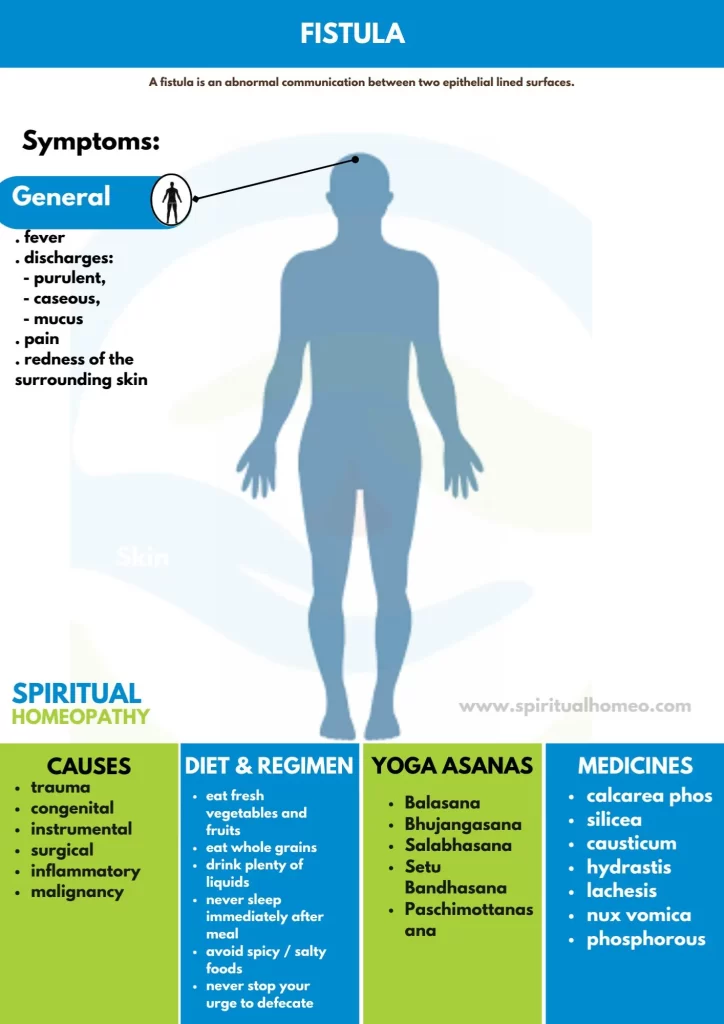
A fistula is an abnormal connection or passage between two epithelial surfaces, most commonly forming between a hollow organ and the skin (external) or between two hollow organs (internal). In some cases, the tract is initially lined with granulation tissue, which may become epithelialized in chronic cases. Fistulas can arise from various underlying conditions, including infections, inflammation, or prior surgical procedures, and may require professional evaluation and care for effective management.
At Spiritual Homeopathy Clinic, patients can access consultations at multiple branches in Hyderabad, including Kukatpally, Chandanagar, Dilsukhnagar, and Nallagandla, as well as online and international consultations for those unable to visit in person. A professional assessment helps guide individualized care and long-term management.
Fistulas can be congenital (present at birth) or acquired due to various medical conditions or trauma. Understanding the underlying cause helps guide individualized care and management.
Fistulas present from birth may include:
Branchial fistula – arising from abnormal development of the branchial arches.
Tracheoesophageal fistula – an abnormal connection between the trachea and esophagus.
Congenital arteriovenous (AV) fistula – a direct connection between an artery and a vein.
Umbilical fistula – a persistent connection between the umbilicus and intestine.
These develop later in life and may include:
Trauma – particularly abdominal or pelvic injuries affecting internal structures.
Instrumental injuries – occurring during procedures like childbirth or invasive diagnostics.
Surgical complications – sometimes arising after operations involving the bowel, bladder, or reproductive organs.
Inflammatory conditions – such as intestinal tuberculosis or actinomycosis, which may lead to chronic infections and fistula formation.
Malignancy – cancers, for example, rectal carcinoma, can result in fistulas like recto-vesical fistula (between the rectum and bladder).
At Spiritual Homeopathy Clinic, understanding the cause of a fistula is an essential step in planning individualized homeopathic care, with consultations available at multiple Hyderabad branches, online, and internationally.
Fistulas are classified based on their anatomical location and the structures they connect. They are broadly divided into external and internal fistulas, which helps guide individualized care and treatment planning.
These connect an internal organ to the skin surface. Common types include:
Oro-cutaneous Fistula – connects the mouth or oral cavity to the skin.
Branchial Fistula – arises from developmental anomalies in the neck region.
Thyroglossal Fistula – results from persistence of the thyroglossal duct, usually found in the midline of the neck.
Enterocutaneous Fistula – forms between the intestine and skin, often following abdominal surgery.
Appendicular Fistula – occurs when the appendix communicates with the skin, usually due to infection or abscess formation.
These form between two internal organs. Examples include:
Tracheoesophageal Fistula – abnormal connection between the trachea and esophagus.
Cholecysto-duodenal Fistula – forms between the gallbladder and duodenum, often due to gallstones.
Colovesical Fistula – connects the colon to the urinary bladder, commonly associated with diverticulitis or cancer.
Recto-vesical Fistula – an abnormal passage between the rectum and urinary bladder, frequently linked to pelvic malignancies or inflammatory conditions.
Understanding the type and location of a fistula is important for accurate diagnosis and helps guide individualized homeopathic or supportive care. At Spiritual Homeopathy Clinic, consultations are available across multiple Hyderabad branches, as well as online and international consultations, for comprehensive assessment and care planning.
The clinical presentation of a fistula can vary depending on its location and underlying cause. Common signs and symptoms include:
Fistulas often produce discharge through the external opening, which may indicate the source or severity:
Thick or foul-smelling discharge – often suggests bacterial infection.
Cheesy or white discharge – may indicate chronic infection.
Yellowish granules in discharge – could point to deep-seated infection.
Mucous discharge – typically seen in fistulas near glands or sinuses.
Clear or watery fluid – may be associated with salivary or glandular fistulas.
Foul-smelling or solid content – seen in digestive tract involvement.
Greenish fluid – may suggest bile leakage from the digestive system.
Bone fragments or debris – indicates possible involvement of bone tissue.
Urine leakage – points to a connection with the urinary system.
Pain is a common symptom, particularly if the fistula is inflamed or infected. Pain may worsen with movement or pressure on the affected area.
Fever, redness, warmth, or localized swelling around the fistula often indicates an active inflammatory or infectious process. These signs suggest the body is responding to infection in the area.
Maintaining a balanced diet and proper hygiene is important in managing fistula symptoms and supporting the healing process. These guidelines may vary for each individual, so professional consultation is recommended.
Include fresh fruits and vegetables daily to boost immunity and support digestion.
Choose whole grains like brown rice, oats, and whole wheat over refined foods to maintain gut health and prevent constipation.
Stay well-hydrated by drinking plenty of water and fluids throughout the day.
Wear clean, breathable clothing to reduce irritation and lower infection risk near the affected area.
Add omega-3-rich foods, such as fatty fish (salmon, mackerel), to help reduce inflammation and support tissue healing.
Avoid heavy meals in one sitting; instead, eat smaller, frequent meals to reduce digestive strain.
Do not lie down immediately after eating, as this may affect digestion and exacerbate symptoms.
Limit spicy, oily, or excessively salty foods, which can worsen inflammation or discomfort.
Never suppress the urge to pass stool, as this increases pressure in the rectal area and may aggravate the fistula.
Avoid drinking large amounts of water during meals, which can dilute digestive enzymes.
Refrain from overusing harsh cleansers or chemicals on the affected area, as this can irritate tissue and interfere with healing.
Following a healthy diet, proper hydration, and mindful daily habits can support recovery and help prevent recurrence. For tailored guidance, consultation at Spiritual Homeopathy Clinic—available in Hyderabad branches as well as online and international—is recommended.
While yoga cannot directly cure a fistula, it can support the healing process by improving digestion, enhancing circulation, reducing inflammation, and relieving stress. These gentle poses may help in managing symptoms:
Aids digestion and helps prevent constipation.
Can be practiced after meals for optimal benefit.
Opens the hips and stretches the lower back.
Promotes smooth bowel movements and reduces pressure on the rectal area.
Relieves gas, bloating, and abdominal discomfort.
Stimulates bowel activity and reduces strain during defecation.
Provides relaxation and eases tension in the lower back and pelvic region.
Helps reduce inflammation and supports tissue healing.
Improves digestion and promotes detoxification.
Supports better blood flow to the abdominal and pelvic regions.
Practice Anulom Vilom and Bhramari Pranayama to reduce stress and support overall immune function.
Always practice under the guidance of a trained yoga instructor, especially if symptoms are severe.
Yoga should be combined with a healthy diet, proper hygiene, and individualized homeopathic care for optimal support in managing fistula symptoms.
At Spiritual Homeopathy Clinic, we provide a holistic healing approach that blends classical homeopathic principles with attention to physical, emotional, and spiritual well-being. Our goal is to support overall wellness through personalized care, professional guidance, and natural treatment approaches. Consultations are available at multiple Hyderabad branches, as well as online and international consultations for patients who cannot visit in person.
True healing begins by addressing the root cause of illness, not just the symptoms. At Spiritual Homeopathy, our approach focuses on restoring balance in the body, mind, and spirit. By supporting the body’s natural healing mechanisms, we aim to manage contributing factors and improve long-term well-being.
1. Comprehensive Consultations
Our experienced homeopathy doctors in Hyderabad take the time to understand your health history, lifestyle, and overall goals. Online and international consultations are also available. Every consultation is individualized to provide a treatment plan tailored to your specific needs.
2. Gentle, Natural Remedies
We provide homeopathic remedies that are generally well-tolerated under professional guidance. These support the body’s healing processes and are appropriate for both acute and chronic conditions.
3. Ongoing Support & Follow-Up
Healing is a gradual process. Our team monitors your progress through regular follow-ups, adjusting care plans as needed, and providing continued guidance for long-term wellness.
At Spiritual Homeopathy, your health and comfort are our priorities. Whether you are managing a chronic condition or seeking to enhance overall vitality, we focus on compassionate, individualized care delivered in a professional and supportive environment.
You should consult a healthcare professional if fistula symptoms become frequent, persistent, or begin to affect daily activities. Early evaluation helps identify underlying causes and supports effective management.
Seek consultation if you experience:
Persistent or recurrent discharge from a fistula opening
Pain, swelling, or discomfort around the affected area
Fever, redness, or signs of infection
Difficulty with bowel or urinary functions, depending on fistula location
Symptoms that do not improve with diet, hygiene, or supportive measures
At Spiritual Homeopathy Clinic, consultations are available at multiple branches in Hyderabad, including Kukatpally, Chandanagar, Dilsukhnagar, and Nallagandla. Online and international consultations are also offered for patients who cannot visit in person. A professional assessment allows for individualized care based on symptoms, overall health, and lifestyle factors.
For appointments or guidance, contact 9069 176 176.
A fistula—an abnormal tunnel connecting two organs, vessels, or the skin—is serious because it rarely heals on its own and can lead to severe complications like systemic infections (sepsis) or malnutrition. Treatment is almost always required.
The first signs of a fistula typically include a painful, throbbing boil that may drain pus or blood, persistent skin irritation, and swelling near the affected area (like the anus or vagina). You might also experience fever and localized pain that worsens when sitting or coughing.
A fistula is an abnormal, tunnel-like connection between two body organs or between an organ and the skin. It is usually caused by infection, injury, or inflammation (such as Crohn's disease) and allows fluids or waste to leak into areas where they do not belong.
Yes, fistulas are highly curable, but they rarely heal on their own and almost always require medical intervention. With modern surgical procedures or laser therapy, the success rate ranges between 90% and 95%. In rare instances where it recurs, a second procedure usually results in a complete, permanent cure.
With an anal fistula, you should avoid foods that trigger constipation, diarrhea, or inflammation. Specifically, stay away from spicy foods, red meat, heavily processed and fried foods, caffeine, and alcohol. These can irritate your digestive tract, cause dehydration, and make bowel movements painful.
Fistula surgery pain typically peaks in the first 3 to 4 days and is most noticeable during bowel movements. The procedure itself is painless under anesthesia, but post-operative discomfort is common. Most patients manage this well with prescribed medications, sitz baths, and stool softeners.
WhatsApp us