
Vitiligo is a chronic skin condition in which the skin loses its natural pigment due to the destruction or reduced function of melanocytes, the cells responsible for producing melanin. As a result, white patches or depigmented areas develop on different parts of the body, including the face, hands, arms, feet, lips, and around the eyes. The condition may also affect the hair and mucous membranes in some individuals. While vitiligo is not contagious or life-threatening, the white patches may gradually spread over time and can have a significant emotional and psychological impact. Early evaluation and appropriate treatment can help manage the condition, support skin health, and improve quality of life.
At Spiritual Homeopathy, we believe in treating the root cause of vitiligo rather than simply addressing the visible white patches. Our experienced homeopathic doctors carefully evaluate each patient’s symptoms, medical history, family history, immune health, lifestyle, stress levels, and overall constitution before preparing an individualized treatment plan. Our holistic approach focuses on providing natural treatment for vitiligo, supporting healthy skin pigmentation, strengthening the body’s immune balance, reducing the progression of depigmentation, and promoting long-term skin wellness through safe and personalized homeopathic care. We specialize in homeopathic treatment for vitiligo, white patches on the skin, pigmentation disorders, leucoderma, and other chronic skin conditions.
We provide personalized homeopathic treatment for vitiligo in Hyderabad to patients of all age groups through our clinics in KPHB, Dilsukhnagar, Chandanagar, and Nallagandla, as well as online homeopathy consultations for patients across India and in more than 100 countries worldwide. If you are looking for the best homeopathy doctor for vitiligo, natural treatment for white patches, homeopathic treatment for leucoderma, or long-term skin wellness, Spiritual Homeopathy is committed to delivering expert, patient-centered care wherever you are.
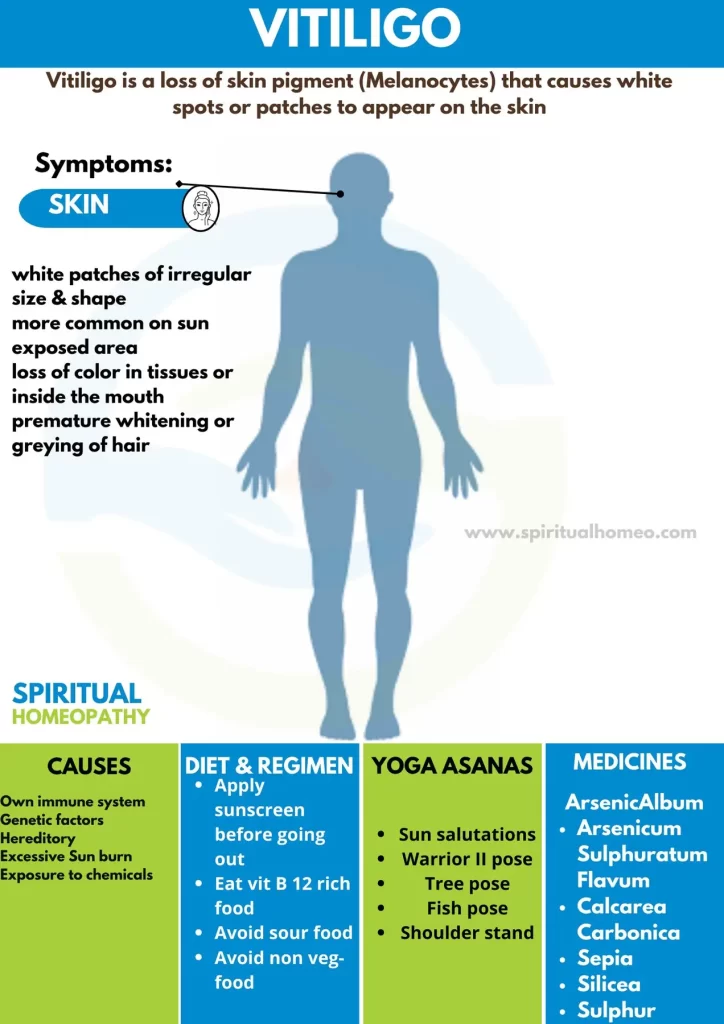
Vitiligo is a chronic skin condition that leads to the loss of skin pigment, causing uneven, pale white patches to appear on different parts of the body. This occurs when melanocytes—the cells responsible for producing melanin, which gives skin its color—are damaged or stop functioning. While the exact cause of vitiligo is not completely understood, it is commonly associated with autoimmune mechanisms, where the immune system mistakenly targets pigment-producing cells.
Evaluation and management of vitiligo may require a detailed, individualized assessment. Consultations are available at Spiritual Homeopathy Clinic through its multiple branches in Hyderabad, as well as via online and international consultation options, based on patient needs.
Autoimmune response – where the immune system mistakenly attacks and destroys melanocytes (the pigment-producing cells).
Oxidative stress imbalance – a disruption in the body’s natural defense mechanisms against cellular damage.
Physical or emotional stress – significant stress events may act as triggers for vitiligo in some individuals.
Skin damage – such as severe sunburn, cuts, or other forms of skin trauma.
Exposure to certain chemicals – which may interfere with normal melanocyte function.
Genetics – vitiligo may run in families, suggesting a hereditary component.
Viral factors – though less common, certain viral influences have been proposed as possible triggers.
Vitiligo is not contagious and cannot be transmitted through touch, close contact, or proximity.
The condition can begin at any age, but it is most commonly observed to start around early adulthood.
Understanding these contributing factors helps guide an individualized approach to long-term management, as triggers and immune responses can vary from person to person.
Types of Vitiligo: Non-Segmental and Segmental
Non-segmental vitiligo is the most common form, accounting for up to 90% of reported cases. It usually presents as symmetrical white patches that appear on both sides of the body and tend to progress gradually, reflecting the chronic nature of the condition.
These depigmented patches commonly occur on areas frequently exposed to sunlight, including:
Face
Neck
Hands and fingers
Arms and elbows
Knees and feet
Around the eyes and mouth
Armpits and groin
Navel
Genitals and rectal area
Subtypes of Non-Segmental Vitiligo include:
Generalized Vitiligo: The most common subtype, with widespread patches without a specific pattern.
Acrofacial Vitiligo: Primarily affects the fingers, toes, and facial areas.
Mucosal Vitiligo: Involves the lips and other mucous membranes.
Universal Vitiligo: A rare form where a large portion of the body loses pigment.
Focal Vitiligo: Presents as a few isolated patches, more often observed in younger children.
Segmental vitiligo is less common, affecting approximately 10% of individuals with vitiligo. Unlike non-segmental vitiligo, it is typically non-symmetrical and usually confined to one side of the body.
Key characteristics include:
Faster onset, with a tendency to stabilize earlier and show less unpredictable spread
More frequently seen in children, accounting for a notable proportion of pediatric cases
Often associated with nerve pathways emerging from the spinal cord (dorsal roots)
May respond differently to management approaches compared to non-segmental vitiligo
Understanding the type of vitiligo is important, as patterns of progression and management considerations can vary, supporting the need for an individualized assessment.
Generalized vitiligo commonly presents with symmetrical white patches on both sides of the body. Areas that are frequently affected include:
Hands, wrists, and knees
Neck
Skin around body openings such as the eyes, mouth, genitals, and anus
In some individuals, hair in the affected areas may also lose pigment, resulting in white or gray patches on the scalp, beard, eyebrows, or eyelashes.
Segmental vitiligo usually involves a localized area of the body. Although it is confined to a specific region, it does not always follow a nerve (dermatomal) pattern.
Key features include:
Clearly defined areas of depigmentation
In fair-skinned individuals, patches may be bordered by darker (hyperpigmented) skin
Perifollicular pigmentation, seen as spotty pigment around hair follicles, which may indicate early repigmentation
Normal sensation in the affected skin areas
A Wood’s lamp examination may be used to enhance the visibility of depigmented patches, making them more apparent under ultraviolet light.
The course of vitiligo can be unpredictable. While many patches remain stable or enlarge slowly over time, some areas may show partial spontaneous repigmentation.
If skin changes are frequent, progressive, or affecting sensitive areas, a medical consultation is advisable for proper evaluation and guidance.
Although there is currently no cure for vitiligo, certain lifestyle habits—particularly related to diet and skincare—may help support skin health, manage symptoms, and potentially slow progression. A well-balanced diet rich in nutrients and antioxidants can help reduce inflammation, support immune function, and promote healthy pigmentation. Guidance may vary depending on individual needs, so consultation with a healthcare professional is recommended.
1. Antioxidant-Rich Foods
Oxidative stress is considered a factor in vitiligo. Consuming foods high in antioxidants may help protect melanocytes (pigment-producing cells) and maintain skin health.
Colorful fruits and vegetables: Berries, carrots, tomatoes, spinach, and kale provide vitamins A, C, and E—potent antioxidants that help protect skin cells.
Nuts and seeds: Almonds, sunflower seeds, walnuts, and flaxseeds supply vitamin E and healthy fats that support skin repair.
2. Copper-Rich Foods
Copper contributes to melanin production, which is essential for skin pigmentation.
Shellfish: Shrimp, crab, and lobster
Nuts and seeds: Cashews, almonds, sunflower seeds
Whole grains: Oats, quinoa, barley
Legumes: Lentils, chickpeas, beans
3. Vitamin B12 and Folate
These nutrients aid in skin cell regeneration, melanin production, and immune support.
Vitamin B12 sources: Fish, meat, dairy, fortified cereals
Folate-rich foods: Leafy greens (spinach, kale), beans, lentils, citrus fruits
4. Healthy Fats
Healthy fats help maintain skin hydration and reduce inflammation.
Omega-3 fatty acids: Fatty fish (salmon, mackerel, sardines), flaxseeds, chia seeds, walnuts
Olive oil: Monounsaturated fats with antioxidant properties, supporting skin health
5. Foods to Limit or Avoid
Some people with vitiligo notice flare-ups or symptom aggravation from certain foods. These triggers are not universal but may include:
Processed foods: High in sugar and unhealthy fats, which can increase inflammation
Gluten: May affect those with gluten sensitivity
Citrus fruits and spicy foods: Can cause irritation in some individuals
6. Stay Hydrated
Adequate hydration supports skin moisture and the body’s natural detoxification processes.
Final Thoughts
Diet alone does not cure vitiligo, but mindful nutrition can support immune function, enhance skin health, and complement other management strategies. Consulting a healthcare professional or dermatologist is advisable before making major dietary changes or starting supplements.
Regular yoga practice can help balance the body and mind. Since stress and immune imbalance are considered potential contributors to vitiligo, incorporating specific yoga asanas may support emotional well-being, circulation, and overall health. Yoga should be seen as a supportive practice and not a replacement for professional medical care.
1. Pranayama (Breathing Techniques)
Best for: Reducing stress, supporting detoxification, and improving oxygen flow.
Anulom Vilom (Alternate Nostril Breathing) – Balances the nervous system and may help modulate immune function.
Bhramari (Bee Breath) – Promotes calmness and reduces mental tension.
Kapalbhati (Skull Shining Breath) – Stimulates metabolism and aids internal purification.
2. Tadasana (Mountain Pose)
Best for: Improving posture, circulation, and mental focus.
Promotes steady breathing and enhances blood flow, supporting skin and overall vitality.
3. Bhujangasana (Cobra Pose)
Best for: Stimulating abdominal organs and improving circulation.
Strengthens the spine, opens the chest, and may support digestion and detoxification.
4. Trikonasana (Triangle Pose)
Best for: Stretching the body, improving digestion, and enhancing metabolism.
Supports circulation and the endocrine system, which can influence autoimmune responses.
5. Sarvangasana (Shoulder Stand)
Best for: Supporting thyroid function and immune regulation.
This inversion helps improve hormone balance and circulation, potentially aiding skin health.
6. Matsyasana (Fish Pose)
Best for: Expanding the chest and improving oxygen supply.
May aid detoxification and support skin health through better circulation.
7. Shavasana (Corpse Pose)
Best for: Deep relaxation and stress relief.
Ending your yoga practice with Shavasana calms the mind and helps manage emotional triggers.
Practice regularly but gently — avoid overexertion.
Combine yoga with mindfulness or meditation to reduce stress.
Focus on deep, steady breathing throughout each pose.
Stay hydrated and maintain a balanced diet to support overall health.
Yoga should complement medical consultation and not replace professional care.
At Spiritual Homeopathy Clinic, we follow a holistic approach that integrates classical homeopathy principles with a focus on overall physical, emotional, and spiritual health. Our goal is to address not just the symptoms, but the underlying factors contributing to your condition. We provide consultations at our multiple Hyderabad branches (Kukatpally, Chandanagar, Dilsukhnagar, Nallagandla), as well as online and international consultations for patients who cannot visit in person.
True healing occurs when the body, mind, and spirit are in balance. Our approach goes beyond symptom management to identify and address underlying imbalances. By supporting the body’s natural healing processes, we aim to facilitate long-term wellness and stability.
1. Homeopathic Consultations
Our experienced homeopathy doctors offer comprehensive consultations in-clinic or online. During each session, we:
Review your complete medical and lifestyle history
Understand your individual health concerns and goals
Develop a personalized treatment plan tailored to your needs
2. Natural Homeopathic Remedies
We provide a range of carefully selected remedies designed to support natural healing. These remedies are generally well-tolerated under professional guidance and can be used for both acute and chronic conditions, addressing contributing factors rather than just symptoms.
3. Follow-Up and Ongoing Care
We emphasize long-term management and continual support. Follow-ups allow us to:
Monitor your progress over time
Adjust treatment plans as needed
Ensure a consistent and structured approach to improving health
Experienced homeopathy doctors with clinical expertise
Individualized, holistic treatment plans
In-clinic, online, and international consultations available
Focus on addressing root causes rather than only managing symptoms
Compassionate, patient-centered care
At Spiritual Homeopathy, we prioritize your health and well-being. Whether managing a specific condition or supporting overall wellness, our care is personalized, empathetic, and designed to work alongside your lifestyle and other medical guidance.
You should consult a healthcare professional if changes in skin color become noticeable, spread over time, or begin to cause emotional or social discomfort. Early evaluation helps assess the pattern of vitiligo, identify possible contributing factors, and guide appropriate long-term care.
Seek consultation if you experience:
White or light-colored patches appearing on the skin
Gradual spread of depigmented patches to new areas
Premature whitening or greying of hair on the scalp, eyebrows, or eyelashes
Loss of color in the lips, gums, or inside the mouth
Increased sensitivity of affected skin to sunlight
Emotional distress, reduced confidence, or social anxiety related to skin changes
No improvement or continued progression despite basic skin care measures
At Spiritual Homeopathy Clinic, consultations are available at multiple branches in Hyderabad, including Kukatpally, Chandanagar, Dilsukhnagar, and Nallagandla. Online and international consultations are also available for individuals who cannot visit in person. A professional assessment supports an individualized care approach based on skin changes, overall health, and personal concerns.
For appointments or guidance, contact 9069 176 176.
Vitiligo occurs when the body's immune system mistakenly attacks and destroys melanocytes—the skin cells responsible for producing melanin, which gives hair, eyes, and skin their color. While the exact trigger is unknown, medical consensus points to a combination of genetic, autoimmune, and environmental factors.
While there is no permanent cure for vitiligo, treatments have advanced significantly. Therapies can now effectively stop the disease from spreading and restore lost skin pigment in many people.
Vitiligo is not contagious or life-threatening, but it is considered a chronic autoimmune disease. It occurs when the immune system attacks pigment-producing cells, causing white patches to appear on the skin. While physically benign, its social and psychological impact can be highly significant.
While there is no permanent cure for vitiligo, the condition can often be effectively reversed or slowed down using medical treatments that restore pigment to the skin. Treatment options depend on the extent and severity of the disease.