Acute stress disorder

How to Recognize and Manage Acute Stress Disorder Naturally

Acute Stress Disorder (ASD) is a mental health condition triggered by a traumatic event. It can occur within three days to a month after the incident and includes symptoms like flashbacks, intrusive thoughts, anxiety, and emotional numbness. People with ASD may experience difficulty sleeping, irritability, or avoidance of reminders related to the trauma. Early intervention through therapy can help reduce symptoms and prevent the development of post-traumatic stress disorder (PTSD).

Everything You Need to Know

Overview of Acute Stress Disorder

Acute Stress Disorder (ASD) occurs when the body’s natural stress response becomes unusually intense and prolonged. While short-term reactions to stressful events are common, ASD symptoms are more severe and can last up to four weeks. Experiencing distress in the first 48 hours after a traumatic event is generally normal; however, if symptoms persist beyond this period or interfere with daily functioning, it may indicate ASD and warrants professional care.

At Spiritual Homeopathy Clinic, individuals can seek guidance through in-clinic consultations at our Hyderabad branches, as well as online or international consultations for personalized support and management.

Causes of Acute Stress Disorder

Acute Stress Disorder (ASD) is generally considered to result from a combination of psychological and biological factors.

Psychological Factors
One of the most studied mechanisms in ASD is dissociation, where a person temporarily detaches from the traumatic experience to reduce immediate emotional overwhelm. While this may provide short-term relief, it can delay recovery by preventing the brain from fully processing and integrating the trauma. Similarly, excessive avoidance—whether conscious or unconscious—of trauma-related thoughts or situations can hinder healing and prolong symptoms.

Biological Factors
Biological explanations often focus on classical conditioning. A traumatic event (unconditioned stimulus) naturally triggers a fear response (unconditioned response). Over time, even reminders of the trauma (conditioned stimuli) can provoke intense fear reactions (conditioned responses). In some individuals, the stress response becomes increasingly sensitive, leading to stronger reactions over time. Those who experience panic attacks during the trauma may be more likely to experience recurrent panic episodes in the following weeks.

Understanding these psychological and biological factors helps guide individualized care, allowing practitioners at Spiritual Homeopathy Clinic—through in-clinic, online, or international consultations—to create tailored management plans that address each patient’s unique needs.

Types of Acute Stress Disorder (ASD)

Acute Stress Disorder (ASD) is a short-term mental health condition that can develop after a person experiences or witnesses a traumatic event. Symptoms typically appear within 3 days to 4 weeks of the trauma and can affect daily life and emotional well-being.

1. Dissociative Type

This type is marked by dissociative symptoms, where individuals may feel disconnected from themselves or their surroundings. Common experiences include:

  • Emotional numbness or detachment

  • Memory gaps related to the traumatic event

  • A sense of unreality or feeling in a dream-like state

Those with this type may struggle to process the trauma fully due to their sense of detachment.

2. Non-Dissociative Type

This form does not involve dissociation but presents as intense psychological distress, such as:

  • Severe anxiety and restlessness

  • Persistent intrusive thoughts about the trauma

  • Irritability or anger outbursts

  • Trouble concentrating

Physical symptoms, like a rapid heartbeat or sweating when reminded of the trauma, may also occur.

3. With Depersonalization

Individuals feel disconnected from their own body or mental processes, sometimes describing a sensation of watching themselves from outside or that their actions don’t feel their own.

4. With Derealization

This type involves a sense that the world feels strange, unreal, or distorted. People may describe surroundings as foggy, distant, or dream-like, even though they recognize them as real.

5. Mixed Symptoms

Some individuals experience a blend of dissociative and non-dissociative symptoms, including:

  • Flashbacks or vivid memories

  • Feelings of unreality or detachment

  • Heightened emotional responses and mood swings

This mixed presentation can make ASD harder to recognize and manage.

Common Symptoms of Acute Stress Disorder

Regardless of type, typical symptoms may include:

  • Flashbacks or reliving the traumatic event

  • Nightmares or sleep disturbances

  • Severe anxiety or panic attacks

  • Emotional numbness or mood swings

  • Difficulty concentrating or functioning normally

Homeopathy and Supportive Care

Management of ASD often involves personalized care focusing on both emotional and physical well-being. At Spiritual Homeopathy Clinic, our practitioners provide in-clinic, online, and international consultations, offering guidance on supportive therapies and stress management strategies tailored to each individual.

Early intervention is key to preventing progression to long-term conditions like Post-Traumatic Stress Disorder (PTSD).

When to Seek Help

If symptoms persist or interfere with daily life after a traumatic event, it is important to seek professional support promptly. Consulting a qualified mental health or homeopathy professional can help develop safe and effective management plans.

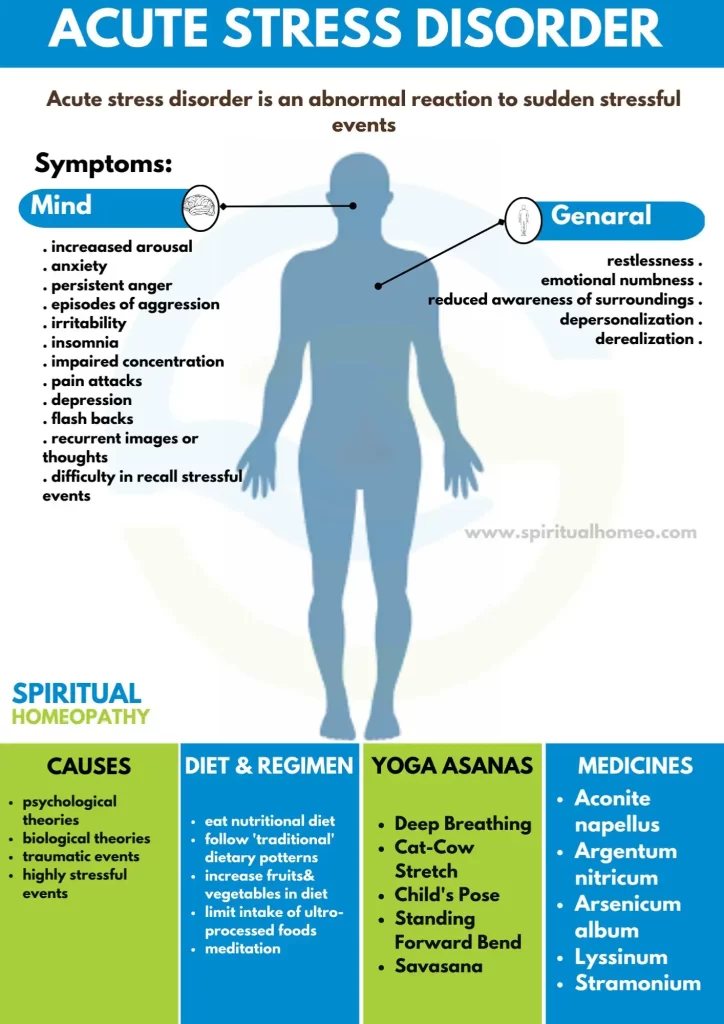
Signs and Symptoms of Acute Stress Disorder (ASD)

Acute Stress Disorder (ASD) is identified when symptoms appear within 2 days of a traumatic event and last up to 4 weeks. Early recognition is essential for effective support and intervention. Symptoms are commonly grouped into four major categories:

1. Increased Arousal

  • Anxiety and sudden panic attacks

  • Restlessness or difficulty concentrating

  • Irritability, mood swings, anger, or feelings of despair

  • Insomnia or disrupted sleep patterns

2. Dissociative Symptoms

  • Emotional numbness or feeling dazed

  • Reduced awareness of surroundings

  • Difficulty recalling details of the traumatic event

  • Feelings of detachment from self (depersonalization) or reality (derealization)

3. Re-experiencing the Trauma

  • Intrusive flashbacks or mental replays

  • Recurrent and distressing thoughts or images

  • Nightmares or disturbing dreams related to the trauma

4. Avoidance and Maladaptive Coping

  • Avoiding places, people, or situations that trigger memories of the trauma

  • Unhealthy coping mechanisms that interfere with emotional healing

Early evaluation and support—including therapy, counseling, or guidance from a qualified mental health professional—can help manage these symptoms effectively.

At Spiritual Homeopathy Clinic, we provide personalized consultations for individuals experiencing ASD, available in-clinic, online, and internationally. Our approach focuses on supportive strategies to address both emotional and physical responses to trauma, tailored to each patient’s needs.

Diet and Lifestyle Tips for Managing Acute Stress Disorder Naturally

A balanced diet and supportive lifestyle can play a key role in managing symptoms of Acute Stress Disorder (ASD). These strategies aim to support both mental and emotional well-being. Guidance may vary depending on individual needs, and consulting a qualified professional is recommended.

🥗 Balanced Nutrition

  • Include fresh fruits, vegetables, whole grains, and lean proteins to support overall health.

  • Stay hydrated with plenty of water to support brain function and overall metabolism.

  • Limit caffeine from coffee, tea, and energy drinks to reduce anxiety and restlessness.

  • Reduce added sugar to help stabilize energy levels and prevent mood fluctuations.

🧠 Nutrients That Support Brain Health

  • Omega-3 fatty acids (found in fish, walnuts, flaxseeds) support mood and cognitive function.

  • Magnesium-rich foods like spinach, bananas, and almonds can help lower stress levels.

  • Vitamin B complex (whole grains, eggs, dairy) supports the nervous system and stress response.

🍵 Supportive Additions

  • Herbal teas such as chamomile or green tea promote relaxation and can improve sleep quality.

  • Probiotic-rich foods like yogurt, kefir, and kimchi support gut health, which is closely linked to mood regulation.

  • Dark chocolate (in moderation) contains antioxidants that may help reduce stress hormone levels.

🏃‍♂️ Healthy Lifestyle Practices

  • Avoid alcohol, which can increase anxiety and interfere with recovery.

  • Eat regular meals to maintain stable blood sugar and prevent irritability.

  • Practice mindful eating—chew slowly and focus on each bite for better digestion.

  • Engage in regular physical activity such as yoga, walking, or light cardio to release endorphins and boost mood.

  • Maintain quality sleep with a consistent bedtime routine to support emotional balance.

  • Spend time in morning sunlight to help regulate circadian rhythms and boost vitamin D for mood stability.

  • Limit processed foods, which can contribute to fatigue and worsen stress symptoms.

  • Stay socially connected with family and friends to reduce isolation and improve emotional well-being.

  • Incorporate meditation, deep breathing, or other relaxation techniques to calm the nervous system and reduce stress responses.

At Spiritual Homeopathy Clinic, our practitioners can provide personalized guidance for diet and lifestyle adjustments, available in-clinic, online, and internationally, as part of a holistic approach to managing ASD.


Yoga Asanas for Acute Stress Disorder

Yoga can help calm the nervous system, support emotional balance, and reduce anxiety in individuals experiencing Acute Stress Disorder (ASD). Gentle and restorative poses are ideal for relaxation and emotional release. Always consult a qualified professional before starting any new exercise routine, especially during periods of acute stress.

  • Balasana (Child’s Pose): Provides grounding and emotional relief by calming the mind and gently stretching the back.

  • Sukhasana (Easy Pose) with Deep Breathing: Encourages mindfulness, reduces anxiety, and helps connect breath with body awareness.

  • Viparita Karani (Legs-Up-The-Wall Pose): Improves circulation, alleviates fatigue, and helps calm an overactive nervous system.

  • Setu Bandhasana (Bridge Pose): Opens the chest and supports adrenal function, which can help modulate stress hormone levels.

  • Shavasana (Corpse Pose): Promotes full-body relaxation and the release of mental tension.

Incorporating these yoga practices daily, along with deep breathing or meditation, can aid in managing stress naturally and enhancing emotional stability. For personalized guidance, Spiritual Homeopathy Clinic offers consultations in-clinic, online, and internationally to integrate lifestyle and holistic care approaches for stress management.

Why Choose Spiritual Homeopathy?

At Spiritual Homeopathy Clinic, we offer a holistic approach that combines classical homeopathy with attention to mental and emotional well-being. Our aim is to support the whole person—body, mind, and spirit—by addressing underlying factors contributing to illness. Our experienced practitioners provide personalized care for patients of all ages through both in-clinic and online consultations.

Our Approach to Treatment

We focus on aligning physical health, emotional balance, and overall well-being. Rather than only addressing symptoms, we explore health history, lifestyle, and emotional triggers to design an individualized plan. This approach supports the body’s natural healing processes and promotes long-term wellness.

What We Offer

1. Personalized Consultations
Our practitioners take time to understand your health concerns, lifestyle, and emotional state. With multiple branches in Dilsukhnagar, Kukatpally, Chandanagar, and Nallagandla, as well as online and international consultations, we provide accessible care tailored to each individual.

2. Safe, Gentle Remedies
We use homeopathic remedies that are designed to support a wide range of conditions. These treatments are generally well-tolerated and are aimed at addressing contributing factors rather than only alleviating symptoms.

3. Ongoing Support and Follow-Up
Healing is a gradual process. We offer regular follow-ups to monitor progress, adjust treatment plans as needed, and provide guidance to ensure steady improvement in health and well-being.

Our Commitment

At Spiritual Homeopathy Clinic, your overall health and balance are our priority. Whether managing chronic conditions, emotional stress, or supporting general wellness, we provide compassionate, evidence-informed homeopathic care across Hyderabad.

When to Consult

You should consult a healthcare professional if acute stress disorder symptoms appear after a stressful or traumatic event and begin to interfere with daily activities, work, relationships, or sleep. Early evaluation helps in understanding symptoms and supporting emotional recovery.

Seek consultation if you experience:

  • Persistent anxiety, fear, or feeling overwhelmed

  • Recurrent distressing thoughts or memories of a stressful event

  • Difficulty sleeping or frequent nightmares

  • Trouble concentrating or feeling mentally restless

  • Emotional numbness, irritability, or sudden mood changes

  • Physical symptoms such as palpitations, sweating, or headaches

  • Symptoms not improving over a few weeks or becoming more intense

At Spiritual Homeopathy Clinic, consultations are available at multiple branches in Hyderabad, including Kukatpally, Chandanagar, Dilsukhnagar, and Nallagandla. Online and international consultations are also available for patients who cannot visit in person. A professional assessment supports an individualized care approach based on symptoms and overall health status.

📞 For appointments or guidance, contact 9069 176 176.

Frequently Asked Questions (FAQ) About Acute Stress Disorder

1. What do brain scans reveal about stress disorders like PTSD?
Functional MRI (fMRI) studies in individuals with PTSD show changes in brain activity. There is often reduced activity in the frontal cortex and increased activity in the temporal cortex, which are involved in emotional regulation and memory. Research also indicates heightened activation in the superior prefrontal cortex, cingulate cortex, and medial posterior precuneus, highlighting a link between trauma and altered brain function.

2. What are the DSM-IV diagnostic criteria for Acute Stress Disorder (ASD)?
To diagnose ASD, the following criteria are generally considered:

  • Traumatic Event Exposure: The person experiences or witnesses a traumatic event involving actual or threatened death, serious injury, or threat to physical integrity, with emotional responses of intense fear, helplessness, or horror.

  • Dissociative Symptoms (at least three required): Emotional numbness, reduced awareness of surroundings, derealization (feeling the world is unreal), depersonalization (feeling detached from self), or dissociative amnesia (difficulty recalling aspects of the trauma).

  • Re-experiencing the Trauma: Recurrent distressing images, thoughts, dreams, flashbacks, or illusions related to the event.

  • Avoidance Behavior: Avoidance of people, places, or activities that trigger memories of the trauma.

  • Increased Arousal: Irritability, sleep disturbances, or difficulty concentrating.

  • Significant Distress or Impairment: Symptoms cause noticeable emotional or social dysfunction.

  • Duration: Symptoms begin within 2–4 weeks of the trauma and last up to 4 weeks.

  • Exclusion of Other Conditions: Symptoms are not caused by medication, substance abuse, medical conditions, or another psychiatric disorder.

3. How is Acute Stress Disorder different from PTSD?
The main difference is timing. ASD occurs within 4 weeks of a traumatic event and lasts no longer than 4 weeks, while PTSD is diagnosed when symptoms persist beyond one month.

4. What other conditions should be considered in diagnosis?
Doctors may evaluate for:

  • Adjustment Disorders

  • Brief Psychotic Disorder

  • Major Depression

  • Dissociative Disorders

  • Postconcussion Syndrome

  • PTSD

  • Substance Use Disorders

5. Are there prevention strategies for ASD or PTSD?
Prevention strategies include psychosocial and medical interventions before or after trauma. Current evidence emphasizes early therapy, resilience-building, and supportive approaches. Natural and homeopathic strategies may be considered as part of holistic stress management under professional guidance.

6. Where can I consult for Acute Stress Disorder?
You can consult Spiritual Homeopathy Clinic for evaluation and supportive care. We provide in-clinic consultations at Dilsukhnagar, Kukatpally, Chandanagar, and Nallagandla, as well as online and international consultations.