
Attention Deficit Hyperactivity Disorder (ADHD) is a common neurodevelopmental condition that affects both children and adults. It is characterized by persistent symptoms such as difficulty paying attention, impulsive behavior, hyperactivity, poor concentration, forgetfulness, and challenges with organization and completing daily tasks. While ADHD is often diagnosed during childhood, many individuals continue to experience symptoms into adolescence and adulthood, which can affect academic performance, work, relationships, and overall quality of life. Early diagnosis, proper evaluation, and individualized management are important to help improve daily functioning and long-term well-being.
At Spiritual Homeopathy, we believe in treating the root cause rather than simply managing symptoms. Our experienced homeopathic doctors carefully evaluate each patient’s symptoms, medical history, developmental history, emotional well-being, lifestyle, family history, and overall health before preparing an individualized treatment plan. Our holistic approach focuses on supporting concentration, emotional balance, behavioral well-being, cognitive function, and overall health through safe and personalized homeopathic care. We provide homeopathic treatment for ADHD, attention difficulties, hyperactivity, behavioral concerns, and related neurodevelopmental conditions.
We provide personalized homeopathic treatment for ADHD in Hyderabad to patients of all age groups through our clinics across Hyderabad, as well as online homeopathy consultations for patients throughout India and in more than 100 countries worldwide. If you are looking for the best homeopathy doctor for ADHD, natural support for attention and behavioral concerns, or long-term holistic care, Spiritual Homeopathy is committed to delivering expert, patient-centered care wherever you are.
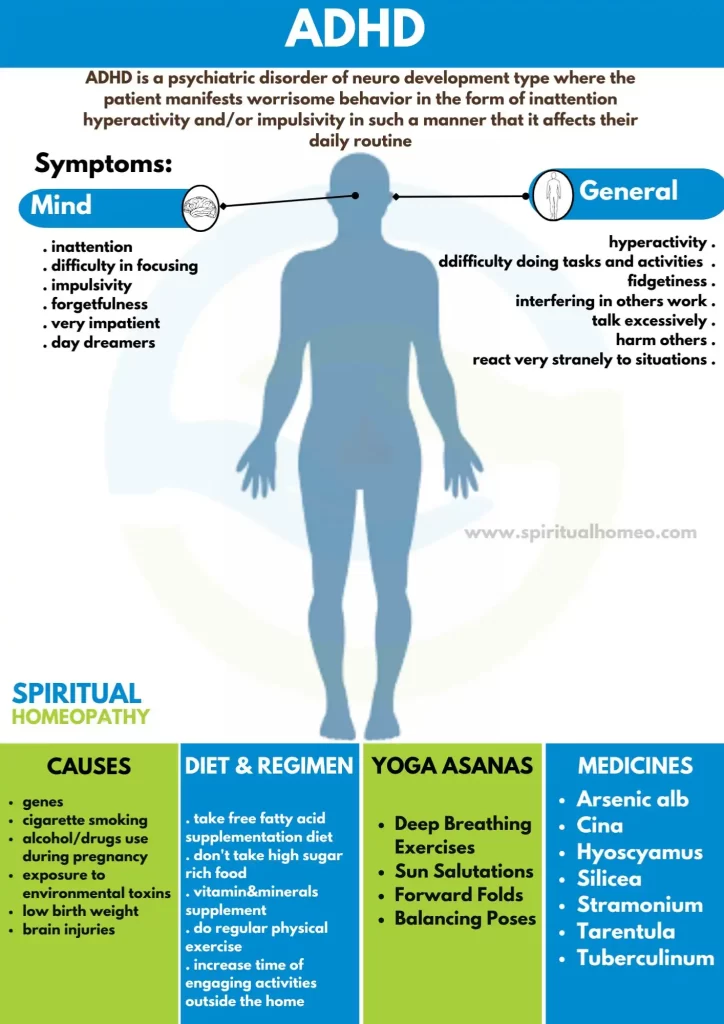
Attention Deficit Hyperactivity Disorder (ADHD) typically begins between the ages of 6 and 12 years. To confirm a diagnosis, symptoms should persist for more than six months and be present in more than one setting. ADHD can significantly affect various areas of life, including relationships, social interactions, and performance at school or the workplace.
Early identification and appropriate management play an important role in helping individuals develop coping strategies and improve daily functioning. Professional evaluation helps determine symptom patterns, contributing factors, and suitable care options.
Consultations for ADHD are available at Spiritual Homeopathy Clinic through multiple branches in Hyderabad, as well as via online and international consultations, allowing access to care based on individual needs.
The exact cause of Attention Deficit Hyperactivity Disorder (ADHD) remains unclear, and ongoing research continues to explore multiple contributing factors. ADHD is generally understood to result from a combination of biological, developmental, and environmental influences. Some potential contributors include:
Genetics:
A family history of ADHD may increase the likelihood of developing the condition, suggesting a hereditary component.
Brain Injury or Developmental Factors:
Injury to specific areas of the brain during early development may influence attention, impulse control, and behavior regulation.
Environmental Factors:
Exposure to environmental toxins, such as lead during pregnancy or early childhood, may affect brain development and functioning.
Substance Use During Pregnancy:
Alcohol, tobacco, or substance use during pregnancy has been associated with an increased risk of attention and behavioral difficulties in children.
Premature Birth or Low Birth Weight:
Children born prematurely or with low birth weight may have a higher likelihood of developing neurodevelopmental concerns, including ADHD.
Other Contributing Factors:
Factors such as excessive screen time, high sugar intake, parenting challenges, and social or environmental stressors may worsen symptoms in some individuals, though they are not considered direct causes.
These contributing factors can vary from person to person, highlighting the importance of an individualized assessment to understand symptom patterns and guide appropriate care.
Attention Deficit Hyperactivity Disorder (ADHD) can present in three distinct ways, depending on which symptoms are most prominent in an individual:
Predominantly Inattentive Presentation:
Individuals mainly experience attention-related difficulties, such as trouble staying focused, organizing tasks, maintaining concentration, and following instructions consistently.
Predominantly Hyperactive-Impulsive Presentation:
This type is characterized by symptoms of hyperactivity and impulsivity, including excessive movement, restlessness, difficulty remaining seated, and acting without considering consequences.
Combined Presentation:
This form includes a combination of both inattentive and hyperactive-impulsive symptoms, leading to challenges with focus, impulse control, and activity regulation across different settings.
The presentation of ADHD may vary over time, and identifying the specific type helps guide an individualized management approach based on symptoms and functional needs.
ADHD can manifest in three distinct forms, depending on which symptoms are most dominant in an individual:
Predominantly Inattentive Type:
This type is marked by significant attention difficulties, such as trouble staying focused, organizing tasks, maintaining concentration, and following through on instructions.
Predominantly Hyperactive-Impulsive Type:
Characterized by hyperactivity and impulsivity, individuals may struggle with staying still, excessive movement, restlessness, and making impulsive decisions without considering consequences.
Combined Type:
This form includes a mix of both inattentive and hyperactive-impulsive symptoms, affecting focus, impulse control, and overall activity regulation.
The presentation of ADHD may vary over time, and identifying the type supports an individualized care approach based on symptoms and functional needs.
Omega-3 Rich Foods:
Incorporate fish, walnuts, and flaxseeds to support overall brain health and cognitive function.
Protein-Rich Foods:
Include eggs, chicken, dairy, and beans in daily meals, as protein may help support focus and sustained attention.
Complex Carbohydrates:
Opt for whole grains, oats, and quinoa to help maintain steady energy levels throughout the day.
Iron & Zinc:
Foods such as spinach, lentils, pumpkin seeds, and nuts provide essential nutrients that support normal cognitive function.
Magnesium-Rich Foods:
Add magnesium-rich options like bananas, seeds, and dark chocolate in moderation to support mental balance and clarity.
Hydration:
Adequate intake of water and non-caffeinated beverages helps maintain overall brain and body function.
Limit Sugar & Additives:
Reducing processed foods, excess sugar, and artificial additives may help minimize fluctuations in energy and attention.
Daily Physical Activity:
Regular exercise such as yoga, walking, swimming, or sports may help reduce restlessness and support concentration.
Adequate Sleep:
Maintaining a consistent sleep schedule supports attention, emotional regulation, and daily functioning.
Mindfulness & Relaxation:
Practices such as meditation, breathing exercises, and relaxation techniques may help manage stress and improve attention.
Dietary and lifestyle guidance may vary based on age, symptoms, and individual health needs, and should be adjusted under professional guidance.
Yoga can be a supportive complementary practice for managing Attention Deficit Hyperactivity Disorder (ADHD). It may help improve focus, reduce restlessness, and promote relaxation when practiced regularly under guidance. Along with medical care, yoga can support overall mental and physical well-being. Consultation is available at Spiritual Homeopathy Clinic, across multiple branches in Hyderabad, as well as through online and international consultations.
Benefits:
Enhances focus, improves posture, and promotes grounding and body awareness.
How to Do:
Stand tall with feet together and arms at the sides. Engage your core, lengthen your spine, and gently raise your arms upward. Breathe deeply and hold the pose for a few breaths.
Benefits:
Improves balance, concentration, and mental stability.
How to Do:
Stand on one leg and place the sole of the other foot on the inner thigh or calf (avoid the knee). Bring palms together at the chest or raise arms overhead. Maintain steady breathing and focus on a fixed point.
Benefits:
Helps calm the mind, reduce stress, and improve circulation, which may support attention.
How to Do:
Begin on all fours, lift the hips upward, and straighten the legs to form an inverted “V” shape. Keep the head relaxed between the arms and breathe steadily.
Benefits:
May help reduce anxiety, strengthen the back, and support mental focus.
How to Do:
Lie on your back with knees bent and feet flat on the floor. Slowly lift your hips while pressing your feet and arms into the ground. Hold the posture with calm breathing.
Benefits:
Supports relaxation, improves flexibility, and helps calm the nervous system.
How to Do:
Sit with feet together and knees gently falling outward. Hold the feet with your hands, keep the spine straight, and breathe comfortably.
Benefits:
Promotes mental relaxation, steady breathing, and improved focus.
How to Do:
Sit cross-legged with a straight spine. Rest hands on the knees, close the eyes, and observe slow, deep breathing for a few minutes.
Benefits:
Helps regulate breathing patterns, reduce hyperactivity, and improve concentration.
How to Do:
Sit comfortably and practice slow nasal breathing. Alternate nostril breathing (Nadi Shodhana) may be practiced under proper guidance.
Yoga practices should be adapted to the individual’s age, physical condition, and symptom severity. These practices are supportive in nature and are not a replacement for professional medical care.
Homeopathy follows a holistic approach to health by focusing on the individual as a whole rather than only addressing symptoms. It aims to support the body’s natural defense mechanisms and considers physical, emotional, and lifestyle factors during care. Homeopathic care is commonly used across different age groups and emphasizes personalized attention based on individual needs. Consultation guidance and suitability may vary from person to person.
At Spiritual Homeopathy Clinic, care is provided using classical homeopathic principles along with a comprehensive understanding of overall well-being. The focus is on identifying contributing factors related to health concerns while maintaining a balanced approach to mind and body health. The clinic offers consultations through multiple branches in Hyderabad, as well as online and international consultation options.
Spiritual Homeopathy Clinic emphasizes individualized care, taking time to understand each patient’s health concerns and background. Practitioners follow a patient-centered approach that considers physical symptoms along with emotional and lifestyle aspects. This method supports long-term management by addressing underlying contributors rather than focusing only on short-term symptom relief.
The treatment approach at Spiritual Homeopathy Clinic focuses on maintaining harmony between physical and emotional health. Care is planned after a detailed assessment, aiming to address contributing factors that may influence the condition. Homeopathic care is generally well-tolerated when followed under professional guidance and is intended to support the body’s natural ability to maintain balance over time.
Homeopathic consultations are available across multiple branches in Hyderabad. Online and international consultations are also offered to ensure continuity of care for patients who are unable to visit in person. Each consultation involves a detailed discussion of symptoms, medical history, and lifestyle factors.
Treatment plans are designed based on individualized assessment and ongoing evaluation. The approach focuses on long-term management and overall well-being rather than immediate symptom suppression.
Regular follow-up consultations help monitor progress and make necessary adjustments based on response and changing health needs. Follow-up frequency may vary depending on individual cases.
At Spiritual Homeopathy Clinic, patient care is guided by professional responsibility and ethical practice. The clinic remains committed to providing structured, individualized support for various health concerns through in-clinic, online, and international consultations.
You should consult a healthcare professional if ADHD-related symptoms become persistent, begin to interfere with daily functioning, or affect academic, occupational, or social performance. Early evaluation helps identify contributing factors and supports appropriate long-term management.
Seek consultation if you experience:
Ongoing difficulty with attention, focus, or task completion
Excessive restlessness or hyperactivity affecting daily routines
Impulsive behavior impacting school, work, or relationships
Poor organization, forgetfulness, or time-management difficulties
Emotional regulation issues such as irritability or frustration
Symptoms present across multiple settings (home, school, or work)
At Spiritual Homeopathy Clinic, consultations are available at multiple branches in Hyderabad, including Kukatpally, Chandanagar, Dilsukhnagar, and Nallagandla. Online and international consultations are also available for individuals who are unable to visit in person. A professional assessment supports an individualized care approach based on symptoms, age, and overall health status.
For appointments or consultation guidance, contact 9069 176 176.
Someone with ADHD generally has a brain that processes information, time, and focus differently than a neurotypical person. They often experience a mix of intense restlessness, deep hyperfocus on things they find interesting, chronic disorganization, and difficulty regulating attention, emotions, and daily routines.
ADHD in adults manifests as persistent patterns of inattention, hyperactivity, and impulsivity that interfere with daily functioning. Key behaviors include severe procrastination, chronic disorganization, "time blindness," frequent misplacement of items, and difficulty regulating emotions like frustration and stress.
ADHD is not universally classed as a disability. It is a neurodevelopmental condition recognized as a medical/psychological disorder. However, it legally qualifies as a disability if symptoms are severe enough to substantially limit major life activities (e.g., working, concentrating) or if systemic protections apply.
The best environment for ADHD is structured yet flexible, low in overwhelming sensory distractions, and rich in positive reinforcement. It minimizes visual clutter, provides clear visual cues or checklists to compensate for working memory issues, and incorporates natural elements and designated spaces for movement.