
Uterine fibroids are common non-cancerous growths that develop in the muscular wall of the uterus. These benign tumors are made up of muscle and fibrous tissues and can vary in size, from small nodules to larger masses. Many women with uterine fibroids may not experience noticeable symptoms, but in some cases, they can lead to heavy menstrual bleeding, pelvic pain, abdominal discomfort, frequent urination, and complications related to pregnancy or childbirth. Although the exact cause of uterine fibroids is not fully understood, hormonal factors, especially changes in estrogen and progesterone levels, are believed to play an important role. Early evaluation and proper management can help prevent complications and support better reproductive health.
At Spiritual Homeopathy, we believe in addressing the root cause of uterine fibroids rather than simply managing symptoms. Our experienced homeopathic doctors carefully evaluate each patient’s symptoms, medical history, menstrual patterns, lifestyle, stress levels, hormonal factors, and overall health before creating an individualized treatment plan. Our holistic approach focuses on providing natural uterine fibroid treatment, supporting hormonal balance, managing symptoms such as heavy bleeding and pelvic discomfort, and promoting long-term women’s health through safe and personalized homeopathic care. We specialize in homeopathic treatment for uterine fibroids, fibroid management, menstrual health concerns, and women’s wellness.
We provide personalized homeopathic treatment for uterine fibroids in Hyderabad for women of all age groups through our clinics in Hyderabad, along with online homeopathy consultations for patients across India and in more than 100 countries worldwide. If you are looking for the best homeopathy doctor for uterine fibroids, natural fibroid treatment, hormonal health support, or long-term gynecological wellness, Spiritual Homeopathy is committed to delivering expert and patient-centered care wherever you are.
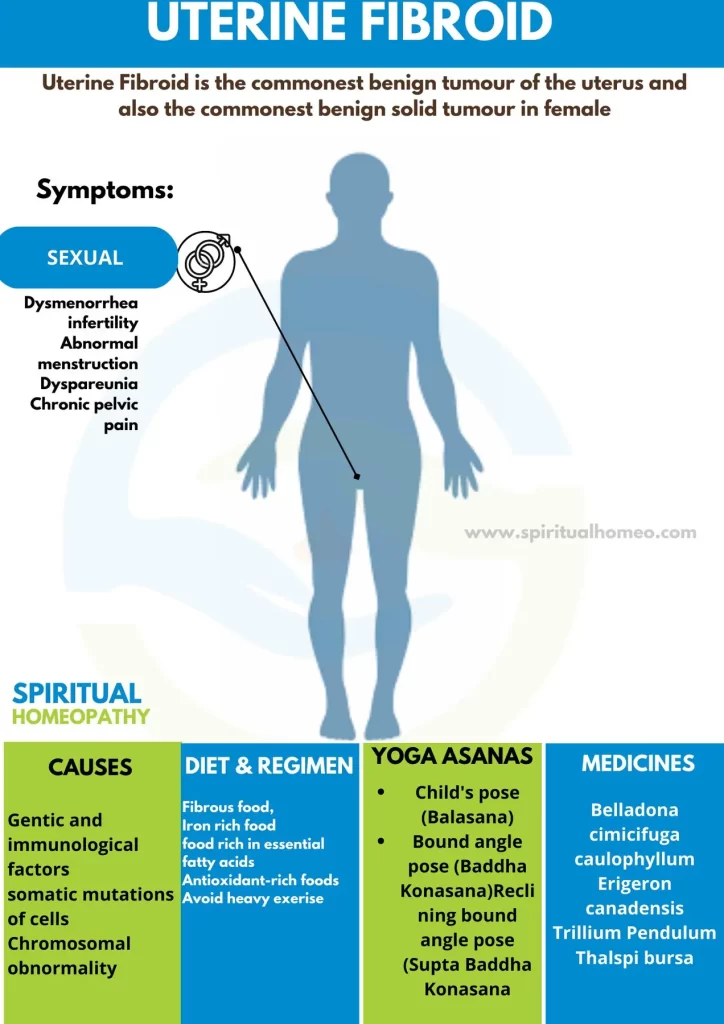
Uterine fibroids, also called leiomyomas, myomas, or fibromyomas, are benign growths made up of smooth muscle and fibrous connective tissue. They are common in women, with studies indicating that about 20% of women aged 30 and older may have fibroids.
The prevalence varies by region and ethnicity. In England, approximately 10% of women are affected, while women of African descent tend to have a higher incidence. Fibroids may remain asymptomatic in many women, though some may experience symptoms that impact daily life.
At Spiritual Homeopathy Clinic, we provide individualized consultations for uterine fibroids across our Hyderabad branches (Kukatpally, Chandanagar, Dilsukhnagar, Nallagandla) as well as online and international consultations for patients who are unable to visit in person.
The exact cause of uterine fibroids is not fully understood, but several factors are known to contribute to their development. Chromosomal abnormalities are often observed in fibroid cells, while growth factors such as epidermal growth factor (EGF), insulin-like growth factor-1 (IGF-1), and transforming growth factor (TGF) may stimulate fibroid growth, either directly or through the influence of estrogen.
A positive family history of uterine fibroids can increase the risk of developing them. Hormones, particularly estrogen and progesterone, play a key role in promoting fibroid growth, making hormonal imbalances an important factor. Other contributing factors include age (more common in women aged 30–50) and lifestyle factors that influence hormone levels.
Because the causes and risk factors can vary between individuals, consultation at Spiritual Homeopathy Clinic—available at our Hyderabad branches (Kukatpally, Chandanagar, Dilsukhnagar, Nallagandla) or online/internationally—can help assess your personal risk and guide individualized management.
Uterine fibroids can develop in different locations within the uterus, and their classification depends on their position and structure.
Interstitial or Intramural Fibroids (75%)
These fibroids develop within the muscular wall of the uterus. They are the most common type and can cause significant symptoms depending on their size and location.
Subserosal Fibroids (15%)
Located on the outer surface of the uterus, subserosal fibroids may expand outward. Variants include:
Broad ligament fibroids
Wandering fibroids
Submucosal Fibroids (5%)
Found just beneath the uterine lining, submucosal fibroids can affect the inner uterine cavity. They can be:
Pedunculated (attached by a stalk)
Sessile (broad-based)
Cervical Fibroids
These fibroids form in the cervix and are categorized by their position:
Anterior cervical fibroids
Posterior cervical fibroids
Lateral cervical fibroids
Central cervical fibroids
Pseudo-Cervical Fibroid
This type mimics the appearance of a cervical fibroid but actually originates from other areas of the uterus.
Uterine fibroids can lead to a variety of symptoms, which may vary depending on their size, location, and number. Common signs and symptoms include:
Menstrual Problems
Menorrhagia: Heavy or prolonged menstrual bleeding is a common symptom of uterine fibroids.
Dysmenorrhea: Painful periods or cramps may occur due to the presence of fibroids.
Abdominal Discomfort
Pressure or Fullness: A feeling of pressure or discomfort in the lower abdomen caused by fibroids pressing on surrounding organs.
Abdominal Distension: Bloating or swelling of the abdomen may result from fibroid growth.
Urinary Issues
Frequent Urination: Fibroids pressing on the bladder can increase the need to urinate.
Urinary Retention: Difficulty fully emptying the bladder may occur with larger fibroids.
Bowel Problems
Fibroids can affect the bowel, sometimes causing constipation or other gastrointestinal discomfort.
Reproductive Health Concerns
Subfertility: Fibroids may interfere with implantation or disrupt the uterine environment, affecting fertility.
Pregnancy Loss: Fibroids can contribute to a higher risk of miscarriage.
Intrapartum Bleeding: There may be an increased risk of bleeding during labor, particularly in Caesarean deliveries.
Managing uterine fibroids involves a balanced approach that includes a nutrient-rich diet, lifestyle adjustments, and healthy habits aimed at supporting hormone regulation, reducing inflammation, and promoting overall well-being. Guidance should be individualized, so consulting a healthcare provider is recommended—Spiritual Homeopathy Clinic offers consultations at our Hyderabad branches (Kukatpally, Chandanagar, Dilsukhnagar, Nallagandla) as well as online and international consultations.
High-Fiber Foods
Why: Fiber supports liver function in detoxifying excess estrogen, which may influence fibroid growth.
Foods to Include:
Whole grains: oats, quinoa, brown rice
Fruits: berries, apples, pears, oranges
Leafy greens (spinach, kale) and cruciferous vegetables (broccoli, cauliflower)
Legumes: beans, lentils, chickpeas
Seeds: flaxseeds, chia seeds, sunflower seeds
Antioxidant-Rich Foods
Why: Antioxidants help reduce inflammation and oxidative stress, supporting overall uterine health.
Foods to Include:
Berries: blueberries, strawberries, raspberries
Dark leafy greens: kale, spinach
Nuts and seeds: walnuts, almonds, flaxseeds
Tomatoes and bell peppers (rich in vitamin C)
Green tea
Healthy Fats (Omega-3 Fatty Acids)
Why: Omega-3s may help manage inflammation and fibroid-related discomfort.
Foods to Include:
Fatty fish: salmon, mackerel, sardines
Plant-based sources: flaxseeds, chia seeds, walnuts, hemp seeds
Avocados and olive oil (moderate use)
Vitamin D-Rich Foods
Why: Adequate vitamin D may support overall health and influence fibroid development.
Foods to Include:
Fatty fish: salmon, tuna
Fortified foods: milk, orange juice, cereals
Egg yolks and sun-exposed mushrooms
Note: Supplements may be considered under professional guidance.
Iron-Rich Foods
Why: Heavy menstrual bleeding from fibroids can lead to iron deficiency.
Foods to Include:
Lean meats: chicken, turkey, grass-fed beef
Leafy greens: spinach, kale
Legumes: lentils, chickpeas, beans
Plant-based sources: tofu, tempeh, quinoa
Pumpkin seeds
Organic and Hormone-Free Foods
Why: Avoiding added hormones and pesticides may support hormonal balance.
Recommendations:
Choose organic produce whenever possible
Select grass-fed, hormone-free meats and dairy
Limit Sugars and Processed Foods
Why: High sugar and refined carb intake can increase inflammation and hormonal imbalance.
Avoid:
Sugary snacks and desserts
Processed meats and fast food
Refined grains: white bread, pastries
Excessive artificial sweeteners and caffeine
Regular Exercise
Engage in consistent physical activity to improve circulation, support hormone balance, and maintain healthy weight. Walking, swimming, and yoga can be particularly beneficial.
Stress Management
Chronic stress may worsen inflammation and hormonal imbalances. Mindfulness practices, meditation, and deep breathing exercises can help manage stress.
Maintain a Healthy Weight
Excess body weight may contribute to hormonal imbalance and influence fibroid growth. Combining a healthy diet with regular exercise supports overall well-being.
Note: These dietary and lifestyle recommendations may vary based on individual health conditions. Consultation with a healthcare provider at Spiritual Homeopathy Clinic can help tailor guidance to your specific needs.
Yoga can support the management of uterine fibroid symptoms by improving pelvic blood circulation, reducing stress, and promoting overall well-being. While yoga cannot reduce the size of fibroids, certain asanas may help alleviate discomfort, support hormonal balance, and improve circulation. Practice these poses with care and consult a healthcare provider if needed. Spiritual Homeopathy Clinic offers in-clinic, online, and international consultations to guide individualized care.
Supta Baddha Konasana (Reclining Bound Angle Pose)
Benefits: Promotes relaxation, improves pelvic blood flow, and relieves pelvic congestion.
How to do it:
Lie on your back, soles of feet together, knees open to the sides.
Rest arms by your sides or on your belly.
Close your eyes, breathe deeply for 3–5 minutes, allowing the pelvis to relax.
Setu Bandhasana (Bridge Pose)
Benefits: Strengthens pelvic floor, opens hips, and supports blood flow to the lower abdomen.
How to do it:
Lie on your back, knees bent, feet flat and hip-width apart.
Press into your feet, lift hips, keeping shoulders and head on the floor.
Interlace hands under your back or keep by sides. Hold 30–60 seconds.
Viparita Karani (Legs-Up-The-Wall Pose)
Benefits: Reduces pelvic congestion, stress, and inflammation while improving lower body circulation.
How to do it:
Sit next to a wall, lie back, place legs up against the wall.
Relax arms by your sides, palms up.
Stay 5–10 minutes, breathing deeply.
Malasana (Garland Pose)
Benefits: Opens hips, stretches pelvic area, improves uterine circulation, and eases abdominal tension.
How to do it:
Stand with feet slightly wider than hips, toes outward.
Bend knees, lower hips, keep back straight.
Bring palms together in front of chest, hold 30–60 seconds.
Adho Mukha Svanasana (Downward-Facing Dog Pose)
Benefits: Enhances overall blood flow, strengthens core and pelvic region, relieves tension.
How to do it:
Start in tabletop position. Lift hips to form an inverted V-shape.
Press heels down, hands firm on the floor. Hold 30–60 seconds.
Supta Virasana (Reclining Hero Pose)
Benefits: Stretches pelvis, improves circulation, and reduces pelvic pressure.
How to do it:
Kneel with knees together, feet slightly apart.
Sit on heels, lower back slowly to the floor.
Arms by sides or overhead, hold 1–3 minutes.
Utkatasana (Chair Pose)
Benefits: Strengthens pelvic muscles, improves circulation, and eases fibroid-related discomfort.
How to do it:
Stand with feet together, bend knees, lower hips.
Keep back straight, arms overhead, palms facing. Hold 30–60 seconds.
Trikonasana (Triangle Pose)
Benefits: Stretches the body, relieves pelvic tension, stimulates abdominal circulation.
How to do it:
Stand with feet wide apart, turn right foot out 90°.
Stretch arms parallel to the ground, reach right hand down to ankle or shin.
Extend left arm upward, hold 30 seconds, then repeat on the other side.
Baddha Konasana (Bound Angle Pose)
Benefits: Opens hips, improves pelvic blood flow, and may reduce menstrual discomfort.
How to do it:
Sit, legs extended, soles together, knees outward.
Hold feet with hands, sit tall, gently press knees downward. Hold 1–2 minutes.
Ananda Balasana (Happy Baby Pose)
Benefits: Opens hips, reduces lower back and pelvic tension, improves abdominal circulation.
How to do it:
Lie on your back, knees toward chest, hold feet with hands.
Keep knees wide, gently rock side to side, hold 1–2 minutes.
Breathing: Maintain slow, deep breaths in each pose to relax the nervous system and reduce stress.
Consistency: Practicing 3–4 times per week can support pelvic health and alleviate discomfort.
Consultation: Always consult your healthcare provider before starting yoga, especially with pre-existing health conditions or severe symptoms.
Homeopathy is a gentle, individualized system of medicine that focuses on addressing the underlying causes of illness, not just the symptoms. It works in harmony with the body’s natural regulatory mechanisms, supporting long-term health and well-being. Homeopathic care is tailored to each person’s unique constitution and is generally well-tolerated under professional guidance.
At Spiritual Homeopathy Clinic, we offer in-clinic, online, and international consultations across multiple Hyderabad branches, including Kukatpally, Chandanagar, Dilsukhnagar, and Nallagandla.
Individualized Care
Each patient receives a comprehensive assessment considering medical history, lifestyle, emotional state, and symptom patterns to create a personalized management plan.
Long-Term Management
Homeopathy aims to support the body over time, addressing contributing factors and improving overall well-being rather than focusing solely on immediate symptom relief.
Holistic Support
The approach considers physical, emotional, and hormonal health, helping to improve energy, regulate cycles, and maintain balance.
Monitoring and Follow-Up
Regular follow-ups allow practitioners to track progress, adjust care plans, and provide ongoing guidance for lifestyle, diet, and stress management.
Safety Considerations
Homeopathic remedies are generally well-tolerated and non-toxic when used under professional supervision. They can be integrated safely alongside other medical care if required.
Persistent or heavy menstrual bleeding
Abdominal or pelvic discomfort
Urinary or bowel irregularities related to fibroids
Difficulty conceiving or recurrent pregnancy loss
You should consult a healthcare professional if symptoms related to uterine fibroids become noticeable, persistent, or begin to affect daily activities and quality of life. Early evaluation helps assess the size, location, and impact of fibroids and supports timely, individualized care.
Seek consultation if you experience:
Heavy, prolonged, or irregular menstrual bleeding
Pelvic pain, pressure, or a feeling of fullness in the lower abdomen
Pain during menstruation or discomfort in the pelvic region
Frequent urination or difficulty emptying the bladder
Constipation or pressure on the rectum
Lower back pain or pain radiating to the legs
Fatigue or weakness, especially related to heavy bleeding
Symptoms that do not improve with routine care or continue to worsen
At Spiritual Homeopathy Clinic, consultations are available at multiple branches in Hyderabad, including Kukatpally, Chandanagar, Dilsukhnagar, and Nallagandla. Online and international consultations are also available for individuals who cannot visit in person. A professional assessment supports an individualized care approach based on symptoms, reproductive health history, and overall well-being.
For appointments or guidance, contact 9069 176 176.
Yes, you can absolutely live with uterine fibroids. Because they are noncancerous growths, many people have them and experience no symptoms at all, discovering them only during routine pelvic exams. For those who do experience symptoms like heavy periods or pelvic pressure, numerous management and treatment options are available.
Many fibroids contain changes in genes that differ from those in typical uterine muscle cells. Hormones. Two hormones called estrogen and progesterone cause the tissue that lines the inside of the uterus to thicken during each menstrual cycle to prepare for pregnancy. These hormones also seem to help fibroids grow.
Uterine fibroids can be cured permanently, but the only definitive, 100% cure (surgical removal of the uterus). However, several non-surgical and uterus-preserving treatments can shrink fibroids, provide lasting symptom relief, or help them disappear naturally.
Fibroids are primarily fueled by estrogen and progesterone, so stopping their growth relies on balancing these hormones and cutting off blood supply. To actively manage or shrink fibroids, you can use targeted hormonal medications, minimally invasive procedures, and specific lifestyle changes.
A "fibroid belly" typically appears as a firm, rounded bulge in the lower abdomen, between the pubic bone and the navel. Because it is caused by the uterus expanding, it frequently mimics the look of a pregnancy bump.
While the exact root cause of uterine fibroids is unknown, medical experts agree their development is driven by a combination of genetic mutations, hormonal imbalances, and growth factors. These non-cancerous tumors originate from a single, altered smooth muscle cell in the uterine wall that multiplies abnormally.