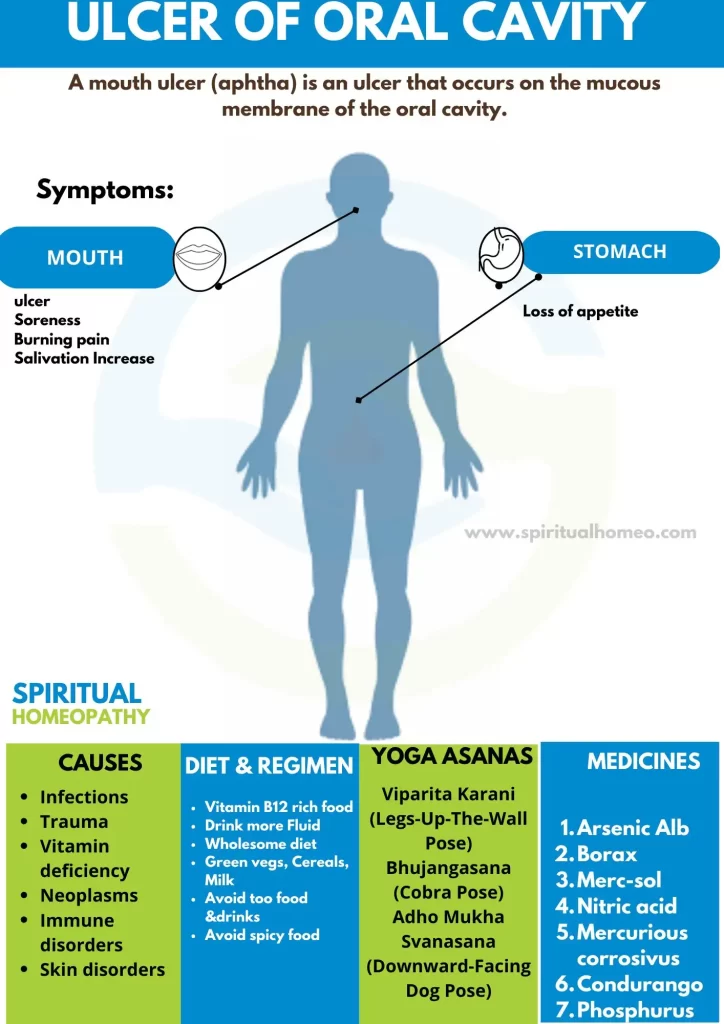
Mouth ulcers, also known as aphthous ulcers or canker sores, are common oral health problems that appear as small, painful sores on the soft tissues inside the mouth. They commonly develop on the inner cheeks, lips, tongue, gums, or the floor of the mouth and can cause discomfort while eating, drinking, speaking, or brushing the teeth. Symptoms may include a round or oval white or yellow sore with a red border, burning sensation, tenderness, and irritation. While occasional mouth ulcers usually heal on their own within one to two weeks, frequent, recurrent, or severe ulcers may indicate underlying nutritional deficiencies, stress, hormonal changes, digestive disorders, or immune-related conditions and should not be ignored. Seeking early mouth ulcer treatment and proper evaluation can help identify the underlying cause and prevent recurring episodes.
At Spiritual Homeopathy, we believe in treating the root cause of mouth ulcers rather than simply providing temporary symptom relief. Our experienced homeopathic doctors carefully evaluate each patient’s symptoms, medical history, dietary habits, stress levels, nutritional status, immune health, and overall well-being before preparing an individualized treatment plan. Our holistic approach focuses on providing natural mouth ulcer treatment, reducing pain and inflammation, preventing recurrent ulcers, promoting faster healing, and improving overall oral health through safe and personalized homeopathic care. We specialize in homeopathic treatment for mouth ulcers, recurrent aphthous ulcers, canker sores, oral ulcers, and related oral health conditions.
We provide personalized homeopathic treatment for mouth ulcers in Hyderabad to patients of all age groups through our clinics in Hyderabad, as well as online homeopathy consultations for patients across India and in more than 100 countries worldwide. If you are looking for the best homeopathy doctor for mouth ulcers, natural treatment for recurrent oral ulcers, canker sore management, or long-term oral health care, Spiritual Homeopathy is committed to delivering expert, patient-centered care wherever you are.