
Angina pectoris is a heart condition that causes chest pain or discomfort when the heart muscle does not receive enough oxygen-rich blood. It commonly occurs due to narrowing of the coronary arteries and is often triggered by physical activity, emotional stress, heavy meals, or exposure to cold weather. Symptoms may include chest pressure, tightness, pain that spreads to the shoulders, arms, neck, jaw, or back, shortness of breath, fatigue, sweating, nausea, or dizziness. Although angina symptoms may improve with rest or prescribed treatment, frequent or recurring chest pain should never be ignored, as it may indicate underlying coronary artery disease and increase the risk of serious heart complications. Early medical evaluation and appropriate treatment are essential for protecting heart health.
At Spiritual Homeopathy, we believe in understanding each patient’s overall health rather than simply focusing on symptoms. Our experienced homeopathic doctors carefully evaluate each patient’s symptoms, medical history, lifestyle, stress levels, dietary habits, family history, and overall health before preparing an individualized treatment plan. Our holistic approach focuses on supporting overall cardiovascular wellness, improving general health, promoting a healthy lifestyle, and providing safe and personalized homeopathic care alongside appropriate medical management. We provide homeopathic care for angina pectoris and other chronic health conditions as part of a comprehensive treatment approach.
We offer personalized homeopathic treatment for angina pectoris in Hyderabad to patients of all age groups through our clinics in Hyderabad, as well as online homeopathy consultations for patients across India and in more than 100 countries worldwide. If you are looking for the best homeopathy doctor for angina pectoris, personalized supportive homeopathic care, or long-term cardiovascular wellness support, Spiritual Homeopathy is committed to providing expert, compassionate, and patient-centered care wherever you are.
Important: Chest pain can be a medical emergency. If you experience severe, sudden, or persistent chest pain, especially with shortness of breath, sweating, nausea, or pain spreading to the arm or jaw, seek immediate emergency medical care. Homeopathy should not replace emergency treatment or standard cardiac care.
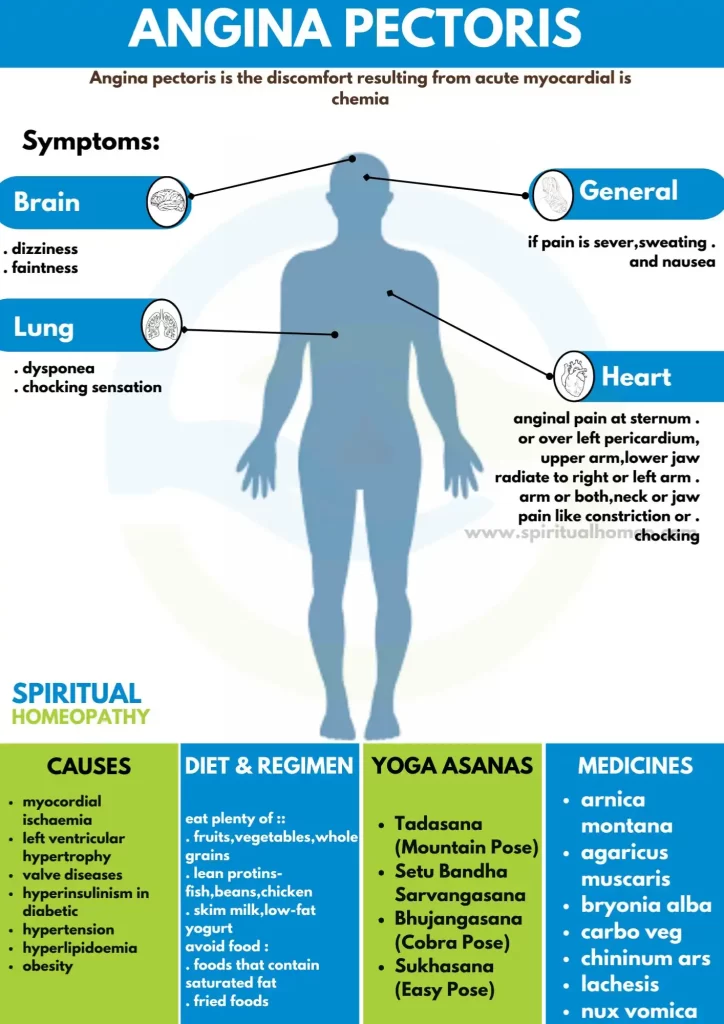
Angina pectoris is a condition characterized by chest discomfort or pain due to reduced blood flow to the heart muscle (myocardial ischemia). The most common cause is coronary atheroma, which narrows the coronary arteries, though other heart conditions, such as aortic valve disease or hypertrophic cardiomyopathy, can also contribute. Angina usually occurs when the heart’s oxygen demand exceeds the supply, often triggered by physical exertion, stress, or other factors.
At Spiritual Homeopathy Clinic, patients can receive guidance and support for managing angina through in-clinic, online, and international consultations, ensuring personalized care tailored to each individual’s health needs.
Angina pectoris develops when there is an imbalance between the heart’s oxygen supply and its demand. Various factors influence both the oxygen requirement of the heart and the oxygen delivered to it:
Blood Pressure: Higher blood pressure increases the heart’s workload.
Myocardial Contractility: The strength of heart contractions affects oxygen needs.
Left Ventricular Hypertrophy: Thickening of the heart’s left ventricle raises oxygen demand.
Valve Disease: Conditions such as aortic stenosis increase cardiac workload.
Heart Rate: Faster heart rates require more oxygen.
Duration of Diastole: The resting period between heartbeats determines coronary blood flow.
Coronary Perfusion Pressure: Blood pressure within the coronary arteries affects oxygen delivery.
Coronary Vasomotor Tone: Constriction or dilation of the coronary arteries alters blood flow.
Oxygenation: Overall blood oxygen levels impact how much oxygen reaches the heart muscle.
Physical Exertion: Increased activity raises oxygen demand.
Heavy Meals: Digestion can divert blood flow, affecting oxygen supply to the heart.
Exposure to Cold: Cold temperatures can constrict vessels, reducing oxygen delivery.
Emotional Stress: Anxiety, excitement, or anger elevates heart rate and blood pressure.
Hyperinsulinism: In diabetic patients, it can influence heart function and oxygen needs.
Hypertension: High blood pressure increases oxygen requirements of the heart.
Hyperlipidaemia: Elevated cholesterol can cause plaque buildup, restricting blood flow.
Obesity: Excess weight increases cardiac workload.
Diabetes: Diabetes and its complications can impair oxygen delivery to the heart.
Understanding these causes is essential for individualized care, which can be guided through in-clinic, online, or international consultations at Spiritual Homeopathy Clinic for personalized assessment and management.
Stable angina is marked by predictable patterns of chest pain that have remained consistent in frequency, duration, and intensity over the past several weeks. It is commonly triggered by physical exertion, emotional stress, or other known factors.
Duration: Pain typically lasts 1 to 5 minutes.
Relief: Symptoms often improve with rest or appropriate treatment.
ECG Findings: ST segment depression may be observed.
Stable angina generally reflects a manageable imbalance between oxygen supply and demand, but evaluation by a healthcare provider is recommended to confirm diagnosis and guide care. Consultations are available at Spiritual Homeopathy Clinic’s Hyderabad branches or via online/international consultations.
Unstable angina occurs when the heart does not receive sufficient blood and oxygen, leading to severe and unpredictable chest pain. This type of angina may occur even at rest or with minimal activity and requires prompt medical evaluation.
Key patterns include:
New-onset Angina: Sudden development of severe chest pain in someone without prior angina.
Accelerating Angina: An increase in the frequency, intensity, or duration of angina attacks compared to previous patterns.
Unstable angina is a medical emergency and can be an early warning of a heart attack. Immediate professional assessment is essential, and follow-up care can be coordinated through in-clinic or online consultations at Spiritual Homeopathy Clinic.
Some individuals may show no noticeable signs, especially in mild cases.
Left ventricular dysfunction may be present in advanced or chronic cases.
Ischemia: Reduced blood flow to the heart muscle can impair heart function.
Papillary muscle dysfunction can affect heart valve function.
Pallor and sweating may occur, often accompanied by increased blood pressure and tachycardia (rapid heart rate).
In certain cases, slowing of the pulse may be observed.
Chest pain is a key clinical sign.
Location: Typically felt in the middle or lower sternum, over the left pericardium, or radiating to the upper arm, neck, or lower jaw.
Radiation: Pain may spread to the left or right arm, both arms, neck, or jaw.
Character: Often described as vice-like constriction, choking, pressure, or burning. Some individuals may experience weakness in the arms without significant pain.
Duration: Usually lasts 1 to 4 minutes, sometimes requiring the patient to stop walking or exertion.
Dyspnoea: Shortness of breath often accompanies the pain.
Throat sensations: Choking or a feeling of impending doom may occur.
Other sensations: Some individuals notice belching, increased urination (polyuria), or passage of gas following an attack.
Dizziness or fainting: Lightheadedness may occur, and rarely syncope (fainting).
Severe attacks: May include sweating, nausea, and extreme discomfort.
Note: If you experience frequent, severe, or new-onset chest pain, it is important to consult a healthcare provider promptly. Spiritual Homeopathy Clinic offers consultations at Kukatpally, Dilsukhnagar, Chandanagar, and Nallagandla branches, as well as online and international consultations.
A heart-healthy diet can help manage angina pectoris by reducing strain on the heart and supporting overall cardiovascular health.
Fruits, Vegetables, and Whole Grains: Include a variety of fresh fruits, vegetables, and whole grains for essential vitamins, minerals, and fiber that support heart function.
Lean Proteins: Choose lean protein sources, such as skinless poultry, fish, and plant-based options like beans and legumes, to minimize saturated fat intake.
Low-Fat Dairy: Opt for non-fat or low-fat dairy products, such as skim milk and low-fat yogurt, to help maintain healthy cholesterol levels.
Limit Sodium (Salt): Avoid foods high in sodium to support blood pressure control and reduce cardiovascular risk.
Read Food Labels: Check labels to identify high levels of unhealthy fats, sodium, and additives in packaged foods.
Avoid Unhealthy Fats: Reduce intake of saturated fats and trans fats, commonly found in fried foods, processed snacks, and baked goods.
Moderate Cheese, Cream, and Eggs: Limit consumption of foods rich in cheese, cream, and eggs, as they can contribute to higher cholesterol and saturated fat intake.
Note: Dietary guidance may vary based on individual health conditions. Consultation with a healthcare provider at Spiritual Homeopathy Clinic—available in Kukatpally, Dilsukhnagar, Chandanagar, and Nallagandla, or via online and international consultations—can help tailor a diet plan suited to your needs.
Yoga can be beneficial for individuals with angina pectoris by improving blood circulation, reducing stress, and supporting overall heart health. The following yoga asanas (postures) can help manage symptoms, promote relaxation, and enhance heart function. Always consult with a healthcare provider before starting any exercise regimen.
How to do it: Sit comfortably with legs crossed and hands resting on your knees. Close your eyes and take deep, steady breaths.
Benefits: Reduces stress and anxiety, which can trigger angina attacks, and promotes relaxation and better breathing control.
How to do it: Stand tall with feet together and arms by your sides. Inhale deeply, raise your arms overhead, and stretch upwards while keeping your body straight. Engage your core muscles.
Benefits: Improves posture, strengthens legs, and promotes better circulation, supporting heart health.
How to do it: Lie on your back with knees bent and feet flat on the floor. Press your feet into the ground and lift your hips toward the ceiling, engaging glutes and core.
Benefits: Opens the chest, enhances circulation to the heart, and relieves tension, which may reduce the risk of angina attacks.
How to do it: Lie face down with palms under your shoulders. Press into your palms to lift your chest and head, extending your spine upwards.
Benefits: Increases chest expansion, improves lung capacity, and enhances blood flow to support heart function.
How to do it: Lie on your back and place your legs up against a wall, with arms extended out to the sides. Relax in this position for several minutes.
Benefits: Supports circulation, calms the nervous system, and reduces stress, which can help manage angina symptoms.
How to do it: Sit comfortably. Close one nostril and inhale through the other, then close both nostrils briefly and exhale through the opposite nostril. Repeat, alternating nostrils.
Benefits: Reduces stress, improves lung function, and helps balance the autonomic nervous system, supporting cardiovascular health.
How to do it: Start on hands and knees. Inhale as you arch your back (cow pose), exhale as you round your back (cat pose). Repeat the flow.
Benefits: Relieves tension in the back, chest, and shoulders, improves circulation, and encourages deep breathing to reduce stress.
Focus on breathing: Deep, controlled breathing ensures relaxation and better oxygenation.
Avoid overexertion: Do not perform poses that feel too strenuous or cause discomfort.
Consult a healthcare provider: Especially important if you have angina or other heart conditions.
Gentle and consistent yoga practice can complement medical care, support heart health, and help manage angina symptoms when performed mindfully.
At Spiritual Homeopathy Clinic, we follow a holistic approach that integrates classical homeopathic principles with consideration of the emotional and spiritual aspects of health. Our experienced practitioners provide care that is personalized to each patient’s unique needs, supporting overall balance and well-being.
Healing is most effective when the body, mind, and spirit are in harmony. Rather than only addressing symptoms, our approach focuses on identifying and addressing the root causes of angina pectoris. By supporting the body’s natural energy and vitality, we aim for long-term improvement in health.
Comprehensive Consultations:
Our doctors conduct thorough consultations to assess your symptoms, medical history, and individual needs. Consultations are available in-clinic at our Hyderabad branches (Kukatpally, Nallagandla, Dilsukhnagar, Chandanagar), online, and internationally.
Homeopathic Remedies:
Homeopathic remedies are chosen based on the physical, emotional, and constitutional factors of each patient. These remedies are generally well-tolerated under professional guidance and support the body’s natural healing processes, addressing contributing factors for both acute and chronic conditions.
Ongoing Follow-Up Care:
We provide regular follow-up consultations to monitor progress, make necessary adjustments, and ensure your treatment aligns with your overall health goals.
Homeopathic treatment for angina pectoris is individualized and requires professional evaluation. Remedies are prescribed only after a thorough consultation with a qualified homeopathic doctor (BHMS or M.D. in Homeopathy). This ensures that your treatment is safe, suitable, and tailored to your personal health profile.
Homeopathy supports long-term management and overall heart health as part of a comprehensive care plan, including lifestyle and dietary guidance.
When to Consult
You should consult a healthcare professional if angina pectoris symptoms appear repeatedly, become more frequent, or begin to affect daily activities, physical effort, or sleep. Early evaluation helps identify heart-related concerns and reduces the risk of serious complications.
Seek consultation if you experience:
Chest pain, pressure, tightness, or heaviness
Discomfort spreading to the left arm, shoulder, neck, jaw, or back
Chest pain triggered by physical activity or emotional stress
Shortness of breath or fatigue with mild exertion
Chest discomfort that improves with rest but returns with activity
Dizziness, sweating, or nausea along with chest pain
Symptoms that worsen, become more frequent, or disturb sleep
At Spiritual Homeopathy Clinic, consultations are available at multiple branches in Hyderabad, including Kukatpally, Chandanagar, Dilsukhnagar, and Nallagandla. Online and international consultations are also available for patients who cannot visit in person. A professional assessment supports an individualized care approach based on symptoms and overall health status.
📞 For appointments or guidance, contact 9069 176 176.
Angina pectoris (commonly called angina) is temporary chest pain or discomfort that occurs when your heart muscle isn't getting enough oxygen-rich blood. It feels like pressure, squeezing, tightness, or a heavy weight on the chest, and is a key symptom of underlying heart disease.
Angina pain typically lasts between 1 to 15 minutes and subsides with rest or medication. The exact duration depends heavily on the type of angina you are experiencing.
Preventing angina (chest pain caused by reduced blood flow to the heart) centers on adopting a heart-healthy lifestyle and effectively managing underlying cardiovascular risk factors. The most actionable strategies include eating a balanced diet, exercising regularly, quitting smoking, managing stress, and properly treating existing conditions like high blood pressure and diabetes.
For immediate angina relief, stop all activity, rest, and take prescribed medications like nitroglycerin. For long-term management, maintain a heart-healthy diet, manage stress, and avoid triggers like heavy meals or cold weather. Always call emergency services if chest pain worsens, lasts longer than 5 minutes, or is accompanied by shortness of breath.