
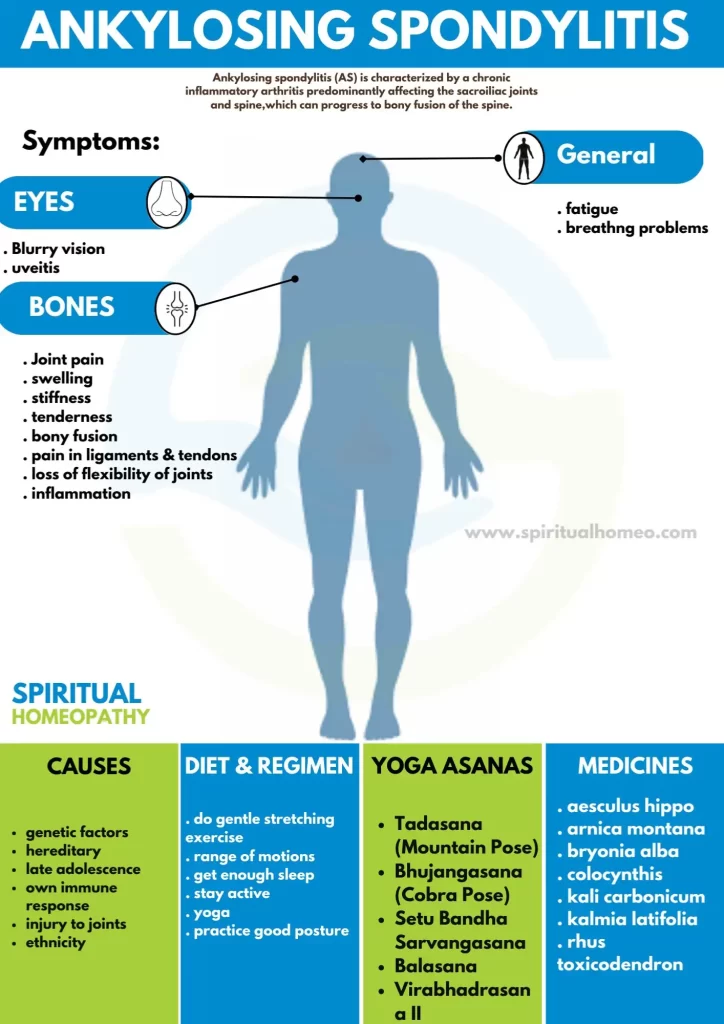
Ankylosing Spondylitis

Ankylosing Spondylitis: Causes, Symptoms, and Natural Management Tips

Ankylosing Spondylitis

Ankylosing Spondylitis: Causes, Symptoms, and Natural Management Tips

Ankylosing spondylitis (AS) is a chronic, progressive form of inflammatory arthritis that primarily affects the spine and sacroiliac joints. Over time, this condition can lead to painful stiffness and reduced mobility, and in advanced stages, it may cause bony fusion of the spine, significantly impacting posture and daily function.

Everything You Need to Know

Ankylosing Spondylitis Overview

Ankylosing spondylitis (AS) is a chronic inflammatory condition that commonly begins between the ages of 20 and 30, with a higher prevalence in males (approximately 3:1). It primarily affects the spine and sacroiliac joints, which can lead to stiffness, reduced mobility, and in advanced cases, fusion of the spine (ankylosis).

In over 90% of European patients, AS is associated with the HLA-B27 genetic marker, though its overall prevalence remains below 0.5% in most global populations. Despite its long-term progression, many individuals with AS continue working and maintain a good quality of life with appropriate management.

As the condition progresses, spinal fusion may result in a forward-stooped posture and reduced flexibility. If the rib joints are affected, chest expansion may be limited, making deep breathing more difficult.

Consultation Note: Spiritual Homeopathy Clinic provides guidance and individualized care for AS at its multiple Hyderabad branches—Kukatpally, Nallagandla, Dilsukhnagar, and Chandanagar—as well as through online and international consultations.

Causes and Risk Factors of Ankylosing Spondylitis

The exact cause of ankylosing spondylitis (AS) is not fully understood, but a combination of genetic, environmental, and immune system factors is believed to contribute to its development. Several key factors can increase the likelihood of developing this chronic inflammatory condition:

  1. Age
    Ankylosing spondylitis commonly begins in late teens to early 30s, with most individuals experiencing their first symptoms before age 30.

  2. Gender
    Men are two to three times more likely to develop AS than women. Women may also be affected, but symptoms are often less severe or present differently.

  3. Genetics and Family History
    A strong genetic link exists in AS. Individuals with a family history of ankylosing spondylitis have a higher risk of developing the condition. The HLA-B27 gene is found in the majority of those diagnosed—particularly in over 90% of European AS patients. However, carrying this gene does not guarantee that a person will develop the disease.

  4. Ethnicity
    The prevalence of the HLA-B27 gene varies across ethnic groups:

  • Approximately 7.5% of non-Hispanic whites

  • 4.6% of Mexican-Americans

  • 1.1% of non-Hispanic Black individuals

AS is also reported more frequently among certain indigenous groups in the U.S. and Canada, including some Native American tribes and Alaskan Eskimos.

Individualized Care Note: Understanding these risk factors helps guide early diagnosis and allows practitioners at Spiritual Homeopathy Clinic—across Kukatpally, Nallagandla, Dilsukhnagar, and Chandanagar branches, as well as online consultations—to create personalized treatment plans tailored to each patient’s unique needs.

Types of Ankylosing Spondylitis (Axial Spondyloarthritis)

Ankylosing spondylitis (AS) is part of a broader group of inflammatory conditions called axial spondyloarthritis (axSpA). The two main types differ based on the visibility of inflammation and joint changes on imaging tests such as X-rays.

  1. Non-Radiographic Axial Spondyloarthritis (nr-axSpA)
    This is an early or less severe form of axial spondyloarthritis. Inflammation is present, but standard X-rays do not show structural changes. Advanced imaging, such as MRI, can detect early signs of inflammation. Individuals with nr-axSpA may experience symptoms similar to AS, including chronic back pain and stiffness, but without visible joint damage.

  2. Radiographic Axial Spondyloarthritis (Ankylosing Spondylitis)
    This is the more advanced form, where inflammation causes structural changes in the sacroiliac joints and spine visible on X-rays. Over time, nr-axSpA may progress to this stage. Severe cases can lead to spinal fusion, reducing flexibility and mobility.

Early diagnosis and individualized care are important for both types. Consulting a qualified homeopathic doctor at Spiritual Homeopathy Clinic—across Kukatpally, Nallagandla, Dilsukhnagar, and Chandanagar branches or via online consultations—can help manage symptoms, maintain mobility, and support long-term health.

🧬 What Is Ankylosing Spondylitis?

Ankylosing spondylitis (AS) is a chronic inflammatory arthritis that primarily affects the spine and sacroiliac joints, potentially leading to spinal fusion. This fusion reduces spinal flexibility and may result in a forward-stooped posture. Early symptoms often include lower back pain and stiffness, particularly after periods of inactivity.

Consultation Note: Individuals experiencing these symptoms can seek evaluation at Spiritual Homeopathy Clinic, available across multiple Hyderabad branches and through online or international consultations.


📊 Prevalence and Demographics

  • Age of Onset: Most cases appear between 20 and 30 years of age.

  • Gender: Men are two to three times more likely to develop AS than women.

  • Genetics: The HLA-B27 gene is commonly found in those with AS, though not all carriers develop the condition.

  • Ethnicity: Certain populations, such as some Native American tribes (Haida, Chukchi) and Northern Europeans, show higher prevalence.


🔬 Causes and Risk Factors

The exact cause of AS is not fully understood, but it is believed to involve a combination of genetic, immune, and environmental factors:

  • Genetics: Strong association with the HLA-B27 gene.

  • Family History: First-degree relatives with AS increase risk.

  • Age & Gender: Typically begins in late adolescence or early adulthood; higher prevalence in men.

  • Ethnicity: Risk varies across populations.

Note: Recognizing these risk factors early can guide individualized management and consultation.


🧩 Types of Ankylosing Spondylitis

AS falls under axial spondyloarthritis (axSpA), with two main types:

  1. Non-Radiographic Axial Spondyloarthritis (nr-axSpA): Symptoms are present, but structural changes are not visible on standard X-rays. MRI may detect early inflammation.

  2. Radiographic Axial Spondyloarthritis (Ankylosing Spondylitis): Inflammation leads to changes visible on X-rays in the sacroiliac joints and spine. Severe cases may result in spinal fusion and reduced flexibility.

Early diagnosis and care are important for both types to maintain mobility and quality of life.


⚠️ Signs and Symptoms

Common manifestations include:

  • Back and Hip Pain: Persistent stiffness and discomfort, often improving with exercise.

  • Spinal Fusion: Gradual reduction in flexibility due to vertebral fusion.

  • Joint Involvement: Pain may extend to shoulders, knees, or jaw.

  • Enthesitis: Inflammation at tendon and ligament attachments.

  • Fatigue: Persistent tiredness not relieved by rest.

  • Eye Inflammation (Uveitis): Pain, light sensitivity, or blurred vision.

  • Cardiovascular Issues: Possible involvement such as aortic valve inflammation.

Consultation Advice: Seek professional evaluation if symptoms are frequent, severe, or progressively worsening.


🧪 Diagnosis

Diagnosis typically involves:

  • Clinical Evaluation: Assessment of symptoms and medical history.

  • Imaging: X-rays, MRI, or CT scans to detect spinal and sacroiliac changes.

  • Laboratory Tests: Blood markers of inflammation (ESR, CRP) and HLA-B27 status.


💊 Treatment Options

While AS has no definitive cure, management focuses on symptom control and slowing progression:

  • Medications: NSAIDs, DMARDs, and biologics may be prescribed under professional supervision.

  • Physical Therapy: Exercises to improve posture and flexibility.

  • Lifestyle Modifications: Regular activity and maintaining a healthy weight.

  • Surgical Intervention: In severe cases, corrective surgery or joint replacement may be necessary.


🧘‍♂️ Lifestyle and Homeopathy

Supportive approaches include:

  • Regular Exercise: Swimming, stretching, and gentle mobility exercises.

  • Posture Management: Yoga and Pilates may help maintain spinal alignment.

  • Dietary Considerations: Balanced diet with anti-inflammatory foods supports overall health.

Homeopathic care at Spiritual Homeopathy Clinic focuses on individualized treatment, addressing physical, emotional, and constitutional factors. Always consult a qualified practitioner for personalized care plans.


📌 When to Seek Medical Attention

Seek professional care if you notice:

  • Persistent back or hip pain lasting more than three months.

  • Pain that worsens at night or after inactivity.

  • Eye redness, pain, or sensitivity to light.

  • Swelling in joints or tendon attachment points.

Early consultation can improve quality of life and help prevent complications associated with AS.

🧘‍♂️ Effective Exercises for Ankylosing Spondylitis Relief

Maintaining a consistent exercise routine is essential for managing ankylosing spondylitis. Regular stretching and strengthening exercises help improve posture, maintain spinal flexibility, reduce stiffness, and relieve discomfort. These exercises are generally supportive, but should complement professional medical care. Consultation with a qualified healthcare provider or physiotherapist is recommended before starting any new routine.


🔹 1. Wall Posture Exercise

How to do it:

  • Stand upright with your back flat against a wall.

  • Ensure heels, buttocks, and shoulder blades are touching the wall.

  • Gently squeeze your shoulder blades together.

  • Hold for 5 seconds, then relax.

  • Repeat 10 times.

Benefits: Improves posture and spinal alignment, helping reduce forward stooping.


🔹 2. Prone Lying (Spine Extension)

How to do it:

  • Lie flat on your stomach on a comfortable surface.

  • Slowly prop yourself up on your elbows, lifting your chest off the ground.

  • Extend your arms fully if possible for a deeper stretch.

  • Hold for 10–20 seconds, then return to start.

  • Repeat 3–5 times.

Benefits: Enhances lower back flexibility and reduces spinal stiffness.


🔹 3. Seated Thoracic Spine Extension

How to do it:

  • Sit upright in a firm chair with feet flat on the ground.

  • Place both hands behind your head, elbows pointing outward.

  • Lean your upper back gently over the backrest.

  • Hold for 5–10 seconds, then return upright.

  • Repeat 5 times.

Benefits: Improves mid-back mobility and relieves tension in the upper spine.


🔹 4. Quadriceps Stretch (Using Strap)

How to do it:

  • Lie face-down on the floor.

  • Loop a belt or strap around the top of your right foot.

  • Gently pull the strap toward your shoulder until a stretch is felt in your thigh.

  • Hold 10–20 seconds, then release.

  • Repeat on the other leg.

Benefits: Relieves tightness in the front thigh and improves hip mobility.


🔹 5. Seated Figure-Four Stretch

How to do it:

  • Sit upright with feet on the floor.

  • Place your right ankle over your left thigh, just above the knee.

  • Keep your back straight and lean forward gently.

  • Apply light pressure to your right thigh for a deeper stretch.

  • Hold 10–20 seconds, then switch sides.

Benefits: Opens the hips and relieves lower back tension.


🔹 6. Modified Plank

How to do it:

  • Lie face-down with forearms on the ground, elbows under shoulders.

  • Tighten core muscles and lift hips and knees off the ground.

  • Maintain a straight line without letting hips sag.

  • Hold for 10–20 seconds, then relax.

  • Repeat 2–3 times.

Benefits: Strengthens core and back muscles, supporting better posture and spinal stability.


📝 Tips for Success

  • Perform these exercises daily or as advised by a physiotherapist.

  • Breathe deeply and evenly throughout each stretch.

  • Avoid sudden or jerky movements.

  • If any exercise causes pain, stop immediately and consult your doctor or homeopathic practitioner.

  • Individual guidance may vary depending on disease severity and mobility.

Note: Exercises support spinal health and complement homeopathic treatment, but are not a substitute for professional medical evaluation or care.

🧘‍♀️ Yoga Asanas for Ankylosing Spondylitis Relief

Practicing yoga regularly can support the management of ankylosing spondylitis (AS) by improving spinal flexibility, enhancing posture, reducing stiffness, and promoting better breathing and relaxation. These poses are generally supportive and should complement professional care, including homeopathic treatment and physiotherapy.


🔹 1. Tadasana (Mountain Pose)

Benefits: Improves posture, strengthens the spine, and promotes balance.

How to do:

  • Stand tall with feet together.

  • Distribute weight evenly on both feet.

  • Stretch arms overhead and interlock fingers.

  • Inhale deeply, lift heels slightly, and stretch upward.

  • Hold for 10–20 seconds while breathing naturally.


🔹 2. Bhujangasana (Cobra Pose)

Benefits: Enhances lower back flexibility and reduces spinal stiffness.

How to do:

  • Lie face-down with palms under shoulders.

  • Inhale and gently lift the chest off the floor, keeping elbows slightly bent.

  • Keep hips grounded and shoulders relaxed.

  • Hold for 15–30 seconds, then slowly release.


🔹 3. Marjaryasana–Bitilasana (Cat-Cow Stretch)

Benefits: Improves spinal mobility and relieves back tension.

How to do:

  • Come onto all fours (hands under shoulders, knees under hips).

  • Inhale, arch the spine (cow pose), lifting the head and tailbone.

  • Exhale, round the spine (cat pose), tucking the chin toward the chest.

  • Repeat slowly for 8–10 cycles.


🔹 4. Setu Bandhasana (Bridge Pose)

Benefits: Strengthens back muscles and supports spinal alignment.

How to do:

  • Lie on your back, bend knees, feet hip-width apart.

  • Press into feet and lift hips upward while keeping shoulders grounded.

  • Hold for 15–20 seconds, then gently lower.


🔹 5. Balasana (Child’s Pose)

Benefits: Provides a gentle spinal stretch and relaxation.

How to do:

  • Kneel on the mat, sit back on heels, and stretch arms forward.

  • Lower the chest toward the floor, resting the forehead on the mat.

  • Breathe deeply and hold for 30 seconds to 1 minute.


🔹 6. Shavasana (Corpse Pose)

Benefits: Promotes deep relaxation and helps reduce stress and overall tension.

How to do:

  • Lie flat on your back with arms at your sides.

  • Close your eyes, focus on your breath, and relax each part of the body.

  • Stay in the pose for 5–10 minutes.


📝 Important Tips

  • Always warm up before starting yoga.

  • Practice under the guidance of a certified yoga therapist, especially if new or in pain.

  • Avoid high-impact or twisting poses that strain the spine.

  • Stop immediately if any pose causes discomfort or pain.

  • Individual guidance may vary depending on your mobility and disease stage.

Note: Yoga complements your AS management plan but does not replace professional medical care or homeopathic treatment. Regular practice can help maintain mobility, reduce stiffness, and support overall well-being.

🌿 Homeopathic Treatment for Holistic Health & Healing

Why Homeopathy?

Homeopathy is a holistic system of medicine that focuses on addressing the root causes of illness rather than only suppressing symptoms. By stimulating the body’s own healing mechanisms, it supports long-term management of chronic conditions and overall wellness. Homeopathic care is gentle, individualized, and generally well-tolerated under professional guidance, making it suitable for people of all ages.

Spiritual Homeopathy Clinic: Individualized Care

At Spiritual Homeopathy Clinic, we provide personalized and holistic care for each patient. Our approach considers not only physical symptoms but also emotional and mental well-being, recognizing that overall health is a balance of mind, body, and spirit. Consultations are available at our Hyderabad branches—Kukatpally, Chandanagar, Dilsukhnagar, and Nallagandla—as well as online and international consultations.

Key Features of Our Approach

  • Holistic Evaluation: We assess your complete health profile, including past medical history, lifestyle habits, and emotional factors.

  • Root-Cause Focus: Treatments are designed to address underlying imbalances contributing to your condition.

  • Gentle & Natural Remedies: Remedies are carefully selected to support your body’s own healing and long-term wellness.

  • Personalized Care Plans: Every plan is tailored to your individual needs, lifestyle, and health goals.

  • Continuous Monitoring: Regular follow-ups ensure your progress is tracked, and treatment is adapted as needed.

How Homeopathy Supports You

Homeopathic care works as part of a long-term management plan, complementing conventional medical care where required. It focuses on enhancing resilience, reducing symptom burden, and promoting overall vitality, while respecting safety and professional medical guidance.

For appointments or online consultation, call 9069 176 176. Early evaluation is recommended for chronic or recurring symptoms to receive tailored guidance.

When to Consult

You should consult a healthcare professional if ankylosing spondylitis symptoms become frequent, persistent, or begin to affect daily activities, posture, mobility, or sleep. Early evaluation helps in understanding disease progression and supporting better long-term management.

Seek consultation if you experience:

  • Persistent lower back or hip pain, especially in young adults

  • Stiffness in the back or neck, particularly in the morning or after rest

  • Pain that improves with movement but worsens with inactivity

  • Reduced flexibility or difficulty bending and standing upright

  • Fatigue or general body stiffness

  • Pain or stiffness that disturbs sleep or daily routines

  • Symptoms not improving or gradually worsening over time

At Spiritual Homeopathy Clinic, consultations are available at multiple branches in Hyderabad, including Kukatpally, Chandanagar, Dilsukhnagar, and Nallagandla. Online and international consultations are also available for patients who cannot visit in person. A professional assessment supports an individualized care approach based on symptoms, mobility, and overall health status.

📞 For appointments or guidance, contact 9069 176 176.

🧾 Frequently Asked Questions (FAQ) on Ankylosing Spondylitis

1. What is Ankylosing Spondylitis?
Ankylosing Spondylitis (AS) is a chronic, inflammatory condition primarily affecting the spine and sacroiliac joints. Over time, it can lead to partial fusion of spinal bones, reducing flexibility and causing a forward-stooped posture. AS is a progressive autoimmune disorder that may also involve the hips, shoulders, and occasionally internal organs.

2. How is Ankylosing Spondylitis treated with Homeopathy?
Homeopathic treatment focuses on stimulating the body’s natural healing mechanisms. A qualified homeopathic practitioner evaluates an individual’s physical symptoms, emotional state, and overall constitution to design a personalized, holistic care plan. This approach helps manage chronic pain, stiffness, and inflammation while addressing underlying factors. Treatments are gentle, individualized, and generally well-tolerated under professional guidance.

3. What are the common symptoms of Ankylosing Spondylitis?
Typical symptoms may include:

  • Persistent pain and stiffness in the lower back, hips, and buttocks, especially in the morning or after inactivity.

  • Fusion of spinal bones, leading to reduced flexibility.

  • Pain or inflammation at tendon and ligament attachment sites (e.g., heels, lower back).

  • Forward-leaning or stooped posture due to spinal changes.

  • Breathing difficulties if the rib joints are affected.

  • Possible cardiac involvement in advanced stages.

If these symptoms are frequent or severe, it is important to seek professional consultation.

4. What are some effective exercises for Ankylosing Spondylitis?
Regular stretching and strengthening exercises help maintain spinal mobility, posture, and flexibility. Recommended activities include:

  • Back Against a Wall: Improves posture and relieves upper back tension.

  • Prone Lying (Spine Extension): Reduces stiffness and enhances spinal flexibility.

  • Seated Thoracic Extension: Supports upper spine and thoracic mobility.

  • Quadriceps Stretch: Improves thigh flexibility and hip function.

  • Seated Figure-Four Stretch: Opens hip joints and eases lower back tension.

  • Modified Plank: Strengthens core muscles and supports overall posture.

Perform exercises gently and consult a physiotherapist if unsure. Stop immediately if pain or discomfort occurs.

5. Final Note:
Early diagnosis and consistent management—including homeopathic care, therapeutic exercises, and lifestyle support—can help maintain mobility and quality of life. Consult a qualified practitioner for a personalized treatment plan tailored to your needs.