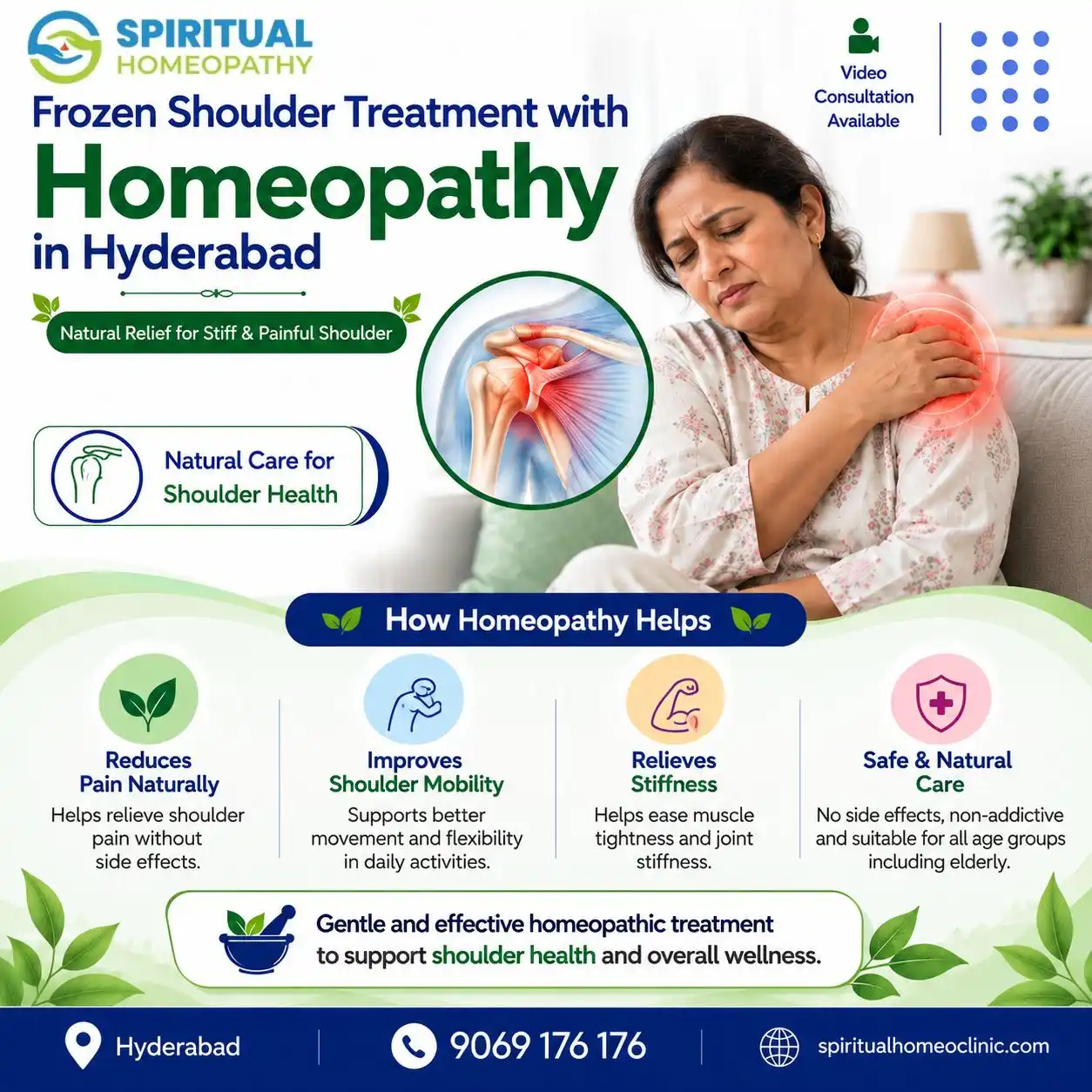
Reaching overhead to fetch a kitchen jar or simply trying to fasten a seatbelt shouldn’t trigger sharp, agonizing joint distress. Seeking Frozen Shoulder Treatment with Homeopathy offers individuals in Hyderabad a natural, constitutional approach to manage persistent joint stiffness, ease nocturnal aching, and support shoulder range of motion. Understanding how holistic, patient-centered care complements physical rehabilitation helps individuals regain comfortable daily movement and long-term joint function.
At Spiritual Homeopathy, a recognized healthcare center in Hyderabad, our compassionate doctors focus on providing individualized, patient-centered care for both acute and chronic conditions. Operating as a non-profit organization dedicated to accessible healthcare, Spiritual Homeopathy provides tailored clinical evaluations for women’s health, skin and hair concerns, hormonal imbalances, digestive disorders, child healthcare, and other chronic health issues. Our experienced homeopaths focus on understanding every patient’s complete physical and emotional background to guide them toward lasting health and vitality.
What Is Frozen Shoulder and Why Does the Shoulder Become Stiff?
What Is Frozen Shoulder?
Frozen shoulder, clinically known as adhesive capsulitis, is a painful and debilitating condition characterized by progressive stiffness, severe deep joint pain, and significant loss of movement in the glenohumeral joint. According to orthopaedic insights published by the American Academy of Orthopaedic Surgeons (AAOS), it most commonly affects individuals between 40 and 60 years of age.
How the Shoulder Joint Normally Moves
The shoulder is a highly mobile ball-and-socket joint formed by the humerus (upper arm bone), scapula (shoulder blade), and clavicle (collarbone). Surrounding this joint is a protective, flexible connective tissue capsule filled with lubricating synovial fluid, allowing smooth arm rotation across multiple directions.
What Happens Inside the Shoulder During Frozen Shoulder?
In adhesive capsulitis, the strong fibrous capsule surrounding the glenohumeral joint becomes inflamed, abnormally thick, and tight. Thick bands of scar tissue—known as adhesions—develop within the tissue capsule, and the volume of lubricating synovial fluid drastically decreases.
Why Shoulder Movement Gradually Becomes Restricted
As the joint capsule shrinks and tightens, the humerus head loses its ability to glide smoothly within the socket. This structural tightening creates intense mechanical resistance, making both voluntary arm movements and passive arm elevation by a doctor increasingly difficult.
Frozen Shoulder vs Ordinary Shoulder Pain
Unlike temporary muscular strain or acute tendonitis, frozen shoulder produces a unique global restriction of joint movement. While a strain may cause pain during specific motions, adhesive capsulitis restricts movement in almost every direction—especially external rotation and reaching behind the back.
Common Signs and Symptoms of Frozen Shoulder
Shoulder Pain That May Gradually Increase
In the initial stage, pain develops gradually deep within the shoulder capsule. It often begins as a dull, constant ache that becomes sharp and severe with sudden, unexpected arm movements.
Difficulty Raising the Arm
Lifting the affected arm forward or out to the side becomes progressively restricted. Simple acts like reaching for an overhead cabinet or hailing a auto-rickshaw become physically challenging.
Trouble Reaching Behind the Back
Loss of internal rotation is one of the earliest clinical signs. Patients frequently notice intense difficulty tucking in a shirt, fastening a bra, or reaching into a back pocket.
Shoulder Stiffness and Reduced Range of Motion
As the condition progresses, joint stiffness often overtakes pain as the dominant symptom. The shoulder joint feels physically locked, as if mechanically blocked from moving past a certain angle.
Night Pain and Difficulty Sleeping
Constant nocturnal pain is a signature characteristic of frozen shoulder. Lying on the affected side compresses the inflamed joint capsule, frequently waking individuals from deep sleep and leading to sleep deprivation.
Why Everyday Activities Can Become Difficult
The combination of constant aching and mechanical stiffness hampers basic self-care routines. Activities like combing hair, washing the back, wearing a jacket, or driving can feel overwhelming without supportive joint care.
What Causes Frozen Shoulder and Who Is More Likely to Develop It?
Shoulder Immobilization After Injury or Surgery
Keeping the shoulder still for extended periods—such as wearing a sling after a wrist fracture, recovering from surgery, or managing a stroke—increases the risk of capsular thickening and scar tissue formation.
Age-Related Changes
Natural age-related changes in connective tissue elasticity make adults between 40 and 60 years old particularly vulnerable to capsular inflammation and structural tightening.
Diabetes and Other Associated Health Conditions
Epidemiological studies indicate that people with diabetes are up to five times more likely to develop adhesive capsulitis. Systemic conditions such as hypothyroidism, hyperthyroidism, cardiovascular disease, and Parkinson’s disease are also linked to higher incidence rates.
Previous Shoulder Problems
Past episodes of rotator cuff tendonitis, subacromial bursitis, or minor glenohumeral trauma can initiate localized inflammatory responses that eventually progress to capsular fibrosis.
Why Frozen Shoulder Can Sometimes Develop Without an Obvious Cause
In many instances, frozen shoulder develops idiopathically—meaning it arises spontaneously without a history of physical trauma, metabolic disorder, or clear external trigger.
Frozen Shoulder vs Other Causes of Shoulder Pain
| Condition | Primary Pain Location | Motion Restriction Type | Night Pain Intensity |
| Frozen Shoulder (Adhesive Capsulitis) | Deep within the glenohumeral capsule. | Both active (self-moved) and passive (doctor-moved) restriction in all planes. | High; severe difficulty sleeping on affected side. |
| Rotator Cuff Tear | Anterolateral arm, radiating down deltoid. | Active movement restricted due to muscle weakness; passive range often preserved. | Moderate; painful when reaching, variable at night. |
| Shoulder Osteoarthritis | Deep joint line, posterior or anterior. | Progressive loss of range accompanied by grinding, crepitus, and bony enlargement. | Moderate; worse after prolonged activity or weather changes. |
| Subacromial Bursitis | Top or outer aspect of the shoulder. | Painful arc (60°–120° elevation); passive movement generally full. | Moderate; painful when direct pressure is applied. |
Frozen Shoulder and Rotator Cuff Problems
While rotator cuff tears cause arm weakness and difficulty lifting due to tendon damage, passive movement is usually intact. In contrast, frozen shoulder physically blocks both active and passive motion.
Frozen Shoulder and Shoulder Arthritis
Shoulder osteoarthritis stems from gradual joint cartilage breakdown and bony spur growth, visible on standard radiographs. Adhesive capsulitis primarily involves soft-tissue capsular inflammation without cartilage destruction.
Frozen Shoulder and Tendon-Related Pain
Tendonitis causes localized inflammation around specific muscle tendons, causing pain during specific resisted movements. Frozen shoulder restricts motion universally across the entire joint capsule.
Why Correct Identification Matters Before Treatment
Distinguishing adhesive capsulitis from tendon tears, nerve entrapment, or arthritis ensures that physical movement therapies and supportive care strategies are applied safely and effectively.
When Persistent Shoulder Pain Needs Evaluation
Any shoulder pain that persists for more than two weeks, worsens at night, or restricts daily self-care requires a structured clinical evaluation to determine the underlying cause.
How Frozen Shoulder Is Diagnosed
Medical History and Shoulder Symptoms
Diagnostic evaluation begins with a detailed clinical consultation, recording when joint discomfort started, night pain patterns, prior shoulder injuries, and systemic health conditions like diabetes.
Physical Examination and Range-of-Motion Testing
A clinician systematically assesses shoulder movement, feeling for muscle guarding, capsular tightness, localized tenderness, and compensatory movements of the scapula.
Checking Active and Passive Shoulder Movement
- Active Range of Motion: The patient attempts to lift, rotate, and extend the arm independently.
- Passive Range of Motion: The clinician gently moves the patient’s arm while muscles are fully relaxed. Equal restriction in both active and passive movement strongly suggests frozen shoulder.
Role of X-Rays and Other Imaging When Required
Plain X-rays do not show joint capsule thickening, but they help rule out underlying bone spurs, shoulder osteoarthritis, or joint dislocations. Magnetic Resonance Imaging (MRI) or ultrasound can confirm capsular thickening and rule out rotator cuff tears.
Ruling Out Other Shoulder Conditions
Ensuring the absence of cervical spine radiculopathy (pinched neck nerve), gallbladder pain, or cardiac strain ensures that shoulder-directed care remains safe and appropriate.
Understanding the Usual Medical Management of Frozen Shoulder
Why Treatment Often Focuses on Pain and Mobility
Standard medical protocols focus on controlling acute joint inflammation, easing night-time pain, and preserving range of motion to prevent permanent joint stiffness.
Role of Physiotherapy and Shoulder Exercises
Structured physical therapy—including gentle pendulum swings, passive wand stretches, and home exercises—helps maintain capsular flexibility without overloading inflamed joint tissue.
Managing Pain During Different Stages
Clinical care adapts through the three distinct phases of adhesive capsulitis:
- Freezing Phase (2–9 months): High pain and progressive loss of movement; focus is on gentle pain relief and avoiding aggressive movements.
- Frozen Phase (4–12 months): Pain gradually stabilizes, but severe stiffness remains; focus shifts to gentle capsular stretching.
- Thawing Phase (5–24 months): Movement slowly improves; focus centers on progressive functional rehabilitation.
When Additional Medical Treatment May Be Considered
If conservative physical therapy and medical management do not improve severe joint restriction, specialists may evaluate interventional options under orthopedic guidance.
Why Recovery Can Take Time
Adhesive capsulitis is inherently a slow-resolving condition, often taking 12 to 24 months to complete its natural resolution cycle. Patient patience and steady care are essential.
Understanding Frozen Shoulder Treatment with Homeopathy
What a Homeopathic Consultation May Focus On
When exploring Frozen Shoulder Treatment with Homeopathy, clinicians evaluate the individual’s entire health profile, looking at how joint pain impacts sleep, daily emotional well-being, and constitutional vitality.
Individual Symptoms and Shoulder-Movement Limitations
In homeopathic clinical evaluation, attention is paid to specific symptom characteristics:
- Is joint pain worse from initial movement but better after gentle continued motion?
- Does cold, damp weather aggravate shoulder stiffness?
- Is nocturnal pain intensified by lying on the painful side, or does it radiate down to the elbow?
Pain, Stiffness, and Daily Activity Difficulties
Understanding how joint stiffness interferes with dressing, working, or sleeping helps the clinician select personalized constitutional support aligned with the patient’s exact physical needs.
Why Individualized Assessment Matters
No two individuals experience frozen shoulder identically. Personalizing care based on individual symptom patterns, thermal sensitivities, and physical constitution helps support the body’s natural self-regulatory functions.
Setting Realistic Expectations From Supportive Care
Holistic care aims to improve general physical comfort, support post-exercise recovery, ease nocturnal pain, and work alongside physical therapy to preserve daily function.
Understanding frozen shoulder homeopathy as Supportive Care
Looking at Pain and Stiffness Together
When candidates undergo evaluation for frozen shoulder homeopathy, clinicians assess how pain levels and capsular tightness interact, ensuring supportive strategies address both inflammatory discomfort and joint stiffness.
Understanding Individual Symptom Patterns
A detailed constitutional review explores personal health history—including metabolic health, past joint issues, stress levels, and daily activity patterns—to build a comprehensive health assessment.
Supporting Comfort and Daily Function
Supportive holistic care focuses on reducing systemic strain, promoting restful sleep, and helping patients maintain steady participation in prescribed physical movement exercises.
Importance of Ongoing Monitoring
Routine clinical reviews ensure that shoulder range of motion, muscle tone, and pain trends are tracked over time, allowing care strategies to adapt as the condition progresses through its phases.
Combining Complementary Support With Appropriate Medical Care
Integrating supportive care with primary medical evaluations and physical rehabilitation provides a well-rounded foundation for joint recovery.
What to Know About homeopathic treatment for frozen shoulder
Why Treatment Should Begin With Proper Diagnosis
Before starting homeopathic treatment for frozen shoulder, an initial evaluation by a medical professional or orthopaedist is essential to confirm adhesive capsulitis and rule out structural tendon tears or bone fractures.
How Individual History Can Influence a Care Plan
Factors such as long-standing diabetes, thyroid imbalance, past surgical procedures, or workplace ergonomics guide the development of a tailored, supportive care plan.
Monitoring Changes in Pain and Movement
Tracking functional milestones—such as reaching higher on a wall stretch or sleeping through the night without pain—provides clear measures of clinical progress.
Why Homeopathic Care Should Not Replace Necessary Medical Treatment
Complementary care works alongside essential medical guidelines. Patients should not discontinue prescribed diabetic management or physical therapy protocols without consulting their healthcare team.
Understanding Realistic Recovery Expectations
Capsular healing requires time. Supportive holistic care aims to encourage comfortable progression through the freezing, frozen, and thawing stages while supporting general vital energy.
Understanding adhesive capsulitis homeopathy and Shoulder Mobility
What Adhesive Capsulitis Means
“Adhesive” refers to scar tissue adhesions binding the tissue layers together, while “capsulitis” indicates inflammation within the joint capsule surrounding the humerus head.
Why the Shoulder Capsule Becomes Tight
Chronic inflammation causes the collagen fibers within the joint capsule to shorten, thicken, and contract, dramatically reducing internal joint volume and fluid circulation.
How Restricted Movement Can Affect Daily Life
The contraction of the joint capsule restricts arm rotation, making everyday actions like reaching into the back seat of a car or styling hair uncomfortable and difficult.
Monitoring Shoulder Mobility Over Time
Regular measurements of active and passive abduction, flexion, and external rotation help track capsular release and functional improvement.
Importance of Appropriate Physical Rehabilitation
Gentle, consistent physical stretching guided by a physiotherapist is vital for preventing permanent joint contractures and restoring smooth capsular flexibility.
Managing shoulder stiffness homeopathy Alongside Mobility-Focused Care
Why Stiffness Can Persist Even When Pain Changes
As acute joint inflammation decreases, capsular scar tissue and muscular guarding can keep the joint tight even when sharp resting pain has subsided.
Tracking Changes in Shoulder Range of Motion
Using simple visual reference markers—such as noting how high the fingers can reach up a door frame—helps patients and clinicians celebrate gradual mobility gains.
Gentle Movement and Physiotherapy Guidance
- Pendulum Exercises: Lean forward, supporting your healthy arm on a table, and allow the affected arm to dangle freely, making small gentle circles.
- Towel Stretch: Hold a towel behind your back with both hands, using the unaffected arm to gently pull the stiff arm upward.
- Finger Ladder Stretches: Face a wall, place your fingers on it at waist level, and slowly “walk” them upward as far as comfortable without forcing through sharp pain.
Avoiding Excessive Force on a Painful Shoulder
Aggressive, forceful arm pulling can tear inflamed tissue, trigger severe muscle spasms, and worsen joint capsulitis. Movement should always remain gentle and controlled.
Supporting Everyday Shoulder Function
When exploring shoulder stiffness homeopathy, supportive care focuses on easing periarticular muscle tension and helping individuals perform daily movements with less discomfort.
Understanding homeopathy for shoulder pain in Frozen Shoulder
Why Frozen Shoulder Can Cause Persistent Pain
Pain in adhesive capsulitis stems from active capsular inflammation, heightened nerve sensitivity within joint tissues, and compensatory muscle spasms around the shoulder blade.
Pain During Movement vs Pain At Rest
Sharp pain during movement occurs when stretched capsular adhesions pull on sensitive nerve endings. Resting pain reflects ongoing chemical inflammation within the joint capsule.
Night-Time Shoulder Pain
Lying flat or turning onto the affected shoulder increases intra-capsular pressure and decreases venous drainage from the joint, resulting in intense nocturnal aching.
How Pain Can Affect Sleep and Daily Activities
Persistent pain disrupts sleep cycles, leading to daytime fatigue, decreased stress tolerance, and reduced enthusiasm for daily routines.
When New or Worsening Pain Needs Medical Reassessment
A sudden increase in pain intensity, accompanied by joint warmth, visible swelling, or radiating neck discomfort, requires prompt medical re-evaluation to rule out acute complications. Exploring homeopathy for shoulder pain can be part of a supportive approach alongside standard medical care.
Lifestyle and Daily Habits That Can Support Shoulder Recovery
Essential Daily Habits for Joint Recovery
- Maintain Consistent, Gentle Movement: Perform doctor-approved gentle mobility stretches twice daily to encourage capsular circulation without forcing the joint.
- Optimize Sleeping Posture: Sleep on your uninjured side or back, supporting the affected arm on a soft pillow to prevent the shoulder from drooping forward.
- Apply Warm Compresses: Apply a warm heating pad or warm towel to the shoulder for 15 minutes before stretching to relax tight surrounding muscles.
- Practice Ergonomic Awareness: Keep your computer keyboard and mouse close to your body to prevent long periods of shoulder extension while working.
- Manage Underlying Health Conditions: Maintain stable blood sugar levels if living with diabetes, as controlled glycemia supports healthier connective tissue healing.
How Frozen Shoulder Can Affect Daily Life
Difficulty Dressing and Changing Clothes
Putting on a button-down shirt, pulling a sweater overhead, or reaching for a coat sleeve requires significant shoulder rotation, often demanding adaptive dressing techniques.
Problems Reaching Overhead
Fetching items from upper kitchen shelves or reaching for overhead handles in public transport becomes challenging due to restricted arm elevation.
Difficulty Combing Hair or Reaching Behind the Back
Personal grooming activities that involve placing the hand behind the head or lower back are often restricted by limited external and internal rotation.
Sleep Disruption
Difficulty finding a comfortable sleeping position can lead to fragmented rest, elevated stress levels, and daytime physical exhaustion.
Impact on Work and Routine Activities
Occupations involving lifting, typing, driving, or overhead reaching often require temporary workload adjustments or ergonomic modifications during recovery.
When Should You Seek Medical Attention for Shoulder Pain?
Red-Flag Symptoms Demanding Urgent Emergency Care
- Sudden Severe Shoulder Pain: Sharp, unbearable pain following a sudden fall, accident, or physical impact.
- Complete Loss of Sensation or Movement: Inability to move the hand or wrist, accompanied by limb numbness.
- Shoulder Pain Accompanied by Chest Discomfort: Deep crushing chest pain, shortness of breath, dizziness, or jaw pain.
- Signs of Local Infection: Visible joint redness, localized skin warmth, rapid tissue swelling, or systemic fever.
- Noticeable Joint Deformity: Visible alteration in the anatomical shape of the shoulder joint following trauma.
Critical Safety Warning: If shoulder pain is accompanied by chest pressure, shortness of breath, radiating arm pain, or sudden dizziness, seek emergency medical care at a hospital immediately. These signs may indicate an acute cardiovascular event requiring urgent emergency intervention.
What to Expect During a Frozen Shoulder Consultation in Hyderabad
Discussion of Pain and Stiffness
At Spiritual Homeopathy in Hyderabad, consultations begin with a compassionate review of your joint symptoms, night pain patterns, and daily movement challenges.
Understanding How Long Symptoms Have Been Present
Our doctors evaluate the timeline of your condition to determine whether you are in the freezing, frozen, or thawing stage of adhesive capsulitis.
Reviewing Previous Injuries or Treatments
We carefully review your health history, including past shoulder trauma, surgeries, physical therapy progress, and concurrent conditions like diabetes or thyroid disorders.
Assessing Shoulder Movement and Daily Limitations
Our homeopaths evaluate active and passive movement ranges, observing how joint stiffness impacts dressing, working, and self-care routines.
Reviewing Existing Medical Reports
We analyze available diagnostic reports—such as X-rays, MRI scans, and blood sugar tests—to establish a clear clinical baseline.
Developing an Individualized Care Approach
Based on this comprehensive evaluation, our team formulates a personalized, supportive care approach designed to improve joint comfort and promote overall well-being.
Importance of Follow-Up and Progress Monitoring
Routine follow-up appointments allow us to track movement progress, review physical therapy gains, and adjust supportive guidance as your shoulder heals over time.
Frequently Asked Questions About Frozen Shoulder and Homeopathy
What is frozen shoulder?
Frozen shoulder (adhesive capsulitis) is a chronic joint condition characterized by deep shoulder pain, progressive capsular stiffness, and restricted active and passive movement.
Is frozen shoulder the same as adhesive capsulitis?
Yes. Adhesive capsulitis is the formal medical term describing the inflammatory thickening and contracture of the glenohumeral joint capsule.
How long can frozen shoulder last?
Without structured care, frozen shoulder typically runs a course lasting 12 to 24 months, progressing through freezing, frozen, and thawing phases.
Can frozen shoulder improve with exercises?
Yes. Gentle, consistent physical therapy and home range-of-motion stretches are essential for preserving joint mobility and preventing permanent capsular tightness.
Can homeopathy help with frozen shoulder symptoms?
Homeopathy provides supportive, constitutional care aimed at easing joint discomfort, improving post-exercise comfort, and supporting general quality of life during recovery.
Can homeopathy restore restricted shoulder movement?
Homeopathy acts as a complementary support alongside physical therapy and exercises, helping ease joint discomfort so patients can comfortably participate in mobility rehabilitation.
Is physiotherapy important for frozen shoulder?
Yes. Physical therapy is a key element of management, helping maintain capsular flexibility and rebuild muscle strength around the shoulder blade.
When should persistent shoulder pain be evaluated?
Any shoulder pain that lasts longer than two weeks, disturbs night sleep, or limits normal arm movement should be evaluated by a medical professional.
Can frozen shoulder happen in both shoulders?
Yes. Approximately 20% to 30% of individuals who experience frozen shoulder in one arm may eventually develop it in the opposite shoulder, particularly those with underlying diabetes.
Conclusion – Taking the Right Approach to Frozen Shoulder Recovery
Understanding the Condition Is the First Step
Recognizing how adhesive capsulitis affects the joint capsule empowers individuals to seek timely care, set realistic recovery timelines, and practice protective daily movement habits.
Early Assessment Can Help Guide Appropriate Care
Early clinical evaluation ensures that frozen shoulder is correctly identified and distinguished from tendon tears or arthritis, laying the groundwork for safe, effective management.
Managing Pain and Mobility Together
Combining medical oversight, structured physical rehabilitation, ergonomic habits, and supportive care provides a well-rounded approach to managing joint tightness and discomfort.
The Importance of Individualized and Monitored Care
Personalizing supportive care to match an individual’s unique health background, symptom expression, and recovery phase ensures safer, more consistent health outcomes over time.
Take Charge of Your Shoulder Health Today If shoulder stiffness, persistent joint pain, or restricted movement is affecting your daily quality of life and sleep, take a proactive step forward. Contact Spiritual Homeopathy in Hyderabad today to schedule a consultation with our experienced clinical team and explore personalized, supportive care tailored to your joint recovery needs.