


Herpes is a viral infection caused by the herpes simplex virus (HSV). It commonly affects the mouth or genital area and may cause symptoms such as painful blisters, sores, itching, tingling, or a burning sensation. Some people may experience mild symptoms or no noticeable symptoms at all. Herpes can recur because the virus remains in the body after the initial infection. It can spread through direct skin-to-skin contact, including when visible sores are absent. Anyone experiencing possible herpes symptoms should consult a qualified healthcare professional for proper evaluation, diagnosis, and guidance on appropriate treatment.
At Spiritual Homeopathy, we believe in understanding each individual’s health concerns, symptoms, medical history, and overall well-being. Our homeopathic doctors discuss patients’ concerns and provide individualized consultations based on their reported symptoms and health background. However, reliable scientific evidence has not established homeopathy as an effective treatment for herpes or shown that it can eliminate the herpes simplex virus. Evidence-based medical care, including antiviral treatment when prescribed, can help manage symptoms and reduce the frequency of outbreaks. Homeopathy should not replace recommended medical treatment.
Spiritual Homeopathy offers consultations for individuals seeking guidance about their health concerns at its Hyderabad branches in KPHB (Kukatpally), Chandanagar, Dilsukhnagar, and Nallagandla. Online consultations are also available for people across India and internationally, providing convenient access to consultation services. If you notice new blisters, painful sores, or symptoms that may indicate herpes, seek medical advice for appropriate testing and care. Prompt medical attention is particularly important during pregnancy or if symptoms are severe or accompanied by eye pain or vision changes.
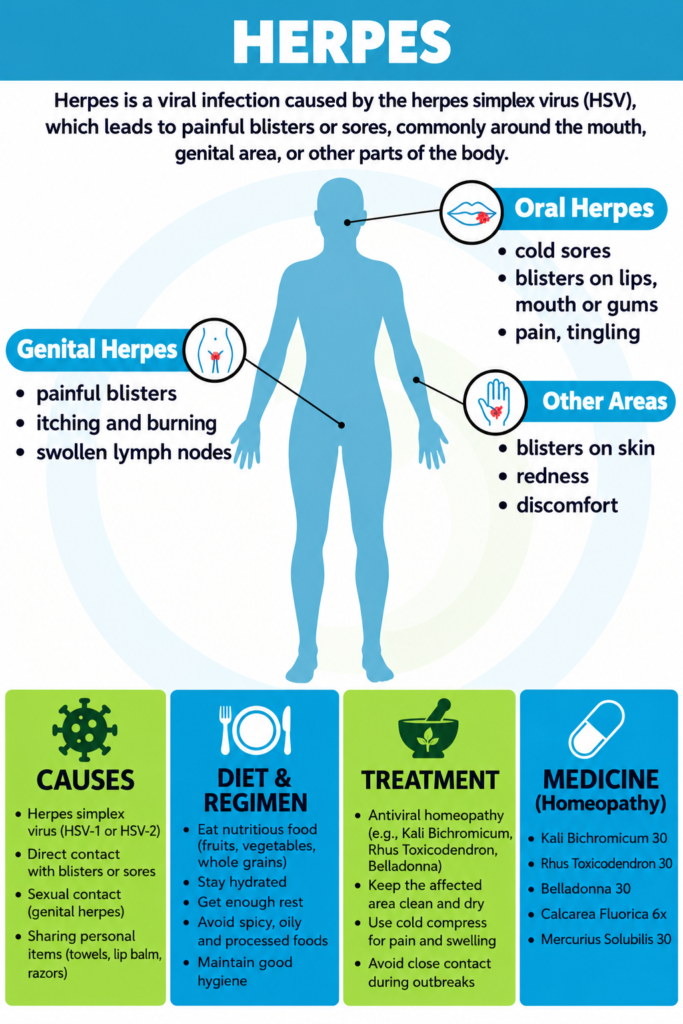
Herpes is a common viral infection caused by the herpes simplex virus (HSV). It generally affects the mouth or genital area and can cause blisters, sores, itching, tingling, or a burning sensation. Some people may have mild symptoms or no noticeable signs of infection.
Herpes symptoms can recur because the virus remains in the body after the initial infection. The virus can spread through direct skin-to-skin contact, including when visible sores are absent. Appropriate medical care can help manage symptoms, reduce outbreaks, and lower the risk of transmission. Anyone who suspects they have herpes should consult a qualified healthcare professional for proper assessment and treatment guidance.
At Spiritual Homeopathy Clinic, consultations are available at multiple branches in Hyderabad, including KPHB, Dilsukhnagar, Chandanagar, and Nallagandla. Online consultations may also be available for individuals in India and internationally, depending on their needs. Homeopathy has not been shown by reliable scientific evidence to treat herpes or eliminate the virus, so it should not replace evidence-based medical care.
Blisters or Sores: Small, fluid-filled blisters or painful sores may develop around the lips, mouth, genital area, or nearby skin.
Tingling or Itching: Some people notice itching, tingling, or unusual sensations in the affected area before blisters appear.
Burning or Pain: The affected skin may feel sore, sensitive, or painful, particularly during an outbreak.
Painful Urination: Genital herpes sores may cause discomfort or a burning sensation during urination.
Flu-Like Symptoms: During an initial outbreak, some individuals may experience fever, body aches, headache, or swollen lymph nodes.
Recurring Outbreaks: Symptoms may return periodically, although recurrent episodes are often milder than the first outbreak.
Symptoms can vary from person to person, and other skin conditions may cause similar signs. Seek medical advice for proper diagnosis and appropriate treatment. Prompt assessment is especially important during pregnancy or if symptoms involve the eyes.
Herpes is a viral infection caused by the herpes simplex virus (HSV). The two main types are HSV-1, which commonly causes oral herpes, and HSV-2, which is more commonly associated with genital herpes. Both types can affect either area. Understanding how herpes spreads and what may trigger recurring outbreaks can help people take appropriate precautions and seek suitable medical care.
Herpes develops when the herpes simplex virus enters the body through the skin or mucous membranes. Once infected, the virus remains in the body and may reactivate later.
HSV-1 commonly causes cold sores around the mouth.
HSV-2 commonly causes genital herpes.
Both types can cause oral or genital infections.
Herpes can spread through direct contact with an infected area, including contact when no visible sores are present. Common transmission routes include:
Kissing or oral contact with an infected area
Oral, vaginal, or anal sexual contact
Direct contact with herpes sores or affected skin
Contact with infected oral secretions or genital fluids
Herpes is not generally spread through ordinary activities such as sharing meals or casual social contact.
After the initial infection, the virus remains dormant in nerve cells and may reactivate, causing symptoms to return. Recurrences vary from person to person and may become less frequent over time.
Possible triggers include:
Physical illness or fever
Emotional stress
Fatigue or lack of sleep
Friction or irritation around the affected area
Menstruation or hormonal changes in some individuals
Prolonged exposure to sunlight, particularly for oral herpes
These factors do not trigger outbreaks in everyone, and some recurrences occur without an identifiable cause.
A weakened immune system may increase the risk of more frequent, severe, or prolonged herpes outbreaks. Certain medical conditions and treatments that suppress immune function can affect how the body controls the virus. People experiencing recurrent or severe symptoms should discuss them with a healthcare professional.
Many people with herpes have mild symptoms or do not realize they are infected. The virus can still spread even when sores are absent, although the risk is generally higher during an active outbreak. A healthcare professional can advise whether testing is appropriate based on symptoms and exposure history.
Understanding the causes and transmission of herpes can help people make informed decisions about prevention and care. Antiviral medicines prescribed by a qualified healthcare professional can help manage outbreaks and reduce the risk of transmission. Homeopathy has not been shown by reliable scientific evidence to treat herpes or eliminate the virus, so it should not replace recommended medical care. Seek medical advice if you develop unexplained blisters, painful sores, or other symptoms that may indicate herpes.
Oral herpes is commonly caused by the herpes simplex virus type 1 (HSV-1). It usually affects the lips and mouth and may cause cold sores or blisters around the affected area. Some people carry the virus without experiencing noticeable symptoms.
Symptoms may include:
Small blisters around the lips or mouth
Painful sores that may develop crusts
Tingling or itching before sores appear
Burning or discomfort around the affected area
Outbreaks may recur over time. Avoiding direct contact with active sores and following medical advice can help reduce the risk of transmission.
Genital herpes is a sexually transmitted infection caused by HSV-1 or HSV-2. It affects the genital or anal area and may cause symptoms that range from mild irritation to painful sores. Some people may not notice any symptoms.
Symptoms may include:
Blisters or sores around the genital or anal area
Itching or tingling
Pain or discomfort in the affected skin
Burning during urination when sores are present
Flu-like symptoms during an initial outbreak
A healthcare professional can assess symptoms and recommend appropriate testing and treatment. Antiviral medicines can help manage outbreaks and reduce the risk of transmission.
After the initial infection, the herpes simplex virus remains in the body and may reactivate, causing repeated outbreaks. The frequency and severity of recurrences vary from person to person.
Symptoms may include:
Reappearing blisters or sores
Tingling or itching before an outbreak
Localized pain or skin sensitivity
Sores that gradually heal
Physical illness, stress, fatigue, and other individual factors may contribute to recurrences in some people. Medical advice can help determine suitable options for managing repeated outbreaks.
Some people carry the herpes simplex virus without visible blisters or other noticeable symptoms. Even without symptoms, the virus can sometimes spread through skin-to-skin contact.
Important points include:
Visible sores may never develop.
Mild symptoms may be mistaken for other skin conditions.
Transmission can occur even when symptoms are absent.
Testing may be appropriate depending on symptoms and exposure history.
A healthcare professional can explain the benefits and limitations of available tests and discuss ways to reduce transmission.
In some cases, herpes can cause more serious complications, particularly in newborns and people with weakened immune systems. Infection involving the eyes can also threaten vision if not treated promptly.
Warning signs may include:
Severe or widespread sores
Significant pain or difficulty urinating
Eye pain, redness, or vision changes
Fever with severe or worsening symptoms
Seek prompt medical attention if these symptoms occur. Pregnant individuals with possible genital herpes should also consult their healthcare professional, especially if symptoms develop near delivery.
Identifying the type of herpes and obtaining an appropriate diagnosis can help guide effective management. Antiviral medicines prescribed by a qualified healthcare professional can help control symptoms and reduce outbreaks. Homeopathy has not been shown by reliable scientific evidence to treat herpes or eliminate the virus, so it should not replace evidence-based medical care.
Herpes is a viral infection caused by the herpes simplex virus (HSV), which commonly affects the mouth or genital area. Symptoms can vary from person to person, and some individuals may not experience noticeable signs of infection. When symptoms occur, they may include blisters, sores, itching, tingling, or discomfort in the affected area. Recognizing these symptoms can help individuals seek appropriate medical evaluation and care.
🔹 Blisters or Painful Sores
One of the most recognizable symptoms of herpes is the appearance of small blisters that may break open and develop into painful sores. These can occur around the lips, mouth, genital area, or anus.
🔹 Tingling or Itching
Some individuals experience tingling, itching, or unusual skin sensations before visible sores develop. These early signs may indicate the beginning of a herpes outbreak.
🔹 Burning Sensation or Skin Discomfort
The affected area may feel irritated, sensitive, or painful. Discomfort can occur before blisters appear and may continue while the sores heal.
🔹 Pain During Urination
Genital herpes sores may cause burning or pain during urination, particularly when urine comes into contact with affected skin. Severe pain or difficulty urinating should be assessed promptly by a healthcare professional.
🔹 Flu-Like Symptoms
During an initial outbreak, some people may experience fever, headache, body aches, fatigue, or swollen lymph nodes. These symptoms vary in severity and may occur alongside painful sores.
🔹 Recurring Blisters or Sores
Herpes can cause repeated outbreaks because the virus remains in the body after the initial infection. Recurrences may be triggered by factors such as illness, stress, or fatigue, although some occur without an obvious trigger.
🔹 No Visible Symptoms
Some people with herpes do not develop noticeable sores or may experience symptoms so mild that they go unrecognized. The virus can still spread even when visible symptoms are absent.
If you notice unexplained blisters, painful sores, or other symptoms that may indicate herpes, consult a qualified healthcare professional for assessment and appropriate testing. Antiviral medicines can help manage symptoms and reduce outbreaks. Homeopathy has not been shown by reliable scientific evidence to treat herpes or eliminate the virus, so it should not replace recommended medical care. Seek prompt medical attention for eye pain or vision changes, severe symptoms, or possible herpes infection during pregnancy.
Maintaining a balanced diet and following healthy lifestyle habits can support overall well-being for people living with herpes. Although no specific diet has been proven to prevent herpes outbreaks or eliminate the herpes simplex virus (HSV), adequate nutrition, sufficient rest, stress management, and appropriate medical care can help support general health.
🥗 1. Eat a Balanced Diet
A varied, balanced diet provides nutrients that support normal immune function. Consider including:
Fresh vegetables and leafy greens
Whole grains such as oats and brown rice
Fruits such as bananas, apples, and berries
Protein sources such as eggs, fish, beans, and lentils
Healthy fats from nuts, seeds, and olive oil
Choose a variety of foods to meet your nutritional needs.
💧 2. Stay Well Hydrated
Drinking enough water supports normal body functions and helps maintain hydration, particularly when you are unwell.
Drink water regularly throughout the day.
Include soups and other fluids as desired.
Choose drinks that suit your individual needs.
Limit sugary beverages if they contribute to other health concerns.
🍎 3. Maintain Regular, Nutritious Meals
Eating regular, balanced meals can help maintain energy levels and support general health.
Include vegetables and fruits in daily meals.
Choose whole grains and nutritious protein sources.
Avoid restrictive diets that remove entire food groups without medical guidance.
Follow any dietary recommendations related to other health conditions.
No particular food has been established as a cure for herpes.
🥚 4. Include Adequate Protein
Protein is important for tissue maintenance and normal immune function. Suitable sources include:
Eggs
Fish and lean poultry
Lentils and beans
Tofu
Milk or yogurt, if tolerated
Nuts and seeds
Choose protein sources according to your dietary preferences and health needs.
😴 5. Prioritize Sleep and Rest
Fatigue and illness may be associated with recurrent outbreaks in some individuals. Healthy sleep habits can support general well-being.
Maintain a consistent sleep schedule.
Aim for sufficient sleep each night.
Allow time for rest during illness.
Avoid overexertion when experiencing an outbreak.
Stress and fatigue do not trigger every outbreak, and symptoms may recur without an identifiable reason.
🧘 6. Manage Stress
Stress management may help support emotional well-being and healthy daily routines.
Practise gentle breathing exercises.
Try meditation or relaxation techniques.
Maintain enjoyable social activities.
Seek professional support if stress becomes difficult to manage.
These approaches may support well-being but have not been proven to prevent herpes outbreaks.
🚫 7. Follow Appropriate Hygiene and Prevention Measures
Healthy habits can help reduce the risk of spreading herpes to other people or other areas of the body.
Avoid kissing or direct contact with affected areas during an oral outbreak.
Avoid sexual contact when sores or warning symptoms are present.
Use condoms or other barriers to reduce, but not eliminate, transmission risk.
Wash your hands after touching the affected area or applying prescribed treatment.
Avoid touching or picking at blisters and sores.
Do not share items that have direct contact with active oral sores, such as lip products.
The virus can sometimes spread even when no visible sores are present, so discuss prevention options with a healthcare professional.
⚖️ 8. Follow a Suitable Medical Care Plan
Diet and lifestyle measures cannot eliminate HSV from the body. Antiviral medicines prescribed by a qualified healthcare professional can help manage outbreaks and reduce the risk of transmission. Seek medical advice if symptoms are recurrent, severe, or unexplained. Homeopathy has not been shown by reliable scientific evidence to treat herpes or eliminate the virus and should not replace recommended medical care.
Dietary and lifestyle recommendations should be tailored to individual needs and medical history. Seek prompt medical attention for eye pain, vision changes, severe symptoms, or possible herpes infection during pregnancy.
Yoga may serve as a complementary wellness practice for people living with herpes by encouraging relaxation, improving body awareness, and supporting stress management. Some individuals find gentle movement and breathing exercises helpful for managing stress associated with recurring symptoms. However, yoga has not been shown to treat herpes, prevent outbreaks, or eliminate the herpes simplex virus (HSV).
Yoga should be practiced according to individual comfort and physical ability. It should not replace medical evaluation, prescribed antiviral treatment, or other recommended care for herpes.
Sukhasana (Easy Pose) – This comfortable seated posture encourages relaxation and mindful breathing. It may help individuals manage everyday stress while maintaining a gentle, comfortable position.
Tadasana (Mountain Pose) – This standing posture promotes body awareness, balance, and an upright stance. Practising it gently can be part of a regular movement routine that supports overall well-being.
Balasana (Child’s Pose) – This gentle resting posture may encourage relaxation. Use a comfortable modification if needed, and avoid positions that cause pressure or discomfort around affected areas.
Nadi Shodhana (Alternate Nostril Breathing) – Slow, gentle breathing may support relaxation and stress management. Breathe naturally without forceful inhalation, prolonged breath-holding, or straining.
Shavasana (Corpse Pose — Modified) – A comfortable relaxation posture can help release physical tension. Use cushions or a supported position if lying flat is uncomfortable, and avoid direct pressure on painful sores.
Choose comfortable movements that do not irritate affected skin or place pressure on sores.
Avoid poses that cause friction, pain, or discomfort around the affected area.
Use a clean personal yoga mat and towel, and maintain good hand hygiene.
Stop practising if you experience pain, dizziness, or worsening discomfort.
Avoid strenuous exercise if you are unwell or experiencing significant symptoms.
Consult a healthcare professional if outbreaks are frequent, severe, or persistent.
Gentle yoga, mindful breathing, adequate sleep, and stress management may support general well-being. However, these practices do not cure herpes or reliably prevent recurrences. Antiviral medicines prescribed by a qualified healthcare professional can help manage symptoms and reduce the risk of transmission. Homeopathy has not been shown by reliable scientific evidence to treat herpes or eliminate the virus, so it should not replace evidence-based medical care.
Herpes is a viral infection caused by the herpes simplex virus (HSV). It may cause symptoms such as blisters, painful sores, itching, tingling, or irritation around the mouth or genital area. Symptoms vary between individuals, and some people may not experience noticeable signs. Understanding the type of infection, symptom patterns, medical history, and possible triggers is important when deciding on appropriate care.
Homeopathy is an alternative system of care that emphasizes individualized consultations. However, reliable scientific evidence has not established homeopathy as an effective treatment for herpes or shown that it can eliminate HSV. It should not replace evidence-based medical evaluation or prescribed antiviral treatment.
At Spiritual Homeopathy Clinic, consultations focus on understanding each patient’s reported symptoms, medical history, general health concerns, and overall well-being. The consultation process aims to help patients discuss their concerns and understand the importance of appropriate medical assessment and evidence-based treatment options.
Consultations are available at multiple branches in Hyderabad, including KPHB, Dilsukhnagar, Chandanagar, and Nallagandla. Online consultations may also be available for people in India and internationally, depending on individual needs.
The clinic’s consultation approach emphasizes individualized assessment, clear communication, and responsible health guidance. Key aspects include:
Individualized Assessment: Discussing reported symptoms, medical history, and health concerns to understand each patient’s situation.
Lifestyle and Well-Being Review: Exploring general lifestyle habits, stress, sleep, and factors that may affect overall well-being.
Professional Consultation: Providing an opportunity to discuss concerns and understand when medical evaluation or further testing may be appropriate.
Holistic Perspective: Considering general physical and emotional well-being while recognizing the importance of evidence-based herpes management.
The consultation involves discussing the nature and duration of symptoms, previous outbreaks, relevant medical history, and any treatments already being used. This information can help identify concerns that require further medical evaluation.
Care recommendations should reflect the individual’s symptoms and clinical needs. Evidence-based herpes management may include antiviral medicines prescribed by a qualified healthcare professional to help manage outbreaks and reduce the risk of transmission. Homeopathy should not be relied upon as a proven treatment for herpes or as a replacement for antiviral care.
Follow-up consultations with an appropriate healthcare professional can help monitor recurring symptoms, assess treatment response, and address concerns about preventing transmission. Recurrent, severe, or unusual symptoms may require further assessment.
Spiritual Homeopathy Clinic emphasizes individualized consultations, patient education, and responsible health guidance for people seeking support with their health concerns. Understanding herpes, obtaining an appropriate diagnosis, and choosing evidence-based treatment are important steps in managing symptoms and reducing transmission risk.
Patients should consult a qualified healthcare professional before starting, stopping, or changing any treatment. Prompt medical attention is important for eye pain or vision changes, severe symptoms, or possible herpes infection during pregnancy.
You should consult a healthcare professional if you notice blisters, painful sores, itching, tingling, or unusual irritation around the mouth or genital area. These symptoms may indicate herpes, although other conditions can cause similar signs. A medical evaluation can help establish the diagnosis and determine appropriate treatment.
Herpes symptoms may recur because the herpes simplex virus (HSV) remains in the body after the initial infection. Early assessment can help patients understand the condition, manage symptoms, and reduce the risk of transmission.
Painful blisters or sores around the lips, mouth, or genital area
Tingling, itching, or burning sensations before sores appear
Pain or discomfort during urination
Repeated outbreaks of blisters or sores
Fever, body aches, or swollen lymph nodes alongside sores
Symptoms that persist, worsen, or do not heal as expected
Possible exposure to herpes, especially if symptoms develop afterward
Seek prompt medical attention if you experience eye pain, eye redness, or vision changes, severe or widespread sores, or difficulty urinating. If you are pregnant and suspect genital herpes, contact your healthcare professional promptly, as infection can pose risks to the newborn.
At Spiritual Homeopathy, consultations are available at our Hyderabad branches in Kukatpally (KPHB), Chandanagar, Dilsukhnagar, and Nallagandla. Consultations focus on discussing health concerns, medical history, and general well-being to help patients understand the importance of appropriate assessment and care. Online consultations may also be available for patients across India and internationally.
Antiviral medicines prescribed by a qualified healthcare professional can help manage herpes symptoms and reduce the frequency of outbreaks and the risk of transmission. Homeopathy has not been shown by reliable scientific evidence to treat herpes or eliminate the virus, and it should not replace evidence-based medical care.
To schedule a consultation with Spiritual Homeopathy, call 9069 176 176.
Herpes symptoms may last around 2–4 weeks during an initial outbreak, while recurrent outbreaks often heal within 1–2 weeks. The duration varies depending on the individual and the severity of symptoms. Antiviral treatment prescribed by a healthcare professional may help shorten outbreaks. If symptoms are severe, persistent, or recurring frequently, seek medical advice for appropriate evaluation and care.
The most appropriate treatment for herpes depends on the type of infection, symptoms, frequency of outbreaks, and individual medical history. Antiviral medicines prescribed by a qualified healthcare professional can help manage symptoms, shorten outbreaks, and reduce the risk of transmission. Although herpes cannot currently be eliminated from the body, effective management options are available. If you notice blisters, painful sores, or recurring symptoms, consult a doctor for proper diagnosis and suitable treatment. Homeopathy has not been shown by reliable scientific evidence to be an effective treatment for herpes and should not replace recommended medical care.
There is no specific food proven to trigger or worsen herpes outbreaks in everyone. Maintaining a balanced diet with vegetables, fruits, whole grains, and adequate protein can support overall health. Staying hydrated, getting enough sleep, and managing stress may also support general well-being. If you notice that particular foods affect your symptoms, discuss your concerns with a healthcare professional. No diet can eliminate the herpes simplex virus, and dietary changes should not replace recommended antiviral treatment.
Herpes is often manageable with appropriate medical care, although its severity varies from person to person. Some individuals experience mild or occasional symptoms, while others may have recurring outbreaks or complications. Antiviral medicines prescribed by a healthcare professional can help manage symptoms and reduce the risk of transmission. Seek prompt medical attention if you experience severe or widespread sores, eye pain, vision changes, or possible herpes infection during pregnancy.
To manage herpes symptoms at home, keep the affected area clean and dry, avoid touching or picking at blisters, and wash your hands after contact with the affected skin. Wear loose, comfortable clothing to reduce irritation and use a cool compress to help soothe discomfort. Avoid kissing or sexual contact during an outbreak to reduce the risk of transmission. Consult a healthcare professional about antiviral treatment, as home care alone cannot eliminate the herpes virus. Seek medical advice if symptoms worsen, sores do not heal, or you develop severe pain or eye symptoms.
Herpes is a lifelong viral infection because the herpes simplex virus (HSV) remains in the body after the initial infection. However, symptoms vary from person to person, and some individuals experience infrequent or no noticeable outbreaks. Antiviral medicines prescribed by a healthcare professional can help manage symptoms, reduce recurrences, and lower the risk of transmission. Although there is currently no cure that eliminates the virus, appropriate medical care can help people manage the condition effectively.