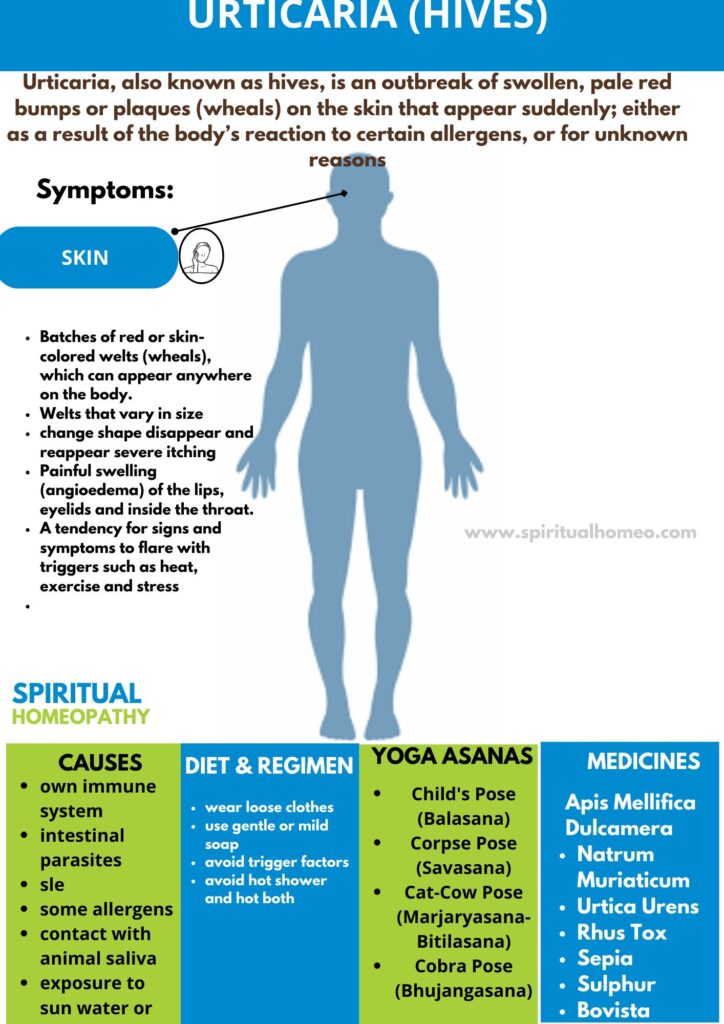
Urticaria (Hives)

Urticaria (Hives) Guide: Symptoms, Causes, and Treatment Options

Urticaria (Hives)

Effective Homeopathic Treatment for Urticaria (Hives)

Urticaria, also known as hives, is a skin condition that causes sudden outbreaks of swollen, pale red bumps or plaques, commonly referred to as wheals. These hives can appear anywhere on the body and vary in size. Urticaria is often triggered by the body’s allergic reaction to certain allergens, such as food, medications, or insect stings. However, in some cases, the cause may remain unknown. The condition can cause intense itching and discomfort, and symptoms may last from a few minutes to several hours.


Best Homeopathy Doctor for Urticaria in Hyderabad

Everything You Need to Know

Overview

  • Urticaria, commonly known as hives, is a skin condition marked by raised, itchy welts that can vary in size. It can be acute, lasting less than six weeks, or chronic, persisting for a longer period. Common triggers include allergens, stress, certain medications, and other factors. Treatment typically involves antihistamines to relieve symptoms, with corticosteroids used in more severe cases to reduce inflammation and discomfort. Managing triggers and timely treatment can help control outbreaks.

Causes

Urticaria (hives) can be triggered by various factors, including autoimmune responses where antibodies cross-link the IgE receptor on mast cells. Common allergens like foods, medications, and inhalants can also cause outbreaks. Other triggers include contact with substances like latex or animal saliva, physical factors such as heat, cold, pressure, sun exposure, sweat, or water, and infections like intestinal parasites. Conditions like systemic lupus erythematosus (SLE) and pregnancy can also contribute. In some cases, chronic spontaneous urticaria and angioedema may occur without a known cause (idiopathic). Urticarial vasculitis can be caused by Hepatitis B, SLE, or idiopathic factors.


Types of Urticaria (Hives)

  1. Acute Urticaria: Acute urticaria refers to hives or swelling that lasts less than 6 weeks. The most common triggers include foods, medications, latex, and infections. Insect bites or underlying diseases can also cause outbreaks. Common food triggers are nuts, chocolate, fish, tomatoes, eggs, fresh berries, soy, wheat, and milk. Fresh foods tend to cause hives more often than cooked ones. Certain food additives and preservatives can also contribute to the condition.

  2. Chronic Urticaria: Chronic urticaria lasts for more than 6 weeks and often has a more elusive cause. While it can be triggered by the same factors as acute urticaria, chronic cases may also be linked to the immune system, chronic infections, hormonal imbalances, or tumors. Identifying the specific cause of chronic urticaria can be challenging.

  3. Physical Urticaria: Physical urticaria is caused by direct physical stimulation of the skin, such as exposure to cold, heat, sunlight, vibration, pressure, sweating, or exercise. Hives usually appear in the area affected by the trigger and tend to appear within an hour of exposure.

  4. Dermatographism: Dermatographism is a type of hives that forms after firmly scratching or stroking the skin. It’s often characterized by raised, red welts where the skin has been rubbed or scratched.

  5. Hereditary Angioedema: Hereditary angioedema involves painful swelling under the skin, typically in the hands, feet, or face. It is a genetic condition that runs in families and can cause recurring episodes of swelling without hives.

Signs and Symptoms of Urticaria (Hives)

Urticaria, commonly known as hives, presents with several noticeable symptoms, including:

  1. Red or Skin-Colored Welts (Wheals): Raised, itchy bumps or welts can appear anywhere on the body. These welts may vary in size, shape, and location, and can change over time, disappearing and reappearing within a short period.

  2. Wheals with Clear Edges: The bumps typically appear suddenly and are often red or skin-colored, with clear, defined edges. These hives tend to resolve quickly but can recur.

  3. Itching: Intense itching is a hallmark symptom of urticaria. The itching may be severe and uncomfortable, often leading to scratching.

  4. Painful Swelling (Angioedema): Swelling, known as angioedema, can occur in areas such as the lips, eyelids, and inside the throat. This swelling may be painful and could cause discomfort or difficulty breathing.

  5. Flare-ups Triggered by Heat, Exercise, or Stress: Symptoms often worsen with triggers such as heat, physical activity, or stress. These external factors can cause hives to flare up and intensify the discomfort.

Diet and Regimen for Managing Urticaria (Hives)

Managing urticaria (hives) through diet and lifestyle can significantly help in reducing flare-ups and improving overall skin health. Here’s a comprehensive guide to the foods and regimen that may help alleviate symptoms.

Diet for Urticaria:

  1. 1. Anti-Inflammatory Foods:
  • Fatty Fish (salmon, mackerel, sardines): Rich in omega-3 fatty acids, these help reduce inflammation.

  • Fresh Fruits and Vegetables: High in antioxidants, especially berries, apples, pears, leafy greens, and cruciferous vegetables like broccoli and kale, which fight inflammation.

  • Whole Grains: Brown rice, quinoa, and oats provide fiber that helps control inflammation.

2. Foods Rich in Vitamin C:

  • Citrus Fruits (oranges, lemons), Bell Peppers, Strawberries, and Kiwis are packed with vitamin C, which supports the immune system and reduces skin inflammation.

3. Probiotics:

  • Incorporate fermented foods such as yogurt, kefir, kimchi, and sauerkraut. Probiotics support gut health, which plays a key role in modulating immune responses that may contribute to urticaria flare-ups.

4. Hydration:

  • Drink plenty of water throughout the day to keep your skin hydrated and help detoxify the body.

5. Gluten-Free and Dairy-Free (If Sensitive):

  • If gluten or dairy appears to trigger your symptoms, avoid them. Opt for gluten-free grains like rice, quinoa, and buckwheat, and choose plant-based milk alternatives like almond, coconut, or oat milk.

6. Herbal Teas:

  • Chamomile Tea: Known for its anti-inflammatory properties, it can soothe irritated skin.

  • Peppermint Tea: Helps with digestion and reduces inflammation, providing additional relief.


Regimen for Urticaria:

1. Avoid Triggers:

  • Identify and avoid known triggers, such as certain foods, medications, or environmental factors (heat, pollen, stress). Keep a food and symptom diary to track potential triggers.

2. Daily Skincare Routine:

  • Use mild, fragrance-free soaps and moisturizers to prevent irritation.

  • Lukewarm showers are gentler on the skin than hot showers.

  • Apply cooling gels (such as aloe vera) to soothe inflamed areas of the skin.

3. Stress Management:

  • Practice relaxation techniques like yoga, deep breathing exercises, or meditation to reduce stress, a common trigger for hives.

  • Regular physical activity, such as walking or swimming, can also help lower stress levels.

4. Medication:

  • Follow your healthcare provider’s advice on antihistamines or other medications to control flare-ups.

  • In chronic cases, corticosteroids or immune-modulating drugs may be prescribed.

5. Sleep:

  • Ensure adequate sleep (7-9 hours per night) to support the body’s natural healing and reduce stress levels.

6. Avoid Extreme Temperatures:

  • Extreme heat or cold can trigger hives in some individuals, so try to avoid sudden temperature changes and dress in loose, breathable clothing.

7. Regular Check-ups:

  • Schedule regular follow-up appointments with your healthcare provider to monitor your condition and adjust treatments as needed.


Sample Daily Regimen:

Morning:

  • Start the day with a glass of water with a slice of lemon.

  • Enjoy a breakfast of whole grains (e.g., oatmeal with berries and chia seeds) and a probiotic-rich food (such as yogurt).

  • Begin your day with a calming cup of chamomile tea.

Midday:

  • For lunch, have a salad with leafy greens, grilled salmon, quinoa, and an olive oil dressing.

  • Keep drinking water throughout the day.

Afternoon:

  • Snack on fresh fruits like apples or strawberries, paired with a handful of almonds (if not allergic).

  • Practice deep breathing or stretching exercises to reduce stress.

Evening:

  • For dinner, choose a gluten-free, anti-inflammatory meal, such as roasted chicken with steamed broccoli, sweet potatoes, and leafy greens.

  • Wind down with a soothing cup of peppermint tea.

Night:

  • Follow your skincare routine (gentle cleansing and moisturizing).

  • Aim for 7-9 hours of restful sleep to promote healing and well-being.

By following these dietary and lifestyle recommendations, you can help manage urticaria and reduce flare-ups, improving your overall quality of life. However, always consult with your healthcare provider for personalized advice and treatment options.


Yoga Asanas for Urticaria (Hives)

1. Child’s Pose (Balasana)

  • Benefits: Calms the nervous system, reduces stress, and promotes relaxation.

  • How to Do It:

    • Start on your hands and knees in a tabletop position.

    • Bring your hips back towards your heels while stretching your arms out in front of you, resting your forehead on the floor.

    • Breathe deeply and relax in this pose for 1-2 minutes.

2. Seated Forward Fold (Paschimottanasana)

  • Benefits: Helps calm the nervous system, reduces stress, and stretches the back and legs.

  • How to Do It:

    • Sit on the floor with your legs extended straight in front of you.

    • Inhale and lengthen your spine; as you exhale, fold forward, reaching for your feet or shins.

    • Hold the position for 30 seconds to 1 minute, breathing deeply.

3. Legs Up the Wall Pose (Viparita Karani)

  • Benefits: Helps to reduce stress and inflammation, calms the body, and promotes relaxation.

  • How to Do It:

    • Sit with one side of your body against a wall, then slowly lie down and swing your legs up the wall.

    • Keep your arms relaxed by your sides or place them on your belly.

    • Stay in this pose for 5-10 minutes, focusing on deep, calming breaths.

4. Cat-Cow Pose (Marjaryasana-Bitilasana)

  • Benefits: Helps improve blood circulation, reduces stress, and releases tension in the back and shoulders.

  • How to Do It:

    • Start on your hands and knees in a tabletop position with your wrists aligned under your shoulders and your knees under your hips.

    • Inhale and arch your back, lifting your head and tailbone (cow pose).

    • Exhale and round your spine, tucking your chin to your chest (cat pose).

    • Repeat for 1-2 minutes, moving slowly and synchronizing your breath with your movement.

5. Reclining Bound Angle Pose (Supta Baddha Konasana)

  • Benefits: Opens the hips, promotes relaxation, and relieves stress.

  • How to Do It:

    • Lie on your back and bring the soles of your feet together, allowing your knees to fall outward.

    • Place your hands on your belly or by your sides.

    • Breathe deeply and stay in this pose for 2-5 minutes to help release tension.

6. Corpse Pose (Savasana)

  • Benefits: Deep relaxation, stress reduction, and calming of the mind and body.

  • How to Do It:

    • Lie on your back with your legs extended and your arms relaxed by your sides.

    • Close your eyes and focus on your breath, letting go of any tension in your body.

    • Stay in this pose for 5-10 minutes, allowing your mind and body to fully relax.

7. Alternate Nostril Breathing (Nadi Shodhana Pranayama)

  • Benefits: Reduces stress, balances the nervous system, and promotes mental clarity.

  • How to Do It:

    • Sit comfortably with your spine straight.

    • Use your right thumb to close your right nostril and inhale deeply through your left nostril.

    • Close the left nostril with your right ring finger and release the right nostril, exhaling fully.

    • Inhale deeply through the right nostril, close the right nostril with your thumb, and exhale through the left nostril.

    • Repeat this process for 5-10 minutes, focusing on your breath and calming your mind.

8. Bridge Pose (Setu Bandhasana)

  • Benefits: Opens the chest, improves circulation, and reduces stress.

  • How to Do It:

    • Lie on your back with your knees bent and feet flat on the floor, hip-width apart.

    • Press your feet into the floor as you lift your hips toward the ceiling, creating a bridge with your body.

    • Keep your arms by your sides or interlace your fingers under your back.

    • Hold the pose for 30 seconds to 1 minute, breathing deeply.

Tips for Practicing Yoga with Urticaria:

  • Avoid Overheating: Some individuals with urticaria may experience flare-ups due to heat, so try to practice in a cool, calm environment.

  • Stay Mindful of Stress: Since stress can be a trigger for urticaria, focus on mindfulness and deep breathing during your yoga practice to calm the nervous system.

  • Modify Poses if Needed: If you experience discomfort or swelling, you can modify poses with props like blankets, blocks, or cushions to make them more comfortable.


🌿 Why Choose Homeopathy?

Homeopathy is a gentle, natural system of healing that focuses on treating the root cause of illness, not just the symptoms. It works in harmony with your body’s innate ability to heal itself—without causing side effects. Safe for all ages and tailored to each individual, homeopathy supports long-term health and well-being.

Whether you’re managing a chronic condition or seeking relief from acute symptoms, homeopathy offers a holistic, personalized path to recovery.


🌟 Spiritual Homeopathy: Your Trusted Partner in Natural Healing

At Spiritual Homeopathy, we are deeply committed to helping you achieve true wellness—physically, emotionally, and spiritually. Our mission is to provide compassionate, individualized care using time-tested homeopathic principles and modern clinical insight.

We don’t just treat symptoms; we focus on identifying and resolving the underlying imbalances that cause illness, so you can enjoy lasting health and vitality.


💫 Why Choose Spiritual Homeopathy?

At the heart of our practice is a unique approach that blends classical homeopathy with a deep respect for the spiritual and emotional dimensions of healing. Here’s what sets us apart:

  • ✅ Root-Cause Healing: We look beyond surface symptoms to identify and treat the root cause.

  • ✅ Personalized Treatment: Every remedy and plan is uniquely tailored to your body, lifestyle, and emotional needs.

  • ✅ Experienced Team: Our skilled and empathetic homeopathy doctors in Hyderabad offer both in-clinic and online consultations for your convenience.

  • ✅ Safe & Non-Toxic: Our remedies are gentle, non-addictive, and free from harmful chemicals.

  • ✅ Spiritual Care: We understand the mind-body-spirit connection and integrate it into every treatment.


🔍 Our Treatment Process

🩺 1. In-Depth Consultation

We take time to listen—really listen. During your initial session, our experts assess your health history, lifestyle, emotional state, and current symptoms to develop a treatment plan that’s customized just for you.

💊 2. Holistic Remedies

We offer a wide range of homeopathic medicines, carefully selected to suit your individual condition—whether you’re dealing with an acute illness like bronchitis or a long-standing issue like digestive problems, skin disorders, or allergies.

🔄 3. Ongoing Support & Follow-Up

Healing is a journey, and we’re with you every step of the way. Regular follow-ups help us monitor your progress, fine-tune your treatment, and ensure you’re getting the best possible outcome.


❤️ Our Promise to You

At Spiritual Homeopathy, your well-being is our highest priority. Whether you’re seeking relief from specific health issues or aiming to boost your overall vitality, we’re here to guide you with care, empathy, and clinical excellence.


📞 Start Your Healing Journey Today

Ready to experience the power of natural, root-cause healing?
Book your consultation with Spiritual Homeopathy now — in person or online — and take the first step toward balanced, vibrant health.

👉 Schedule Your Appointment Today

When to Consult

You should consult a healthcare professional if urticaria (hives) becomes frequent, persistent, or begins to interfere with daily comfort, sleep, or overall well-being. Early evaluation helps identify possible triggers and supports appropriate, individualized care.

Seek consultation if you experience:

  • Recurrent or long-lasting itchy welts or raised skin patches

  • Sudden swelling of the lips, eyelids, face, or hands

  • Intense itching that disturbs sleep or daily activities

  • Hives that last longer than six weeks (chronic urticaria)

  • Skin reactions that worsen with stress, heat, pressure, or certain foods

  • Associated symptoms such as fatigue or discomfort

  • Symptoms not improving with avoidance of known triggers or routine measures

Seek immediate medical attention if hives are accompanied by difficulty breathing, throat tightness, dizziness, or swelling of the tongue, as these may indicate a serious allergic reaction.

At Spiritual Homeopathy Clinic, consultations are available at multiple branches in Hyderabad, including Kukatpally, Chandanagar, Dilsukhnagar, and Nallagandla. Online and international consultations are also available for individuals who cannot visit in person. A professional assessment supports an individualized care approach based on symptom patterns, triggers, and overall health status.

For appointments or guidance, contact 9069 176 176.

FAQ

  • . What is urticaria?

    • Answer: Urticaria, also known as hives, is a skin condition characterized by the sudden appearance of raised, red, or pale welts or bumps on the skin. These welts can vary in size and shape and are often accompanied by itching.

    2. What causes urticaria?

    • Answer: Urticaria can be triggered by a variety of factors, including allergic reactions to foods, medications, insect stings, or infections. Other common triggers include physical factors like heat, cold, pressure, and sunlight, as well as stress. In some cases, the cause remains unknown.

    3. Is urticaria contagious?

    • Answer: No, urticaria is not contagious. It is an allergic or immune response that does not spread from person to person.

    4. What are the different types of urticaria?

    • Answer: Urticaria is classified into:

      • Acute urticaria: Lasts less than six weeks, often caused by an allergy or infection.

      • Chronic urticaria: Lasts more than six weeks and may have an unknown cause or be linked to autoimmune conditions.

      • Physical urticaria: Triggered by physical factors like heat, cold, pressure, or exercise.

    5. How long does urticaria last?

    • Answer: Acute urticaria usually resolves within a few hours to a few days. Chronic urticaria can persist for weeks, months, or even years, and may require long-term treatment.

    6. What are the symptoms of urticaria?

    • Answer: The main symptoms include raised, red or skin-colored welts or hives on the skin that may itch intensely. The welts can vary in size and may change location. In some cases, swelling of deeper skin layers (angioedema) may also occur, especially around the eyes, lips, or throat.

    7. Can stress cause urticaria?

    • Answer: Yes, stress can be a trigger for urticaria in some individuals. Stress can activate the immune system and cause the release of histamine, which contributes to the appearance of hives.

    8. How is urticaria diagnosed?

    • Answer: Urticaria is usually diagnosed through a physical examination and a detailed medical history. Your doctor may ask about recent exposures to potential allergens, medications, or stress factors. In some cases, allergy tests or blood tests may be conducted to identify specific triggers.

    9. How is urticaria treated?

    • Answer: Treatment for urticaria typically involves:

      • Antihistamines to reduce itching and swelling.

      • Corticosteroids (for severe or persistent cases).

      • Avoiding known triggers such as certain foods, medications, or environmental factors.

      • Other medications like leukotriene inhibitors or biologics for chronic urticaria.

      • Lifestyle changes to manage stress and avoid triggers.

    10. Can urticaria be prevented?

    • Answer: While it may not be entirely preventable, you can minimize the risk of flare-ups by identifying and avoiding known triggers, managing stress levels, and maintaining a healthy lifestyle. Working with a healthcare provider to manage the condition is key.

    11. Can food allergies cause urticaria?

    • Answer: Yes, certain foods like nuts, shellfish, eggs, or dairy can cause allergic reactions that trigger urticaria. If food is suspected as a trigger, it may be helpful to keep a food diary and consult an allergist for testing.

    12. What should I do if I have a severe allergic reaction with urticaria?

    • Answer: If urticaria is accompanied by difficulty breathing, swelling of the throat, or signs of anaphylaxis (severe allergic reaction), seek immediate medical attention. An epinephrine injection may be necessary in severe cases.

    13. Is there a connection between urticaria and autoimmune diseases?

    • Answer: Yes, in some cases, chronic urticaria may be linked to autoimmune diseases such as lupus or thyroid disorders. This is because the immune system mistakenly attacks the body’s own tissues, leading to inflammation and skin reactions.

    14. Can exercise trigger urticaria?

    • Answer: Yes, exercise-induced urticaria is a form of physical urticaria. Some people experience hives after physical activity due to increased body temperature, sweat, or exertion.

    15. Can I still exercise if I have urticaria?

    • Answer: If you experience exercise-induced urticaria, you may need to modify your exercise routine to prevent flare-ups. Cooling down after exercise, staying hydrated, and avoiding excessive heat can help manage symptoms. Consult your doctor before engaging in physical activity.

    16. Are there natural remedies for urticaria?

    • Answer: While medical treatments like antihistamines are most effective, some people find relief from natural remedies such as:

      • Aloe vera (applied topically) to soothe the skin.

      • Oatmeal baths to relieve itching.

      • Chamomile tea to help reduce inflammation.

      • Cold compresses to reduce swelling.

    17. When should I see a doctor for urticaria?

    • Answer: You should see a doctor if:

      • Urticaria lasts longer than a few days.

      • You have difficulty breathing, swelling of the throat, or other signs of a severe allergic reaction.

      • You experience frequent flare-ups without identifying triggers.

      • You have concerns about your condition or if symptoms interfere with daily activities.

    18. Can urticaria go away on its own?

    • Answer: Yes, acute urticaria often resolves on its own within a few days to weeks. However, chronic urticaria may require long-term management and may not resolve without treatment.

    19. Is there a cure for chronic urticaria?

    • Answer: There is no permanent cure for chronic urticaria, but the condition can often be managed with medications like antihistamines and other treatments. Many people with chronic urticaria experience periods of remission or reduced symptoms over time.