Adenoids

"Adenoidectomy: When is Surgery Necessary for Enlarged Adenoids?"

Adenoids

Homeopathy treatment for Adenoids​

Homeopathy offers a natural, holistic approach to treating enlarged adenoids in both children and adults. Instead of just masking symptoms, homeopathy aims to address the root causes of adenoid enlargement by boosting the body’s natural healing abilities.

Homeopathic Remedies for Adenoids can help reduce inflammation, prevent recurrent infections, and improve overall immune function. Commonly used remedies include Calcarea Carbonica, Silicea, Baryta Carbonica, and Phosphorus, tailored to the individual’s specific symptoms and overall health.

Unlike conventional treatments, homeopathy offers a safe, non-invasive alternative without side effects, promoting long-term wellness. It can be particularly effective for those who experience frequent adenoid infections or breathing difficulties.

Why Choose Homeopathy for Adenoids?

  • Natural Healing: Treats the body holistically without relying on antibiotics or steroids.

  • Safe for Children: A gentle treatment option for young ones suffering from adenoid-related issues.

  • Fewer Recurrences: Helps reduce the frequency of infections and associated symptoms.

Always consult a qualified homeopath to find the right treatment plan tailored to your needs.

Everything You Need to Know

Overview of Adenoids

Adenoids are lymphoid tissues located at the back of the nasal cavity, playing a key role in the body’s immune defense, especially in early childhood. They are part of the immune system, helping to fight infections. Typically, adenoids begin to shrink around age 5 and are mostly gone by the teenage years, as the body develops other mechanisms for immune protection.

While adenoids are critical in childhood, their size and function naturally decrease over time, often requiring less focus in later life.


Anatomy and Physiology of Adenoids

The nasopharyngeal tonsil, commonly referred to as the adenoids, is located where the roof and back wall of the nasopharynx meet. These tissues are made up of vertical ridges of lymphoid tissue, separated by deep clefts, and are essential for immune response, especially in young children.

Types of Epithelium

The covering epithelium of the adenoids consists of three types:

  • Ciliated pseudostratified columnar

  • Stratified squamous

  • Transitional

Unlike the palatine tonsils, the adenoids lack crypts and a surrounding capsule. They are present at birth, enlarge physiologically until around age 6, and then gradually shrink as puberty approaches, nearly disappearing by age 20.

Blood Supply to the Adenoids

The adenoids receive blood from several key arteries:

  1. Ascending palatine branch of the facial artery

  2. Ascending pharyngeal branch of the external carotid artery

  3. Pharyngeal branch from the third part of the maxillary artery

  4. Ascending cervical branch of the inferior thyroid artery

Lymphatic Drainage

Lymph from the adenoids drains into the upper jugular nodes, either directly or through retropharyngeal and parapharyngeal nodes.

Nerve Supply

The ninth (CN IX) and tenth (CN X) cranial nerves supply sensation to the adenoids. Referred pain to the ear, often experienced during adenoiditis, is mediated through these nerves.

Causes of Adenoid Enlargement

Adenoids naturally enlarge during childhood as part of normal immune system development. However, in some children, there is a tendency for generalized lymphoid hyperplasia, where the adenoids, along with other lymphoid tissues, become excessively enlarged.

Common Contributing Factors:

  • Recurrent Infections: Frequent episodes of rhinitis, sinusitis, or chronic tonsillitis can lead to chronic adenoid infection and hyperplasia (abnormal enlargement).

  • Upper Respiratory Tract Allergies: Allergic reactions affecting the upper respiratory tract can also contribute to adenoid enlargement, especially in children prone to allergies.

When these conditions persist, the adenoids may become chronically inflamed, causing issues such as difficulty breathing through the nose, snoring, and frequent ear infections.

Key Classifications and Conditions Related to Adenoids

Adenoids are important for immune function, especially in children, but when they become enlarged or infected, they can lead to various health issues. Here’s an overview of the common classifications and conditions related to adenoids:


1. Normal Adenoids

  • Present in all children as part of the immune system.

  • Typically small and do not cause any health problems.

  • Usually shrink and become less significant by adolescence or early adulthood.


2. Enlarged Adenoids (Adenoid Hypertrophy)

  • Adenoids become abnormally enlarged, often in children between the ages of 3 to 7 years.

  • Symptoms can include:

    • Snoring

    • Mouth breathing

    • Sleep apnea

    • Recurrent ear infections

  • Enlarged adenoids can block airflow, leading to breathing difficulties.


3. Infected Adenoids (Adenoiditis)

  • Caused by bacterial or viral infections.

  • Symptoms may include:

    • Nasal congestion

    • Runny nose

    • Sore throat

    • Postnasal drip

    • Sometimes fever

  • Infected adenoids can cause significant discomfort and require medical treatment.


4. Chronic Adenoiditis

  • Refers to long-term or repeated infection and inflammation of the adenoids.

  • May lead to:

    • Persistent nasal issues

    • Ongoing ear infections

    • Hearing problems, often due to blockage of the eustachian tube, which can affect middle ear function.


5. Obstructive Adenoids

  • In this condition, adenoids are significantly enlarged, blocking the nasal airway.

  • This can lead to sleep-disordered breathing, including obstructive sleep apnea (OSA), particularly in children.

  • Symptoms may include loud snoring, trouble breathing through the nose, and sleep disturbances.

Symptoms and Signs of Enlarged Adenoids

The symptoms of enlarged or infected adenoids depend not only on their size but also on the available space within the nasopharynx. Enlarged adenoids can produce a combination of nasal, aural, and general symptoms that may affect a child’s overall health, sleep quality, and development.

Nasal Symptoms

Nasal Obstruction
The most common symptom of enlarged adenoids is nasal obstruction, which often results in mouth breathing. In infants, this blockage may interfere with feeding or suckling, sometimes leading to feeding difficulties and poor weight gain.

Nasal Discharge
Nasal discharge may occur due to choanal obstruction, where normal secretions are unable to drain into the nasopharynx. It may also be associated with chronic rhinitis. Children may present with a persistent wet or bubbly nasal discharge.

Sinusitis
Chronic maxillary sinusitis is frequently linked with enlarged adenoids, often due to prolonged nasal discharge and infection. In some cases, sinusitis itself may contribute to secondary infection and enlargement of the adenoids.

Epistaxis (Nosebleeds)
Acute inflammation of the adenoids may cause episodes of nosebleeds, particularly during or after nose blowing.

Voice Change
Nasal blockage can alter voice resonance, resulting in a dull or toneless quality with reduced nasal modulation.

Aural Symptoms

Tubal Obstruction
Enlarged adenoid tissue can obstruct the eustachian tube, leading to retraction of the tympanic membrane and conductive hearing loss.

Recurrent Otitis Media
Infection may spread through the eustachian tube, causing repeated episodes of acute otitis media (middle ear infections).

Chronic Suppurative Otitis Media
Persistent infection of the middle ear may continue if adenoids remain chronically infected.

Serous Otitis Media
Adenoids are a significant contributing factor in serous otitis media, where fluid accumulates in the middle ear. Variations in adenoid size may cause intermittent eustachian tube blockage, resulting in fluctuating hearing levels. Diagnostic tests such as impedance audiometry may aid in evaluation.

General Symptoms

Adenoid Facies
Prolonged nasal obstruction and habitual mouth breathing can lead to characteristic facial features known as adenoid facies. These may include an elongated face, dull expression, open mouth posture, crowded upper teeth, pinched nasal appearance, and a high-arched palate due to altered tongue positioning.

Pulmonary Hypertension
Long-standing upper airway obstruction from enlarged adenoids may contribute to pulmonary hypertension and cor pulmonale, affecting cardiopulmonary function.

Aprosexia (Lack of Concentration)
Children with chronic adenoid-related obstruction may experience difficulty concentrating, often associated with reduced oxygen intake and disturbed sleep patterns.

Medical consultation is advised when these symptoms are frequent, persistent, or interfere with breathing, hearing, sleep, or daily activities. Spiritual Homeopathy Clinic offers evaluation through its Hyderabad branches as well as online and international consultations.

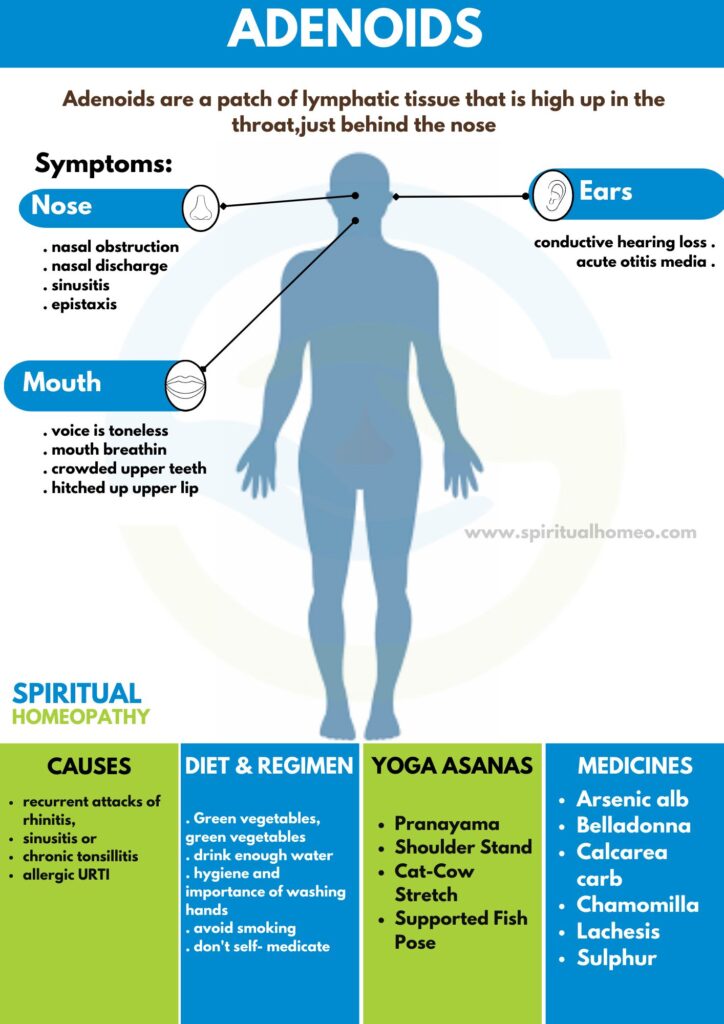
Diet and Regimen for Adenoid Health

Maintaining a healthy diet and lifestyle can support overall well-being and help manage adenoid-related issues. The following measures may contribute to better respiratory and immune health:

1. Incorporate Green Vegetables into Your Diet

Eating a variety of green vegetables rich in essential vitamins and minerals can support immune function and overall respiratory health. These nutrient-dense foods may help reduce inflammation and support normal healing processes.

2. Stay Hydrated

Adequate water intake is important for maintaining hydration and supporting nasal and throat health. Proper hydration helps keep mucus thin, which may ease congestion and support comfortable breathing.

3. Practice Good Hygiene

Maintaining good personal hygiene, including regular hand washing, helps reduce the risk of infections that may aggravate adenoid-related problems. This is particularly important during seasonal infections.

4. Avoid Smoking

Smoking and exposure to secondhand smoke can irritate the respiratory tract and worsen symptoms associated with enlarged or infected adenoids. Avoiding tobacco smoke supports healthier airways.

5. Don’t Self-Medicate

Self-medication with over-the-counter remedies without medical advice should be avoided. Professional guidance is important for safe and appropriate management of adenoid conditions.

Dietary and lifestyle recommendations may vary based on the child’s age, symptoms, and overall health, and should be guided by a qualified healthcare professional.

Yoga and Lifestyle Practices for Adenoid Support

Yoga and breathing practices may help support respiratory health and relaxation in children with adenoid-related concerns. These practices are supportive in nature and should be performed gently and under supervision when advised.

1. Anulom Vilom (Nadi Shodhana Pranayama) – Alternate Nostril Breathing

Benefits:
This pranayama helps clear the nasal passages, improves airflow, and supports better oxygenation of the body.

How to Do:

  • Sit comfortably in a meditative posture.

  • Close the right nostril with the right thumb and inhale slowly through the left nostril.

  • Close the left nostril with the ring finger, release the right nostril, and exhale through the right nostril.

  • Inhale through the right nostril, then close it and exhale through the left nostril.

  • Continue for 5–10 minutes, alternating nostrils.


2. Bhujangasana (Cobra Pose)

Benefits:
Bhujangasana helps open the chest, supports respiratory function, and may aid in loosening chest congestion.

How to Do:

  • Lie on your stomach with legs extended and feet together.

  • Place the palms under the shoulders.

  • Inhale and gently lift the chest off the floor while straightening the arms.

  • Hold for 20–30 seconds with normal breathing.

  • Slowly lower the body back to the floor.


3. Setu Bandhasana (Bridge Pose)

Benefits:
This asana opens the chest area and stimulates the respiratory system, which may help improve airflow.

How to Do:

  • Lie on the back with knees bent and feet flat on the floor, hip-width apart.

  • Place arms by the sides with palms facing down.

  • Press the feet into the floor and lift the hips upward.

  • Hold for 20–30 seconds while breathing comfortably.

  • Slowly lower the hips back down.


4. Ujjayi Pranayama (Victorious Breath)

Benefits:
Ujjayi pranayama supports nasal breathing, improves lung capacity, and promotes calm, controlled respiration.

How to Do:

  • Sit comfortably with the spine straight.

  • Inhale through the nose while gently constricting the throat to create a soft sound.

  • Exhale slowly through the nose with the same throat control.

  • Continue for 5–10 minutes with steady breathing.


5. Viparita Karani (Legs-Up-The-Wall Pose)

Benefits:
This restorative posture promotes relaxation, supports circulation, and may help reduce discomfort associated with inflammation.

How to Do:

  • Sit close to a wall and lie on your back.

  • Raise both legs up against the wall while keeping them straight.

  • Place arms comfortably by the sides with palms facing upward.

  • Remain in this position for 5–10 minutes with relaxed breathing.


6. Bhramari Pranayama (Bee Breath)

Benefits:
Bhramari pranayama helps calm the nervous system, reduces stress, and supports smooth airflow through the nasal passages.

How to Do:

  • Sit in a comfortable position with eyes closed.

  • Gently place fingers near the ears.

  • Inhale deeply and exhale slowly while making a humming sound.

  • Practice for 5–10 minutes, focusing on the vibration of the breath.


Yoga and breathing practices are supportive measures and should not replace medical evaluation or treatment. Suitability and duration may vary based on age and symptoms, and guidance from a healthcare professional is advised.

Why Choose Spiritual Homeopathy?

At Spiritual Homeopathy Clinic, we offer a holistic and personalized approach to care, blending the time-tested principles of homeopathy with a deep understanding of the physical and emotional aspects of health. Our team of experienced practitioners focuses on understanding each individual’s health concerns and overall well-being.

With multiple branches across Hyderabad and options for in-clinic, online, and international consultations, we aim to make professional homeopathic care accessible and convenient for patients seeking long-term support.


Our Approach to Treatment

We believe that effective care begins with understanding the person as a whole — physical, emotional, and lifestyle factors included. Our approach goes beyond symptom relief and focuses on identifying contributing factors that may influence the condition.

By supporting the body’s natural healing response, homeopathic care aims to promote balance and overall well-being. Treatment is guided by detailed case evaluation and is planned for long-term management under professional supervision.


Our Services

Consultations

Our homeopathic doctors in Hyderabad provide detailed consultations to understand your symptoms, medical history, lifestyle patterns, and individual health needs. Online and international consultations are also available for those who prefer remote care.

Each consultation is conducted with careful listening and clinical assessment to help guide an individualized care plan suited to your condition and health goals.

For appointments, you may contact: 9069 176 176


Tailored Care Approach

At Spiritual Homeopathy Clinic, treatment is based on individualized care rather than a one-size-fits-all approach. The aim is to address contributing factors, support long-term management, and promote overall balance.

Homeopathic care is generally well-tolerated when taken under professional guidance and is suitable for both acute and chronic conditions, depending on individual health requirements.


Follow-Up Care

Ongoing follow-up is an important part of the treatment process. Regular reviews help monitor progress, assess response, and make necessary adjustments based on individual needs and health changes.

This continuity of care supports long-term health management and encourages steady improvement over time.


Our Commitment to You

Your well-being remains a priority at Spiritual Homeopathy Clinic. We are committed to providing responsible, patient-centered care through careful evaluation, individualized treatment planning, and consistent follow-up.

Whether you are managing a specific condition or seeking guidance for overall health support, our team is available through our Hyderabad branches as well as online and international consultation services

When to Consult

You should consult a healthcare professional if adenoids-related symptoms become frequent, persistent, or start affecting breathing, sleep, hearing, or daily activities. Early evaluation helps identify the extent of the problem and reduces the risk of repeated infections or related complications.

Seek consultation if you experience:

  • Persistent nasal blockage or mouth breathing

  • Frequent cold, cough, or throat infections

  • Snoring or disturbed sleep

  • Difficulty breathing through the nose, especially at night

  • Ear pain, repeated ear infections, or reduced hearing

  • Nasal voice or speech changes

  • Symptoms not improving with basic care or recurring often

At Spiritual Homeopathy Clinic, consultations are available at multiple branches in Hyderabad, including Kukatpally, Chandanagar, Dilsukhnagar, and Nallagandla. Online and international consultations are also available for patients who cannot visit in person. A professional assessment supports an individualized care approach based on symptoms and overall health status.

📞 For appointments or guidance, contact 9069 176 176.

FAQ: Homeopathy and Adenoid Care

Why Choose Homeopathy?

Homeopathy offers a natural and holistic approach to care by focusing on contributing factors rather than only managing symptoms. It supports immune health, is gentle for all age groups, and provides individualized care based on a person’s overall health condition. Homeopathic treatment is generally well-tolerated under professional guidance and supports long-term management.


Spiritual Homeopathy: Your Path to Natural Healing

At Spiritual Homeopathy Clinic, we believe in a holistic and patient-centered approach to care. Our focus is on understanding the individual’s health concerns and supporting balance between physical, emotional, and lifestyle factors.

With multiple branches across Hyderabad and options for in-clinic, online, and international consultations, we aim to make professional homeopathic care accessible for patients seeking long-term health support.


Consult Homeopathy Doctors at Spiritual Homeopathy Clinics, Hyderabad

Our clinics in Hyderabad offer both in-clinic and online consultations for patients with adenoid-related concerns. We also provide international consultation services for patients outside India.

Our clinical focus includes the management of chronic and recurrent conditions such as respiratory issues, gastrointestinal disorders, endocrine disorders, skin conditions, joint problems, headaches, and childhood health concerns. Treatment planning is based on detailed case evaluation and individualized care.

Appointments can be scheduled based on medical assessment and patient needs.
For consultation and guidance, please contact: 9069 176 176


Healthy Lifestyle Tips for Adenoid Care

  • Eat green vegetables to support immune function and overall health.

  • Stay hydrated by drinking adequate water daily.

  • Practice good hygiene and wash hands regularly to help prevent infections.

  • Avoid smoking and exposure to second-hand smoke, as it may aggravate respiratory problems.

  • Avoid self-medication and seek professional medical guidance when symptoms persist.

Lifestyle guidance may vary based on individual health status and associated conditions.


What are Adenoids?

Adenoids are small masses of lymphatic tissue located at the back of the nasal passage, above the roof of the mouth. They are part of the immune system and help in fighting infections, particularly during childhood. In some cases, adenoids may become enlarged or infected, leading to breathing and ear-related problems.

Consultations for adenoid-related concerns are available at Spiritual Homeopathy Clinic through Hyderabad branches, as well as online and international consultation services.


Common Symptoms of Adenoid Enlargement

Enlarged or infected adenoids can lead to a range of symptoms, including:

  • Nasal obstruction (difficulty breathing through the nose)

  • Nasal discharge (runny nose or congestion)

  • Sinusitis (inflammation or infection of the sinuses)

  • Epistaxis (nosebleeds)

  • Voice changes (muffled or nasal-sounding voice)

  • Tubal obstruction affecting ear function and hearing

  • Recurrent ear infections or acute otitis media

  • Adenoid facies (distinct facial appearance due to chronic mouth breathing)

If these symptoms are frequent, persistent, or severe, medical evaluation is advised.


Treatment Options for Adenoids

Management of enlarged or infected adenoids may involve a combination of approaches based on severity and associated complications:

  • Breathing exercises to improve nasal airflow

  • Supportive measures to reduce nasal congestion

  • Allergy management where relevant

  • Surgical intervention (adenoidectomy) in selected cases when conservative management is not sufficient

The choice of treatment depends on clinical evaluation, age, symptom severity, and overall health condition.

Homeopathic care focuses on individualized treatment planning, addressing contributing factors, and supporting long-term management under professional supervision.