
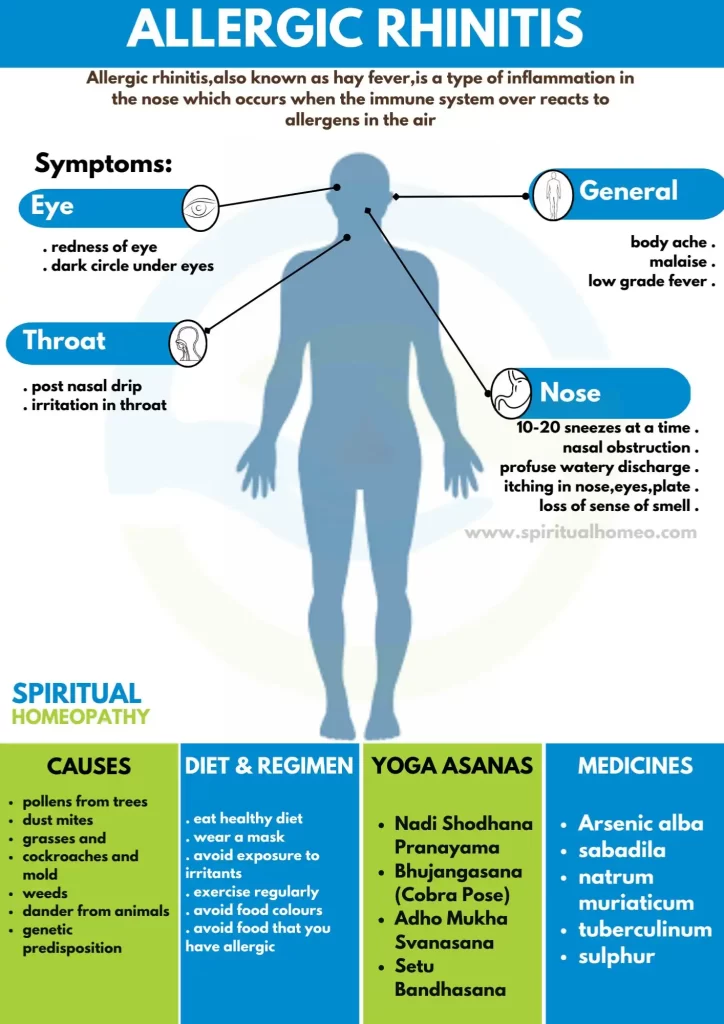
Allergic Rhinitis

Effective Lifestyle Changes to Control Allergic Rhinitis Symptoms

Allergic Rhinitis

What Is the Role of Homeopathy in the Treatment of Allergic Rhinitis?

At Spiritual Homeopathy, we believe in treating the underlying causes contributing to recurrent allergies rather than simply suppressing symptoms. Our experienced homeopathic doctors carefully evaluate each patient’s symptoms, allergy triggers, medical history, immune health, lifestyle, environmental exposure, and overall constitution before preparing an individualized treatment plan. Our holistic approach focuses on supporting the body’s natural healing processes, promoting immune balance, reducing the tendency for recurring allergic episodes, and improving overall respiratory health through safe and personalized homeopathic care. We provide individualized homeopathic treatment for allergic rhinitis and other chronic allergic conditions based on each patient’s unique needs.

We provide personalized homeopathic treatment for allergic rhinitis in Hyderabad to patients of all age groups through our clinics, as well as online homeopathy consultations for patients across India and in more than 100 countries worldwide. If you are looking for experienced homeopathy doctors in Hyderabad for allergic rhinitis, seasonal allergies, dust allergies, or long-term allergy management, Spiritual Homeopathy is committed to delivering compassionate, patient-centered care wherever you are.

Everything You Need to Know

Overview of Allergic Rhinitis (Hay Fever)

Allergic rhinitis is an IgE-mediated immune response that occurs when the nasal mucosa comes into contact with airborne allergens. This reaction leads to common allergy symptoms such as watery nasal discharge, nasal congestion, sneezing, and itching of the nose. In many individuals, it may also be associated with itching of the eyes, throat, palate, and pharynx.

Symptoms usually begin within minutes of exposure to the triggering allergen and can interfere with daily activities, including sleep quality, concentration, and overall productivity. Some individuals experience seasonal allergic rhinitis, often related to pollen exposure, while others may develop perennial allergic rhinitis due to year-round allergens such as dust mites, mold, or pet dander.

Allergic rhinitis is often associated with other allergic conditions, including asthma, allergic conjunctivitis, and atopic dermatitis. Early identification and appropriate management are important, as ongoing nasal inflammation may influence overall respiratory and immune health.

At Spiritual Homeopathy Clinic, evaluation and guidance for allergic rhinitis are available through in-clinic consultations across multiple branches in Hyderabad, as well as through online and international consultation options when required.

Causes of Allergic Rhinitis

Allergic rhinitis is triggered by an overactive immune response to certain allergens. The most common causes include inhalant allergens and genetic predisposition, both of which play a significant role in the onset and severity of symptoms.

1. Inhalant Allergens

These allergens are typically airborne and may be seasonal or perennial in nature:

Seasonal Allergens:
These commonly include pollen from trees, grasses, and weeds. Symptoms usually appear during specific seasons, particularly in spring and fall.

Perennial Allergens:
These are present throughout the year and may include:

  • Mold spores

  • Dust mites

  • Cockroach droppings

  • Pet dander (skin flakes from cats, dogs, and other animals)

Household dust is a frequent source of perennial allergens. It often contains dust mites, insect particles, textile fibers, and pet dander. Dust mites thrive in warm and humid environments such as bedding, pillows, mattresses, carpets, and upholstered furniture, where they feed on shed skin cells and organic debris.

2. Genetic Predisposition

Genetic factors play an important role in the development of allergic rhinitis. Individuals with a family history of allergies may have a higher likelihood of developing allergic conditions:

  • If one parent has allergies, the child has approximately a 20% chance of developing allergic rhinitis.

  • If both parents have allergic conditions, the risk may increase to around 47%.

Understanding the contributing causes helps guide individualized care and long-term management strategies, which may vary based on a person’s triggers, environment, and overall health profile.

Types of Allergic Rhinitis

Allergic rhinitis is generally classified into two clinical types based on the timing, duration, and pattern of symptoms.

1. Seasonal Allergic Rhinitis (Hay Fever)

This type occurs during specific times of the year, particularly when pollen levels are high in the environment. Individuals with seasonal allergic rhinitis commonly react to tree, grass, or weed pollens that circulate during certain seasons. Symptoms often worsen in spring, summer, or early fall, depending on the specific allergen involved and regional climate patterns.

2. Perennial Allergic Rhinitis

Perennial allergic rhinitis is characterized by symptoms that occur throughout the year. It is usually triggered by indoor allergens such as dust mites, pet dander, mold spores, and cockroach droppings. Individuals with this type may experience ongoing nasal congestion, sneezing, and a runny nose, regardless of seasonal changes.

Identifying the specific type of allergic rhinitis helps guide individualized care and long-term management based on symptom pattern and allergen exposure.

Signs and Symptoms of Allergic Rhinitis

Allergic rhinitis presents with a variety of symptoms that can differ depending on the type (seasonal or perennial) and the individual’s sensitivity to allergens. Symptoms arise when the immune system reacts to triggers such as pollen, dust mites, pet dander, or mold.

Types and Onset

Seasonal Allergic Rhinitis: Symptoms typically appear during specific seasons, especially when pollen levels are high. Individuals may react to tree, grass, or weed pollens.

Perennial Allergic Rhinitis: Symptoms persist throughout the year and are generally triggered by indoor allergens.

Allergic rhinitis can affect people of any age or gender. Onset commonly occurs between 12 and 16 years, but symptoms may also appear in infants as young as 6 months or in older adults.

Note: Frequent, severe, or worsening symptoms should prompt consultation with a qualified homeopathy doctor, either at a Hyderabad branch or through online/international consultation.

Common Symptoms

Seasonal Allergic Rhinitis Symptoms

  • Paroxysmal sneezing: Sudden bouts of 10–20 sneezes in succession.

  • Nasal congestion: Blocked nose, especially in the morning.

  • Watery nasal discharge: Clear, thin mucus.

  • Nasal and facial itching: Often accompanied by itching in the eyes, throat, or roof of the mouth.

  • Possible bronchospasm: Particularly in individuals with coexisting asthma.

Symptom severity varies with allergen exposure and season.

Perennial Allergic Rhinitis Symptoms

  • Mild but persistent nasal stuffiness

  • Frequent cold-like symptoms

  • Postnasal drip

  • Chronic cough

  • Reduced sense of smell due to swollen nasal lining

  • Hearing difficulties caused by fluid in the middle ear or eustachian tube blockage

Associated Physical Signs

Nasal Signs

  • Transverse nasal crease from habitual upward rubbing (allergic salute)

  • Pale, bluish, and swollen nasal mucosa

  • Swollen nasal turbinates

  • Clear, thin nasal discharge

Eye (Ocular) Signs

  • Eyelid puffiness

  • Red, irritated eyes with cobblestone appearance of conjunctiva

  • Dark circles under the eyes (allergic shiners)

Ear (Otologic) Signs

  • Retracted eardrums

  • Fluid in the middle ear (serous otitis media) due to eustachian tube dysfunction

Throat (Pharyngeal) Signs

  • Granular pharyngitis from lymphoid tissue enlargement

  • Mouth breathing in children, often overlapping with adenoid-related symptoms

Voice Box (Laryngeal) Signs

  • Hoarseness

  • Vocal cord swelling

Clinical Examination for Allergic Rhinitis

A thorough evaluation should include:

  • Nasal inspection

  • Ear and throat examination

  • Assessment for related conditions such as asthma, sinusitis, or otitis media

This detailed assessment helps identify potential complications and supports a personalized management plan for improved long-term outcomes and quality of life.

Diet and Regimen for Allergic Rhinitis

A balanced, anti-inflammatory diet and mindful daily habits can support symptom management and strengthen the body’s natural defense mechanisms. Individual guidance may vary based on age, health status, and allergen sensitivity.

Nutritional Guidelines

  • Anti-Inflammatory Foods: Incorporate natural inflammation-fighting foods like turmeric, ginger, and garlic to help reduce nasal swelling and support overall respiratory health.

  • Vitamin C-Rich Foods: Citrus fruits (oranges, lemons) and vegetables (bell peppers, broccoli) can enhance immune function and act as natural antihistamines.

  • Probiotic Foods: Yogurt, kefir, sauerkraut, and kimchi support gut health, which plays a role in regulating allergic responses.

  • Omega-3 Fatty Acids: Walnuts, flaxseeds, chia seeds, and fatty fish (salmon, mackerel) may help lower systemic inflammation.

  • Green Tea: Rich in antioxidants, green tea may support immune regulation and relieve mild nasal congestion.

  • Raw Honey: Consuming small amounts of local raw honey may help gradual desensitization to regional pollens.

  • Hydration: Drink warm water, herbal teas, and clear fluids to help thin mucus and flush allergens from the body.

Daily Habits and Regimen

  • Steam Inhalation: Warm steam helps open nasal passages and relieve sinus pressure.

  • Nasal Irrigation: Saline rinses (e.g., neti pot or nasal spray) can flush out allergens, dust, and mucus.

  • Moderate Exercise: Activities like walking, yoga, or cycling improve circulation and immune function. Avoid outdoor workouts during high pollen seasons.

  • Avoid Environmental Triggers: Reduce exposure to dust mites, pollen, pet dander, mold, and strong perfumes or smoke. Use air purifiers and keep windows closed during peak pollen periods.

  • Sleep Hygiene: Maintain consistent sleep schedules and allergen-free bedding to support immune regulation and overall well-being.

Following a personalized diet and daily routine, in conjunction with professional guidance, can help manage allergic rhinitis symptoms effectively and support long-term respiratory health.

Yoga and Lifestyle for Allergic Rhinitis

Practicing specific yoga poses and breathing exercises can support respiratory health, reduce nasal congestion, and enhance overall immunity. These practices are supportive and should be used alongside professional care. Individual guidance may vary, and consultation with a qualified practitioner is recommended before starting a new regimen.

Recommended Yoga Asanas and Breathing Practices

1. Anulom Vilom (Alternate Nostril Breathing)

  • Benefits: Helps clear nasal passages, balances the nervous system, and supports respiratory health.

  • Practice: Sit comfortably, inhale through the left nostril while closing the right, then exhale through the right nostril while closing the left. Repeat for 5–10 minutes daily.

2. Kapalbhati Pranayama (Skull-Shining Breath)

  • Benefits: Expels toxins from the respiratory system and energizes the body.

  • Note: Avoid if you have high blood pressure or are pregnant.

  • Practice: Sit upright, exhale forcefully through the nose while pulling the abdomen in; inhalation is passive. Start with 30–50 strokes.

3. Bhujangasana (Cobra Pose)

  • Benefits: Expands the chest, improves lung function, and relieves mild sinus pressure.

  • Practice: Lie on your stomach, palms under shoulders, lift chest while inhaling deeply.

4. Matsyasana (Fish Pose)

  • Benefits: Opens the throat and chest, eases breathing, and supports immunity.

  • Practice: Lie on your back, lift your chest, rest the crown of your head on the floor while arching your back.

5. Setu Bandhasana (Bridge Pose)

  • Benefits: Enhances sinus blood flow and strengthens respiratory muscles.

  • Practice: Lie on your back, bend knees, lift hips upward while pressing feet and shoulders into the floor.

6. Adho Mukha Svanasana (Downward-Facing Dog Pose)

  • Benefits: Improves sinus drainage, strengthens the upper body, and supports respiratory health.

  • Practice: From plank position, lift hips upward into an inverted “V” shape; hold and breathe deeply.

7. Shavasana (Corpse Pose)

  • Benefits: Promotes relaxation and helps relieve stress that may worsen allergy symptoms.

  • Practice: Lie flat on your back, consciously relax each part of the body, and focus on slow breathing for 5–10 minutes.

Practical Tips

  • Perform yoga in a clean, dust-free environment.

  • Early morning practice can help clear nasal passages for the day.

  • These practices are supportive and should not replace medical evaluation or treatment.

For personalized guidance on managing allergic rhinitis, including yoga, diet, and homeopathy treatment, you can consult Spiritual Homeopathy Clinic at our Hyderabad branches (Dilsukhnagar, Chandanagar, Kukatpally, Nallagandla) or via online and international consultations.

Homeopathic Support for Allergic Rhinitis

At Spiritual Homeopathy Clinic, we provide individualized homeopathic care for managing allergic rhinitis symptoms. Our approach considers both physical and emotional factors, creating a comprehensive plan that addresses the root contributors to allergy-related discomfort.

How We Approach Treatment

  • Personalized Care: Each consultation evaluates your unique triggers, symptom patterns, and overall health. Treatment plans are customized to support your specific needs.

  • Long-Term Management: Our focus is on reducing symptom frequency and intensity over time while enhancing the body’s natural resilience.

  • Holistic Perspective: Homeopathic care addresses contributing factors such as environmental sensitivities and lifestyle, alongside physical symptoms.

  • Well-Tolerated Approach: Treatments are designed to be gentle, generally well-tolerated under professional guidance, and adaptable as your condition evolves.

Common Symptom Support

Our individualized care can help manage symptoms such as:

  • Watery eyes, nasal discharge, and sneezing triggered by environmental allergens

  • Nasal congestion, itching, or tingling sensations

  • Discomfort in the eyes, nose, and throat associated with allergic reactions

  • Restlessness or irritability linked to allergy flare-ups

Consultation Options

You can access our in-clinic consultations at any of our Hyderabad branches — Dilsukhnagar, Chandanagar, Kukatpally, and Nallagandla — or opt for online and international consultations if visiting in person is not possible.

Note: Early consultation is recommended if symptoms are frequent, worsening, or affecting daily life.

When to Consult

You should consult a healthcare professional if allergic rhinitis symptoms become frequent, persistent, or begin to affect daily activities, work, or sleep. Early evaluation helps identify triggers and supports better symptom management.

Seek consultation if you experience:

  • Frequent sneezing or a runny nose

  • Persistent nasal congestion or blockage

  • Itchy nose, throat, or eyes

  • Watery or red eyes

  • Post-nasal drip or throat irritation

  • Symptoms that worsen at night or disturb sleep

  • Symptoms not improving with basic precautions or lifestyle changes

At Spiritual Homeopathy Clinic, consultations are available at multiple branches in Hyderabad, including Kukatpally, Chandanagar, Dilsukhnagar, and Nallagandla. Online and international consultations are also available for patients who cannot visit in person. A professional assessment supports an individualized care approach based on symptoms and overall health status.

📞 For appointments or guidance, contact 9069 176 176.

Frequently Asked Questions – Homeopathy Treatment For Allergic Rhinitis

Allergic rhinitis is treated by avoiding triggers, using nasal saline rinses, and taking over-the-counter or prescription medications. The most effective first-line treatments are intranasal corticosteroid sprays, while antihistamines and leukotriene inhibitors help relieve sneezing, itching, and congestion. 

Allergic rhinitis (hay fever) occurs when your immune system overreacts to airborne allergens like pollen, dust mites, or pet dander. The reaction triggers common cold-like symptoms, primarily involving sneezing, congestion, a runny nose, and itchy, watery eyes, which can appear immediately upon exposure. 

It is sometimes possible to prevent allergic rhinitis symptoms by taking precautions such as: Staying indoors when the pollen count/ pollution/dust is high. Avoid going out in months when pollution, dust, and pollen count are high.

Allergic rhinitis is caused by an overactive immune response to harmless airborne substances. When inhaled, your immune system mistakenly identifies these allergens as threats and releases chemicals like histamine, which causes inflammation, sneezing, and nasal congestion. 

Allergic rhinitis often begins in early childhood. Sensitization to indoor allergens such as dust mites, pet dander, mold, and cockroach particles may occur before 2 years old, particularly with high exposure. Sensitization to outdoor allergens typically emerges after age 3–5 years.

In other people, especially people with allergies, rhinitis can be chronic. Chronic means it is almost always present or recurs often. Rhinitis can last for weeks to months if you are exposed to your allergens.