FAQ: Understanding Alopecia and Hair Loss
1. What is Androgenic Alopecia?
Androgenic alopecia is a common type of hair loss often characterized by hair thinning along the scalp’s midline. In men, it usually appears as a receding hairline at the temples, while women often experience thinning at the crown with the frontal hairline generally preserved.
2. What Should You Look for in the Appearance of Alopecia?
Observing the scalp can help identify the type of hair loss:
Normal Scalp or Scarring Features: Scarring alopecia may show tufted hair folliculitis or permanent hair loss.
Scalp Abnormalities: Scaling, redness (erythema), pustules, or pigment changes may indicate underlying conditions.
Hair Loss Patterns:
Diffuse Hair Loss: Bitemporal or vertex thinning in men; crown thinning in women.
Patchy Hair Loss: Seen in alopecia areata or trichotillomania, sometimes with “exclamation mark” hairs.
Complete Hair Loss: Scarring alopecia, syphilis, or tinea may cause total hair loss.
3. What Investigations Should Be Done?
Blood Tests: Full blood count, iron studies, thyroid function, liver and kidney tests; autoantibody screens or syphilis tests if needed.
Hair Pull Test: Determines the proportion of growing versus shedding hairs.
Mycology Tests: Detect fungal infections such as tinea capitis.
Scalp Biopsy: Can confirm scarring alopecia or autoimmune conditions like lichen planus or discoid lupus erythematosus.
4. What is Alopecia Areata?
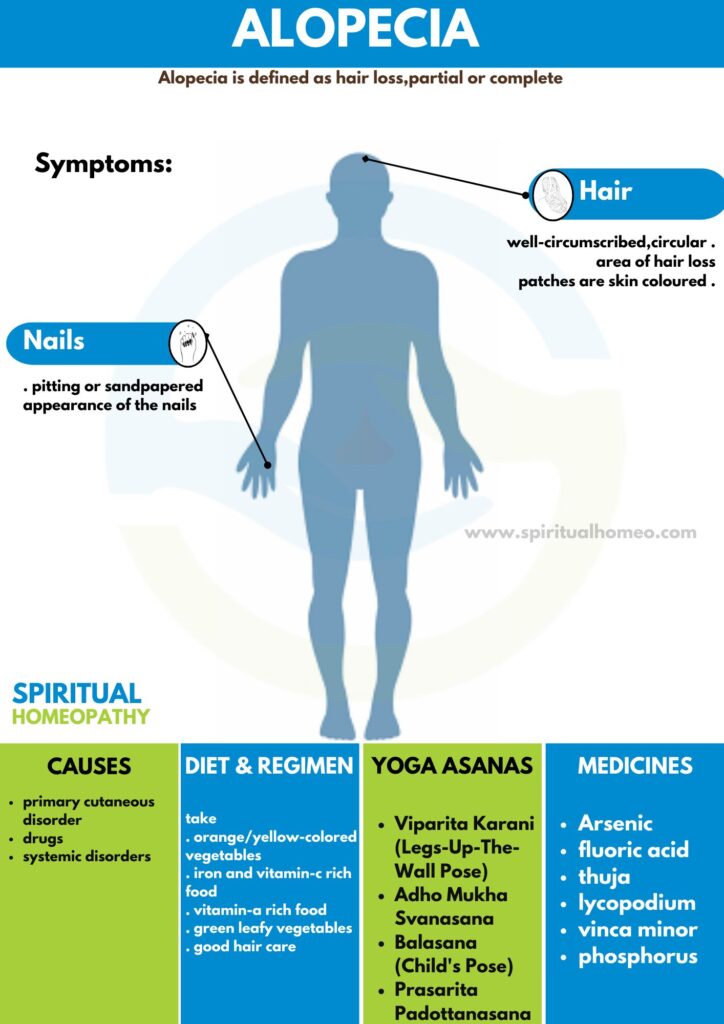
Alopecia areata is an autoimmune disorder causing patchy hair loss in round or oval areas. Severity varies, and mild or early cases may improve over time. Severe forms, such as alopecia totalis or universalis, or recurrent episodes, may have a more prolonged course. Nail changes or coexisting autoimmune conditions, like thyroid disorders, can influence outcomes.
5. What Conditions Can Be Mistaken for Alopecia Areata?
Conditions with similar symptoms include:
6. What Are Some Tips to Prevent Hair Loss?
Avoid Tight Hairstyles: Frequent braids, ponytails, or buns can lead to traction alopecia.
Quit Smoking or Vaping: Improves blood circulation to the scalp.
Maintain a Healthy Diet: Include vitamins and minerals essential for hair health.
Gentle Hair Care: Avoid excessive heat, harsh chemicals, and frequent styling that may damage hair.
7. Why Choose Homeopathy for Hair Loss?
Homeopathy addresses the root causes of hair loss through a holistic approach, supporting overall health and well-being. Treatments are individualized, suitable for all ages, and generally well-tolerated under professional guidance. Homeopathy focuses on long-term management rather than only symptom relief.
8. How Can Spiritual Homeopathy Help?
At Spiritual Homeopathy Clinic, we provide personalized, holistic care that balances physical, emotional, and spiritual health. Consultations are available at our Hyderabad branches – Kukatpally, Chandanagar, Nallagandla, and Dilsukhnagar, as well as online and international consultations. Our aim is to support your healing journey with professional guidance and individualized treatment plans.