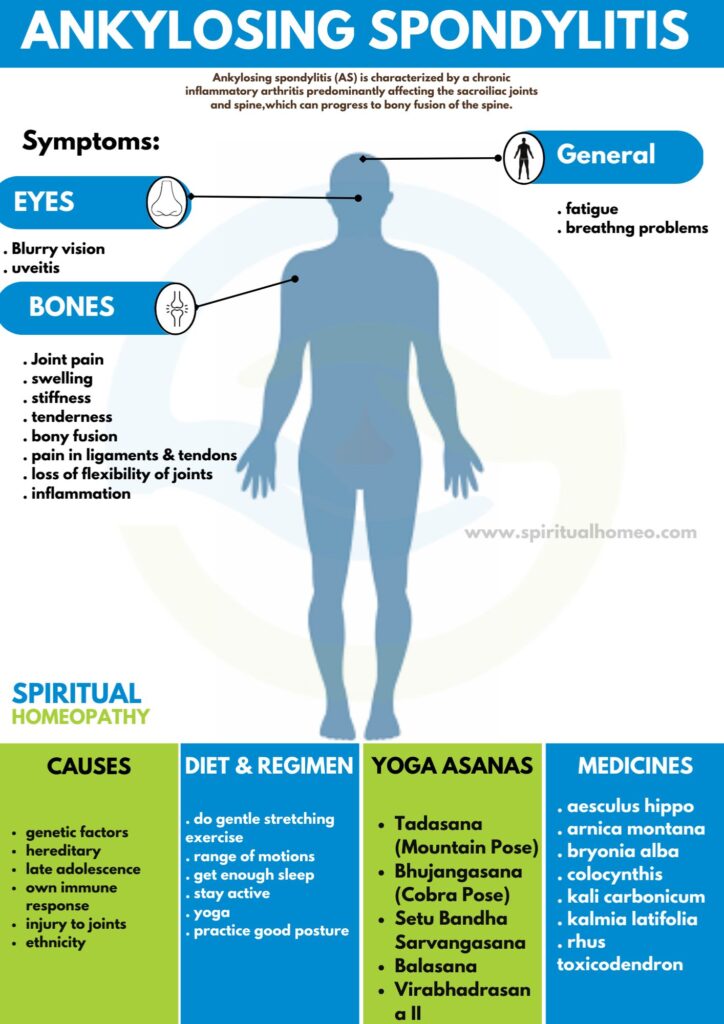
🧬 What Is Ankylosing Spondylitis?
Ankylosing spondylitis (AS) is a chronic inflammatory arthritis that primarily affects the spine and sacroiliac joints, potentially leading to spinal fusion. This fusion reduces spinal flexibility and may result in a forward-stooped posture. Early symptoms often include lower back pain and stiffness, particularly after periods of inactivity.
Consultation Note: Individuals experiencing these symptoms can seek evaluation at Spiritual Homeopathy Clinic, available across multiple Hyderabad branches and through online or international consultations.
📊 Prevalence and Demographics
-
Age of Onset: Most cases appear between 20 and 30 years of age.
-
Gender: Men are two to three times more likely to develop AS than women.
-
Genetics: The HLA-B27 gene is commonly found in those with AS, though not all carriers develop the condition.
-
Ethnicity: Certain populations, such as some Native American tribes (Haida, Chukchi) and Northern Europeans, show higher prevalence.
🔬 Causes and Risk Factors
The exact cause of AS is not fully understood, but it is believed to involve a combination of genetic, immune, and environmental factors:
-
Genetics: Strong association with the HLA-B27 gene.
-
Family History: First-degree relatives with AS increase risk.
-
Age & Gender: Typically begins in late adolescence or early adulthood; higher prevalence in men.
-
Ethnicity: Risk varies across populations.
Note: Recognizing these risk factors early can guide individualized management and consultation.
🧩 Types of Ankylosing Spondylitis
AS falls under axial spondyloarthritis (axSpA), with two main types:
-
Non-Radiographic Axial Spondyloarthritis (nr-axSpA): Symptoms are present, but structural changes are not visible on standard X-rays. MRI may detect early inflammation.
-
Radiographic Axial Spondyloarthritis (Ankylosing Spondylitis): Inflammation leads to changes visible on X-rays in the sacroiliac joints and spine. Severe cases may result in spinal fusion and reduced flexibility.
Early diagnosis and care are important for both types to maintain mobility and quality of life.
⚠️ Signs and Symptoms
Common manifestations include:
-
Back and Hip Pain: Persistent stiffness and discomfort, often improving with exercise.
-
Spinal Fusion: Gradual reduction in flexibility due to vertebral fusion.
-
Joint Involvement: Pain may extend to shoulders, knees, or jaw.
-
Enthesitis: Inflammation at tendon and ligament attachments.
-
Fatigue: Persistent tiredness not relieved by rest.
-
Eye Inflammation (Uveitis): Pain, light sensitivity, or blurred vision.
-
Cardiovascular Issues: Possible involvement such as aortic valve inflammation.
Consultation Advice: Seek professional evaluation if symptoms are frequent, severe, or progressively worsening.
🧪 Diagnosis
Diagnosis typically involves:
-
Clinical Evaluation: Assessment of symptoms and medical history.
-
Imaging: X-rays, MRI, or CT scans to detect spinal and sacroiliac changes.
-
Laboratory Tests: Blood markers of inflammation (ESR, CRP) and HLA-B27 status.
💊 Treatment Options
While AS has no definitive cure, management focuses on symptom control and slowing progression:
-
Medications: NSAIDs, DMARDs, and biologics may be prescribed under professional supervision.
-
Physical Therapy: Exercises to improve posture and flexibility.
-
Lifestyle Modifications: Regular activity and maintaining a healthy weight.
-
Surgical Intervention: In severe cases, corrective surgery or joint replacement may be necessary.
🧘♂️ Lifestyle and Homeopathy
Supportive approaches include:
-
Regular Exercise: Swimming, stretching, and gentle mobility exercises.
-
Posture Management: Yoga and Pilates may help maintain spinal alignment.
-
Dietary Considerations: Balanced diet with anti-inflammatory foods supports overall health.
Homeopathic care at Spiritual Homeopathy Clinic focuses on individualized treatment, addressing physical, emotional, and constitutional factors. Always consult a qualified practitioner for personalized care plans.
📌 When to Seek Medical Attention
Seek professional care if you notice:
-
Persistent back or hip pain lasting more than three months.
-
Pain that worsens at night or after inactivity.
-
Eye redness, pain, or sensitivity to light.
-
Swelling in joints or tendon attachment points.
Early consultation can improve quality of life and help prevent complications associated with AS.