
“Anorexia nervosa is a serious eating disorder marked by extremely low body weight, loss of menstrual periods (amenorrhea), a distorted body image, and an intense fear of gaining weight.”
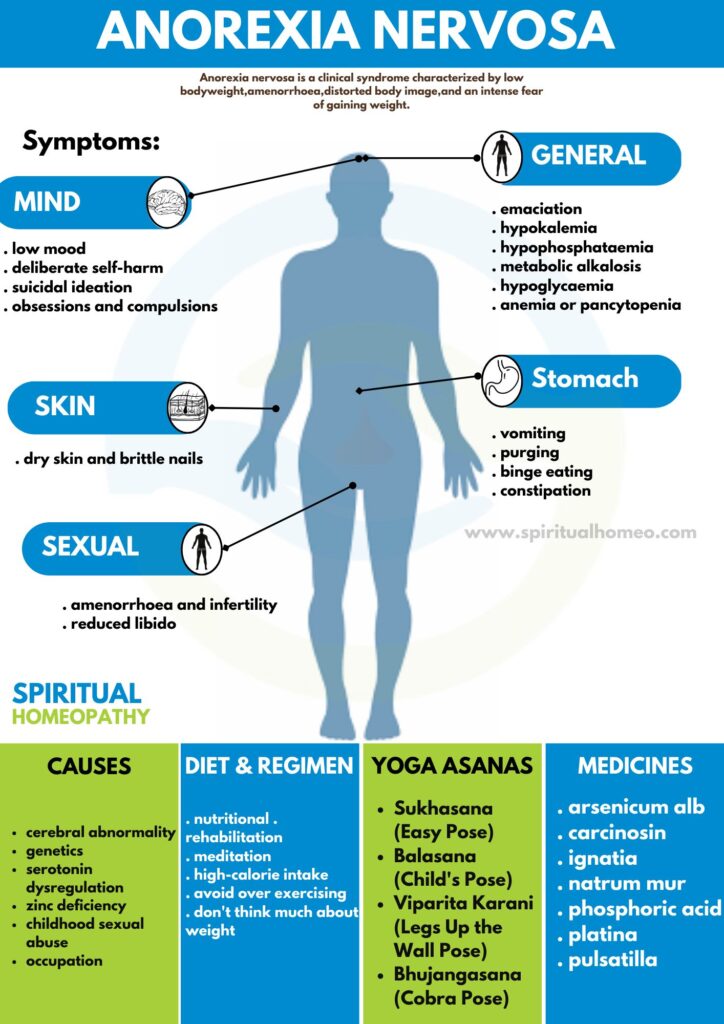
Anorexia nervosa is a serious eating disorder characterized by restricted food intake, intense fear of gaining weight, and a distorted body image. It often presents with a wide range of physical, psychological, and emotional symptoms, making early recognition and comprehensive care essential.
The term “anorexia nervosa” was first introduced in 1874 by physician William Gull. His early clinical descriptions continue to align closely with the modern diagnostic criteria used today.
This disorder predominantly affects females, with an estimated female-to-male ratio of approximately 10:1. The average age of onset is typically between 15 and 17 years for girls, and slightly earlier, around 12 to 13 years, for boys.
At Spiritual Homeopathy Clinic, our multi-branch presence in Hyderabad (Kukatpally, Chandanagar, Dilsukhnagar, Nallagandla) allows patients to access in-clinic, online, and international consultations for individualized support and holistic care.
Anorexia nervosa is a complex mental health disorder with no single cause. It typically develops due to a combination of biological, psychological, and environmental factors. Some of the key contributors include:
Brain abnormalities: Certain cerebral changes may affect appetite regulation and body perception.
Genetic predisposition: A family history of eating disorders or other mental health conditions can increase susceptibility.
Serotonin imbalance: Dysregulation of serotonin, a key neurotransmitter, can influence mood, anxiety, and eating behaviors.
Zinc deficiency: Although less common, low zinc levels may contribute to appetite suppression and mood disturbances.
Childhood experiences: Traumatic or difficult early experiences, including abuse, may increase risk.
Home environment: Dysfunctional family dynamics or emotional neglect during formative years can affect self-esteem and body image.
Occupational influences: Professions emphasizing physical appearance, such as modeling, dance, or athletics, can increase pressure to maintain low weight.
Societal and cultural pressures: Media and cultural ideals of thinness can fuel body dissatisfaction and disordered eating patterns.
Understanding these factors is essential for developing individualized care plans, which can be guided by qualified homeopathic practitioners at Spiritual Homeopathy Clinic through in-clinic, online, and international consultations.
Anorexia nervosa can manifest in different forms, each with distinct behaviors and characteristics. Recognizing the type is important for accurate diagnosis and tailored treatment.
Restricting Type
Individuals with the restricting type severely limit the amount and type of food they consume. They typically do not engage in bingeing or purging but may rely on extreme dieting, fasting, or excessive exercise to control weight.
Binge-Eating/Purging Type
This type involves significant food restriction combined with episodes of binge eating followed by purging behaviors. Methods may include self-induced vomiting, laxatives, or diuretics to prevent weight gain.
Atypical Anorexia Nervosa
Atypical anorexia falls under Other Specified Feeding or Eating Disorders (OSFED). Individuals show the psychological and behavioral features of anorexia—such as extreme food restriction and body image concerns—but maintain a body weight within or above the normal range. Despite appearing “normal” in weight, they face similar health risks and emotional distress.
Note: Understanding the specific type helps in designing individualized care plans. Qualified practitioners at Spiritual Homeopathy Clinic offer guidance through in-clinic, online, and international consultations.
Anorexia nervosa is a complex mental health disorder with psychological, behavioral, and physical manifestations. Symptoms can be grouped into four main categories:
Intense fear of gaining weight
Excessive concern with body shape and weight
Distorted body image (perceiving oneself as overweight despite being underweight)
Low self-esteem and feelings of inadequacy
Persistent dieting or severe food restriction
Self-induced vomiting or misuse of laxatives and diuretics (purging behaviors)
Excessive or compulsive exercise
Preoccupation with food, calories, and weight
Binge eating followed by purging in some cases
Depression or persistently low mood
Self-harm behaviors
Suicidal thoughts or ideation
Obsessive thoughts or compulsive actions, often related to food or body image
General physical signs:
Severe weight loss and emaciation
Constipation
Dry skin and brittle nails
Low blood pressure (hypotension) and slow heart rate (bradycardia)
Cold extremities, bluish skin (cyanosis), and hypothermia
Fine body hair growth (lanugo)
Yellow-orange skin tone (hypercarotenemia)
Tooth enamel erosion and swollen salivary glands (parotid swelling)
Bone thinning (osteoporosis)
Kidney stones (renal calculi)
Nerve damage (peripheral neuropathy)
Absence of menstrual periods (amenorrhea) and infertility
Decreased sex drive (reduced libido)
Biochemical abnormalities caused by malnutrition:
Low potassium (hypokalemia)
Low phosphate (hypophosphatemia)
Metabolic alkalosis
Low blood sugar (hypoglycemia)
Elevated cortisol levels (hypercortisolemia)
Anemia or, in severe cases, pancytopenia (reduction in all blood cell types)
Note: Recognizing these signs early is essential. Frequent or severe symptoms should prompt consultation with a qualified healthcare professional. Spiritual Homeopathy Clinic offers in-clinic, online, and international consultations to guide personalized care and support holistic recovery.
Proper nutrition and a supportive daily routine are essential components in the treatment and recovery from anorexia nervosa. A carefully planned diet helps rebuild strength, correct nutrient deficiencies, and promote healthy weight gain, while lifestyle adjustments support emotional healing and long-term recovery. Spiritual Homeopathy Clinic provides guidance through in-clinic, online, and international consultations to tailor recovery plans to individual needs.
Nutrient-Dense Foods: Include high-calorie, nourishing options such as nuts, seeds, avocados, and full-fat dairy products to support healthy weight gain.
Protein-Rich Diet: Add lean proteins like eggs, chicken, fish, tofu, and legumes to rebuild muscle mass and improve energy levels.
Complex Carbohydrates: Incorporate whole grains such as quinoa, oats, and brown rice to provide steady energy and support digestive health.
Healthy Fats: Use beneficial fats like olive oil, coconut oil, and omega-3-rich fish (e.g., salmon) to nourish the brain and hormonal balance.
Iron and Vitamin-Rich Foods: Consume iron-rich foods (spinach, legumes) alongside vitamin C sources (citrus fruits) and calcium-rich options such as dairy to prevent deficiencies.
Frequent, Small Meals: Eating 5–6 small, balanced meals a day can ease digestion, boost appetite, and reduce anxiety around larger portions.
Hydration: Stay well-hydrated with water, herbal teas, fresh fruit juices, and nutrient-dense smoothies to support overall health.
Structured Meal Plan: Follow a consistent daily eating schedule to normalize hunger cues and reduce food-related anxiety.
Mindful Eating: Create a calm, distraction-free environment to focus on food and listen to your body’s hunger and fullness signals.
Therapy and Counseling: Engage in individual or group therapy to address the emotional, psychological, and behavioral aspects of anorexia nervosa.
Gentle Physical Activity: Incorporate low-intensity movement, such as yoga, stretching, or walking, to support mental health without overexertion.
Adequate Sleep: Aim for 7–9 hours of restful sleep each night to aid physical recovery and emotional balance.
Note: Guidance may vary for each individual. A personalized approach, ideally developed with the support of healthcare providers, dietitians, and mental health professionals, is key to effective anorexia nervosa recovery.
Yoga can be a gentle and supportive tool in anorexia nervosa recovery. It helps improve body awareness, reduces stress, and promotes emotional grounding. These practices complement treatment but are not a substitute for professional medical or psychological care. Spiritual Homeopathy Clinic offers guidance through in-clinic, online, and international consultations to integrate lifestyle approaches safely into your recovery plan.
Balasana (Child’s Pose)
Benefits: Calms the mind, relieves stress and fatigue, and promotes emotional grounding.
How: Kneel and sit on your heels, then fold forward with arms stretched forward or resting by your side.
Supta Baddha Konasana (Reclining Bound Angle Pose)
Benefits: Opens the chest and hips, reduces anxiety, and supports digestion.
How: Lie on your back, bring the soles of your feet together, and let your knees drop to the sides.
Viparita Karani (Legs-Up-the-Wall Pose)
Benefits: Reduces fatigue, improves circulation, and calms the nervous system.
How: Lie on your back with your legs resting vertically against a wall.
Setu Bandhasana (Bridge Pose)
Benefits: Stimulates digestion, strengthens the back, and opens the chest.
How: Lie on your back, bend your knees with feet flat on the floor, and gently lift the hips upward.
Marjaryasana–Bitilasana (Cat-Cow Stretch)
Benefits: Improves spinal flexibility, encourages body awareness, and regulates breathing.
How: On all fours, alternate between arching the back (cat) and lifting the chest (cow).
Tadasana (Mountain Pose)
Benefits: Promotes balance, body alignment, and self-awareness.
How: Stand tall with feet together, arms by your side or overhead, and focus on grounding through the feet.
Shavasana (Corpse Pose)
Benefits: Deep relaxation, reduces anxiety, and supports emotional processing.
How: Lie flat on your back with arms and legs comfortably spread, eyes closed, and focus on gentle breathing.
Practice with intention: Focus on self-compassion and body awareness rather than appearance or performance.
Avoid intense poses: Steer clear of fast-paced or strenuous yoga styles, especially during early recovery.
Use props: Bolsters, cushions, or blocks can provide support and comfort during practice.
Note: Yoga should be approached gradually, and adjustments may be needed depending on your physical and emotional condition. Consultation with a certified yoga therapist or your homeopathic practitioner can help integrate these practices safely into your recovery plan.
At Spiritual Homeopathy Clinic, we provide a compassionate, holistic approach to anorexia nervosa—addressing physical, emotional, and spiritual aspects of the individual. Our focus is on supporting long-term healing by working with underlying causes rather than only managing visible symptoms.
We recognize that anorexia nervosa involves more than food-related challenges. It can be influenced by factors such as perfectionism, emotional trauma, fear of rejection, or low self-esteem. Our homeopathic doctors in Hyderabad, available in-clinic and through online consultations, carefully evaluate each patient’s physical, emotional, and lifestyle factors to develop a personalized treatment plan.
Holistic Assessment: Initial consultations explore physical health, emotional history, lifestyle, and potential past traumas. This comprehensive view allows identification of underlying imbalances contributing to anorexia nervosa.
Gentle Stimulation of Healing: Homeopathy works by encouraging the body’s natural healing mechanisms. Remedies are selected to match the individual’s constitution, supporting emotional stability, appetite regulation, and digestive health.
Individualized Care: Every treatment plan is tailored to the person’s unique needs, ensuring care addresses both physical and emotional dimensions.
Long-Term Management: Recovery is gradual. Ongoing support, monitoring, and adjustment of the plan help maintain progress and prevent relapses.
Anorexia often involves hidden emotional or spiritual stressors—guilt, fear of judgment, compulsive control, or emotional numbness. Our homeopathic approach recognizes these layers and helps restore:
Emotional balance and resilience
Healthier relationship with food and body image
Mental clarity and inner peace
Personalized Consultations: In-person at our Hyderabad branches (Kukatpally, Chandanagar, Dilsukhnagar, Nallagandla) or via online and international consultations.
Natural, Well-Tolerated Remedies: Remedies are selected based on overall physical and emotional profile, supporting recovery gently without conventional medication side effects.
Ongoing Support: Regular follow-ups monitor progress, provide guidance, and adjust treatment as needed to support a safe, sustainable recovery journey.
Note: Homeopathy complements professional mental health care and nutritional support. For best outcomes, individualized guidance from qualified practitioners is recommended.
When to Consult
You should consult a healthcare professional if anorexia nervosa–related symptoms develop or persist and begin to affect physical health, emotional well-being, eating habits, or daily activities. Early evaluation helps in understanding the condition and supporting safe, timely care.
Seek consultation if you experience:
Significant or rapid weight loss
Fear of gaining weight or strong concern about body image
Restricting food intake or skipping meals frequently
Loss of appetite or avoidance of eating with others
Fatigue, weakness, or dizziness
Changes in mood, anxiety, or social withdrawal
Symptoms not improving or gradually worsening over time
At Spiritual Homeopathy Clinic, consultations are available at multiple branches in Hyderabad, including Kukatpally, Chandanagar, Dilsukhnagar, and Nallagandla. Online and international consultations are also available for patients who cannot visit in person. A professional assessment supports an individualized care approach based on symptoms, nutritional status, and overall health.
📞 For appointments or guidance, contact 9069 176 176.
1. What is Anorexia Nervosa?
Anorexia nervosa is a serious eating disorder and mental health condition characterized by extremely low body weight, intense fear of gaining weight, and distorted body image. Individuals may restrict food intake, over-exercise, or engage in purging behaviors. In females, it can also lead to missed menstrual periods (amenorrhea). If symptoms are frequent or severe, consulting a qualified practitioner is important.
2. How Can Homeopathy Help in Treating Anorexia Nervosa?
Homeopathy provides a holistic approach, addressing both physical and emotional aspects of anorexia nervosa. Treatment supports mental clarity, emotional balance, and a healthier relationship with food and self-image. Each individual is assessed thoroughly, and remedies are selected to suit their overall physical and emotional profile, supporting long-term, individualized care. Spiritual Homeopathy Clinic offers consultations at multiple Hyderabad branches (Kukatpally, Chandanagar, Dilsukhnagar, Nallagandla) as well as online and international sessions.
3. What Are the Common Symptoms of Anorexia Nervosa?
Symptoms may include:
Intense focus on body shape, size, and weight
Distorted self-image (seeing oneself as overweight despite being underweight)
Low self-esteem or feelings of inadequacy
Restrictive dieting, purging, or excessive exercise
Preoccupation with food and weight
Depression, anxiety, or persistently low mood
Self-harming behaviors or social withdrawal
Physical signs such as fatigue, dry skin, and hormonal imbalances
4. What Are the Causes of Anorexia Nervosa?
Anorexia nervosa results from multiple contributing factors:
Neurological or brain chemistry issues, including serotonin imbalances
Genetic predisposition or family history of eating disorders
Nutritional deficiencies, such as low zinc affecting appetite and mood
Early life experiences, including childhood trauma or emotional neglect
Environmental pressures, including academic, occupational, or social expectations
Cultural and societal standards that idealize thinness
Occupations emphasizing appearance (e.g., modeling, dance, athletics)
Anorexia nervosa is not a choice but a serious mental health condition. Professional, compassionate care—including homeopathy, nutritional support, and psychological guidance—is essential for effective recovery.
WhatsApp us