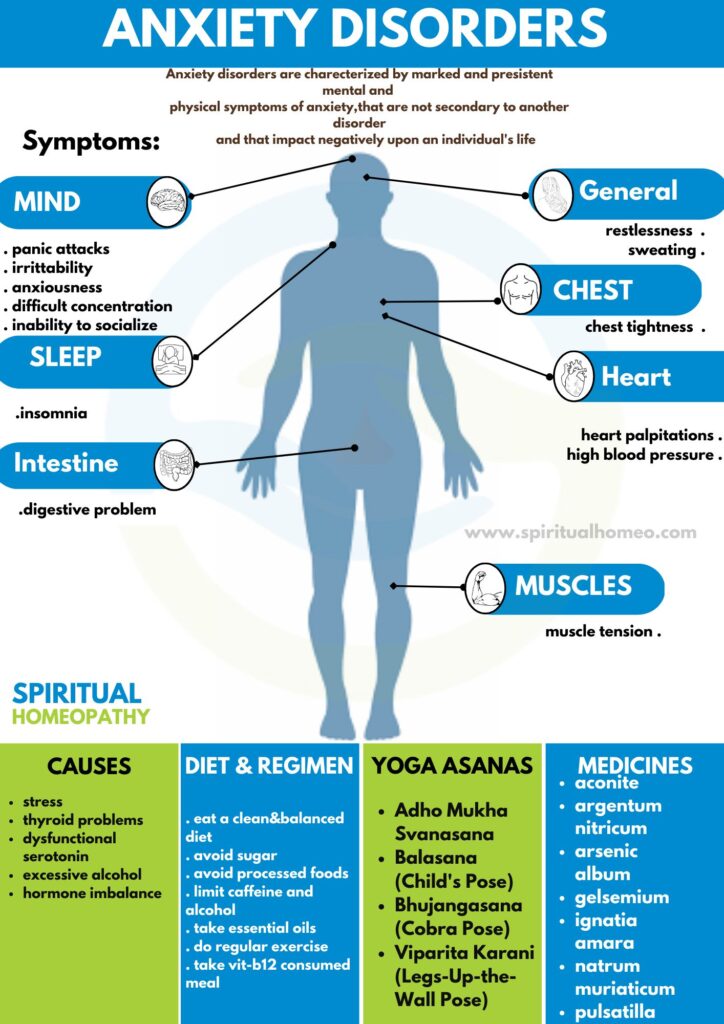
Types of Anxiety Disorders
Anxiety disorders can present in different forms, each with its own pattern of symptoms and functional impact. Understanding the type of anxiety disorder helps guide appropriate evaluation and individualized care. The most common types include:
1. Generalized Anxiety Disorder (GAD)
Generalized Anxiety Disorder (GAD) involves ongoing and excessive worry about everyday matters such as health, work, family, or finances. This worry is often difficult to control and may occur even when there is no clear reason for concern. GAD can be associated with physical symptoms like fatigue, difficulty concentrating, muscle tension, and disturbed sleep. It may coexist with depression and is seen more frequently in women, with a tendency to run in families.
Symptoms include:
2. Panic Disorder
Panic disorder is marked by sudden and recurrent panic attacks that may occur without warning. These episodes involve intense fear and physical symptoms, sometimes leading individuals to feel they are losing control or experiencing a serious medical event. Panic attacks can occur during waking hours or sleep and may last from a few minutes to longer periods. Panic disorder may sometimes be associated with agoraphobia.
Symptoms include:
Rapid or pounding heartbeat
Sweating and trembling
Shortness of breath or choking sensations
Feeling of impending doom or loss of control
Persistent worry about future panic attacks
3. Phobias
Phobias are strong and irrational fears of specific objects, situations, or activities. These fears can provoke marked anxiety and avoidance behaviors that interfere with daily life. Common forms include specific phobias, social phobia, and agoraphobia.
Common types of phobias include:
Fear of heights, flying, animals, or specific objects
Fear of social situations or negative judgment
Fear of open spaces or crowded environments
4. Social Anxiety Disorder (Social Phobia)
Social anxiety disorder involves intense fear or anxiety about social or performance situations where one may feel judged, embarrassed, or humiliated. It often begins during adolescence and may lead to avoidance of social interactions. In some cases, it may be associated with depression or substance-related concerns.
Symptoms include:
Fear of negative evaluation by others
Excessive worry before social events
Avoidance of social or unfamiliar situations
Physical symptoms such as blushing, sweating, or trembling
5. Obsessive-Compulsive Disorder (OCD)
OCD is characterized by intrusive, distressing thoughts (obsessions) and repetitive behaviors or mental acts (compulsions) performed to reduce anxiety. These behaviors can be time-consuming and may significantly disrupt daily activities and responsibilities.
Common symptoms include:
Repetitive handwashing, cleaning, or organizing
Repeated checking of locks, doors, or appliances
Intrusive thoughts related to harm, contamination, or safety
Excessive concern with symmetry, order, or specific numbers
6. Post-Traumatic Stress Disorder (PTSD)
PTSD may develop after experiencing or witnessing a traumatic event such as violence, accidents, natural disasters, or combat exposure. Individuals may experience persistent distress through intrusive memories, avoidance behaviors, emotional changes, and heightened alertness. PTSD can affect emotional well-being, relationships, and daily functioning.
Symptoms include:
Flashbacks or intrusive memories
Avoidance of trauma-related reminders
Sleep disturbances and nightmares
Emotional numbness or detachment
Increased irritability or hyper-alertness
Identifying the specific type of anxiety disorder is an important step toward appropriate management. If symptoms are persistent, worsening, or affecting daily functioning, professional consultation is advised. Spiritual Homeopathy Clinic offers consultations across its Hyderabad branches, as well as online and international consultation options for structured clinical guidance.