
Botulism is a serious paralytic illness caused by potent neurotoxins produced by the bacterium Clostridium botulinum.
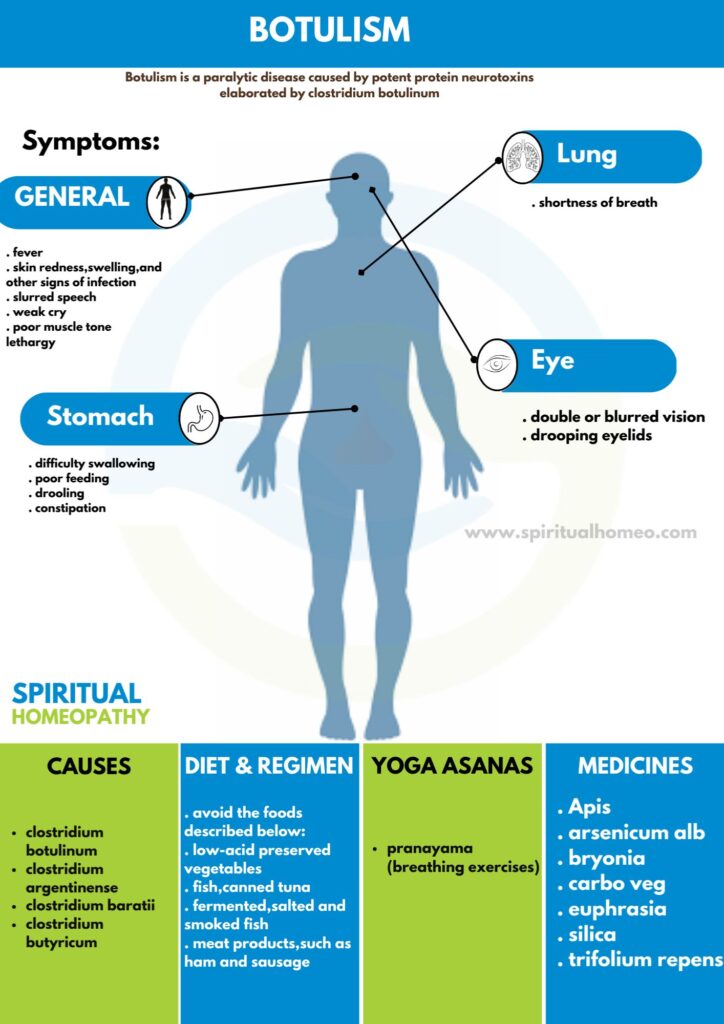
Botulism is a rare but serious neuroparalytic disease recognized since the 18th century. It is caused by botulinum toxin, one of the most potent toxins known. Initially, botulism was thought to occur only through ingestion of toxin-contaminated food (foodborne botulism). However, it is now understood that additional forms exist due to in-situ toxin production following the germination of spores in wounds or within the intestines. These include wound botulism, infant botulism, and adult intestinal colonization botulism.
Botulism symptoms have also been reported in individuals who received botulinum toxin injections for cosmetic or medical purposes, a condition referred to as iatrogenic botulism. In rare circumstances, cases have been documented following inhalation of botulinum toxin in laboratory environments.
Evaluation and medical guidance are essential due to the severity of this condition. Consultations at Spiritual Homeopathy Clinic are available across multiple branches in Hyderabad, with online and international consultation options for patients who cannot visit in person.
All forms of botulism present with a characteristic clinical pattern. The condition typically begins with symmetrical cranial nerve palsies and progresses to descending, bilateral flaccid paralysis of voluntary muscles. This progression can impair respiratory function and may become life-threatening if not addressed promptly.
Early recognition and timely medical care are critical. Immediate evaluation is advised if neurological symptoms such as muscle weakness, vision changes, or difficulty breathing develop.
Botulism occurs worldwide, though reported case numbers vary across countries and regions. Differences in incidence are influenced by several factors, including:
Availability of healthcare resources to identify and diagnose this rare condition
Variations in national reporting requirements and surveillance systems
Limited access to comprehensive data or external monitoring
There is currently no single global surveillance system for botulism. However, approximately 30 countries voluntarily report botulism cases to the European Union through a standardized surveillance framework similar to those used in the United States and Canada. Several countries, including Argentina, China, Thailand, and Japan, also operate independent botulism surveillance systems.
Botulism is caused by botulinum toxins, which are produced by seven distinct serotypes (A through G). These toxins are generated by four recognized species of Clostridia: Clostridium botulinum, Clostridium argentinense, Clostridium baratii, and Clostridium butyricum. Certain bacterial strains are capable of producing more than one toxin serotype.
These organisms are anaerobic, gram-positive bacteria that form subterminal spores. Clostridium botulinum and Clostridium argentinense spores are widely distributed in the environment and are highly resilient, surviving diverse environmental conditions and even standard cooking processes. Toxin production, however, requires specific conditions, including an anaerobic environment, a pH above 4.6, low salt and sugar concentrations, and temperatures exceeding 4°C. Although spores are frequently ingested, they generally do not germinate or produce toxins in the adult human intestine.
Understanding these contributing factors helps guide individualized evaluation and care planning based on exposure risk and clinical presentation.
Food-borne botulism occurs after consumption of food contaminated with preformed botulinum toxin. There are no confirmed host-specific factors known to predispose individuals to this form of the disease.
Wound botulism develops when Clostridium botulinum spores contaminate an open wound. The anaerobic conditions within the wound allow spore germination and toxin production.
Infant botulism occurs when toxigenic clostridia colonize the intestines of infants, usually under one year of age, and produce toxin locally. This is believed to occur due to the immature intestinal microbiota in infants, which may allow these organisms to proliferate. Experimental animal studies support this mechanism.
This rare form resembles infant botulism but occurs in adults. It is most often seen in individuals with anatomical or functional bowel abnormalities or those with recent antibiotic use, which can disrupt normal intestinal flora and permit colonization by toxigenic clostridia.
Although antitoxin therapy is available, some individuals with adult intestinal colonization botulism may experience relapse due to intermittent toxin production within the intestines. Regardless of exposure type, botulinum neurotoxin enters the bloodstream and targets peripheral cholinergic nerve terminals, including neuromuscular junctions, postganglionic parasympathetic nerve endings, and peripheral ganglia.
Botulinum toxin is a zinc-dependent endopeptidase protein with a molecular weight of approximately 150 kDa, composed of a 100-kDa heavy chain and a 50-kDa light chain. Its action occurs through several well-defined steps:
The heavy chain binds to nerve terminals
The toxin is internalized into endocytic vesicles
The light chain is released into the cytosol
The light chain cleaves proteins essential for acetylcholine release
Inhibition of acetylcholine release by any of the seven serotypes results in the characteristic flaccid paralysis associated with botulism. Recovery generally occurs through the gradual formation of new nerve terminals that restore neuromuscular function.
All seven botulinum toxin serotypes have been shown to cause botulism in non-human primates. In humans, serotypes A, B, E, and F are most commonly reported.
Serotype A is associated with the most severe disease and the highest likelihood of requiring mechanical ventilation.
Serotype B usually produces milder symptoms compared to serotype A in both food-borne and infant botulism.
Serotype E, often linked to aquatic food sources, causes variable symptom severity.
Serotype F is rare but may progress rapidly to severe weakness and respiratory compromise, though recovery can be relatively faster.
Recent research has identified additional subtypes within these serotypes through neurotoxin gene sequencing. The clinical significance of these subtype variations remains under investigation.
Botulism is a serious and potentially life-threatening illness caused by botulinum toxin. There are several recognized forms of botulism, each with distinct sources of exposure and risk factors. The main types include:
Foodborne botulism occurs after consuming food contaminated with preformed botulinum toxin, most commonly due to improper food preservation practices such as home canning. Between 1899 and 2011, 1,225 foodborne botulism incidents were reported in the United States, with a median of 23 cases annually from 1990 to 2000. Approximately 80% of these cases involved vegetables, fish, or other aquatic foods.
Higher incidence rates have been reported among Native communities in Alaska and Canada, where traditional food preparation methods are practiced; about 85% of Canadian cases occurred in these populations. Most outbreaks involve two to three individuals, although larger outbreaks have been documented, including a restaurant-associated outbreak in 1977 that affected 59 people.
Wound botulism develops when Clostridium botulinum spores contaminate an open wound and produce toxin in the anaerobic wound environment. The condition was first identified in 1951, following a case linked to a 1943 injury. As of 2011, 491 cases had been reported in the United States, with 97% of cases since 1990 associated with injection drug use, particularly heroin. Similar cases and clusters have been reported in Europe since the early 2000s.
Infant botulism occurs when Clostridium botulinum spores colonize the intestines of infants, usually under one year of age, and produce toxin locally. Since its identification in 1976, more than 3,900 cases have been reported worldwide, with approximately 80–100 cases occurring annually in the United States. This form is most commonly associated with botulinum toxin serotypes A and B.
This rare form of botulism resembles infant botulism but occurs in adults. It is typically linked to colonization of the intestines by toxin-producing bacteria, often in individuals with altered gut anatomy, bowel disorders, or recent antibiotic use. Most reported cases involve Clostridium baratii type F, although C. botulinum type A and C. butyricum type E have also been identified. Due to limited diagnostic criteria, this form remains poorly understood.
Iatrogenic botulism results from medical or cosmetic use of botulinum toxin. Rare cases have been reported following injections intended for therapeutic or cosmetic purposes. Between 1997 and 2006, the U.S. Food and Drug Administration received 658 adverse event reports related to botulinum toxin exposure, although no laboratory-confirmed botulism cases were identified during this period. However, confirmed cases have occurred following the use of unapproved or improperly prepared toxin products, including a documented incident in 2004 at a U.S. medical facility.
Inhalational botulism is extremely rare and does not occur naturally. Only one confirmed case has been reported, in Germany, following suspected laboratory exposure. This form is primarily of concern in controlled research environments or situations involving potential aerosolization of the toxin.
Botulinum toxin has been explored as a biological weapon due to its high potency. Intentional botulism could occur through deliberate contamination of food or aerosol release. Unusual clustering of cases or outbreaks linked to a single source may raise concern for intentional exposure.
Despite differences in exposure routes, botulism typically presents with a similar clinical pattern. Symptoms often begin with weakness affecting both sides of the face, followed by involvement of the neck and progressive spread to the limbs. If not treated promptly, botulism may lead to severe paralysis, respiratory failure, and other life-threatening complications.
Botulism is a medical emergency. Immediate evaluation and hospital-based management are essential. Complementary approaches, including homeopathy, may be considered only as supportive care under professional guidance and never as a substitute for urgent medical treatment.
Botulism, regardless of its form, presents with similar symptoms. The most distinctive feature of botulism is progressive muscle weakness, which typically starts on both sides of the face, moves to the neck, and then spreads to the rest of the body. Below is a breakdown of the signs and symptoms based on the different forms of botulism.
Muscle Weakness: Starts on both sides of the face, moves to the neck, and progresses down to the rest of the body
Double or blurred vision
Drooping eyelids
Difficulty swallowing
Slurred speech
Shortness of breath
Other early symptoms can include:
Vomiting
Abdominal pain
Diarrhea
Severe constipation and difficulty urinating later in the illness
No fever
If left untreated, symptoms can progress to paralysis of the arms and legs, as well as the respiratory muscles, potentially leading to serious breathing difficulties and life-threatening complications.
In infants, botulism presents differently. Common signs include:
Lethargy (low energy and fatigue)
Poor muscle tone, beginning in the head and neck and moving downward
Poor feeding
Excessive drooling
A weak cry
Wound botulism shows symptoms similar to general botulism but may take up to two weeks to appear. Additional features can include:
Fever
Skin redness and swelling, along with other signs of infection at the wound site
Inhalation botulism presents similarly to general botulism but tends to develop more rapidly. Symptoms may include:
Rapid onset of respiratory failure
Adult intestinal toxemia shares symptoms with infant botulism and general botulism. Additional symptoms may include:
Constipation
Poor feeding (rare in adults)
Lethargy (lack of energy)
Iatrogenic botulism results from therapeutic or cosmetic use of botulinum toxin. Symptoms are similar to general botulism and may include:
Muscle weakness
Eye muscle weakness
Difficulty speaking
Facial paralysis
A thick, weak tongue
Reduced gag reflex
Cranial nerve involvement may present as:
Diplopia (double vision)
Dysarthria (slurred speech)
Dysphonia (hoarse voice)
Ptosis (drooping eyelids)
Ophthalmoplegia (difficulty moving the eyes)
Autonomic symptoms such as dizziness, dry mouth, and sore throat may occur. In severe cases, respiratory failure can develop due to paralysis of the diaphragm and other breathing muscles.
In some cases, additional findings may include:
Deep tendon reflexes that are initially normal but may progressively diminish
Paresthesias (tingling sensations), possibly related to prolonged immobility
Nausea, vomiting, and abdominal pain, which may appear before or after paralysis in foodborne botulism
In infants, botulism may also present with:
Reduced ability to suck and swallow
Constipation
Weak voice
Ptosis (drooping eyelids)
Sluggish pupils
Hypotonia (low muscle tone)
Floppy neck due to weak neck muscles
As the condition progresses, infants may develop generalized weakness and difficulty breathing.
Botulism is a medical emergency and can worsen rapidly without timely care. Early hospital-based intervention is essential to reduce the risk of paralysis and respiratory failure. Individuals with persistent or severe symptoms should seek urgent medical evaluation; after stabilization, supportive guidance may be discussed through Spiritual Homeopathy Clinic, which offers consultations across multiple branches in Hyderabad, as well as online and international consultations. For assistance, contact 9069 176 176.
Certain foods are more likely to be contaminated with botulinum toxin, particularly when they are improperly stored, preserved, or handled. To reduce the risk of botulism, it is important to avoid or exercise caution with the following types of foods:
Low-Acid Preserved Vegetables:
Foods such as green beans, spinach, mushrooms, and beets that are improperly canned or preserved can be a potential source of botulinum toxin.
Fish:
Fish products, including canned tuna, as well as fermented, salted, or smoked fish, may be vulnerable to contamination if storage and preservation methods are inadequate.
Meat Products:
Processed meats such as ham and sausage can carry a higher risk of botulism when they are not properly cured, stored, or refrigerated.
To ensure safety, proper food preservation practices should always be followed, and foods with signs of spoilage or improper storage should be avoided. Dietary recommendations may vary based on individual health status and exposure risk and should be followed under professional guidance.
While yoga is not a treatment for botulism, certain gentle yoga asanas may support recovery and improve overall body function. Botulism primarily affects the nervous and muscular systems, causing muscle weakness and paralysis. Yoga may help stimulate and strengthen muscles, improve circulation, and promote relaxation during recovery, under medical supervision.
Tadasana (Mountain Pose)
Improves posture, body awareness, and stimulates the nervous system.
Stand with feet hip-width apart, arms by your sides.
Inhale, lift arms overhead, stretch the body upward.
Engage thighs, lengthen the spine, and hold for 30–60 seconds.
Setu Bandhasana (Bridge Pose)
Strengthens the back, opens the chest, and improves circulation.
Lie on your back with knees bent, feet flat, hip-width apart.
Lift hips off the floor, engaging glutes and core.
Hold for 20–30 seconds while breathing deeply.
Bhujangasana (Cobra Pose)
Enhances spinal flexibility and stimulates the nervous system.
Lie on your stomach, hands under shoulders.
Lift chest gently, elbows slightly bent, pubic bone pressed into the floor.
Hold for 20–30 seconds while breathing deeply.
Viparita Karani (Legs Up the Wall Pose)
Supports relaxation, calms the nervous system, and improves circulation.
Sit beside a wall, lie back, and extend legs up the wall.
Rest arms by your sides and breathe deeply for 5–10 minutes.
Balasana (Child’s Pose)
Promotes rest and relaxation, relieves tension.
Start on hands and knees, lower hips back toward heels, arms forward.
Rest forehead on the floor and stay for 1–3 minutes.
Ananda Balasana (Happy Baby Pose)
Gently stretches the lower back, hips, and thighs.
Lie on your back, bring knees toward chest, hold the outsides of your feet.
Hold for 30–60 seconds, keeping feet flexed.
Savasana (Corpse Pose)
Deep relaxation for nervous system recovery.
Lie flat on your back, legs extended, arms by sides.
Close your eyes, focus on breath, and relax for 5–10 minutes.
Consult your doctor first: Always seek medical guidance before starting yoga, especially after botulism.
Practice gently: Move mindfully to avoid strain if recovering from weakness or paralysis.
Focus on breath: Deep, controlled breathing helps calm the nervous system and supports recovery.
Yoga can support overall well-being during recovery, but botulism requires immediate medical treatment. Prioritize professional care and follow your healthcare provider’s advice before engaging in any physical activity.
At Spiritual Homeopathy Clinic, we provide a holistic and individualized approach to health and well-being. Our care focuses on supporting your body’s natural healing processes while considering physical, emotional, and spiritual aspects. Our experienced practitioners are committed to guiding patients through their health journey with personalized attention and professional care.
Healing at Spiritual Homeopathy goes beyond symptom management. We aim to address underlying contributing factors and restore balance across physical, emotional, and mental health. By understanding your unique health challenges, we develop a personalized treatment plan to support long-term wellness and overall vitality.
Comprehensive Consultations: Our team conducts detailed consultations to understand your health history, lifestyle, and specific needs. Consultations are available at multiple branches in Hyderabad and online for local and international patients.
Homeopathic Care: We offer natural, well-tolerated homeopathic approaches that focus on individualized care. Treatment plans are designed to manage acute and chronic conditions while supporting overall health.
Ongoing Follow-Up: Healing is a gradual process. Regular follow-up helps monitor progress, adjust care plans, and ensure continued support toward your health goals.
Your well-being is our priority. At Spiritual Homeopathy, we provide professional, compassionate care that emphasizes holistic health. Whether addressing specific conditions or supporting overall wellness, our approach is tailored to your individual needs.
With Spiritual Homeopathy, patients receive personalized care, guidance, and support to improve overall health and restore balance, with both in-clinic and online consultations available for convenience.
You should consult a healthcare professional if botulism symptoms become frequent, severe, or begin to affect daily activities or breathing. Early evaluation helps identify the type and severity of botulism and supports timely intervention.
Seek consultation if you notice:
Progressive muscle weakness, especially starting from the face or neck
Difficulty swallowing or speaking
Drooping eyelids or double vision
Shortness of breath or breathing difficulty
Severe constipation or abdominal pain
Any rapid worsening of muscle weakness
At Spiritual Homeopathy Clinic, consultations are available at multiple branches in Hyderabad, including Kukatpally, Chandanagar, Dilsukhnagar, and Nallagandla. Online and international consultations are also offered for patients unable to visit in person. Professional assessment allows for individualized care tailored to symptoms and overall health.
For appointments or guidance, contact 9069 176 176.
1. What Is Botulism?
Botulism is a rare but serious illness caused by toxins produced by certain bacteria, most commonly Clostridium botulinum. These toxins affect the nervous system and can lead to muscle weakness, paralysis, and in severe cases, respiratory difficulties. Prompt medical attention is essential to prevent life-threatening complications.
2. What Are the Symptoms of Botulism?
Symptoms typically appear within hours to a few days after exposure and often start with issues related to vision and swallowing. Common signs include:
Blurred or double vision
Drooping eyelids
Difficulty speaking or swallowing
Slurred speech
Shortness of breath
Nausea, vomiting, or abdominal cramps
Diarrhea
As the condition progresses, muscle weakness can affect the arms, legs, and respiratory muscles. Frequent or severe symptoms require immediate medical care.
3. What Causes Botulism?
Botulism is caused by toxins from specific bacteria that grow in low-oxygen environments, such as improperly preserved foods. Key bacteria include:
Clostridium botulinum
Clostridium baratii
Clostridium butyricum
Clostridium argentinense
The bacteria can enter the body through contaminated food, open wounds, or, rarely, inhalation. Once inside, they produce a neurotoxin that disrupts nerve function and may lead to paralysis.
4. Is There Natural or Holistic Support for Botulism?
In addition to emergency medical treatment, some patients explore supportive approaches to aid recovery. These may include strategies to support overall health, immunity, and recovery under professional guidance.
Important: Botulism is a medical emergency. Holistic support should only complement conventional care under qualified supervision.
5. How Can I Access Consultation and Support?
At Spiritual Homeopathy Clinic, patients can access consultations at multiple branches in Hyderabad or through online and international appointments. Professional assessment helps guide individualized care based on symptoms, recovery stage, and overall health.
Final Thoughts
Botulism requires prompt recognition and treatment to prevent severe complications. Supportive therapies can assist recovery but medical care remains the primary approach. Early evaluation and individualized guidance are crucial for safe and effective management.
WhatsApp us