
A cataract is the clouding of the eye’s natural lens, the transparent structure responsible for focusing light and images onto the retina. When this lens becomes cloudy, it can significantly reduce vision and affect daily activities.
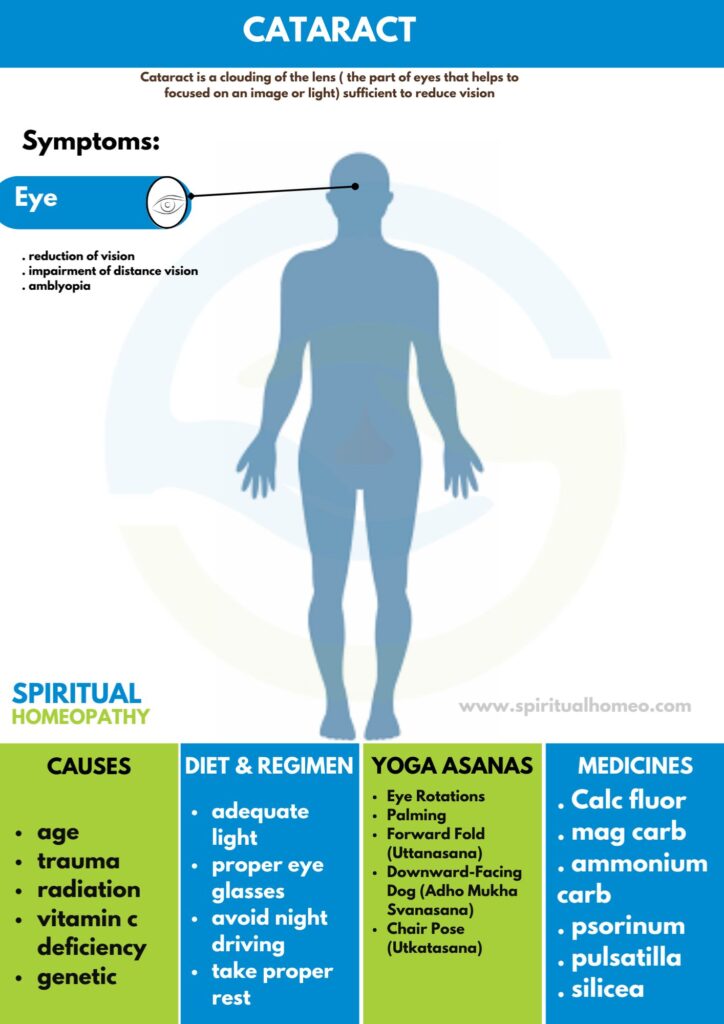
Cataracts are a common age-related eye condition that usually develop gradually over time, leading to a progressive decline in vision. As the natural lens of the eye becomes cloudy, light passing through the lens is scattered, resulting in blurred or dim vision and difficulty performing daily activities such as reading or driving.
Early evaluation and regular eye check-ups are important to monitor vision changes. At Spiritual Homeopathy Clinic, consultations are available across multiple branches in Hyderabad, as well as through online and international consultation services, to support individualized care based on symptoms and overall eye health.
Cataracts develop for several reasons, with age being the most common factor. However, multiple environmental, genetic, medical, and lifestyle factors can also contribute to the condition. Below is an overview of the key causes of cataracts:
The natural aging process is the most frequent cause of cataracts. As people age, the proteins in the eye’s lens begin to break down and degrade. This process may accelerate in individuals with conditions such as diabetes or hypertension, leading to gradual clouding of the lens and impaired vision over time.
Radiation: Exposure to ionizing radiation, such as X-rays, can damage the DNA of lens cells and increase cataract risk. Long-term exposure to ultraviolet (UVB) rays from sunlight is another major factor, as it can harm the lens over time. Wearing protective eyewear may help reduce this risk.
Toxins: Environmental toxins, including cigarette smoke and air pollution, are also associated with an increased likelihood of cataract development.
Eye injuries, including blunt or penetrating trauma, can damage the lens capsule and lead to cataract formation. In some cases, trauma-related cataracts may appear star-shaped or petal-shaped. Electrical injuries can also cause cataracts, reported in a small percentage of affected individuals.
Genetic factors play an important role in cataract development. Inherited conditions may cause cataracts to appear early in life or during childhood. Certain genetic or dermatological conditions, such as atopic dermatitis or eczema, may also increase the risk of specific cataract types.
Cigarette smoking is associated with a higher risk of developing different forms of cataracts. Long-term alcohol consumption may also contribute to earlier cataract formation, especially when combined with other lifestyle risk factors.
Certain medications, particularly long-term use of corticosteroids, are known to increase the risk of cataract development, especially posterior subcapsular cataracts. Other drugs, such as miotics and triparanol, have also been linked to cataract formation.
People with diabetes have a higher risk of developing cataracts. Elevated blood sugar levels can cause biochemical changes in the lens, leading to clouding. Poorly controlled diabetes may further increase this risk.
Low intake of antioxidants, particularly vitamin C, has been associated with an increased risk of cataracts. Reduced antioxidant protection can make the lens more vulnerable to oxidative damage.
Cataracts may develop following certain eye surgeries, including vitrectomy. Changes in the eye’s internal environment after surgery can accelerate lens changes, especially when protective factors are reduced.
Prolonged use of glucocorticoid medications can lead to cataract formation, most commonly affecting the posterior subcapsular region of the lens.
Understanding these contributing factors helps guide individualized care and long-term management, as cataract development often varies based on personal health history, lifestyle, and underlying conditions.
Cataracts typically develop as part of the natural aging process, and the most common types include nuclear sclerosis, cortical cataracts, and posterior subcapsular cataracts. Each type has distinct characteristics, symptoms, and stages of progression, which may influence visual function differently.
Nuclear sclerosis is the most prevalent type of cataract, affecting the central part of the lens, known as the nucleus. Over time, the lens becomes harder and cloudier due to the accumulation of pigment and the condensation of lens fibers.
In the early stages, nuclear sclerosis can cause a temporary myopic shift (nearsightedness), allowing some individuals with presbyopia (age-related difficulty focusing on close objects) to temporarily see better at near distances without reading glasses. This phenomenon is often referred to as second sight.
As the cataract progresses, the lens may gradually turn brown in color, leading to a condition known as a brunescent cataract.
Advanced nuclear sclerosis can result in significant visual impairment as the lens continues to harden and lose transparency.
Cortical cataracts occur when the outer layer of the lens, known as the cortex, becomes cloudy. This type of cataract develops when changes in the fluid balance around the lens periphery lead to the formation of fissures or cracks.
When examined using an ophthalmoscope, cortical cataracts often appear as white, wedge-shaped spokes radiating from the center of the lens, resembling the spokes of a wheel.
These cataracts are commonly associated with glare, light scatter, and reduced contrast sensitivity, which may make night vision and driving more difficult.
Posterior subcapsular cataracts form at the back of the lens, just beneath the capsule that holds the lens in place. Although they are often smaller in size, they can cause noticeable visual disturbances because light entering the eye is focused toward the posterior part of the lens.
This type of cataract often produces symptoms that seem disproportionate to its size, including blurred vision and difficulty reading or seeing clearly in bright light.
Posterior subcapsular cataracts commonly affect near vision and may interfere with daily activities such as reading, driving, and recognizing faces.
Immature Cataract:
At this stage, the lens remains partially transparent, although clouding has begun and may gradually increase over time.
Mature Cataract:
In a mature cataract, the lens becomes fully opaque, resulting in marked reduction of vision.
Hypermature or Morgagnian Cataract:
This advanced stage involves degeneration of lens proteins into a liquefied form, which may cause the lens to shrink and increase the risk of complications.
Congenital cataracts are present at birth or develop during early childhood, though they may sometimes go undetected until later in life. These cataracts are classified based on the area of the lens involved and may include lamellar, polar, or sutural types.
Cataracts are commonly assessed using the Lens Opacities Classification System III (LOCS III), which categorizes cataracts into three primary groups:
Nuclear
Cortical
Posterior
This classification system helps clinicians evaluate the severity and progression of lens opacity in a standardized manner.
Understanding the different types and stages of cataracts can support timely evaluation and appropriate management decisions. Individuals experiencing persistent or progressive vision changes are advised to seek professional consultation for accurate assessment. At Spiritual Homeopathy Clinic, consultations are available through multiple branches in Hyderabad, as well as via online and international consultation options, to support individualized care planning.
Cataracts affect vision in different ways depending on the type and stage of the condition. The severity of symptoms may increase gradually over time. Common signs and symptoms include:
Nuclear cataracts typically cause a gradual reduction in vision, with distance vision often affected more than near vision in the early stages.
As the cataract advances, the lens may become brunescent, or brownish in color, resulting in further decline in visual clarity.
Individuals may experience difficulty seeing clearly, particularly in low-light conditions or when focusing on distant objects.
People with posterior subcapsular cataracts often report glare as a prominent symptom, especially in bright light or while driving at night.
Additional symptoms may include difficulty reading and the appearance of colored halos around lights, which can occur due to changes in the lens structure and hydration.
As cataracts progress, frequent changes in eyeglass prescriptions may be required, as visual acuity continues to fluctuate with increasing lens opacity.
Congenital cataracts, present at birth or developing during early childhood, may lead to amblyopia (lazy eye) if not identified and managed early. Timely evaluation is important to reduce the risk of long-term visual impairment and developmental concerns.
If these symptoms are persistent, worsening, or interfere with daily activities, consultation with an eye care professional is advised. At Spiritual Homeopathy Clinic, evaluations are available through multiple branches in Hyderabad, along with online and international consultation options, to support appropriate assessment and individualized care planning.
A healthy diet and appropriate lifestyle habits can play an important role in supporting eye health and may help slow the progression of cataracts. Incorporating essential nutrients into daily routines can contribute to better visual function. The following dietary and regimen guidelines may support overall eye health:
A well-balanced diet rich in fruits and vegetables provides essential nutrients that support healthy eyes. Including a variety of colorful produce, particularly those high in antioxidants, may help reduce oxidative stress affecting the eyes.
Foods rich in Vitamin C, such as oranges, strawberries, and bell peppers, support lens health by helping reduce damage caused by free radicals and oxidative stress, which are associated with cataract development.
Vitamin E, found in nuts, seeds, and spinach, offers antioxidant properties that may help protect eye tissues from age-related damage and support long-term eye health.
Beta-carotene, present in carrots, sweet potatoes, and kale, supports normal vision by contributing to retinal health and may play a role in reducing the risk of certain eye conditions, including cataracts.
Omega-3 fatty acids help support eye surface health and reduce inflammatory stress. Dietary sources include fatty fish such as salmon and sardines, as well as plant-based options like flaxseeds.
Adequate hydration is important for maintaining eye moisture and comfort. Drinking sufficient water throughout the day may help prevent dryness that can aggravate visual discomfort.
Regular physical activity, including walking or light exercise, supports circulation and overall health, which can have a positive impact on eye function.
Yoga can support overall eye health and general well-being. While it does not cure cataracts, certain yoga practices may help improve circulation to the eyes, reduce visual strain, and promote relaxation. These practices are best used as supportive measures alongside regular eye care.
Benefits:
Trataka is a meditative practice involving focused gazing on a single point, such as a candle flame. It helps improve concentration, supports eye muscle coordination, and may reduce visual fatigue.
How to do it:
Sit comfortably in a quiet space with your spine straight.
Place a candle at eye level, about 3 feet away.
Focus your gaze on the flame without blinking as much as possible.
Continue for 5–10 minutes, then close your eyes and observe the afterimage.
Practice once daily.
Benefits:
Palming helps relax eye muscles and may reduce strain caused by prolonged screen exposure.
How to do it:
Rub your palms together to generate warmth.
Gently place them over closed eyes without applying pressure.
Breathe slowly and relax for 1–2 minutes.
This can be practiced multiple times a day.
Benefits:
This breathing technique promotes relaxation and supports oxygen flow to the brain and eyes.
How to do it:
Sit comfortably with your spine straight.
Inhale through the left nostril while closing the right.
Exhale through the right nostril, then reverse the process.
Continue for 5–10 minutes.
Benefits:
This posture encourages relaxation and improves circulation to the head and neck, helping relieve tension associated with eye strain.
How to do it:
Sit in Sukhasana with relaxed shoulders.
Gently roll the neck clockwise and anticlockwise.
Continue for 1–2 minutes in each direction.
Benefits:
This restorative pose supports circulation to the upper body and helps reduce stress.
How to do it:
Lie on your back with legs resting against a wall.
Keep arms relaxed at your sides.
Close your eyes and remain in the position for 5–10 minutes.
Benefits:
This mild inversion may improve blood flow toward the head and support overall circulation.
How to do it:
Begin in a tabletop position.
Lift the hips upward to form an inverted “V” shape.
Hold for 20–30 seconds while breathing normally.
Benefits:
Bhujangasana supports spinal flexibility and circulation to the upper body.
How to do it:
Lie on your stomach with hands under shoulders.
Gently lift the chest while keeping the pelvis grounded.
Hold for 15–20 seconds and release slowly.
Benefits:
This movement helps release neck and back tension and supports circulation.
How to do it:
Move between arching and rounding the spine with inhalation and exhalation.
Continue for 5–10 minutes.
Maintain proper lighting while reading or working.
Follow the 20-20-20 rule during screen use.
Adequate rest and stress management support overall visual comfort.
Yoga and lifestyle practices are supportive measures and should not replace medical evaluation or treatment. Individuals experiencing persistent or worsening vision changes are advised to seek professional consultation.
Homeopathy offers a holistic approach to healthcare that focuses on understanding the underlying factors contributing to a condition, rather than addressing symptoms alone. It works by supporting the body’s natural regulatory mechanisms and is commonly chosen for its gentle, individualized approach. Care is tailored to each person’s overall health profile, making it suitable across different age groups when guided by a qualified professional.
At Spiritual Homeopathy Clinic, care is guided by established homeopathic principles with attention to physical, emotional, and lifestyle factors that may influence health. The approach emphasizes balance and long-term management, supporting patients through a structured and thoughtful care process. Consultations are available at multiple branches in Hyderabad, as well as through online and international consultation services.
Spiritual Homeopathy Clinic follows an individualized care model, where each patient’s symptoms, medical background, and overall health status are carefully evaluated. The focus remains on understanding health concerns in a broader context, allowing care plans to be adapted to personal needs over time under professional supervision.
The treatment approach aims to address contributing factors associated with health conditions, rather than focusing on isolated symptoms. By considering physical, emotional, and lifestyle aspects together, homeopathic care supports long-term management and overall well-being. This approach is generally well-tolerated when followed under qualified professional guidance.
Personalized Consultations:
Detailed consultations are conducted to understand individual health concerns, past history, and current symptoms. Based on this assessment, an individualized care plan is developed. In-clinic consultations are available across multiple Hyderabad locations, along with online and international consultations.
Natural Care Approach:
Homeopathic care focuses on supporting the body’s natural processes through individualized selection, without routine reliance on conventional medication protocols.
Follow-Up Care:
Regular follow-ups are an important part of care, allowing progress to be reviewed and guidance to be adjusted based on response and changing health needs.
At Spiritual Homeopathy Clinic, patient care is centered on responsible practice, clear communication, and individualized attention. The clinic supports patients seeking complementary care for specific conditions, including long-term health concerns, through structured consultations and ongoing professional guidance.
You should consult a healthcare professional if cataract-related vision changes become noticeable, progressive, or begin to interfere with daily activities. Early evaluation helps assess the severity of lens opacity and supports timely management.
Seek consultation if you experience:
Gradual or sudden blurring of vision
Difficulty seeing at night or in low-light conditions
Increased sensitivity to glare or bright lights
Frequent changes in glasses or contact lens prescription
Double vision in one eye
Fading or yellowing of colors
Vision problems affecting reading, driving, or daily tasks
At Spiritual Homeopathy Clinic, consultations are available across multiple branches in Hyderabad, including Kukatpally, Chandanagar, Dilsukhnagar, and Nallagandla. Online and international consultations are also available for individuals unable to visit in person. Professional evaluation helps support an individualized care approach based on symptoms, stage of cataract, and overall eye health.
For appointments or guidance, contact 9069 176 176.
A cataract is a condition in which the natural lens of the eye becomes cloudy, leading to reduced vision. The lens plays a key role in focusing light onto the retina, and when clouding occurs, it interferes with clear vision and visual sharpness.
Symptoms of cataracts can vary depending on the type and stage of the condition:
Brunescent Cataracts: Gradual reduction in vision, particularly noticeable in dim or low-light environments.
Nuclear Cataracts: Primarily affect distance vision, making it difficult to see distant objects clearly.
Posterior Subcapsular Cataracts: Often cause glare, especially in bright light or during night driving.
Colored Halos: Some individuals may notice halos or rainbow-like rings around lights.
Congenital Cataracts: In infants or young children, cataracts may lead to amblyopia (lazy eye) if not identified early.
If symptoms are persistent or progressively worsening, professional eye evaluation is advised.
Several surgical procedures may be recommended depending on the individual case and clinical findings:
Phacoemulsification: A commonly used technique that employs ultrasound waves to break and remove the cataract through a small incision.
Extracapsular Cataract Extraction (ECCE): Involves removing the cataract in one piece along with part of the lens capsule.
Manual Small Incision Cataract Surgery (MSICS): Uses a small incision to extract the cataract manually.
Intracapsular Cataract Extraction (ICCE): Involves removal of the entire lens and capsule, typically reserved for specific or complex cases.
An eye care professional determines the most appropriate approach based on individual eye health and cataract type.
WhatsApp us