
Chickenpox is a contagious illness that typically causes mild fever and an itchy rash consisting of inflamed pimples, which eventually turn into blisters and then scab over. This condition is caused by the varicella-zoster virus and is most common in children.
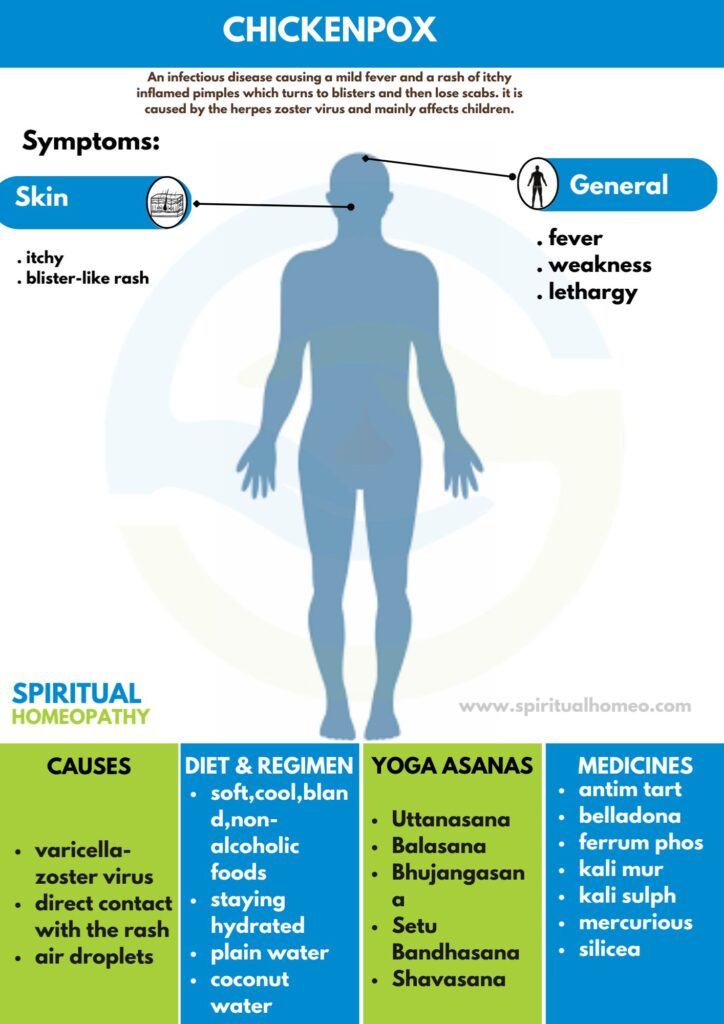
Chickenpox is a highly contagious viral infection caused by the varicella-zoster virus (VZV). It usually begins with fever, fatigue, and an itchy, blister-like rash that commonly appears on the chest, back, and face before spreading to other parts of the body. The rash can progress through stages and may develop into approximately 250 to 500 fluid-filled blisters.
Although chickenpox is generally mild in children, it may lead to more severe symptoms or complications in infants, adolescents, adults, pregnant women, and individuals with weakened immune systems. Careful monitoring is important in these groups. Vaccination remains the most effective preventive measure against chickenpox and its complications.
Historically, chickenpox was widespread. In the early 1990s in the United States, an estimated 4 million cases occurred each year, resulting in approximately 10,500–13,000 hospitalizations and 100–150 deaths annually.
Following the introduction of the chickenpox vaccine in 1995, the incidence of the disease has declined significantly. Current data indicate that vaccination prevents more than 3.5 million cases, around 9,000 hospitalizations, and nearly 100 deaths each year in the United States.
For proper management, clinical guidance, or if symptoms are prolonged or complications develop, consultation with a qualified healthcare professional is advised. Spiritual Homeopathy Clinic offers consultations through its multiple branches in Hyderabad, along with online and international consultation options to support patients based on individual needs.
Chickenpox is caused by the varicella-zoster virus (VZV). The infection is highly contagious and spreads easily through direct contact with the fluid from the blisters of an infected person. It can also be transmitted through airborne droplets when an affected individual coughs or sneezes, allowing the virus to spread by inhalation.
Certain factors such as age, immune status, close contact with an infected person, and lack of vaccination can increase susceptibility to the infection. Understanding these causes helps in planning preventive measures and individualized care, which can be discussed during consultations at Spiritual Homeopathy Clinic through its Hyderabad branches, as well as online and international consultation services.
Chickenpox usually progresses through three distinct stages, each marked by characteristic changes in the skin rash:
Stage 1:
The rash begins as small, red, raised spots on the skin, commonly appearing first on the face, chest, or back before spreading to other areas.
Stage 2:
These spots gradually develop into fluid-filled blisters. The blisters are often itchy and may cause varying degrees of discomfort.
Stage 3:
Over time, the blisters rupture, dry out, and form scabs. These scabs eventually fall off as the skin heals.
If the rash is extensive, painful, or accompanied by high fever, breathing difficulty, or other concerning symptoms, timely consultation with a healthcare professional is recommended. Clinical guidance is available at Spiritual Homeopathy Clinic through its Hyderabad branches, as well as online and international consultations.
The prodromal stage may be marked by mild, nonspecific symptoms such as headache, sore throat, and a low-grade fever, usually lasting about 24 hours.
Early rashes may appear erythematous (red), scarlatiniform (scarlet-like), morbilliform (measles-like), or urticarial (hive-like). In rare cases, hemorrhagic rashes may also be observed.
The earliest lesions often appear inside the mouth, particularly on the buccal and pharyngeal mucosa.
Evolution:
The rash develops in successive crops, typically beginning on the back, followed by the chest, abdomen, face, and eventually the limbs.
Character:
Initially, the rash presents as macules (flat red spots).
Within a few hours, these evolve into dark pink papules (raised lesions), which then develop into fluid-filled vesicles.
These vesicles are usually:
Superficial: Mostly confined to the skin surface
Elliptical or oval: Often described as “tear drop” shaped and aligned with the ribs
Unilocular: Single-chambered vesicles that collapse when pierced
Pustules and Scabs:
Vesicles typically become pustular within 24 hours, and scab formation occurs within 2 to 5 days as healing progresses.
The rash is more densely distributed over the upper arms, thighs, upper part of the face, concavities, and flexural areas of the body.
Less commonly, lesions may involve the genital mucous membranes, conjunctivae, and cornea.
The rash matures rapidly, with most lesions drying within 48 hours of appearance. However, new lesions may continue to appear for 2–3 days. As a result, vesicles, pustules, and scabs may be present simultaneously at different stages of healing (polymorphism).
In immunocompromised individuals, such as those with leukemia, lesions may be more extensive, take longer to heal, and may show a hemorrhagic base.
Pruritus (Itchiness): Itching may vary in intensity and is commonly associated with the rash.
Lymphadenopathy: Enlargement of lymph nodes, particularly in the suboccipital and posterior cervical regions, may occur, often related to secondary infection of scalp lesions.
Varicella Hemorrhagica: Characterized by bleeding into vesicles, skin, subconjunctiva, or intestines, usually associated with thrombocytopenia.
Varicella Bullosa: Some lesions may enlarge into fluid-filled bullae, particularly in children with secondary bacterial skin infections such as impetigo.
Varicella Gangrenosa: Severe necrosis of lesions caused by secondary infection with organisms such as hemolytic streptococcus or diphtheria bacillus.
Congenital and Neonatal Chickenpox: The varicella-zoster virus may cross the placenta, resulting in congenital infection or neonatal chickenpox.
If symptoms are severe, prolonged, or associated with high fever, bleeding, or difficulty breathing, prompt medical evaluation is advised. Consultation support is available at Spiritual Homeopathy Clinic through its Hyderabad branches, as well as via online and international consultations.
When managing chickenpox, it is important to follow a diet that supports comfort and recovery. Soft, cool, and bland foods are generally preferred, as they are gentle on the digestive system and help maintain hydration. The following dietary measures may support overall well-being during the illness:
Stay Hydrated:
Adequate hydration is essential during chickenpox, particularly when fever is present. Drinking sufficient fluids helps support normal body functions and may reduce discomfort.
Plain water
Coconut water
Herbal teas (such as chamomile or peppermint)
Low-sugar sports drinks
Electrolyte-infused beverages
These fluids help maintain electrolyte balance and reduce the risk of dehydration.
In addition, choosing easy-to-digest foods such as soups, broths, and soft fruits (for example, bananas and applesauce) may be beneficial. Spicy, acidic, or rough-textured foods should be avoided, as they can irritate mouth and throat lesions.
Dietary recommendations may vary based on age, symptom severity, and individual tolerance, and can be discussed during consultation with a healthcare professional.
While yoga can support overall health and well-being, it is important to exercise caution during an active chickenpox infection. During the acute and blistering stages, the primary focus should be on adequate rest, hydration, and recovery. Physical activity, including yoga, should be avoided during this phase. Once the blistering has subsided and healing has begun, gentle yoga practices may be considered to support relaxation and gradual recovery.
The following gentle yoga asanas may be practiced during the recovery phase, if energy levels permit:
Benefit:
Helps calm the nervous system, reduce stress, and promote relaxation.
How to do it:
Sit on your heels, gently lower your forehead toward the mat, and stretch your arms forward or keep them by your sides. Focus on slow, deep breathing.
Benefit:
Supports spinal flexibility and encourages gentle movement of the back.
How to do it:
Begin in a tabletop position with wrists under shoulders and knees under hips. Inhale while arching the back (Cow pose) and exhale while rounding the spine (Cat pose). Move slowly in coordination with your breath.
Benefit:
May help improve circulation, reduce fatigue, and promote relaxation.
How to do it:
Lie on your back and rest your legs vertically against a wall, keeping your arms relaxed by your sides. Breathe comfortably and hold for a few minutes.
Benefit:
Encourages mental calmness, stretches the spine, and helps release tension.
How to do it:
Sit with legs extended forward. Gently fold from the hips while keeping the spine as straight as comfortable, and hold the position with relaxed breathing.
Benefit:
Promotes deep relaxation and supports stress reduction.
How to do it:
Lie flat on your back with arms and legs comfortably relaxed. Close your eyes and focus on slow, steady breathing, allowing the body to rest fully.
Gentle Movement: Yoga should be practiced only during the recovery phase and avoided during active blistering or fever.
Rest: Adequate rest remains an essential part of chickenpox recovery. Physical activity should not replace rest.
Medical Guidance: Consultation with a healthcare professional is advised before resuming physical activity, especially if symptoms persist or complications are present.
Yoga may serve as a supportive practice to promote relaxation and gradual recovery but should not be considered a substitute for medical care. Guidance may be individualized based on age, symptoms, and overall health.
At Spiritual Homeopathy Clinic, care is centered on a holistic and patient-focused approach to health. The clinical team follows established homeopathic principles while also considering emotional and lifestyle factors that may influence overall well-being. Emphasis is placed on attentive listening, clinical understanding, and individualized assessment to support patient care.
The treatment approach is based on the understanding that health is influenced by the balance between physical, mental, and emotional factors. Care is not limited to symptom relief alone but aims to identify contributing factors associated with the condition. This method supports long-term management by addressing individual health patterns and promoting the body’s natural regulatory responses under professional guidance.
Consultations:
Comprehensive consultations are conducted to understand symptoms, medical history, and individual health concerns. Consultation services are available across multiple branches in Hyderabad, as well as through online and international consultations for those unable to visit in person.
Care Planning:
Based on clinical evaluation, an individualized care plan is discussed, focusing on symptom patterns and overall health status. This approach supports ongoing monitoring and adjustment as required.
Follow-Up Care:
Follow-up consultations are an important part of care, allowing progress to be reviewed and guidance to be adjusted based on response and recovery. Continued professional supervision supports consistency and safety throughout the care process.
Patient well-being remains a central priority at Spiritual Homeopathy Clinic. Care is delivered with clinical responsibility, clear communication, and respect for individual health needs. Support is provided throughout the consultation process to help patients make informed decisions regarding their care.
For consultation support, appointments are available at Hyderabad branches or through online and international consultation services.
You should consult a healthcare professional if chickenpox symptoms become severe, prolonged, or begin to affect overall health and daily functioning. Early medical evaluation helps identify potential complications and supports appropriate care, especially in high-risk individuals.
Seek consultation if you experience:
High or persistent fever
Widespread, painful, or infected skin lesions
Difficulty breathing or persistent cough
Severe headache, confusion, or excessive drowsiness
Bleeding into the blisters or dark-colored lesions
Symptoms lasting longer than expected or worsening over time
Chickenpox occurring in infants, adults, pregnant women, or individuals with weakened immunity
At Spiritual Homeopathy Clinic, consultations are available across multiple branches in Hyderabad, including Kukatpally, Chandanagar, Dilsukhnagar, and Nallagandla. Online and international consultations are also available for individuals who are unable to visit in person. Professional evaluation helps guide individualized care based on symptoms, age, and overall health status.
For appointments or clinical guidance, you may contact 9069 176 176.
Chickenpox is a contagious viral infection characterized by mild fever and an itchy skin rash. The rash usually begins as small inflamed spots, progresses into fluid-filled blisters, and later forms scabs as healing occurs.
Common symptoms of chickenpox may include:
Headache and sore throat: Often associated with mild fever during the early stage
Prodromal rashes: Early rashes may appear erythematous (red) or resemble scarlatiniform patterns
Exanthem (skin rash): Appears in stages, starting as red spots, then developing into blisters and scabs
Pruritus (itching): A prominent symptom that may vary in intensity
Generalized lymphadenopathy: Swelling of lymph nodes, especially in the neck or underarms
In some cases, more severe forms may be seen, such as:
Varicella hemorrhagica: Bleeding into the skin or blisters
Varicella bullosa: Development of larger, fluid-filled blisters
Medical consultation is advised if symptoms are severe, persistent, or occur in high-risk individuals.
Chickenpox is caused by the varicella-zoster virus. The infection spreads through:
Direct contact with the rash: Exposure to fluid from chickenpox blisters
Airborne transmission: Inhalation of droplets released when an infected person coughs or sneezes
Understanding the cause helps guide preventive measures and individualized care planning.
WhatsApp us