
Chronic Suppurative Otitis Media (CSOM) is a long-term infection of the middle ear characterized by persistent inflammation, continuous or recurring ear discharge (otorrhea), and a perforation (hole) in the eardrum that lasts for six weeks or longer. The condition commonly develops after repeated or untreated middle ear infections and may cause hearing loss, ear pain, ringing in the ears, dizziness, or a feeling of fullness in the ear. If left untreated, chronic suppurative otitis media can increase the risk of serious complications affecting hearing and nearby structures. Early diagnosis, appropriate medical treatment, and regular follow-up are important to control the infection, preserve hearing, and prevent long-term complications.
At Spiritual Homeopathy, we believe in treating the individual as a whole rather than simply managing symptoms. Our experienced homeopathic doctors carefully evaluate each patient’s symptoms, medical history, frequency of ear infections, lifestyle, immune health, and overall well-being before preparing a personalized treatment plan. Our holistic approach focuses on supporting overall ear health, improving general wellness, reducing the recurrence of ear-related symptoms, and providing safe, individualized homeopathic care. Homeopathy may be used as supportive care alongside appropriate medical treatment and regular evaluation by an ear, nose, and throat (ENT) specialist.
We provide personalized homeopathic supportive care for chronic suppurative otitis media in Hyderabad to patients of all age groups through our clinics in Hyderabad, as well as online homeopathy consultations for patients across India and in more than 100 countries worldwide. If you are looking for supportive homeopathic care for chronic ear infections, holistic wellness, or individualized patient-centered care, Spiritual Homeopathy is committed to providing compassionate support wherever you are. Patients with persistent ear discharge, worsening pain, hearing loss, or fever should seek prompt evaluation from an ENT specialist.
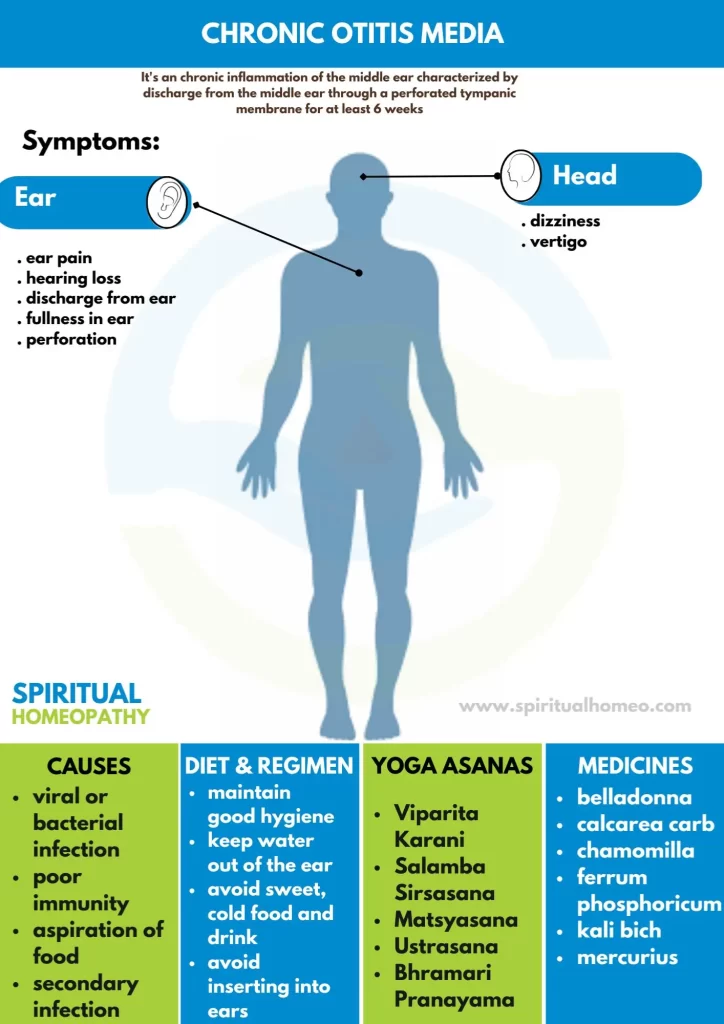
Chronic Suppurative Otitis Media (CSOM) is a long-term infection of the middle ear that commonly affects people in developing regions, often linked to low socioeconomic conditions, poor nutrition, and limited access to health education. It can affect individuals of all ages and genders. In India, CSOM is particularly prevalent, with estimated rates of approximately 46 per 1,000 in rural areas and 16 per 1,000 in urban populations, and it remains a significant cause of hearing impairment in rural communities.
CSOM often arises as a complication of an unresolved upper respiratory tract infection that progresses to acute otitis media. When the initial infection is not adequately treated, it can lead to prolonged inflammation, causing swelling (edema), tissue damage (ulceration), and a perforated eardrum. The body attempts to heal this damage by forming granulation tissue and polyps, which can contribute to persistent ear discharge and ongoing infection.
A foul-smelling discharge (otorrhea) is a common sign and may be visible to the patient or detected only through medical examination using an otoscope or microscope in milder cases. CSOM may also cause varying degrees of hearing loss and, in some cases, be associated with complications such as cholesteatoma, a destructive growth in the middle ear.
Consultations for CSOM are available at Spiritual Homeopathy Clinic across multiple branches in Hyderabad, as well as through online and international appointments. Early evaluation and personalized homeopathic care can help manage symptoms, reduce complications, and support overall ear health.
Chronic Suppurative Otitis Media (CSOM) can be classified into two main types based on the site of involvement and disease progression: Tubotympanic and Atticoantral. Each type has distinct underlying causes:
This form of CSOM often begins in childhood and is more prevalent among children due to several contributing factors:
Post-Acute Otitis Media Complication: CSOM may develop as a complication of acute middle ear infections, particularly following childhood illnesses such as measles, chickenpox, or scarlet fever. These infections can leave a central perforation in the eardrum, which may persist. This opening allows recurrent infections from the outer ear and prolonged exposure of the middle ear lining to environmental allergens like dust and pollen, leading to ongoing ear discharge.
Infections via the Eustachian Tube: Bacteria from the throat, tonsils, adenoids, or infected sinuses can travel up the Eustachian tube to the middle ear. This ascending infection is more likely when these areas are inflamed or infected, contributing to recurrent or persistent discharge.
Food Allergies: In some children, chronic mucoid discharge may be aggravated by sensitivities to certain foods such as milk, eggs, or fish, which can exacerbate inflammation in the ear.
This type of CSOM is often associated with cholesteatoma, a destructive growth in the middle ear. It is frequently seen in individuals with a sclerotic mastoid, although it is not always clear whether the sclerotic changes are a cause or consequence of the disease. The presence of cholesteatoma can lead to more serious complications and requires careful medical evaluation and management.
Understanding these causes helps practitioners provide individualized care, tailoring treatment plans to the patient’s type of CSOM, age, and contributing factors. At Spiritual Homeopathy Clinic, consultations are available across multiple branches in Hyderabad, as well as online and international appointments for personalized guidance.
Chronic Suppurative Otitis Media (CSOM) is primarily classified into two types based on the location of infection and potential risk of complications:
This is the more common and less severe form of CSOM. It typically affects the anteroinferior part of the middle ear cleft, including the Eustachian tube and mesotympanum, and is usually associated with a central perforation of the eardrum.
Risk of complications: Minimal.
Symptoms: Persistent or intermittent ear discharge and mild to moderate hearing loss.
Impact: Does not usually affect surrounding structures.
This more serious form involves the posterosuperior portion of the middle ear cleft, including the attic, antrum, posterior tympanum, and mastoid air cells.
Association: Often linked with a cholesteatoma, a skin-lined cyst that can erode surrounding bones.
Risk of complications: Higher, including significant hearing loss, facial nerve involvement, or intracranial infections.
Identifying the specific type of CSOM is essential for determining the appropriate management approach and reducing the risk of long-term complications. For personalized assessment and guidance, consultations are available at Spiritual Homeopathy Clinic across multiple Hyderabad branches, as well as online and international consultations.
CSOM presents differently depending on its type—Tubotympanic (safe type) and Atticoantral (unsafe type). Recognizing these symptoms helps in early diagnosis and appropriate management. If symptoms are frequent or severe, consultation with a healthcare professional is recommended.
Ear Discharge:
Typically non-offensive and mucoid or mucopurulent in nature.
May be continuous or intermittent, often triggered by upper respiratory infections or water entering the ear.
Hearing Loss:
Usually conductive hearing loss, generally not exceeding 50 dB.
Some patients notice temporary improvement during active discharge due to the “round window shielding effect.”
In long-standing cases, toxins may affect the inner ear, causing mixed (conductive + sensorineural) hearing loss.
Tympanic Membrane Perforation:
Central perforation, which may be anterior, posterior, or inferior to the malleus handle.
Size ranges from small to subtotal, sometimes extending close to the eardrum edge (annulus).
Middle Ear Appearance:
Through large perforations, the middle ear mucosa is usually pale pink and moist.
If inflamed, it becomes red, swollen, or edematous; polyps may occasionally be present.
Ear Discharge:
Often scanty but foul-smelling, indicating possible bone erosion.
Temporary cessation of discharge may occur due to blockage by crusts, polyps, or inflamed tissues—this requires careful evaluation.
Hearing Loss:
Hearing may remain normal if ossicles are intact.
Cholesteatoma can temporarily preserve hearing by bridging gaps.
Hearing loss is generally conductive; a sensorineural component may develop over time.
Bleeding:
Minor bleeding may occur, particularly when cleaning the ear or if granulations or polyps are present.
Understanding these distinctions supports accurate diagnosis, effective management, and prevention of complications. For personalized assessment and guidance, Spiritual Homeopathy Clinic offers consultations at multiple Hyderabad branches as well as online and international consultation options.
A balanced and nutrient-rich diet plays an important role in supporting the immune system and aiding recovery from chronic ear infections. Proper nutrition may help manage symptoms and reduce the risk of recurrence. Dietary guidance should be individualized based on age, health status, and severity of symptoms.
Fresh fruits, vegetables, and whole grains: Strengthen the body’s natural defenses. Nutritious snacks like homemade smoothies and dried fruits are also beneficial.
Vitamin C-rich foods: Bell peppers, green leafy vegetables, citrus fruits, and berries support immune response and help fight infections.
Vitamin A and Zinc sources: Carrots, tomatoes, and other antioxidant-rich foods may help reduce inflammation and support ear health.
Healthy fats: Extra virgin olive oil, fish oil, and coconut oil support immune function and may help reduce inflammation.
Lean proteins and raw foods: Aid in tissue repair and overall health.
Pure, filtered water: Avoid well water or heavily treated water to reduce potential exposure to toxins.
Multivitamins (if diet is limited): Can help ensure adequate intake of Vitamins A, C, E, and Zinc.
Dairy products: May increase mucus production, especially during flare-ups.
Gluten-containing grains: Wheat, barley, and rye can trigger inflammation in sensitive individuals.
Processed and canned foods: Often contain preservatives and low nutritional value, which may aggravate inflammation.
By maintaining a clean, whole-food-based diet and avoiding inflammatory triggers, individuals can better support their body’s ability to manage and recover from chronic ear infections.
Yoga can be a supportive practice for individuals with chronic ear conditions, helping improve circulation, reduce stress, and promote relaxation. These exercises complement medical care but are not a replacement for professional treatment.
Benefits: Reduces stress, soothes the nervous system, and may support ear health through gentle vibrations stimulating the eustachian tubes.
How to do: Close your ears with your thumbs, gently close your eyes, and hum deeply while exhaling.
Benefits: Enhances lymphatic drainage from the head and neck, reduces congestion, and promotes relaxation.
How to do: Sit on your heels, bend forward with your forehead on the ground, and extend your arms forward.
Benefits: Improves blood circulation and calms the nervous system, which may support healing.
How to do: Lie on your back with your legs extended vertically against a wall.
Benefits: Opens the throat and upper chest, which can aid in ear and sinus drainage.
How to do: Lie on your back, arch your chest upward, and gently rest the crown of your head on the mat.
Benefits: Stimulates the throat, sinuses, and ears, releases tension, and clears nasal and ear passages.
How to do: Sit on your heels, stretch your tongue out, and exhale while making a roaring sound.
Jal Neti (Nasal Irrigation): Helps reduce nasal congestion and may improve ear drainage.
Nadi Shodhana (Alternate Nostril Breathing): Supports nervous system balance and overall ENT health.
Note: Practice these exercises gently and progressively, and stop if you experience discomfort. Always continue to follow your healthcare provider’s advice for CSOM management.
At Spiritual Homeopathy Clinic, we combine classical homeopathy principles with a holistic, spiritually aware approach to health. Our focus is on addressing the root causes of illness, rather than only managing symptoms, by considering the physical, emotional, and spiritual aspects of each individual. Our experienced team provides personalized care to support your natural health and balance.
We emphasize whole-person care, identifying and correcting underlying imbalances that contribute to illness. By supporting the body’s innate healing ability, we aim to promote long-term wellness and overall vitality, not just temporary symptom relief.
Our homeopathy practitioners carefully assess your medical history, lifestyle, and emotional wellbeing. Consultations are available at multiple branches across Hyderabad, as well as online and international consultations, making care accessible wherever you are.
We provide natural remedies tailored to your individual condition. These treatments are generally well-tolerated under professional guidance and designed to support chronic, recurrent, or acute health concerns gently and safely.
Healing is a gradual process. Our team provides regular follow-ups to monitor progress, adjust care plans as needed, and support you at every stage of your health journey.
At Spiritual Homeopathy Clinic, your well-being is our priority. We are dedicated to providing empathetic, individualized care that empowers you to achieve better health and balance. Whether managing a specific condition or seeking overall wellness, we guide you through a holistic, homeopathy-based approach that complements modern medical care.
It is important to consult a healthcare professional if symptoms of chronic ear problems or infections persist, worsen, or interfere with daily life. Early evaluation helps identify underlying causes and guides safe, individualized care.
Seek consultation if you experience:
Recurrent or persistent ear discharge
Hearing loss or muffled hearing
Ear pain or pressure
Foul-smelling discharge or bleeding from the ear
Dizziness, balance issues, or ringing in the ears
Symptoms that do not improve with basic dietary or lifestyle measures
At Spiritual Homeopathy Clinic, consultations are available at multiple branches in Hyderabad, including Kukatpally, Chandanagar, Dilsukhnagar, and Nallagandla. Online and international consultations are also offered for patients unable to visit in person. A professional assessment supports an individualized care plan based on your symptoms and overall health.
For appointments or guidance, contact 9069 176 176.
Antibiotic treatment of the infection causing the chronic otitis media may be enough to stop the ear from draining. Sometimes, despite appropriate antibiotics, the infection continues, and surgery may be needed to remove the infected tissue and repair the eardrum perforation and any injury to the tiny bones in the ear.
Chronic otitis media is typically caused by recurrent acute ear infections, Eustachian tube dysfunction, or a persistent perforation of the eardrum. These factors cause ongoing inflammation and allow bacteria—such as Staphylococcus aureus or Pseudomonas aeruginosa—to continuously colonize the middle
Chronic suppurative otitis media (CSOM) is a common cause of hearing impairment and disability. Occasionally it can lead to fatal intracranial infections and acute mastoiditis, especially in developing countries.
Otitis media (middle ear infection) is rarely dangerous for most people and usually clears up on its own or with antibiotics. However, it can become dangerous if left untreated, as the infection may spread to nearby tissues and cause complications like a perforated eardrum, hearing loss, or meningitis.
The only treatment for chronic otitis media and cholesteatoma is a surgery called tympanoplasty with mastoidectomy. There are no medicines that will cure these diseases.
In chronic suppurative otitis media, bacterial pathogens invade the middle ear mucosa through the external canal. [7] An inflammatory reaction occurs in the middle ear, accompanied by edema and fibrosis with spontaneous perforation of the tympanic membrane and ongoing infection.