
Delirium is the most common organic mental disorder encountered in clinical practice.
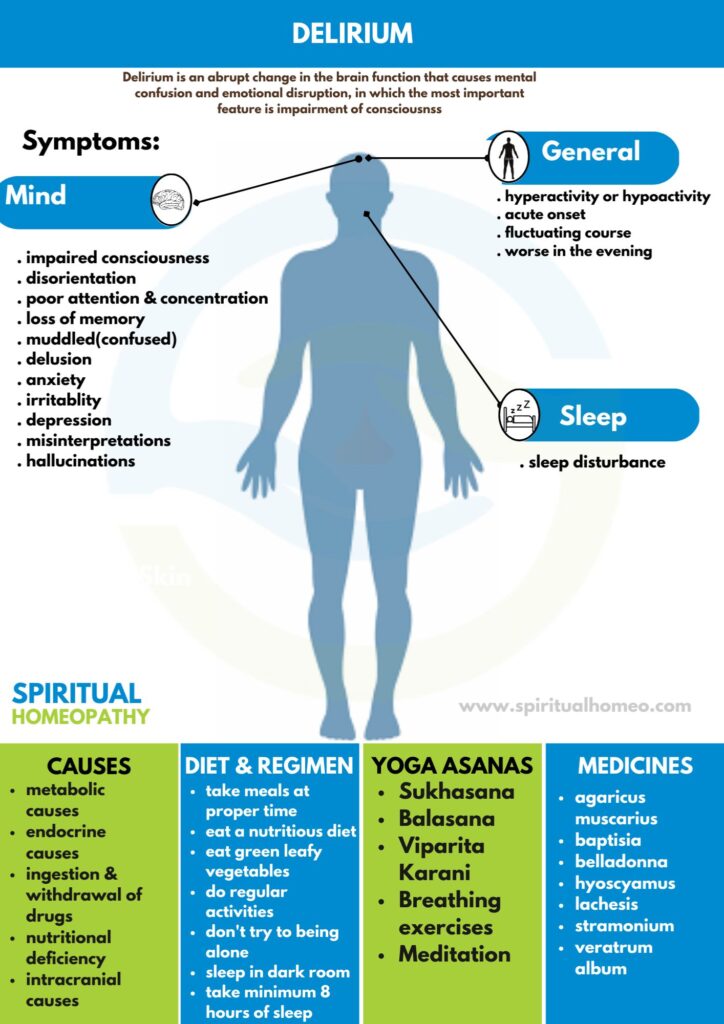
Delirium is the most accurate clinical term used to describe what was previously referred to by various names, including acute confusional states, acute brain syndrome, toxic psychosis, and metabolic or other acute encephalopathies. It is characterized by a sudden disturbance in attention, awareness, and cognitive function, often developing over a short period of time.
At Spiritual Homeopathy Clinic, consultations for delirium-related concerns are available through multiple branches in Hyderabad, as well as via online and international consultation options, allowing timely medical guidance based on individual presentation.
Delirium can arise from a wide range of underlying conditions, which may be categorized into several groups:
Hypoxia and carbon dioxide narcosis
Hypoglycemia
Hepatic and uremic encephalopathy
Cardiac issues, including cardiac failure, arrhythmias, and cardiac arrest
Electrolyte imbalance involving water, sodium (Na⁺), potassium (K⁺), magnesium (Mg²⁺), and calcium (Ca²⁺)
Metabolic acidosis or alkalosis
Fever, anemia, and hypovolemic shock
Carcinoid syndrome and porphyria
Hypo- and hyperpituitarism
Hypo- and hyperthyroidism
Hypo- and hyperparathyroidism
Hypo- and hyperadrenalism
Medications such as digitalis, quinidine, and antihypertensives
Substances including alcohol, sedatives, and hypnotics, particularly barbiturates
Psychotropic drugs such as tricyclic antidepressants, antipsychotics, anticholinergics, and disulfiram
Other drugs including anticonvulsants, L-dopa, opiates, salicylates, steroids, penicillin, and insulin
Toxins such as methyl alcohol, heavy metals, and biocides
Vitamin deficiencies, including thiamine, niacin, pyridoxine, folic acid, and vitamin B12
Protein deficiency
Acute and chronic infections such as septicemia, pneumonia, and endocarditis
Neurological disorders, including epilepsy (postictal states), stroke (especially in the acute phase), and hypertensive encephalopathy
Head injury and brain-related conditions such as subarachnoid hemorrhage, subdural hematoma, intracranial infections (meningitis, encephalitis, cerebral malaria), and focal lesions including abscesses and neoplasms
Migraine
Postoperative states, including ICU-related delirium
Sleep deprivation
Environmental factors such as heat exposure, electricity, and radiation
These varied causes reflect the complex and multifactorial nature of delirium, highlighting the importance of individualized assessment and care based on the underlying contributing factors.
Delirium is generally categorized into three distinct types, each associated with characteristic symptoms and behavioral patterns:
This type is often the easiest to recognize. Individuals may exhibit restlessness, pacing, and agitation. Rapid mood changes, anxiety, and hallucinations may occur. People with hyperactive delirium often resist care and can be more challenging to manage in clinical or home settings.
In this form, individuals tend to show markedly reduced activity levels. They may appear sluggish, drowsy, or in a dazed state. Communication and interaction with family members or caregivers may be limited, and the individual may seem withdrawn or less responsive.
Mixed delirium involves features of both hyperactive and hypoactive types. An individual may alternate between periods of restlessness and agitation and episodes of reduced alertness or drowsiness, sometimes within short intervals.
Each type of delirium presents distinct challenges in recognition and care, and identifying the pattern of symptoms early can support appropriate clinical evaluation and management.
Delirium is generally categorized into three distinct types, each associated with characteristic symptoms and behavioral patterns:
This type is often the easiest to recognize. Individuals may exhibit restlessness, pacing, and agitation. Rapid mood changes, anxiety, and hallucinations may occur. People with hyperactive delirium often resist care and can be more challenging to manage in clinical or home settings.
In this form, individuals tend to show markedly reduced activity levels. They may appear sluggish, drowsy, or in a dazed state. Communication and interaction with family members or caregivers may be limited, and the individual may seem withdrawn or less responsive.
Mixed delirium involves features of both hyperactive and hypoactive types. An individual may alternate between periods of restlessness and agitation and episodes of reduced alertness or drowsiness, sometimes within short intervals.
Each type of delirium presents distinct challenges in recognition and care, and identifying the pattern of symptoms early can support appropriate clinical evaluation and management.
Delirium is characterized by a range of symptoms that affect various aspects of consciousness, behavior, and perception. These symptoms often fluctuate in intensity, with the condition frequently worsening in the evening. Key signs include:
Impaired Consciousness: A core feature involving reduced attention, concentration, and awareness, making it difficult to engage in logical conversation.
Disorientation: Confusion regarding time, place, or the identity of people.
Memory Issues: Disturbances in memory affecting the ability to register, retain, and recall information, including new learning.
Poor Attention and Concentration: Difficulty maintaining focus, often contributing to confusion.
Overactive Behavior: Restlessness, irritability, and increased motor activity.
Underactive Behavior: Reduced activity levels, sluggishness, or withdrawal.
Sleep Disturbance: Disrupted sleep–wake cycles, which may further worsen confusion.
Muddled Thinking: Slow, disorganized thought processes, although the content may remain complex.
Ideas of Reference and Delusions: False beliefs or misinterpretation of events as personally significant.
Perceptual Disturbances: Misinterpretations, illusions, and predominantly visual hallucinations; tactile and auditory hallucinations may occur less frequently.
Mood Swings: Rapid shifts in emotional state, including anxiety, irritability, perplexity, or low mood.
Anxiety and Irritability: Feelings of unease and agitation are commonly observed.
Depression and Perplexity: Ongoing confusion or sadness may be present.
Delirium typically develops rapidly and fluctuates over time, with symptoms often worsening in the evening, a pattern commonly referred to as sundowning.
Clinical Note: If these symptoms are frequent, severe, or appear suddenly, timely medical consultation is important for proper evaluation and care.
The symptoms of delirium vary but usually involve a combination of cognitive, behavioral, emotional, and perceptual disturbances that fluctuate in intensity. Early recognition and appropriate clinical management play a key role in supporting recovery and overall safety.
A well-balanced diet and a supportive daily regimen play an important role in managing delirium and supporting overall recovery. The following measures may help improve general well-being:
Adequate Fluid Intake: Ensure proper hydration through water, electrolyte solutions, and herbal teas, as dehydration is a common contributing factor to delirium.
Gentle Meals: Light, easily digestible foods such as broths, clear soups, mashed potatoes, and scrambled eggs are often better tolerated and help maintain energy levels without placing excess strain on digestion.
Fruits for Nutrients: Soft fruits such as bananas, applesauce, and pears are easier to consume and provide essential vitamins that support overall health.
Well-Balanced Meals: Small, balanced meals containing lean proteins, whole grains, and healthy fats support brain function and general physical health.
Exclusion of Stimulants: Foods and beverages containing caffeine, alcohol, or nicotine should be avoided, as they may worsen confusion, disrupt sleep, and aggravate delirium symptoms.
Smaller, Frequent Meals: Offering smaller meals at regular intervals can help prevent digestive discomfort and promote steady nutrient intake.
Vitamin B and C: Adequate intake of B-complex vitamins and vitamin C supports brain health and immune function and may be obtained through diet or as advised by a healthcare professional.
Monitoring Contributing Factors: Managing underlying issues such as infections, metabolic disturbances, or medication-related effects is essential in supporting recovery from delirium.
Adequate Sleep: Sufficient rest and a regular sleep–wake routine are important for cognitive recovery and mental clarity.
Light Exercise: When appropriate, gentle physical activity such as short walks may help improve circulation and overall alertness.
Important Note: Dietary and regimen recommendations may vary based on age, overall health status, and the underlying causes of delirium, and should be individualized under professional guidance.
How to Perform: Sit comfortably with legs crossed and hands resting on the knees. Keep the back straight and shoulders relaxed.
Benefits: Sukhasana promotes calmness and relaxation. It supports grounding and helps improve mindfulness and mental stability.
How to Perform: Lie on your back and gently rest your legs against a wall, keeping them elevated and relaxed.
Benefits: This restorative posture supports blood circulation, reduces stress, and helps calm the nervous system. It may assist in improving mental clarity and reducing anxiety.
How to Perform: Begin in a tabletop position, lift the hips toward the ceiling, and straighten the arms and legs to form an inverted V shape.
Benefits: This pose stretches the body, helps relieve tension, and supports circulation. It may also ease neck and shoulder stiffness that can occur during episodes of delirium.
Anulom Vilom (Alternate Nostril Breathing)
How to Perform: Sit comfortably and alternately close one nostril while breathing slowly and deeply. Inhale through one nostril and exhale through the other.
Benefits: This breathing technique helps calm the mind, improve concentration, and reduce stress by supporting nervous system balance.
Ujjayi Pranayama (Victorious Breath)
How to Perform: Inhale and exhale through the nose with gentle throat constriction, producing a soft, wave-like sound.
Benefits: Ujjayi breathing promotes relaxation and may help reduce anxiety, which is commonly associated with delirium.
How to Perform: Lie on your back with knees bent and feet flat on the floor. Lift the hips upward while pressing the arms into the ground.
Benefits: This posture opens the chest, supports circulation, and helps reduce stress and muscular tension.
How to Perform: Lie flat on the back with arms relaxed at the sides and legs slightly apart. Close the eyes and focus on natural breathing.
Benefits: Shavasana encourages deep relaxation, calms the nervous system, and supports mental clarity and emotional balance.
How to Perform: Lie on the stomach and place the hands beneath the shoulders. Gently lift the chest while keeping the elbows slightly bent.
Benefits: This pose stretches the chest and spine, helps reduce stress, and supports improved focus and alertness.
How to Perform: Stand upright with feet together and arms at the sides, maintaining steady posture and awareness.
Benefits: Tadasana supports balance, stability, and body awareness, promoting a sense of grounding.
How to Perform: From a kneeling position, lower the hips toward the heels and extend the arms forward.
Benefits: This restful pose encourages relaxation, reduces mental tension, and helps calm the mind.
How to Perform: Sit comfortably, close the eyes, and gently focus on the breath. Begin with short sessions and gradually increase duration as tolerated.
Benefits: Meditation supports concentration, reduces anxiety, and encourages emotional calmness, which may be helpful during recovery.
Important Note: Yoga and mindfulness practices are supportive measures and should not replace medical evaluation or treatment. Practices should be gentle, supervised when necessary, and adapted to the individual’s physical and mental condition.
At Spiritual Homeopathy Clinic, care is guided by classical homeopathic principles along with an understanding of the emotional and lifestyle factors that influence health. The clinical team focuses on attentive listening and careful evaluation, allowing care to be tailored to individual needs in a structured and responsible manner.
Health is approached as a balance of physical, emotional, and functional aspects of the individual. Rather than focusing only on symptom relief, the clinical approach involves understanding contributing factors and overall health patterns. Care planning is aimed at supporting the body’s natural regulatory processes through individualized assessment and long-term management strategies.
Experienced practitioners at Spiritual Homeopathy Clinic provide detailed consultations across multiple branches in Hyderabad. Online and international consultations are also available for individuals who are unable to visit in person. Each consultation includes a review of medical history, current concerns, and health goals to support individualized care planning.
Homeopathic care focuses on individualized selection based on symptoms, constitution, and overall health status. The approach is intended to be gentle and supportive, and is generally well-tolerated when provided under professional guidance.
Follow-up consultations are an important part of ongoing care. Regular reviews help monitor progress, assess symptom changes, and adjust the management approach when required, based on clinical response and individual needs.
Patient well-being remains central to the clinical approach at Spiritual Homeopathy Clinic. Care is provided with attention to safety, personalization, and continuity. Whether addressing a specific health concern or supporting general well-being, guidance is offered in a structured and responsible manner throughout the care process.
You should consult a healthcare professional if symptoms of delirium appear suddenly, persist, or begin to interfere with daily functioning or safety. Early evaluation is important to identify underlying causes and reduce the risk of complications.
Seek medical consultation if you experience:
Sudden confusion or changes in awareness
Difficulty focusing, disorientation, or memory disturbances
Marked changes in behavior, such as agitation or unusual withdrawal
Hallucinations, delusions, or altered perception
Disturbed sleep–wake cycle, especially worsening symptoms in the evening
Symptoms occurring after illness, injury, surgery, or medication changes
At Spiritual Homeopathy Clinic, consultations for delirium-related concerns are available across multiple branches in Hyderabad, including Kukatpally, Chandanagar, Dilsukhnagar, and Nallagandla. Online and international consultations are also available for individuals unable to visit in person. Professional assessment helps support an individualized care approach based on symptoms and overall health status.
For consultation or guidance, contact 9069 176 176.
Delirium is an acute condition that results in widespread impairment of brain function. The defining feature of delirium is a disturbance in consciousness, which makes it difficult for affected individuals to remain aware, attentive, and properly oriented.
Common signs and symptoms of delirium may include:
Impaired consciousness: Difficulty maintaining awareness and attention
Disorientation: Confusion regarding time, place, or people
Poor attention and concentration: Trouble focusing on tasks or conversations
Memory disturbances: Difficulty recalling recent events or information
Behavioral changes: Either increased activity such as restlessness and agitation, or reduced activity such as lethargy and withdrawal
Confused thinking: Difficulty processing thoughts or understanding surroundings
Mood disturbances: Anxiety, irritability, or low mood may be observed
Perceptual distortions: Misinterpretation of sensory input, including visual hallucinations
Delirium may arise due to a variety of medical conditions and contributing factors, including:
Hypoxia (reduced oxygen supply)
Hypoglycemia (low blood sugar levels)
Liver dysfunction, such as hepatic encephalopathy
Cardiac conditions, including heart failure or arrhythmias
Thyroid disorders, both underactive and overactive
Certain medications that affect the central nervous system
Systemic infections, such as sepsis or pneumonia
Neurological conditions, including epilepsy or head injury
Delirium often develops due to a combination of contributing factors, which is why timely medical evaluation and individualized assessment are important.
WhatsApp us