
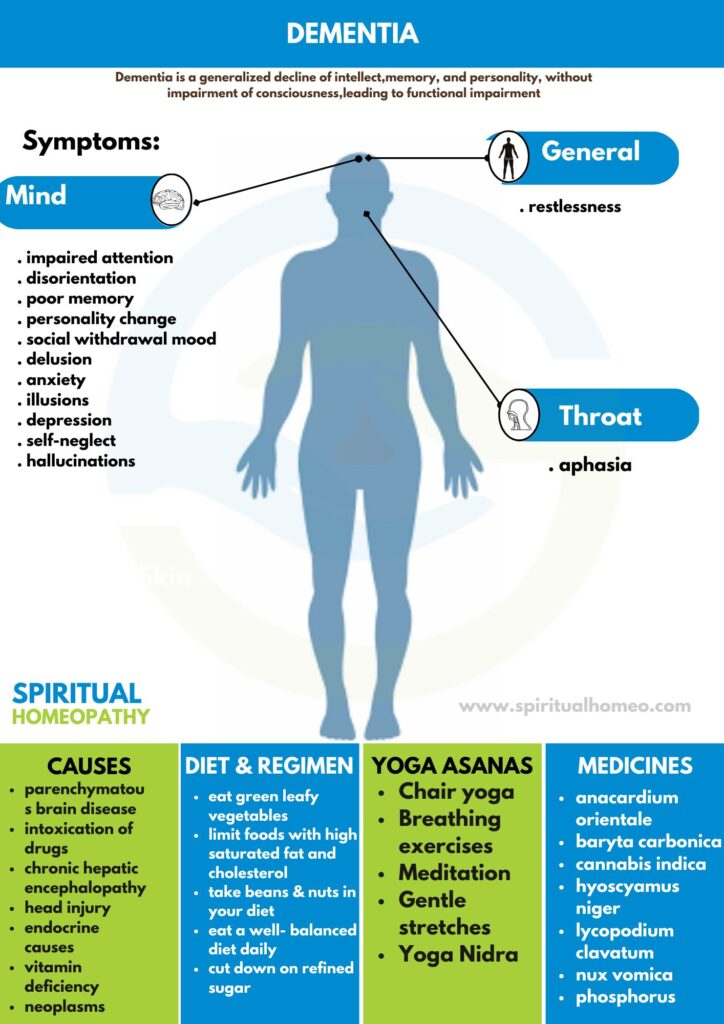
Dementia is a condition characterized by a broad decline in memory, intellect, and personality, without affecting consciousness, ultimately leading to functional impairments.
Dementia is a clinical syndrome, not a specific diagnosis, and can be caused by a variety of underlying pathologies. Unlike learning disabilities, which are present from birth, dementia is an acquired disorder that can begin at any age.
In individuals in middle age or older, any unusual social behavior, memory lapses, or changes that appear out of character should raise concerns about the possibility of dementia and warrant clinical evaluation.
At Spiritual Homeopathy Clinic, consultations for dementia-related concerns are available across multiple branches in Hyderabad, as well as through online and international consultation options, allowing timely professional guidance.
Onset: Gradual and subtle
Course: Progressive, though it may be reversible in certain cases depending on the underlying cause and early intervention.
Dementia can develop due to a wide range of medical conditions affecting brain structure, blood supply, metabolism, or systemic health. These causes are broadly classified as irreversible and potentially reversible.
Parenchymatous Brain Diseases:
Alzheimer’s disease
Pick’s disease
Parkinson’s disease
Huntington’s chorea
Lewy body dementia
Progressive supranuclear palsy (Steele–Richardson syndrome)
Vascular Dementia:
Multi-infarct dementia
Subcortical vascular dementia (Binswanger’s disease)
Toxic Dementias:
Bromide intoxication
Drug-related causes, including exposure to heavy metals, alcohol, carbon monoxide, analgesics, anticonvulsants, benzodiazepines, and psychotropic drugs
Metabolic Dementias:
Chronic hepatic or uraemic encephalopathy
Dialysis dementia
Wilson’s disease
Traumatic Dementias:
Chronic subdural hematoma
Head injury
Endocrine Causes:
Dysfunction of the thyroid, parathyroid, pituitary, or adrenal glands
Deficiency Dementias:
Pernicious anemia
Pellagra
Folic acid deficiency
Thiamine deficiency
Neoplastic Dementias:
Brain tumors and other intracranial space-occupying lesions
Hydrocephalic Dementia:
Normal pressure hydrocephalus
Identifying the underlying cause of dementia is essential, as it helps guide individualized care and long-term management based on the patient’s overall medical condition.
Dementia presents with a range of symptoms that may vary depending on the underlying cause and stage of the condition. These symptoms commonly affect cognitive, behavioral, emotional, and perceptual functions.
Poor memory
Impaired attention
Aphasia (difficulty in speaking or understanding language)
Agnosia (inability to recognize objects or people)
Apraxia (difficulty performing motor tasks despite normal physical ability)
Disorientation (confusion regarding time, place, or people)
Personality changes
Odd or disorganized behavior
Restlessness or wandering
Self-neglect
Disinhibition (reduced impulse control)
Social withdrawal
Anxiety
Depression
Slow or impoverished thought processes
Delusions (fixed false beliefs)
Illusions (misinterpretation of real stimuli)
Hallucinations (perceptions occurring without external stimuli)
Impaired self-awareness or limited understanding of one’s condition
If these symptoms are frequent, progressive, or interfere with daily functioning, professional evaluation is recommended to guide appropriate care and management.
Alzheimer’s disease is the most common cause of dementia, accounting for a large proportion of cases worldwide. It is more frequently observed in women and may present in two forms: presenile and senile. Structural brain changes such as enlarged cerebral ventricles, widened cerebral sulci, and shrinkage of the cerebral cortex are commonly noted. Neurochemical studies indicate a significant reduction in acetylcholine levels in the brain, which contributes to cognitive decline.
Management focuses on supporting cognitive function and daily activities through long-term, individualized care under professional supervision.
Multi-infarct dementia is the second most common cause of dementia and is particularly prevalent in India. It results from multiple cerebral infarctions, leading to progressive impairment of brain function. The condition often begins suddenly and follows a stepwise pattern of deterioration, especially in individuals with hypertension or a history of stroke or transient ischemic attacks.
Diagnosis is based on clinical features such as emotional lability and supportive findings from neurological evaluation and brain imaging.
Hypothyroid dementia is a less common but potentially reversible cause of cognitive decline. It should be considered in individuals presenting with memory impairment or slowed mental function, as early identification and appropriate management may improve outcomes, particularly when addressed in the early stages.
AIDS dementia complex may develop in individuals living with HIV and is characterized by cognitive, behavioral, and motor impairments typical of subcortical dementia. The virus can affect the central nervous system early in the course of infection, leading to progressive neurological symptoms.
Diagnosis relies on clinical assessment supported by appropriate laboratory and imaging evaluations.
Lewy body dementia is a common neurodegenerative form of dementia marked by fluctuating cognitive impairment. Key features include memory difficulties, language disturbances, and recurrent visual hallucinations. Many individuals also exhibit spontaneous Parkinsonian features such as rigidity and tremors.
Clinical Features:
Recurrent visual hallucinations
Parkinsonian symptoms, including tremors and rigidity
Autonomic dysfunction, such as postural blood pressure changes
Depression and delusional thinking
Neuroimaging studies may support the diagnosis by identifying characteristic changes in brain function.
Understanding the different types of dementia and their associated signs supports early recognition and informed care planning. If symptoms are progressive or interfere with daily functioning, professional consultation is recommended for appropriate evaluation and management.
At Spiritual Homeopathy Clinic, consultations are available across multiple branches in Hyderabad, as well as through online and international consultation services.
Include nutrient-rich green leafy vegetables in daily meals. They provide essential vitamins and antioxidants that support brain function and may help protect against cognitive decline.
Reduce the intake of foods high in saturated fats and cholesterol, as these may negatively affect brain health and are associated with an increased risk of cognitive impairment.
Beans and nuts are valuable sources of healthy fats, plant-based proteins, and essential nutrients. Regular inclusion can contribute to better brain health and cognitive support.
Maintain a well-balanced diet that includes fruits, vegetables, whole grains, and appropriate protein sources. Nutritional balance plays an important role in supporting overall health and brain function.
Limit the consumption of refined sugars commonly found in processed foods and sugary beverages. Excessive sugar intake has been associated with cognitive decline and reduced mental clarity over time.
Dietary recommendations may vary based on individual health status, stage of dementia, and associated medical conditions, and should be guided by professional advice.
A structured diet and healthy daily regimen support cognitive well-being and complement overall long-term management strategies for dementia.
Benefits: Improves posture, balance, and mental clarity.
Instructions:
Stand with feet hip-width apart and arms by your sides.
Inhale deeply and raise your arms overhead with palms facing each other.
Stand tall, grounding through your feet, and gently stretch upward.
Focus on steady breathing and hold for a few breaths.
Exhale slowly and lower your arms.
Benefits: Enhances balance, coordination, and focus.
Instructions:
Stand upright and shift your weight onto one leg.
Place the sole of the opposite foot on the inner calf or thigh, avoiding the knee.
Bring palms together at the chest or raise arms overhead.
Focus on a fixed point to maintain balance.
Hold briefly, then repeat on the other side.
Benefits: Strengthens the back and supports circulation to the brain.
Instructions:
Lie on your back with knees bent and feet hip-width apart.
Press feet into the floor and gently lift the hips upward.
Interlace fingers beneath the back and lift the chest slightly.
Hold for a few breaths, then lower slowly.
Benefits: Promotes calmness, relaxation, and improved breathing.
Instructions:
Sit comfortably with legs crossed and spine upright.
Rest hands on knees with palms facing upward.
Close the eyes and take slow, deep breaths.
Focus on breath awareness and relaxation.
Benefits: Calms the mind, reduces stress, and supports mental clarity.
Instructions:
Sit comfortably with a straight spine.
Close the right nostril and inhale through the left.
Close the left nostril and exhale through the right.
Inhale through the right, then exhale through the left.
Continue gently for 5–10 rounds.
Benefits: Reduces stress and gently stretches the back.
Instructions:
Kneel with big toes together and knees slightly apart.
Sit back on heels and fold forward, resting the forehead down.
Extend arms forward or relax them beside the body.
Hold for several calm breaths.
Benefits: Encourages circulation, stretches the body, and relieves tension.
Instructions:
Begin on hands and knees with proper alignment.
Lift hips upward, straightening legs as comfortable.
Press heels gently downward and relax the neck.
Hold briefly with steady breathing.
Benefits: Promotes relaxation, reduces anxiety, and supports circulation.
Instructions:
Lie on your back with legs supported vertically against a wall.
Keep arms relaxed by the sides with palms upward.
Close the eyes and breathe naturally.
Remain for 5–10 minutes.
Benefits: Helps calm agitation and mental restlessness.
Instructions:
Sit comfortably with spine upright.
Close eyes and gently place fingers near the ears.
Inhale deeply and exhale with a soft humming sound.
Repeat for several relaxed rounds.
Benefits: Supports deep relaxation and stress relief.
Instructions:
Lie flat on the back with arms relaxed and palms facing upward.
Close eyes and observe natural breathing.
Allow the body to fully relax for 5–10 minutes.
Practice in a calm, quiet, and familiar environment.
Use supportive props such as cushions, chairs, or blankets.
Focus on gentle movements and breath awareness.
Sessions should be adapted to the individual’s physical ability and comfort level.
Yoga and breathing practices serve as supportive lifestyle measures and may help with relaxation, mobility, and emotional well-being. These practices are not a replacement for medical care and should be guided appropriately, especially in individuals with advanced symptoms or mobility concerns.
At Spiritual Homeopathy Clinic, we offer a holistic approach that integrates traditional homeopathic principles with a careful understanding of the emotional and cognitive aspects of health. Our experienced practitioners combine expertise and empathy to provide personalized care tailored to each individual, including those managing cognitive concerns such as dementia.
We focus on the physical, emotional, and mental well-being of each patient. Instead of solely addressing symptoms, our approach aims to identify and manage underlying factors that may contribute to cognitive decline. This supports long-term wellness and helps patients maintain mental clarity and quality of life.
Consultations: Our homeopathic doctors in Hyderabad provide detailed consultations to assess cognitive health, medical history, and individual needs. Online and international consultations are also available, allowing patients who cannot visit in person to receive professional guidance.
Homeopathic Support: We provide individualized care for cognitive concerns, aiming at long-term management and addressing contributing factors. Treatments are generally well-tolerated under professional guidance and designed to support overall mental and physical health.
Follow-Up Care: Continuous monitoring is essential for cognitive conditions. Our team provides regular follow-ups to track progress, adjust treatment strategies, and ensure that care remains aligned with the patient’s needs.
At Spiritual Homeopathy Clinic, your health and cognitive well-being are our priorities. We are dedicated to offering compassionate, structured, and supportive care for patients and their families, helping navigate the challenges of dementia and related conditions.
It is important to consult a healthcare professional if you or a loved one notice frequent or progressive memory lapses, confusion, or changes in thinking, behavior, or daily functioning. Early evaluation can help identify underlying causes and support timely management.
Seek consultation if you experience:
Increasing forgetfulness that affects daily activities
Confusion about time, place, or familiar people
Difficulty performing routine tasks or decision-making
Sudden personality or behavior changes
Mood disturbances such as anxiety, depression, or irritability
Sleep disturbances or frequent nighttime disorientation
At Spiritual Homeopathy Clinic, consultations are available at multiple branches in Hyderabad, including Kukatpally, Chandanagar, Dilsukhnagar, and Nallagandla. Online and international consultations are also offered for patients who cannot visit in person. A professional assessment supports an individualized care approach based on cognitive symptoms and overall health.
For appointments or guidance, contact 9069 176 176.
1. What is Dementia?
Dementia refers to a general decline in intellectual abilities, memory, and personality, without impairing consciousness. This cognitive decline can affect daily life, decision-making, and the ability to perform routine tasks. Early consultation with a healthcare professional helps in timely assessment and management.
2. What are the Symptoms of Dementia?
Common signs include:
Poor Memory: Difficulty recalling recent events, names, or daily activities.
Impaired Attention: Trouble concentrating or maintaining focus.
Aphasia, Agnosia, and Apraxia: Difficulty with speaking, recognizing objects, or performing familiar tasks.
Disorientation: Confusion about time, place, or people.
Personality Changes: Noticeable shifts in behavior or mood.
Odd or Disorganized Behavior: Actions or speech that seem unusual or illogical.
Restlessness & Wandering: Unexplained urge to move or leave familiar places.
Self-Neglect: Reduced interest in personal hygiene or appearance.
Social Withdrawal: Avoidance of social interactions.
Mood Changes: Anxiety, depression, or emotional instability.
Impaired Thinking: Slower thought processes, delusions, illusions, or hallucinations.
Note: Frequent or severe symptoms should prompt consultation with a qualified healthcare professional.
3. What Causes Dementia?
Dementia may arise from a variety of factors, including:
Parenchymatous Brain Disease: Conditions like Alzheimer’s, Parkinson’s, or Huntington’s disease.
Vascular Dementia: Reduced blood flow to the brain due to stroke or vascular issues.
Toxic Dementias: Exposure to drugs, alcohol, or heavy metals.
Metabolic Dementias: Disorders such as liver disease or thyroid dysfunction.
Traumatic Dementias: Brain injuries from accidents or trauma.
Endocrine Disorders: Thyroid or parathyroid imbalances affecting cognition.
Deficiency Dementias: Lack of essential nutrients like vitamin B12 or folic acid.
Neoplastic Dementias: Brain tumors or space-occupying lesions.
Since dementia can result from multiple causes, individualized evaluation and treatment are essential for effective management.
4. How Can Homeopathy Help with Dementia?
Homeopathic care focuses on individualized treatment, supporting long-term management and addressing contributing factors to cognitive decline. Care is generally well-tolerated under professional supervision and complements lifestyle measures and supportive therapies.
5. When Should I Consult a Doctor?
Seek consultation if memory issues, confusion, or behavioral changes interfere with daily life or worsen over time. Early assessment can help identify underlying causes and guide appropriate care, including in-clinic, online, or international consultations at Spiritual Homeopathy Clinic.
WhatsApp us