
Ebola virus disease is a highly infectious and often fatal illness characterized by fever, severe internal bleeding, and organ failure. It spreads through direct contact with the bodily fluids of an infected person. The natural host species of the Ebola virus remains unidentified.
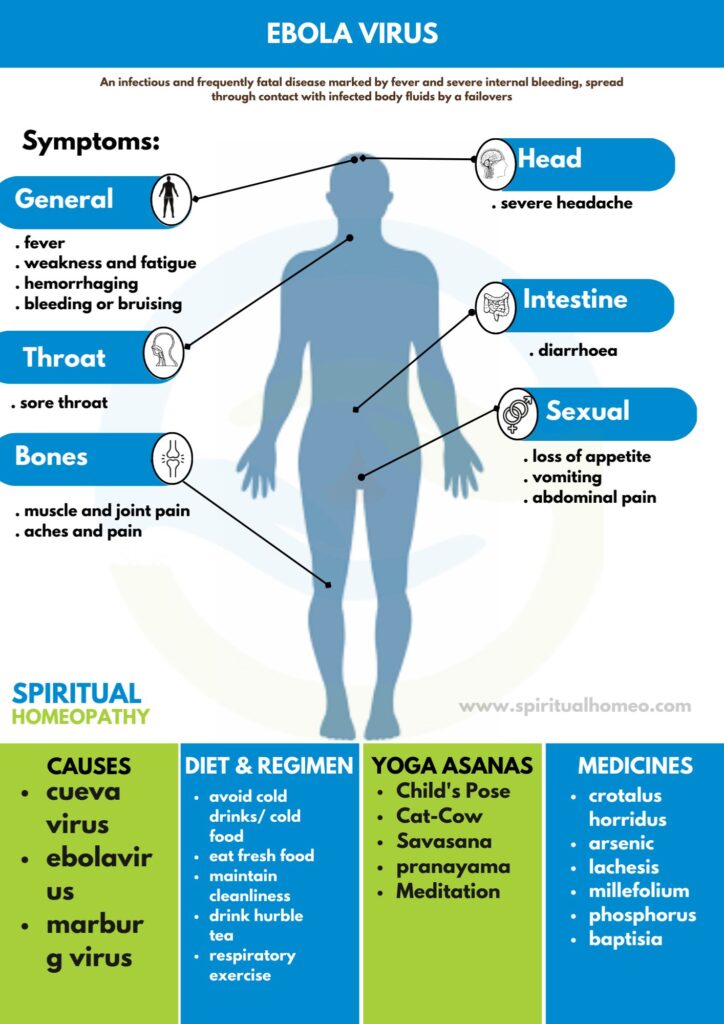
Filoviruses are a family of viruses responsible for causing severe and sometimes fatal viral hemorrhagic fevers in humans. The introduction of these viruses into human populations is rare and usually occurs through direct or indirect contact with infected mammalian hosts, or through exposure to sick or deceased nonhuman primates carrying the virus.
These infections are considered serious medical conditions and require timely medical evaluation. Consultation support for related concerns is available at Spiritual Homeopathy Clinic through in-clinic consultations across Hyderabad, as well as online and international consultation options.
The Filoviridae family consists of three genera: Cuevavirus, Ebolavirus, and Marburgvirus. These viruses possess genomes containing six or seven genes that code for seven structural proteins. These proteins include the nucleoprotein, polymerase cofactor (VP35), matrix protein (VP40), glycoprotein (GP1,2), transcriptional cofactor (VP30), secondary matrix protein (VP24), and RNA-dependent RNA polymerase (L protein).
Each of these components plays a critical role in viral replication, immune system interaction, and disease development. Understanding these biological factors helps guide an individualized approach to care, based on the nature and progression of the infection.
Ebola viruses are classified into five distinct strains, each differing in severity, genetic structure, and geographical distribution:
Zaïre Ebolavirus is considered the most severe among the five strains and has been associated with higher mortality rates. It is characterized by:
Found primarily in the Democratic Republic of the Congo, Gabon, and the Republic of the Congo
A genome with two or three gene overlaps (VP35/VP40, GP/VP30, VP24/L)
A genomic sequence that differs from related virus types by less than 30%
Sudan Ebolavirus is endemic to parts of East Africa and shows the following features:
Found mainly in Sudan and Uganda
A genome with three gene overlaps (VP35/VP40, GP/VP30, VP24/L)
A genomic sequence that differs from other Ebola viruses by 30% or more, while remaining closely related to the Sudan virus lineage
Reston Ebolavirus is considered less pathogenic in humans but remains significant from a public health perspective. Its characteristics include:
A genome diverging by 10% or less from the prototype Reston virus variant
Primary concern in non-human primates
Documented outbreaks in the Philippines
Tai Forest Ebolavirus has been identified in West Africa and includes the following features:
Endemic to Côte d’Ivoire
A genome with three gene overlaps (VP35/VP40, GP/VP30, VP24/L)
A genomic sequence differing by 30% or more from other Ebola viruses, while remaining closely related to the Tai Forest virus
Bundibugyo Ebolavirus has been reported mainly in Uganda and is characterized by:
Endemic presence in Uganda
A genome with three gene overlaps (VP35/VP40, GP/VP30, VP24/L)
A genomic sequence that differs by 30% or more from other Ebola viruses but remains closely related to the Bundibugyo virus
Each strain of Ebolavirus has distinct biological and epidemiological characteristics, which are important when considering individualized assessment and long-term management approaches.
The symptoms of Ebola virus infection can develop suddenly and may intensify rapidly. Common signs include:
Fever – A sudden high fever is often one of the earliest indicators of Ebola infection.
Aches and Pains – Severe headaches, muscle aches, and joint pain are commonly reported during the early stages.
Weakness and Fatigue – Marked weakness and profound tiredness can occur early in the course of the disease.
Sore Throat – Many individuals experience throat discomfort as part of the infection.
Loss of Appetite – A noticeable reduction in appetite is frequently observed.
Gastrointestinal Symptoms – Abdominal pain, vomiting, and diarrhea are common as the illness progresses.
Unexplained Bleeding – In some cases, unexplained bleeding or bruising may occur, indicating a more severe form of the disease.
These symptoms can worsen quickly and may lead to serious complications. If symptoms are persistent, severe, or worsening, prompt medical consultation is strongly advised.
Managing health during an Ebola virus infection involves careful attention to diet and daily habits, alongside appropriate medical care. The following recommendations may help support overall well-being during recovery:
Avoid Cold Foods and Drinks – It is advisable to avoid cold foods and beverages, as they may worsen discomfort or aggravate symptoms.
Eat Fresh, Nutritious Foods – Emphasize a balanced diet that includes fresh fruits and vegetables to support nutritional needs and general strength during illness.
Maintain Cleanliness – Good hygiene practices, including regular handwashing and maintaining a clean environment, are essential to reduce the risk of secondary infections.
Drink Herbal Tea – Warm herbal teas may help with hydration and provide soothing support during recovery.
Practice Respiratory Exercises – Gentle breathing exercises may assist in easing respiratory discomfort and supporting lung function where appropriate.
Dietary and lifestyle guidance may vary based on individual health status and stage of illness. These measures are supportive and should be followed in coordination with medical supervision.
While yoga can be a supportive practice for promoting relaxation, reducing stress, and improving general well-being, it is important to note that for serious viral infections such as Ebola, medical treatment remains the primary approach. Yoga may be used as a complementary practice once acute symptoms are controlled and under appropriate medical guidance.
The following gentle yoga practices may help support overall health and recovery:
Tadasana helps improve posture, balance, and circulation. It may promote relaxation and help relieve physical and mental stress during recovery.
How to do it:
Stand upright with feet together and arms by your sides.
Lift your chest, lengthen the spine, and engage the thighs.
Stretch your arms overhead with palms facing each other.
Breathe deeply and hold for 30 seconds to 1 minute.
This pose supports gentle stretching, circulation, and tension release. It may help stimulate the lymphatic system and promote overall vitality.
How to do it:
Begin on hands and knees, then lift the hips to form an inverted “V.”
Keep hands shoulder-width apart and feet hip-width apart.
Press heels gently toward the floor and breathe steadily for 30–60 seconds.
Bhujangasana helps open the chest, support lung expansion, and reduce stiffness. It may assist in improving energy levels and circulation.
How to do it:
Lie on your stomach with palms under the shoulders.
Gently lift the chest while keeping elbows slightly bent.
Hold for 15–30 seconds with slow, controlled breathing.
This pose supports spinal strength, circulation, and stress reduction. It may also help improve overall body balance during recovery.
How to do it:
Lie on your back with knees bent and feet flat on the floor.
Press feet into the ground and slowly lift the hips.
Hold for about 30 seconds before lowering gently.
Savasana encourages deep relaxation and mental calm, allowing the body to rest and recover.
How to do it:
Lie flat on your back with arms relaxed by your sides.
Close your eyes and focus on slow, natural breathing.
Remain in this pose for 5–10 minutes.
Alternate nostril breathing helps calm the nervous system, improve oxygen flow, and support emotional balance.
How to do it:
Sit comfortably with a straight spine.
Inhale through one nostril and exhale through the other in a slow, rhythmic pattern.
Continue for several gentle rounds.
This pose promotes gentle stretching, relaxation, and improved circulation while helping calm the mind.
How to do it:
Stand with feet hip-width apart and bend forward from the hips.
Allow the head and neck to relax fully.
Hold for 30 seconds while breathing comfortably.
Listen to your body: Avoid strain or overexertion at all times.
Medical guidance: Always consult a healthcare professional before starting yoga during or after serious illness.
Hydration: Maintain adequate hydration before and after practice.
Yoga and lifestyle practices are supportive measures only and should never replace medical care for Ebola virus infection.
At Spiritual Homeopathy Clinic, care is provided with an understanding that health is influenced by multiple factors, including physical and emotional well-being. The clinic follows a patient-centered approach, where each case is assessed individually to support overall health needs alongside standard medical care.
Consultations are available at multiple branches in Hyderabad, as well as through online and international consultations, allowing access to professional guidance when in-person visits are not feasible.
The approach focuses on understanding the individual’s overall condition rather than addressing symptoms alone. Attention is given to factors such as general health status, immunity, and recovery patterns. Care is planned to address contributing factors and support the body during illness and recovery, while working alongside essential medical supervision.
This approach emphasizes long-term health management and supportive care rather than isolated symptom relief.
Qualified homeopathic practitioners provide detailed consultations, either in person or online. These consultations involve understanding symptoms, medical history, and recovery progress to support an individualized care plan suited to the patient’s condition and stage of illness.
Guidance is offered to support patients during recovery, focusing on general well-being, nutrition, and lifestyle measures. This care is intended to complement necessary medical treatment and is generally well-tolerated under professional guidance.
Recovery from serious infections requires monitoring over time. Follow-up consultations help review progress, address ongoing concerns, and adjust supportive care plans based on the individual’s response and overall health condition.
At Spiritual Homeopathy Clinic, patient well-being remains the central focus. Care is provided in a responsible, supportive manner, with attention to safety, individual needs, and coordination with appropriate medical care. Patients are encouraged to seek timely medical evaluation for serious symptoms and use supportive therapies as part of an integrated care approach.
You should consult a healthcare professional immediately if Ebola virus–related symptoms appear or worsen, as early medical evaluation is essential for timely care and infection control. Prompt consultation helps assess severity, manage symptoms appropriately, and reduce health risks.
Seek consultation if you experience:
Sudden onset of high fever
Severe weakness or fatigue
Headache, muscle pain, or joint pain
Vomiting or persistent diarrhea
Abdominal pain or loss of appetite
Unexplained bleeding or bruising
Symptoms that worsen rapidly or do not improve
Individuals with recent travel history to affected areas or contact with suspected cases should seek medical attention without delay.
At Spiritual Homeopathy Clinic, consultations are available at multiple branches in Hyderabad. Online and international consultations are also available for patients who cannot visit in person. Professional consultation supports an individualized care approach based on symptoms, medical history, and overall health status.
For appointments or guidance, contact 9069 176 176.
1. What is the Ebola Virus?
Ebola is a serious viral infection that can cause fever, severe fatigue, and internal bleeding. It spreads through direct contact with infected body fluids. While the natural host of the virus is not definitively known, Ebola can lead to outbreaks with high health risks. Early medical evaluation is crucial for suspected exposure.
2. What causes the Ebola Virus?
The Ebola virus belongs to the Filoviridae family, which includes three main types: Cueva virus, Ebolavirus, and Marburg virus. Transmission can occur from animals to humans or through direct contact with infected individuals. Understanding the cause helps in providing individualized supportive care alongside medical management.
3. What are the symptoms of Ebola Virus?
Symptoms may appear 2 to 21 days after exposure and can include:
Fever
Severe headaches, muscle aches, and joint pain
Weakness and fatigue
Sore throat
Loss of appetite
Abdominal pain, diarrhea, and vomiting
Unexplained bleeding or bruising
If these symptoms appear, especially after potential exposure, it is essential to seek immediate medical attention. Consultation with healthcare professionals, including supportive homeopathy guidance, can aid in monitoring recovery and overall health.
WhatsApp us