
Eczema is a common inflammatory skin condition that affects both the outer (epidermis) and deeper (dermis) layers of the skin, causing redness, itching, and irritation.
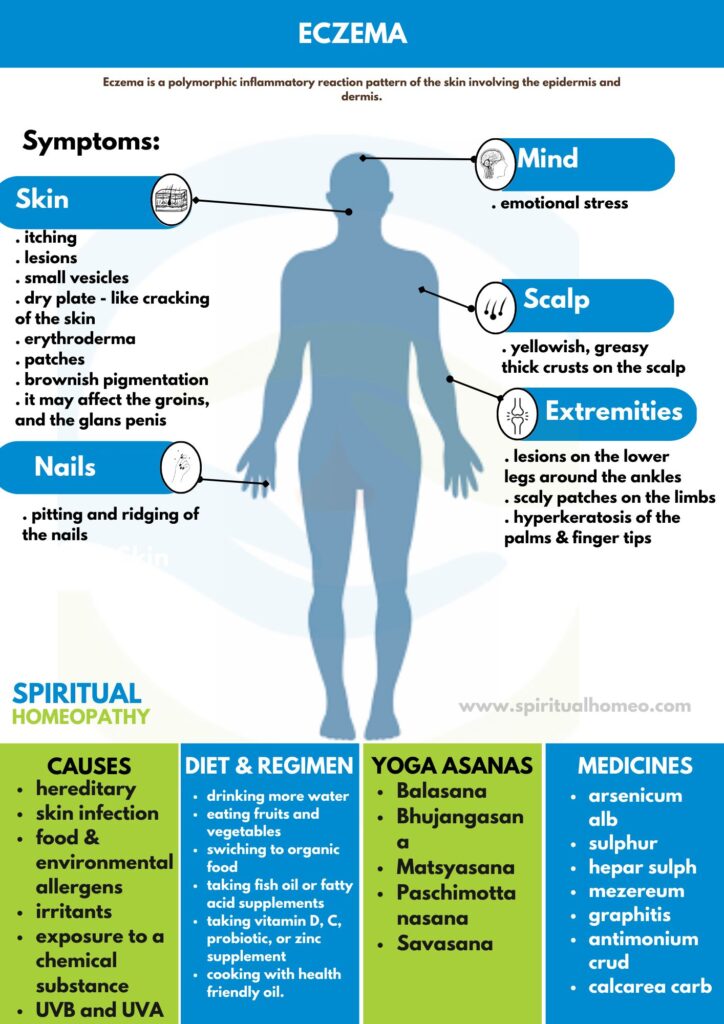
The term eczema originates from the Greek word meaning “to boil over,” which describes the inflammation that can cause the skin to become red, itchy, or develop small blisters that may ooze fluid. Eczema is often used interchangeably with dermatitis, as both refer to the same inflammatory skin condition.
Eczema is relatively common, affecting an estimated 10% of people at any given time, with up to 40% experiencing an episode at some point in their lifetime. The condition can vary in severity and presentation, and consultation with a healthcare professional, including homeopathic guidance at Spiritual Homeopathy Clinic, can help tailor individualized care. Our services are available at multiple Hyderabad branches, as well as through online and international consultations.
Eczema is a complex skin condition with a variety of triggers, both internal (endogenous) and external (exogenous). Below are common causes and risk factors for different types of eczema:
Atopic eczema is one of the most common forms and is often linked to both genetic and environmental factors. Possible causes include:
Genetics: A family history of eczema, asthma, or hay fever increases susceptibility.
Irritants: Everyday products such as soaps, detergents, and shampoos.
Environmental Allergens: Cold, dry weather, dust mites, mold, and pollen.
Food Allergies: Certain foods may trigger flare-ups.
Hormonal Changes: Fluctuations during pregnancy, menstruation, or menopause.
Skin Infections: Bacterial or viral infections can worsen symptoms.
Discoid eczema presents as round, scaly patches on the skin and is often linked to:
Infections: Bacterial or viral infections may contribute to flare-ups.
Genetics: Family history may play a role.
Skin Infections: Pre-existing infections can exacerbate symptoms.
Primarily affecting the hands, this type is often caused by:
Irritants: Frequent exposure to chemicals or detergents.
Fungal Infections: Can trigger or worsen the condition.
Skin Infections: Bacterial or viral infections may lead to flare-ups.
Triggered by an overgrowth of a yeast-like fungus called Malassezia:
Yeast Overgrowth: Leads to inflammation and scaling.
Immune Response: The body’s reaction to the fungus causes flare-ups, often on the scalp and areas rich in sebaceous glands.
Also called gravitational eczema, commonly seen in older adults:
Venous Hypertension: Increased pressure in the veins causes blood leakage into the skin.
Poor Circulation: Reduced blood flow contributes to skin damage.
Often seen during winter months, characterized by dry, cracked skin:
Soap Overuse: Frequent washing can strip the skin of natural oils.
Thyroid Imbalance: Conditions like hypothyroidism may worsen dryness.
Irritant Contact Eczema: Caused by chemicals, soaps, or harsh cleaning agents.
Allergic Contact Eczema: Triggered by prolonged exposure to allergens such as fragrances, metals, or latex.
Triggered by ultraviolet (UV) light exposure, including UVA and UVB rays, leading to rash and inflammation in susceptible individuals.
Chronic Scratching: Repeated rubbing leads to thickened skin.
Stress or Infection: Emotional stress and bacterial/viral infections can exacerbate symptoms.
Closing Note: Understanding these causes helps in identifying triggers and guiding treatment. At Spiritual Homeopathy Clinic, consultations are available at multiple Hyderabad branches, as well as online and international sessions, allowing for individualized care based on your specific condition.
Eczema is a broad condition with different forms, each having unique triggers and symptoms. It can be broadly categorized into endogenous (internal) and exogenous (external) types.
Atopic Eczema
Atopic eczema is the most common form and is often linked to genetic factors. It usually appears as itchy, red, scaly patches on areas such as the elbows, knees, and neck. This type is often associated with other allergic conditions like asthma and hay fever.
Discoid Eczema
Discoid eczema presents as round, scaly patches, typically on the limbs or torso. It can be exacerbated by infections and is often influenced by genetic predisposition.
Hand Eczema
Hand eczema primarily affects the hands, causing redness, irritation, and blisters. Frequent exposure to irritants such as soaps, chemicals, or harsh weather conditions can trigger flare-ups. It is commonly seen in individuals whose work involves constant hand use.
Seborrheic Eczema
Seborrheic eczema often affects areas rich in sebaceous (oil-producing) glands, including the scalp, face, and chest. It commonly presents as yellow, greasy scales and can be linked to fungal overgrowth.
Venous (Gravitational) Eczema
Venous eczema is most common in older adults and typically affects the lower legs, especially near the ankles. Poor circulation and venous hypertension can lead to swelling, pigmentation changes, and in some cases, varicose veins or leg ulcers.
Asteatotic Eczema
Characterized by dry, cracked skin, asteatotic eczema often appears on the lower legs or backs of the hands. It is commonly seen in winter due to cold, dry weather or as a result of underlying conditions like hypothyroidism.
Contact Eczema – Irritant
Irritant contact eczema arises from direct exposure to environmental irritants such as chemicals, detergents, or harsh cleaning products. It usually leads to localized redness, itching, and inflammation.
Contact Eczema – Allergic
Allergic contact eczema develops when the skin reacts to allergens, triggering an immune response. Common triggers include metals like nickel, fragrances, and certain chemicals. This type typically causes red, itchy rashes and blisters.
Photosensitive Eczema
Photosensitive eczema is triggered by ultraviolet (UV) light exposure, either from the sun or artificial sources. It primarily affects sun-exposed areas such as the face, chest, and hands, causing redness, inflammation, and rash.
Lichen Simplex / Nodular Prurigo
Lichen simplex is a chronic condition caused by persistent scratching or rubbing. It leads to thickened, scaly patches and can be aggravated by stress or infections.
Eczema symptoms can vary depending on the type and severity of the condition. Below is an overview of common signs and symptoms for each type of eczema:
Atopic eczema is one of the most common forms and often begins in childhood, though it can persist into adulthood. Symptoms include:
Itchy, red, scaly patches: Typically on elbows, knees, neck, and other common areas.
Acute lesions: Small, fluid-filled blisters (vesicles) may form.
Scratching and excoriations: Can lead to broken skin and scarring.
Skin thickening: Repeated rubbing or scratching may cause thick, leathery skin.
Nail changes: Pitting or ridging of nails may occur in some cases.
Discoid eczema presents as round, scaly patches, often in adults. Symptoms include:
Scaly patches: Usually on limbs or torso.
Infections: Bacterial infections can occur in affected areas.
Vesicles: Small blisters may appear around scaly patches.
Hand eczema affects the hands, causing discomfort and irritation. Symptoms include:
Itchy vesicles: Fluid-filled blisters on palms and fingers.
Erythematous scaling: Redness and scaling, especially on fingers.
Hyperkeratosis: Thickened skin, particularly on palms and fingertips.
Seborrheic eczema affects areas rich in sebaceous glands. Symptoms vary by age:
Children: Yellowish, greasy crusts on the scalp; scaly rashes on the trunk.
Adults: Scaling along the sides of the nose, possibly extending to the chest, groin, or genitals.
Older adults: May involve large areas and, in severe cases, lead to widespread redness and peeling.
Often seen in older adults with poor circulation. Symptoms include:
Brownish pigmentation: Skin around lower legs and ankles may darken.
Swelling: Especially around the ankles.
Ulcers and varicose veins: Present in more severe cases.
Common in colder months, especially winter. Symptoms include:
Dry, cracked skin: Plate-like cracking on lower legs or backs of hands.
Itching: Often intense in dry environments.
Occurs due to environmental irritants. Symptoms include:
Localized redness: Inflamed, irritated areas.
Patches: Dry, scaly areas at sites of irritant exposure.
Triggered by allergens. Symptoms include:
Blisters and vesicles: Often on hands or frequently exposed areas.
Itching and redness: Typically intense.
Triggered by UV light exposure. Symptoms include:
Sun-exposed areas: Rashes and inflammation on face, chest, and hands.
Chronic scratching or rubbing, often due to stress. Symptoms include:
Intense itching: Leads to persistent scratching or rubbing.
Thickened skin: Skin becomes thick and leathery over time.
Bacterial or viral infections: Can occur from constant irritation.
To reduce flare-ups and manage eczema effectively:
Avoid triggers: Identify and avoid irritants, allergens, and harsh chemicals.
Moisturize frequently: Use fragrance-free moisturizers to maintain skin hydration.
Protect skin: Wear gloves or protective clothing when handling irritants.
Control stress: Stress management can help reduce flare-ups.
Maintain stable environment: Avoid extreme temperature or humidity changes.
Use gentle products: Opt for fragrance-free cleansers and detergents.
If you experience frequent or severe eczema symptoms, consulting a healthcare professional is important. At Spiritual Homeopathy Clinic, patients can access in-clinic, online, and international consultations for individualized assessment and care tailored to their eczema type and overall health.
Managing eczema goes beyond topical treatments—adopting a healthy diet and lifestyle can play an important role in reducing flare-ups and supporting skin health. Here are practical strategies to consider:
Staying well-hydrated helps maintain skin moisture from within, reducing dryness and irritation that can worsen eczema symptoms.
A diet rich in fruits and vegetables provides essential vitamins, minerals, and antioxidants that support skin health. Berries, leafy greens, and citrus fruits can help reduce inflammation and promote healing.
Organic fruits, vegetables, and meats are free from pesticides and chemical additives that may irritate sensitive skin, potentially reducing flare-ups.
Omega-3 fatty acids, found in fish oil or plant-based sources, are known for anti-inflammatory properties and can help improve overall skin health.
Vitamin D: Supports immune function and may help manage inflammation.
Vitamin C: Aids collagen production and strengthens skin.
Probiotics: Promote gut health, which can influence skin conditions like eczema.
Zinc: Important for skin healing and reducing inflammation.
Incorporate oils rich in essential fatty acids and antioxidants, such as olive oil, coconut oil, hempseed oil, or primrose oil, to support skin hydration and overall health.
Yoga can support overall health and help manage stress, which is often a trigger for eczema flare-ups. Certain asanas (postures) may improve circulation, balance the immune system, and promote relaxation, potentially reducing the severity of eczema symptoms. These practices are supportive and should complement medical care.
Benefits: Promotes relaxation, reduces stress and anxiety—common triggers for eczema.
How to Do It: Sit cross-legged with a straight spine. Place your hands on your knees, palms up. Close your eyes and take slow, deep breaths for several minutes.
Benefits: Relieves stress, improves circulation, and reduces swelling in the lower body.
How to Do It: Lie on your back and extend your legs against a wall. Keep your hips close to the wall and arms by your sides, palms facing up. Relax and breathe deeply.
Benefits: Improves blood circulation, reduces inflammation, and supports detoxification.
How to Do It: From hands and knees, lift your hips to form an inverted “V.” Keep hands and feet grounded, head aligned with your arms, and hold for 30–60 seconds.
Benefits: Opens the chest, stretches the skin, and promotes blood flow to the skin.
How to Do It: Lie on your stomach, hands under shoulders. Lift your chest gently while keeping elbows slightly bent. Hold briefly, then lower.
Benefits: Relieves tension, improves circulation, and opens the chest.
How to Do It: Lie on your back, knees bent, feet hip-width apart. Press feet into the floor and lift your hips to form a bridge. Hold 20–30 seconds, then gently release.
Benefits: Calms the nervous system, reduces stress, and supports skin health.
How to Do It: Sit comfortably. Inhale through the nose for 4 counts, hold 4 counts, exhale 4 counts. Repeat several minutes.
Benefits: Gently stretches the body, relieves stress, and calms the mind.
How to Do It: Kneel, sit back on your heels, and bend forward, forehead to floor. Extend arms forward or by your sides. Breathe deeply for several minutes.
Benefits: Opens chest and abdomen, stimulates the immune system, and aids detoxification.
How to Do It: Lie on your stomach, bend knees, and hold ankles. Lift chest and thighs to form a bow. Hold 15–30 seconds, then release slowly.
Avoid Overheating: Keep the environment cool to prevent skin irritation from sweat.
Gentle Stretching: Stick to restorative poses to avoid aggravating sensitive skin.
Mindful Breathing: Focus on breath to calm the nervous system and manage stress.
Note: Yoga supports eczema management but is not a replacement for medical care. Patients are encouraged to consult with their homeopathy practitioner at Spiritual Homeopathy Clinic, available at multiple Hyderabad branches, online, and international consultations, for personalized guidance.
At Spiritual Homeopathy Clinic, we provide a personalized approach to health that integrates traditional homeopathic principles with a holistic understanding of wellness. Our team of skilled and compassionate practitioners offers care tailored to your individual needs, supporting long-term health management.
We believe that effective treatment addresses not only physical symptoms but also the emotional and spiritual aspects of well-being. By focusing on underlying causes, Spiritual Homeopathy supports the body’s natural ability to maintain balance and health, promoting overall vitality and resilience.
Personalized Consultations
Our homeopathy doctors in Hyderabad conduct thorough assessments of your health history and current concerns. We also offer online and international consultations, ensuring patients can access professional care even if they cannot visit in person. Individualized treatment plans are designed to meet your specific health needs and goals.
Homeopathic Care
Our approach uses natural homeopathic remedies to support the body’s healing process. These remedies are selected to manage acute or chronic conditions and are generally well-tolerated under professional guidance, complementing long-term health management.
Ongoing Support and Follow-Up
Continued monitoring is essential for effective care. Our team provides regular follow-up consultations to evaluate progress, adjust care plans as needed, and support patients throughout their healing journey.
Your health and well-being are our priority. Spiritual Homeopathy emphasizes patient-centered care, individualized management, and guidance to support overall wellness. Whether addressing a specific health concern or promoting general health, our clinic is committed to professional, evidence-informed homeopathic care.
You should consult a healthcare professional if eczema symptoms become frequent, persistent, or start affecting daily life. Early evaluation helps identify triggers and supports better management.
Seek consultation if you experience:
Persistent itching or redness that does not improve with moisturizers
Worsening or spreading rashes, blisters, or skin infections
Thickened or leathery skin due to repeated scratching
Pain, oozing, or signs of bacterial/viral infection
Symptoms that interfere with sleep, work, or daily activities
At Spiritual Homeopathy Clinic, consultations are available at multiple Hyderabad branches, including Kukatpally, Chandanagar, Dilsukhnagar, and Nallagandla. Online and international consultations are also available for patients unable to visit in person. A professional assessment ensures an individualized care approach tailored to your symptoms and overall health.
For appointments or guidance, contact 9069 176 176.
1. What is Eczema?
Eczema is a skin condition that causes inflammation of the skin, affecting both the outer and deeper layers. It can lead to dryness, redness, itching, and irritation, and may appear in different forms depending on individual triggers and skin type.
2. What Causes Eczema?
Eczema can result from a combination of internal and external factors, including:
Genetics: A family history of eczema, asthma, or allergies increases risk.
Irritants: Harsh soaps, detergents, and shampoos can trigger flare-ups.
Environmental Allergens: Dust, pollen, mold, and pollution.
Food Sensitivities: Certain foods may provoke or worsen symptoms.
Infections: Bacterial or fungal infections can exacerbate eczema.
UV Light Exposure: Sunlight or artificial UV rays can trigger reactions.
Understanding the causes helps practitioners provide individualized care for each patient.
3. What Are the Symptoms of Eczema?
Symptoms vary by type and severity but often include:
Itchy, red, scaly patches: Common on arms, legs, and other areas.
Acute lesions: Small fluid-filled bumps (vesicles) that may leak.
Scratching and excoriations: Persistent scratching can damage skin.
Infection: Eczema-prone skin is more susceptible to bacterial infections.
Blisters and scaling: Hands and fingers may show thickened skin (hyperkeratosis) or erythematous patches.
Frequent or severe symptoms warrant a consultation with a healthcare provider.
4. What Are the Types of Eczema?
Eczema can present in several forms:
Atopic Eczema: Chronic, often linked to allergies or irritants; common in children but can persist in adults.
Discoid Eczema: Round, coin-shaped itchy patches.
Hand Eczema: Dry, cracked, or blistered hands caused by irritants or occupational exposure.
Seborrheic Eczema: Affects oily areas like the scalp, face, and chest; causes flaky or greasy patches.
Venous (Gravitational) Eczema: Appears on lower legs due to poor circulation, sometimes with pigmentation changes.
Asteatotic Eczema: Dry, cracked skin often seen in colder weather, usually on legs and backs of hands.
Contact Eczema – Irritant: Triggered by direct contact with chemicals, soaps, or detergents.
Contact Eczema – Allergic: Results from allergic reactions to substances such as metals or fragrances.
Photosensitive Eczema: Caused by UV exposure, appearing on sun-exposed areas.
Lichen Simplex / Nodular Prurigo: Thickened, itchy skin from chronic scratching, often linked to stress or anxiety.
5. When Should I Consult a Doctor?
If you notice persistent or worsening symptoms, frequent flare-ups, or signs of infection, consult a healthcare provider promptly. At Spiritual Homeopathy Clinic, we offer consultations across multiple Hyderabad branches, as well as online and international consultations, to assess your condition and provide individualized treatment plans.
WhatsApp us