
Fatigue is a common condition marked by persistent tiredness, low energy, reduced stamina, and difficulty staying focused or motivated. Unlike temporary tiredness after physical activity, ongoing fatigue may continue even after adequate rest and can interfere with work, studies, exercise, and everyday activities. It may be associated with factors such as poor sleep, nutritional deficiencies, stress, anemia, hormonal changes, infections, or certain underlying health conditions. Identifying the possible cause is important when fatigue becomes frequent or prolonged.
At Spiritual Homeopathy, we follow a personalized approach to understanding fatigue rather than focusing only on tiredness. Our experienced homeopathic doctors assess each individual’s symptoms, medical history, sleep patterns, dietary habits, stress levels, daily routine, and overall health before developing an individualized care plan. Our holistic approach aims to support overall well-being, energy levels, and healthy daily functioning through personalized homeopathic care. We provide homeopathic treatment for fatigue, along with supportive guidance for recurring tiredness and low energy.
We offer personalized homeopathic treatment for fatigue in Hyderabad through our clinics, with consultations available in Kukatpally (KPHB), Chandanagar, Dilsukhnagar, and Nallagandla. We also provide online homeopathy consultations across India and in more than 100 countries worldwide. If persistent tiredness, weakness, or low energy is affecting your quality of life, Spiritual Homeopathy provides patient-centered consultations focused on understanding your individual health needs and contributing factors.
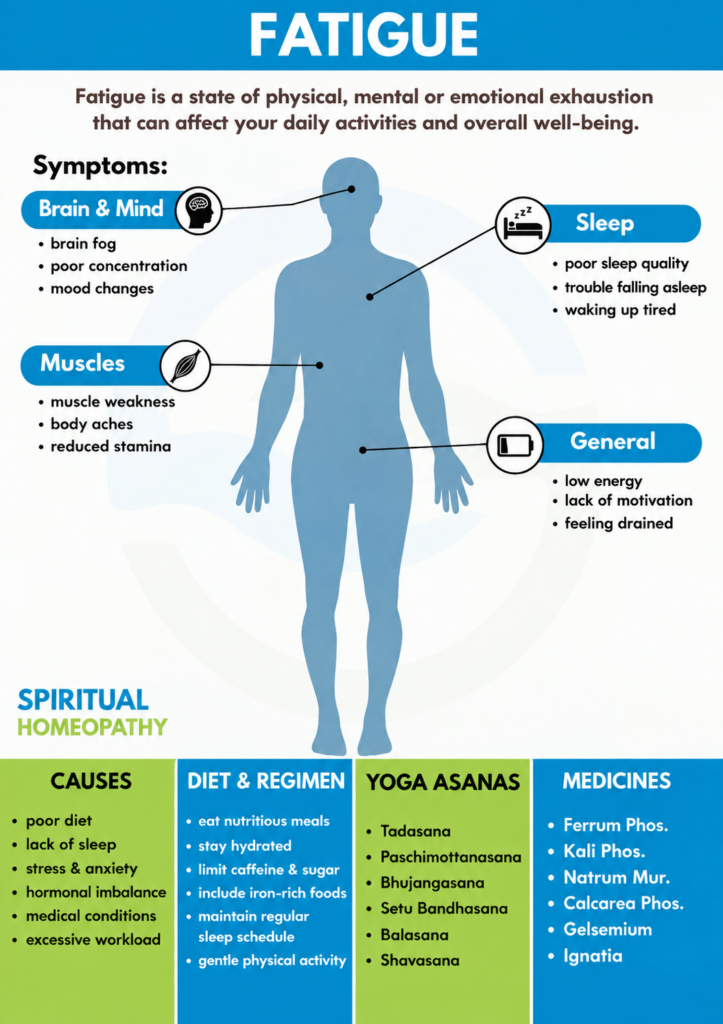
Fatigue: Understanding Persistent Tiredness, Low Energy, and Its Possible Causes
Fatigue is more than feeling tired after a busy day. It is a persistent sense of physical or mental exhaustion that may make everyday activities feel more difficult. A person may experience low energy, reduced stamina, difficulty concentrating, sleepiness, or a general lack of motivation. When these symptoms continue despite adequate rest, it is important to consider possible underlying factors.
Fatigue can develop for many reasons. Insufficient sleep, prolonged stress, poor nutrition, dehydration, excessive physical or mental workload, and an inactive lifestyle are common contributors. In some cases, ongoing fatigue may occur alongside health conditions such as anemia, thyroid disorders, diabetes, infections, or other medical problems.
The experience of fatigue is different for each person. Some individuals mainly notice physical weakness, while others may struggle with concentration, memory, mood, or maintaining their usual routine. Persistent or unexplained fatigue should be evaluated by a healthcare professional to determine its possible cause.
Spiritual Homeopathy Clinic provides individualized consultation support through its branches in Hyderabad, including Kukatpally (KPHB), Chandanagar, Dilsukhnagar, and Nallagandla. Online consultations are also available for patients across India and in more than 100 countries worldwide.
What Can Lead to Fatigue? Common Causes and Contributing Factors
Fatigue is more than ordinary tiredness. It can involve a persistent lack of energy, reduced motivation, difficulty concentrating, or a feeling that even routine activities require extra effort. Occasional fatigue may follow physical exertion or inadequate sleep, but ongoing or unexplained fatigue can sometimes be associated with an underlying health or lifestyle factor.
Common Causes and Risk Factors for Fatigue:
1. Inadequate Sleep:
Insufficient sleep, irregular sleep schedules, frequent waking, or poor sleep quality can leave the body and mind without adequate recovery.
2. Poor Nutrition:
Skipping meals or following an unbalanced diet may result in inadequate calories, protein, iron, vitamin B12, folate, or other nutrients, potentially contributing to low energy.
3. Dehydration:
Not drinking enough fluids can contribute to weakness, headaches, dizziness, and reduced physical or mental performance.
4. Physical or Mental Overexertion:
Excessive exercise, demanding work, prolonged screen use, or continuous mental activity without sufficient rest can contribute to exhaustion.
5. Stress and Emotional Strain:
Long-term stress, anxiety, emotional difficulties, or persistent mental pressure may affect sleep, concentration, and energy levels.
6. Anemia:
Low levels of healthy red blood cells or hemoglobin can reduce oxygen delivery to tissues and may cause tiredness, weakness, breathlessness, or reduced stamina.
7. Thyroid Disorders:
An underactive thyroid can slow several body processes and may be associated with fatigue, feeling unusually cold, weight changes, or reduced concentration.
8. Infections and Illness:
Viral or bacterial infections can temporarily drain energy. Fatigue may sometimes continue during recovery even after other symptoms improve.
9. Diabetes and Blood Sugar Changes:
Changes in blood glucose levels may be accompanied by tiredness, increased thirst, frequent urination, or changes in appetite.
10. Chronic Health Conditions:
Conditions affecting the heart, lungs, kidneys, liver, or other body systems may contribute to persistent fatigue, particularly when accompanied by other symptoms.
11. Certain Medications:
Some medicines can cause drowsiness, weakness, or tiredness as a side effect. Medication should not be stopped or changed without professional advice.
12. Hormonal and Reproductive Changes:
Menstruation, pregnancy, menopause, and other hormonal changes can influence energy levels in some individuals.
Because fatigue has many possible causes, persistent or unexplained tiredness should be evaluated rather than assumed to be simply due to a busy lifestyle.
Different Types of Fatigue: Understanding the Patterns and Possible Causes
Fatigue is not simply feeling tired after a busy day. It can vary in intensity, duration, and underlying cause. Some people experience temporary tiredness that improves with adequate rest, while others may have persistent fatigue associated with lifestyle factors or an underlying health condition.
Common Types of Fatigue:
1. Physical Fatigue:
This type involves reduced physical energy, muscle tiredness, or difficulty performing routine activities. It may occur after strenuous exercise, prolonged work, or insufficient recovery.
2. Mental Fatigue:
Mental fatigue is characterized by difficulty concentrating, reduced alertness, forgetfulness, or feeling mentally exhausted. Long periods of studying, working, or problem-solving may contribute to it.
3. Emotional Fatigue:
Ongoing emotional pressure, stress, or demanding personal circumstances can leave a person feeling drained, unmotivated, or unable to cope with everyday responsibilities.
4. Temporary Fatigue:
Short-term tiredness may develop because of inadequate sleep, excessive activity, travel, changes in routine, or temporary illness. It generally improves when the contributing factor is addressed.
5. Chronic Fatigue:
Fatigue that continues for weeks or repeatedly returns may require professional assessment. It can sometimes occur alongside conditions such as anemia, thyroid disorders, diabetes, sleep problems, infections, or other health concerns.
6. Post-Illness Fatigue:
Some individuals experience reduced energy while recovering from an infection or other illness. Recovery time can vary depending on the person’s overall health and the condition involved.
Recognizing the pattern and duration of fatigue can help identify possible contributing factors and determine when professional evaluation may be appropriate.
Recognizing Fatigue: Common Signs of Low Energy You Should Pay Attention To
Fatigue can affect both the body and mind, making normal daily activities feel more demanding. It may appear as simple tiredness or involve several physical, emotional, and cognitive changes. When these symptoms occur frequently or continue despite adequate rest, identifying the underlying cause is important.
Common Signs and Symptoms of Fatigue:
1. Persistent Tiredness
A continuous feeling of exhaustion or lack of energy that does not improve sufficiently with normal rest.
2. Reduced Physical Strength
You may feel unusually weak or find routine activities such as walking, climbing stairs, or household work more tiring than usual.
3. Difficulty Concentrating
Fatigue can make it harder to focus on tasks, remember information, make decisions, or remain mentally alert.
4. Excessive Sleepiness
Some people experience frequent drowsiness during the day, even after getting what seems like adequate sleep at night.
5. Low Motivation
A noticeable reduction in interest or willingness to participate in work, exercise, social activities, or everyday responsibilities may occur.
6. Headaches
Tiredness, poor sleep, dehydration, or prolonged mental strain may be accompanied by recurring headaches.
7. Irritability and Mood Changes
Persistent exhaustion may affect emotional well-being, leading to increased irritability, frustration, or difficulty managing everyday stress.
8. Muscle Aches or Heaviness
Some individuals experience tired or heavy muscles, body aches, or reduced stamina, particularly after routine physical activity.
9. Sleep Problems
Difficulty falling asleep, frequent nighttime waking, or unrefreshing sleep can occur alongside ongoing fatigue.
10. Reduced Performance
Fatigue may affect productivity at work or school and make it difficult to maintain normal physical and mental performance.
The intensity and combination of symptoms can differ from person to person. Persistent, unexplained, or worsening fatigue should not be ignored, particularly when it occurs with symptoms such as unexplained weight changes, breathlessness, fainting, fever, severe weakness, or other significant health changes. Professional evaluation can help identify possible causes and guide appropriate care.
Diet and Daily Habits for Fatigue: Practical Ways to Support Energy and Wellness
Persistent fatigue can sometimes be influenced by inadequate nutrition, dehydration, poor sleep, stress, or an irregular daily routine. A balanced diet and healthy lifestyle habits can help provide the body with essential nutrients and support consistent energy throughout the day. The right approach may vary depending on the underlying cause of fatigue.
Build meals around foods that provide protein, complex carbohydrates, healthy fats, vitamins, and minerals:
Nutrients such as iron and vitamin B12 are important for healthy blood formation and energy metabolism. Include foods such as leafy greens, legumes, eggs, dairy products, fish, and meat according to individual dietary preferences.
Long gaps between meals may leave some people feeling weak or low on energy. Try to maintain reasonably consistent meal timings and include a balanced combination of carbohydrates, protein, and healthy fats.
Even mild dehydration can contribute to tiredness and headaches. Drink water regularly throughout the day, with greater attention to fluid intake during hot weather, exercise, or illness.
Coffee, tea, energy drinks, and sugary snacks may provide temporary alertness but should not be relied upon to manage ongoing fatigue. Excessive caffeine, particularly later in the day, can also interfere with sleep.
Aim for consistent sleeping and waking times. A comfortable, quiet, and dark sleeping environment may help improve sleep quality and support better daytime energy.
When medically appropriate, activities such as walking, stretching, cycling, or light exercise can support overall fitness and may improve energy levels over time. Avoid pushing through severe exhaustion.
If work or study involves long periods of concentration, take brief breaks to relax your eyes, stretch, walk around, or practice slow breathing. This can help reduce physical and mental strain.
Ongoing stress can affect sleep, appetite, concentration, and energy. Consider incorporating relaxation practices such as meditation, deep breathing, yoga, hobbies, or time outdoors into your routine.
Balance activity with adequate recovery. Excessive exercise, long working hours, and insufficient rest can worsen tiredness rather than improve it.
Pro Tip: Keep a simple record of your sleep, meals, activity levels, stress, and fatigue. This can help identify patterns and useful lifestyle changes.
Dietary and lifestyle measures can support general well-being, but persistent fatigue may have an underlying medical cause. If tiredness continues despite adequate rest and healthy habits, consult a healthcare professional for appropriate evaluation.
Yoga for Fatigue: Gentle Poses to Support Energy and Well-Being
Yoga may be a useful supportive practice for people experiencing tiredness or low energy. Gentle movements, stretching, breathing exercises, and relaxation techniques can help improve flexibility, promote circulation, reduce stress, and support overall physical and mental well-being. The following asanas can be practiced comfortably and consistently according to individual ability.
1. Tadasana (Mountain Pose):
This simple standing posture encourages better body alignment, improves awareness of posture, and provides a gentle way to activate the muscles while beginning a yoga routine.
2. Bhujangasana (Cobra Pose):
A gentle backbend that opens the chest and stretches the front of the body. It may help promote a feeling of alertness and reduce stiffness associated with prolonged sitting.
3. Setu Bandhasana (Bridge Pose):
This posture engages the legs, hips, and back while opening the chest. Practicing it with proper technique may support circulation and provide a refreshing movement break.
4. Balasana (Child’s Pose):
A restorative posture that allows the body to relax. It can be particularly useful during a yoga session when tiredness is accompanied by physical or mental tension.
5. Adho Mukha Svanasana (Downward-Facing Dog):
This pose provides a whole-body stretch and engages several muscle groups. It may help reduce stiffness and leave the body feeling more active when performed comfortably.
6. Sukhasana with Deep Breathing (Easy Pose):
Sitting comfortably while practicing slow, controlled breathing can encourage relaxation and help manage stress-related tiredness. It also provides a quiet opportunity to focus on the breath.
7. Viparita Karani (Legs-Up-the-Wall Pose):
This gentle restorative posture can help relax the legs after a tiring day and may promote a sense of calm and physical recovery.
Yoga should be adapted to your fitness level, especially when fatigue is significant. Avoid forcing any posture or exercising when you feel faint, unusually weak, or unwell. Persistent or unexplained fatigue should not be managed with yoga alone, as it can sometimes be associated with conditions such as anemia, thyroid problems, sleep disorders, nutritional deficiencies, infections, or other health concerns. Professional evaluation is advisable when tiredness continues or affects daily activities.
Homeopathic Treatment for Fatigue: A Personalized Approach to Restoring Vitality
Fatigue is more than simply feeling tired after a busy day. Persistent tiredness, low energy, reduced concentration, and a lack of motivation may affect work, relationships, exercise, and everyday activities. Fatigue can be associated with inadequate sleep, nutritional deficiencies, prolonged stress, lifestyle factors, infections, hormonal changes, or underlying health conditions. Identifying the contributing factors is therefore important before deciding on an appropriate treatment approach.
Homeopathy follows an individualized approach, where the person’s overall health, pattern of tiredness, sleep quality, emotional state, daily routine, and other symptoms are considered together. Rather than treating tiredness as an isolated complaint, a homeopathic consultation explores possible factors associated with recurring fatigue.
During a consultation, the practitioner may consider several aspects of an individual’s health to develop a personalized care plan.
Individual Symptom Assessment:
The nature of fatigue is explored, including when it occurs, how long it lasts, what makes it better or worse, and whether it is accompanied by other symptoms.
Lifestyle and Daily Routine:
Sleep patterns, physical activity, working habits, eating schedules, and levels of daily exertion may be reviewed to identify factors that could contribute to low energy.
Nutritional Considerations:
Dietary habits and nutritional status may be discussed. When fatigue could be related to a deficiency or another medical problem, appropriate medical evaluation and testing may be recommended.
Emotional and Mental Well-being:
Ongoing stress, emotional strain, poor sleep, and mental exhaustion can influence energy levels. These factors may be included in the overall assessment.
Homeopathic care may be considered as a complementary wellness approach for individuals experiencing recurring tiredness. The focus is on understanding the person’s complete health picture and encouraging healthy routines alongside professional guidance.
Persistent fatigue should not automatically be attributed to lifestyle alone. Conditions such as anemia, thyroid disorders, diabetes, sleep disorders, infections, and other medical problems can also cause ongoing tiredness and may require conventional medical assessment.
A supportive daily routine can contribute to better energy and general well-being:
If tiredness continues for several weeks, becomes increasingly severe, or interferes with normal activities, professional medical evaluation is advisable. Seek prompt medical attention if fatigue occurs with symptoms such as unexplained weight loss, persistent fever, shortness of breath, fainting, chest pain, or significant weakness.
Spiritual Homeopathy Clinic provides personalized consultations through its Hyderabad branches, as well as online and international consultation options. A detailed assessment can help understand the possible factors associated with fatigue and determine appropriate next steps.
Homeopathy should not replace necessary medical diagnosis or evidence-based treatment, particularly when persistent fatigue may indicate an underlying health condition.
Occasional tiredness can happen after physical activity, inadequate sleep, or a stressful day. However, fatigue that persists, keeps returning, or affects your ability to work and perform everyday activities deserves proper attention. Ongoing fatigue can sometimes be linked to conditions such as anemia, thyroid problems, diabetes, sleep disorders, infections, nutritional deficiencies, or other underlying health concerns.
At Spiritual Homeopathy, our homeopathic doctors take an individualized approach by considering your symptoms, medical history, sleep pattern, lifestyle, nutritional habits, stress levels, and overall health. Consultations are available at our Hyderabad clinics in Kukatpally (KPHB), Chandanagar, Dilsukhnagar, and Nallagandla, along with secure online consultations across India and in more than 100 countries worldwide.
If fatigue is persistent or unexplained, appropriate medical evaluation is important to identify possible underlying causes. To schedule a consultation, call 9069 176 176.
You can combat fatigue by improving your sleep, adjusting your diet, and managing daily stress.
Fatigue is a deep, ongoing exhaustion that does not go away with rest, and it is usually caused by lifestyle habits, mental health issues, or medical conditions.
Yes, fatigue is a frequent sign that your body is fighting an infection or an underlying sickness. When you are sick, your immune system works overtime and uses energy that normally fuels your day-to-day activities.
To remove fatigue from your body, you need to fix your sleep, drink more water, and eat balanced meals.
Fatigue is most commonly caused by deficiencies in Vitamin B12, Vitamin D, and iron