
Frozen Shoulder (Adhesive Capsulitis) is a condition that causes pain and significant stiffness in the shoulder joint. It is characterized by a global restriction of both active and passive movement in the glenohumeral joint. This limitation of motion can make everyday activities challenging and may progress in stages, often leading to discomfort and reduced shoulder function.
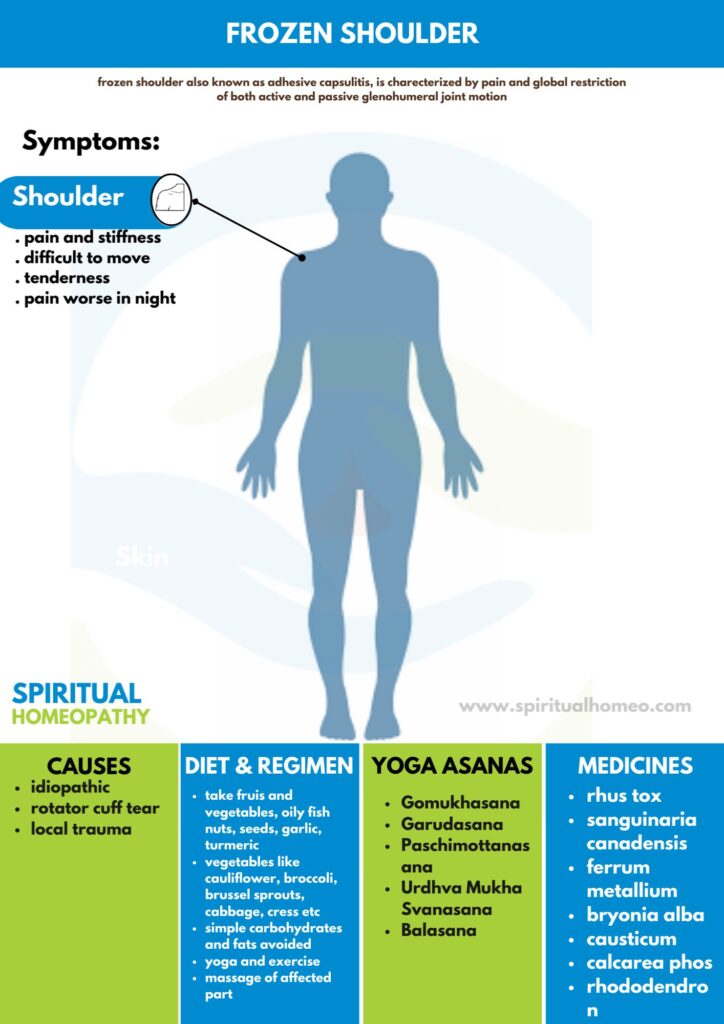
Frozen Shoulder, also known as Adhesive Capsulitis, occurs when the joint capsule surrounding the shoulder becomes thickened, contracted, and adheres to the anatomic neck of the humerus. This condition leads to significant stiffness and pain in the shoulder joint, restricting both active and passive movement.
Frozen shoulder can be primary (idiopathic), where the cause is unknown, or secondary, often associated with conditions such as diabetes mellitus, thyroid disorders, hyperlipidemia, pulmonary issues, or prior shoulder trauma. Women, particularly in their 50s and 60s, are more commonly affected.
Frozen shoulder typically develops in three phases:
Freezing Phase: Gradual onset of pain with increasing stiffness.
Frozen Phase: Significant restriction of movement with relatively reduced pain.
Thawing Phase: Gradual improvement in motion over 1 to 3 years, though some residual stiffness may persist.
Prolonged immobility of the shoulder joint can lead to adhesions, making early guided mobilization important to prevent long-term complications.
The likelihood of developing frozen shoulder increases after conditions or procedures that limit arm movement, including:
Stroke
Mastectomy
Shoulder surgery
Other medical conditions that reduce shoulder mobility
Understanding these factors helps in planning individualized management and rehabilitation strategies.
Management typically focuses on restoring shoulder mobility and reducing pain:
Range-of-motion exercises: Gentle stretching and physiotherapy to improve flexibility and reduce stiffness.
Medication or injections: Corticosteroid injections or local analgesics may be recommended to reduce inflammation and pain.
Surgical intervention: Rarely, arthroscopic surgery may be required to release tight tissues and restore function.
Recurrence in the same shoulder is uncommon, but some individuals may develop frozen shoulder in the opposite shoulder.
Consultation Guidance: At Spiritual Homeopathy Clinic, patients can access in-clinic consultations at multiple Hyderabad branches (Kukatpally, Chandanagar, Dilsukhnagar, and Nallagandla) as well as online and international consultations. Early assessment and a tailored management plan can support recovery and help maintain shoulder function.
The exact cause of frozen shoulder remains unclear, but certain factors can increase the likelihood of developing this condition. Women are more commonly affected than men, particularly those between 40 and 60 years of age.
Frozen shoulder is often associated with diabetes mellitus, and individuals with diabetes are at a higher risk. Other factors that may contribute include:
Rotator cuff tears: Damage to the shoulder’s tendons
Local trauma: Shoulder injury or surgery
Myocardial infarction: History of a heart attack
Hemiplegia: Paralysis on one side of the body, often following a stroke
While these factors may increase susceptibility, not everyone with these conditions will develop frozen shoulder. Identifying personal risk factors can guide individualized assessment and management, which may help in early intervention and tailored rehabilitation strategies.
Frozen shoulder, or adhesive capsulitis, generally progresses through three main stages, each with distinct symptoms and limitations:
Freezing Stage:
This initial phase involves gradually increasing pain and stiffness in the shoulder. Movement becomes more difficult, and discomfort may worsen, particularly at night. This stage can last from a few weeks to several months.
Frozen Stage:
In this phase, pain often lessens, but stiffness becomes more pronounced. The shoulder’s range of motion is significantly limited, making everyday activities challenging. This stage can last several months up to a year.
Thawing Stage:
The final phase involves a gradual improvement in mobility. Pain continues to decrease, and shoulder movement becomes less restricted, though full recovery of range of motion may take several months.
The duration of these phases can vary from several months to up to two years. Early assessment and intervention—available at Spiritual Homeopathy Clinic’s Hyderabad branches, online, and international consultations—can support individualized management and help maintain shoulder function during recovery.
The primary symptoms of frozen shoulder are pain and stiffness, which can make shoulder movement difficult or, in severe cases, nearly impossible. Common signs include:
A dull or aching pain in one shoulder, sometimes radiating to the upper arm or surrounding muscles.
Pain that may worsen at night, affecting sleep quality.
Limited range of motion, making it difficult to perform daily activities, with pain intensifying during certain movements.
Frozen shoulder typically progresses through three distinct stages, each with its own symptoms and duration:
1. Freezing Stage
Gradual increase in pain during shoulder movement, which can sometimes be severe.
Pain may intensify at night.
Progressive restriction of shoulder mobility.
Duration: Approximately 6 to 9 months.
2. Frozen Stage
Pain may decrease, but stiffness becomes more pronounced.
Shoulder movement is significantly limited, affecting daily tasks.
Duration: Typically 4 to 12 months.
3. Thawing Stage
Gradual improvement in range of motion and flexibility.
Pain continues to subside, allowing easier performance of daily activities.
Duration: Approximately 6 months to 2 years.
If you notice these symptoms, especially if they are frequent, severe, or affecting daily activities, it is important to consult a healthcare professional. Spiritual Homeopathy Clinic offers consultations at multiple Hyderabad branches, as well as online and international appointments to support an individualized management approach.
A balanced diet can play a supportive role in managing frozen shoulder by helping reduce inflammation and supporting overall joint health. Along with medical guidance, appropriate dietary choices and daily routines may assist in improving comfort and mobility.
To help manage inflammation and support recovery, the following foods may be included as part of a balanced diet:
Anti-inflammatory foods:
Include a variety of fruits, vegetables, and oily fish rich in omega-3 fatty acids, such as salmon, mackerel, and sardines.
Nuts and seeds:
These provide healthy fats and antioxidants that support general joint and tissue health.
Spices:
Ginger, garlic, and turmeric are commonly used for their anti-inflammatory properties.
Antioxidant-rich vegetables:
Vegetables such as cauliflower, broccoli, Brussels sprouts, cabbage, cress, and sweet potatoes help support the body’s natural healing processes.
Fruits:
Berries, pineapples, and red grapes are known for their antioxidant and anti-inflammatory benefits.
Limiting certain foods may help prevent aggravation of symptoms:
Simple carbohydrates:
Excess intake may contribute to increased inflammation.
Saturated and trans fats:
Often found in processed foods, these may worsen joint discomfort and stiffness.
Gentle exercises and yoga, when performed correctly, may help improve shoulder mobility and reduce stiffness. These practices should be done within comfort limits and not forcefully.
Pendulum Stretch
Towel Stretch
Finger Walk
Cross-Body Reach
Armpit Stretch
Outward Rotation
Inward Rotation
Gomukhasana (Cow Face Pose)
Pranayama in Sukasana (breathing exercises in a seated posture)
Parvatasana (Mountain Pose)
Yoga and breathing practices are supportive measures and should not replace medical evaluation or treatment.
Relaxation techniques such as meditation and listening to calming music may help reduce stress, which can indirectly support pain management and overall well-being.
Gentle movements:
Move the affected shoulder slowly within a pain-free range to help reduce stiffness.
Massage:
Gentle massage may help improve local blood circulation and muscle relaxation.
Warm or cold compresses:
Applying heat or cold may provide temporary relief from pain and inflammation.
Proper posture:
Maintaining correct posture helps avoid unnecessary strain on the shoulder.
Sleep support:
Using one pillow under the head and another between the elbow and body on the affected side can help reduce pressure on the shoulder during sleep.
These dietary measures, lifestyle adjustments, and supportive exercises may assist in managing frozen shoulder symptoms. If pain, stiffness, or restricted movement persists or worsens, consultation with a qualified healthcare professional is recommended.
At Spiritual Homeopathy Clinic, consultations are available across multiple branches in Hyderabad, as well as through online and international consultation services.
Yoga postures, when practiced gently and under guidance, may support shoulder mobility and help reduce stiffness associated with frozen shoulder. These practices are supportive in nature and should be performed within individual comfort limits.
This asana helps stretch the shoulders, arms, and upper back, which may improve flexibility and reduce stiffness. It also opens the chest and helps release tension around the shoulder area.
How to do it:
Sit in a comfortable cross-legged position (Sukhasana).
Bring your right arm behind your back and bend it at the elbow, reaching the hand down the center of your back.
Reach your left arm over your head, bend the elbow, and gently attempt to clasp the right hand.
Hold the pose for about 30 seconds, then switch sides.
Pranayama helps reduce stress and muscular tension, which may indirectly ease tightness around the shoulders.
How to do it:
Sit in a relaxed cross-legged position (Sukhasana).
Close your eyes and focus on slow, deep breathing.
Inhale through the nose, pause briefly, and exhale slowly.
Continue for 5–10 minutes to promote relaxation.
This pose stretches the upper body, including the shoulders, and encourages proper spinal alignment, which may help reduce shoulder tension.
How to do it:
Stand with feet hip-width apart.
Raise both arms overhead, palms facing each other, and stretch upward while lengthening the spine.
Hold for about 30 seconds with steady breathing.
Lower the arms slowly and repeat.
Bhujangasana helps open the chest and shoulders, supporting improved mobility and relief from stiffness. It also stretches the front of the shoulders.
How to do it:
Lie on your stomach with legs extended and palms under the shoulders.
Inhale and gently lift your chest using back muscles.
Keep elbows close to the body and avoid straining the lower back.
Hold for 20–30 seconds, then slowly release.
This gentle movement between Cat and Cow poses helps mobilize the spine and release tension in the shoulders, neck, and upper back.
How to do it:
Begin in a tabletop position with wrists under shoulders and knees under hips.
Inhale, drop the abdomen, and lift the chest (Cow Pose).
Exhale, round the spine, and tuck the chin (Cat Pose).
Continue for 1–2 minutes in a slow, comfortable rhythm.
This asana strengthens the back while stretching the shoulders, chest, and spine, which may help reduce tightness in the shoulder region.
How to do it:
Lie on your back with knees bent and feet flat on the floor.
Keep arms beside the body, palms facing down.
Press the feet into the floor and lift the hips gently.
Hold for 20–30 seconds, then lower slowly.
This seated twist stretches the shoulders, arms, and back while improving spinal mobility.
How to do it:
Sit with legs extended.
Bend the right knee and place the right foot outside the left thigh.
Twist the torso to the right, using the left elbow to gently support the movement.
Hold for 20–30 seconds, then repeat on the other side.
Incorporating these yoga practices into a daily routine may support shoulder mobility and comfort when done regularly and gently. Movements should remain within a pain-free range. If stiffness, pain, or movement restriction persists, consultation with a healthcare professional is advisable.
At Spiritual Homeopathy Clinic, guidance is available through in-clinic consultations across multiple branches in Hyderabad, as well as online and international consultation options.
At Spiritual Homeopathy Clinic, care is guided by a holistic approach that follows established principles of homeopathy while considering the physical and emotional aspects of health. The focus remains on understanding each patient’s condition thoroughly and providing individualized care based on clinical evaluation.
Our team of qualified practitioners emphasizes attentive listening and careful assessment to support patients through a structured and responsible treatment process.
The treatment approach is based on understanding the interaction between physical symptoms, emotional factors, and overall health status. Rather than focusing only on isolated symptoms, care is directed toward identifying contributing factors that may influence the condition.
This approach supports long-term management by encouraging balance and overall well-being through individualized assessment and follow-up under professional guidance.
Homeopathy consultations are available at multiple branches in Hyderabad, where practitioners assess symptoms, medical history, and lifestyle factors. Online and international consultations are also available for patients who are unable to visit the clinic in person. Each consultation aims to understand the patient’s concerns clearly and guide care accordingly.
Care plans are designed on an individual basis, considering the nature of the condition, symptom pattern, and overall health. This personalized approach supports ongoing management and addresses contributing factors rather than isolated symptoms alone.
Regular follow-up is an important part of the care process. Progress is reviewed over time, and guidance is adjusted as needed to support continuity of care and patient well-being.
Patient health and safety remain central to all services at Spiritual Homeopathy Clinic. Care is provided with professional responsibility, clear communication, and attention to individual needs. Whether managing a specific health concern or supporting general wellness, patients receive structured guidance throughout their care journey.
Consultations are available across multiple branches in Hyderabad, with options for online and international consultation.
You should consult a healthcare professional if frozen shoulder symptoms become persistent, worsen over time, or begin to interfere with daily activities. Early evaluation helps assess the stage of the condition and supports appropriate, individualized care.
Seek consultation if you experience:
Ongoing shoulder pain lasting several weeks
Progressive stiffness or reduced range of shoulder movement
Difficulty performing routine activities such as dressing or lifting the arm
Pain that worsens at night or disturbs sleep
Shoulder discomfort following injury, surgery, or prolonged immobility
Limited improvement despite regular exercises and lifestyle measures
At Spiritual Homeopathy Clinic, consultations are available across multiple branches in Hyderabad, including Kukatpally, Chandanagar, Dilsukhnagar, and Nallagandla. Online and international consultations are also available for patients who are unable to visit in person. A professional consultation helps guide long-term management based on symptoms, stage of the condition, and overall health.
For appointments or consultation guidance, contact 9069 176 176.
Frozen shoulder, also known as adhesive capsulitis, is a condition marked by persistent shoulder pain and a significant restriction in the movement of the shoulder joint. Both active and passive range of motion become limited, which can make routine activities involving arm movement difficult. The condition usually develops gradually over time.
The exact cause of frozen shoulder is not always clearly understood. However, several factors are known to increase the likelihood of developing this condition, including:
Diabetes mellitus
Rotator cuff tear
Trauma or injury to the shoulder
Heart attack (myocardial infarction)
Stroke or hemiplegia (paralysis affecting one side of the body)
Identifying these contributing factors helps guide an individualized care approach during consultation.
Symptoms of frozen shoulder typically develop slowly and may progress through different stages. Common symptoms include:
Shoulder pain during movement, which may gradually worsen
Increased pain at night, often affecting sleep
Restricted range of motion, making it difficult to lift or rotate the arm
The condition may last for several months, commonly around 6 to 9 months, with pain and stiffness increasing initially and gradually easing over time. Medical consultation is advisable if symptoms persist or interfere with daily activities.
WhatsApp us