


WhatsAppCall

gerd (Gastro-Esophageal Reflux Disease)

Living with GERD: Top Tips for Managing Acid Reflux and Improving Digestive Health

gerd (Gastro-Esophageal Reflux Disease)

Homeopathy treatment for gerd (Gastro-Esophageal Reflux Disease)

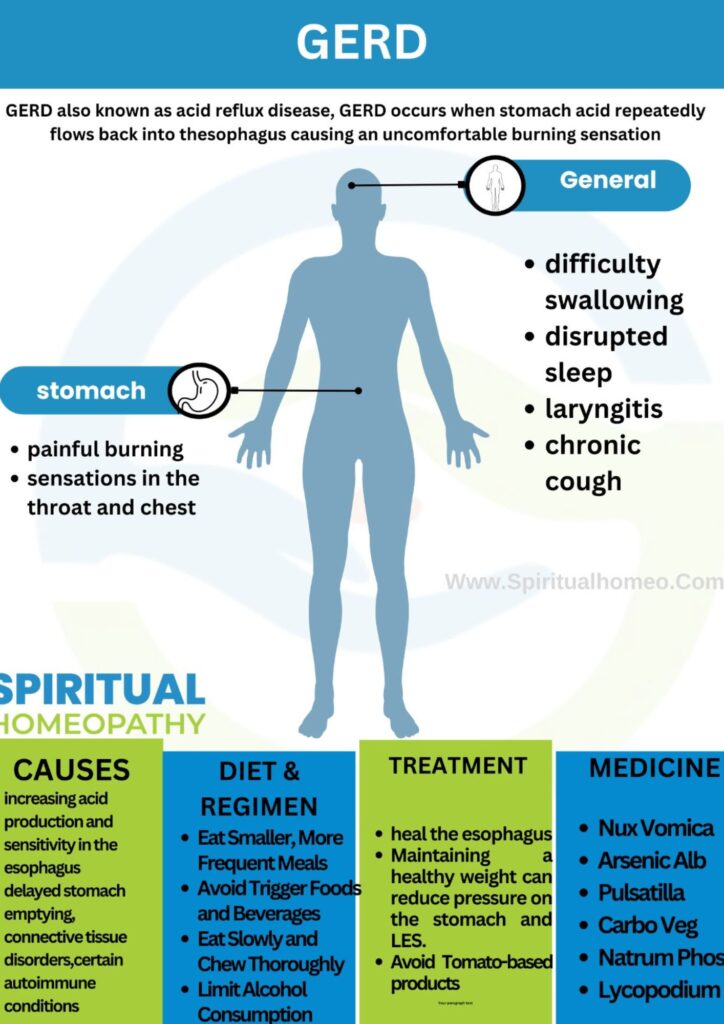
Gastroesophageal reflux disease (GERD) occurs when stomach acid or other gastric contents repeatedly flow back into the lower esophagus.

Everything You Need to Know

OVERVIEW

Motility disorders of the distal esophagus, such as reduced peristaltic amplitude, slower contraction speed, and prolonged contraction duration, lead to extended exposure of the esophagus to refluxed stomach contents.

Causes of GERD

Several factors contribute to the development of gastroesophageal reflux disease (GERD), including:

  • Hiatal hernia and sliding hiatus

  • Fatty meals and large meals

  • Diabetes mellitus and gastroparesis

  • Obesity and pregnancy

  • Prolonged gastric tube intubation

  • Scleroderma

  • Medications such as anticholinergics, β-adrenergic agents, calcium channel blockers, and nitrates

  • Ascites

  • Lifestyle factors like alcohol consumption and smoking

  • Pyloric obstruction

  • Conditions like Zollinger-Ellison syndrome (Z-E syndrome)

These factors can weaken the lower esophageal sphincter (LES), leading to the reflux of stomach contents into the esophagus.

Types of GERD (Gastroesophageal Reflux Disease)

Gastroesophageal reflux disease (GERD) encompasses various types, each with distinct symptoms and severity. Understanding the different types is crucial for appropriate treatment:

  1. Non-Erosive Reflux Disease (NERD): This is the most common form of GERD, where patients experience heartburn and regurgitation without visible damage to the esophagus.

  2. Erosive Esophagitis: In this type, acid reflux causes visible inflammation and damage to the esophageal lining. This can lead to more severe complications if left untreated.

  3. Barrett’s Esophagus: A serious condition where long-term acid exposure changes the cells in the esophagus, increasing the risk of esophageal cancer. Regular monitoring is essential for early detection of potential cancerous changes.

  4. Silent GERD: Silent GERD is characterized by the absence of typical symptoms like heartburn. It may cause throat issues, chronic cough, or asthma-like symptoms, making it harder to diagnose.

  5. Laryngopharyngeal Reflux (LPR): This type occurs when stomach acid reaches the throat and voice box, leading to symptoms such as hoarseness, sore throat, or a persistent cough.

Each type of GERD requires a tailored treatment approach, highlighting the importance of a proper diagnosis to manage symptoms effectively.

Signs and Symptoms of GERD (Gastroesophageal Reflux Disease)

Gastroesophageal reflux disease (GERD) presents with a wide range of symptoms, which can be categorized as typical, atypical, extraesophageal, and sleep-related.

Typical Symptoms:

  • Heartburn: A burning sensation in the chest, often after eating.

  • Acid Regurgitation: The feeling of stomach acid backing up into the throat or mouth.

Atypical Symptoms:

  • Dysphagia: Difficulty swallowing.

  • Globus Sensation: The feeling of a lump in the throat.

  • Noncardiac Chest Pain: Chest discomfort not related to heart issues.

  • Dyspepsia or Abdominal Pain: Indigestion or discomfort in the upper abdomen.

Extraesophageal Symptoms:

GERD can also affect areas outside the esophagus:

  • Hoarseness or Sore Throat: Often caused by stomach acid irritating the throat.

  • Sinusitis & Otitis Media: Chronic sinus infections or middle ear infections.

  • Chronic Cough & Laryngitis: Persistent cough or inflammation of the voice box.

  • Dental Erosions: Enamel damage due to acid exposure.

  • Non-Atopic Asthma: Asthma-like symptoms not caused by allergies.

  • Recurrent Aspiration or Pulmonary Fibrosis: Breathing problems due to inhalation of stomach contents.

Sleep-Related GERD:

  • GERD can disrupt sleep, leading to multiple awakenings due to:

    • Substernal Burning: A burning sensation below the breastbone.

    • Chest Discomfort: Often accompanied by indigestion or heartburn.

    • Water Brash: A sour taste in the mouth caused by regurgitated acid.

    • Coughing or Choking: A sensation of choking while lying down.

Malignancy Risks:

  • Esophageal Adenocarcinoma: Long-term GERD can increase the risk of this type of cancer.

  • Head and Neck Cancer: Chronic acid reflux can contribute to cancers in these areas.

Barrett’s Esophagus:

  • Found in 10–20% of patients with reflux esophagitis, Barrett’s esophagus occurs when chronic acid reflux injures the squamous epithelium, which is then replaced by columnar cells. This condition can increase the risk of malignant transformation.

  • Upper GI Scopy: This procedure, assisted by biopsy, can help diagnose Barrett’s esophagus.

Understanding these symptoms and seeking early diagnosis and treatment can help manage GERD and prevent serious complications.

Diet and Regimen for Managing GERD

To manage GERD effectively, it’s important to focus on a balanced diet that promotes digestive health while reducing reflux symptoms. Here are some dietary guidelines to follow:

Recommended Foods:

  • Whole Foods: Choose natural, whole foods that are low in fat and sugar. These include:

    • Fruits and Vegetables: Rich in fiber, vitamins, and minerals that support overall health.

    • Whole Grains: Such as oats, brown rice, and whole wheat bread, which help with digestion.

    • Nonfat Dairy: Opt for low-fat or fat-free dairy products to avoid excess fat intake.

    • Lean Protein: Fish, poultry, and plant-based proteins are excellent sources of nutrition.

Foods to Avoid:

  • Fatty Meats: Limit consumption of fatty cuts of meat, as they can trigger reflux.

  • Sugary Drinks: Avoid sugary beverages, especially carbonated drinks, which can increase bloating and acid production.

  • Processed Foods: These often contain unhealthy fats, added sugars, and preservatives that can worsen GERD symptoms.

  • Fatty, Sugary Desserts: Sweets and desserts that are high in fat and sugar can lead to acid reflux.

Limit Alcohol and Caffeine:

  • Alcohol: If you consume alcohol, do so in moderation, as it can relax the lower esophageal sphincter and worsen reflux.

  • Caffeine: Limit your intake of caffeine, as it can irritate the esophagus and trigger GERD symptoms.

By following these dietary guidelines, you can help manage GERD and reduce the frequency and severity of symptoms. A healthy diet combined with proper lifestyle changes plays a vital role in improving digestive health.


Yoga can be a beneficial practice for managing GERD (Gastroesophageal Reflux Disease) by promoting relaxation, reducing stress, and improving digestion. Certain yoga poses help strengthen the digestive system, support the lower esophageal sphincter, and prevent acid reflux. Here are some yoga asanas (poses) that may help alleviate GERD symptoms:

1. Sukhasana (Easy Pose)

  • Benefits: Helps in relaxation, calming the mind, and improving posture.

  • How to Perform: Sit with your legs crossed, keeping your back straight and your hands resting on your knees. Close your eyes and take deep breaths. Hold the pose for 5–10 minutes while focusing on your breathing.

2. Marjaryasana-Bitilasana (Cat-Cow Pose)

  • Benefits: Improves digestion by stimulating the abdominal organs and relieving tension in the spine.

  • How to Perform: Start on your hands and knees with wrists aligned under your shoulders and knees under your hips. Inhale as you arch your back (cow pose), lifting your chest and tailbone, then exhale as you round your back (cat pose), tucking your chin and tailbone. Repeat for 10–15 breaths.

3. Setu Bandhasana (Bridge Pose)

  • Benefits: Strengthens the core and pelvic muscles, helps with digestion, and supports the lower esophageal sphincter.

  • How to Perform: Lie on your back with your knees bent and feet flat on the floor, hip-width apart. Inhale as you lift your hips towards the ceiling, squeezing your glutes and thighs. Keep your arms by your sides, pressing your palms into the floor. Hold the pose for 15–30 seconds and slowly release.

4. Viparita Karani (Legs Up the Wall Pose)

  • Benefits: Reduces stress, improves circulation, and helps calm the nervous system.

  • How to Perform: Lie on your back with your legs extended up against a wall, keeping your body at a 90-degree angle. Relax your arms by your sides and breathe deeply. Hold the position for 5–10 minutes.

5. Paschimottanasana (Seated Forward Bend)

  • Benefits: Stretches the back and promotes relaxation, improving digestion and relieving stress.

  • How to Perform: Sit with your legs extended straight in front of you. Inhale, lengthen your spine, and exhale as you hinge from the hips, bringing your chest toward your thighs. Hold your feet or ankles, and hold the stretch for 15–30 seconds.

6. Ardha Matsyendrasana (Half Spinal Twist)

  • Benefits: Stimulates digestion and improves the function of the digestive organs.

  • How to Perform: Sit with your legs extended in front of you. Bend your right knee and place your foot on the floor, then twist your torso to the right, placing your left elbow on the outside of your right knee. Hold for 15–30 seconds and repeat on the other side.

7. Uttanasana (Standing Forward Bend)

  • Benefits: Relieves tension in the body and calms the mind, which can help reduce stress-induced reflux.

  • How to Perform: Stand with your feet hip-width apart. Inhale, then exhale as you fold forward from your hips, bringing your hands to the floor or your ankles. Let your head relax toward the ground. Hold for 15–30 seconds.

8. Adho Mukha Svanasana (Downward-Facing Dog)

  • Benefits: Strengthens the abdominal muscles, improves circulation, and helps reduce stress.

  • How to Perform: Start on your hands and knees, then lift your hips toward the ceiling, forming an inverted “V” shape with your body. Keep your hands and feet firmly planted on the floor. Hold for 15–30 seconds.

Tips for Practicing Yoga for GERD:

  • Avoid Doing Yoga Immediately After Meals: Wait at least 1-2 hours after eating before practicing yoga to avoid triggering reflux.

  • Practice Gentle Poses: Focus on gentle and restorative yoga poses that help calm the nervous system and improve digestion.

  • Breathing Exercises: Incorporate deep breathing techniques like pranayama to reduce stress and support digestion.

  • Mindful Practice: Pay attention to how your body feels during each pose and avoid overstretching or pushing yourself too hard.

By incorporating these yoga poses into your daily routine, you can potentially alleviate some GERD symptoms, improve digestion, and reduce stress, leading to better overall well-being. Always consult with a healthcare professional if you have severe GERD symptoms or underlying medical conditions.


Why Choose Spiritual Homeopathy for Your Health Needs?

At Spiritual Homeopathy, we provide a holistic approach to healing by combining traditional homeopathic remedies with a deep understanding of the spiritual and emotional aspects of health. Our experienced team of homeopathic practitioners is dedicated to offering compassionate, personalized care that focuses on your unique needs. We aim to help you achieve lasting well-being through a balanced, individualized treatment plan.

Our Healing Approach

We believe that true healing occurs when the body, mind, and spirit are in harmony. Instead of merely addressing symptoms, our approach focuses on uncovering and treating the root causes of your health concerns. By restoring balance within your body and supporting its natural healing ability, we empower you to enjoy better health and vitality.

Services We Offer

Consultations: Our skilled homeopaths in Hyderabad provide thorough consultations to understand your health issues, medical history, and individual needs. We also offer online consultations for your convenience. We take the time to listen to your story and understand your specific health goals, developing a customized treatment plan that’s tailored to your needs.

Homeopathic Remedies: At Spiritual Homeopathy, we offer a wide selection of safe, effective, and natural homeopathic remedies to treat various health conditions. Whether you’re dealing with acute ailments or chronic diseases, our remedies work gently to restore balance in the body, without the harsh side effects associated with conventional medications.

Follow-Up Care: We understand that healing is a journey, which is why we emphasize continuous support throughout your treatment. Our team will regularly monitor your progress, adjust your treatment plan as needed, and ensure that you are on the path to optimal health and well-being.

Our Commitment to Your Health

Your health and wellness are our top priority. At Spiritual Homeopathy, we are dedicated to providing you with the highest standard of care, personalized treatment, and the ongoing support you need to achieve your health goals. Whether you’re seeking relief from a specific health issue or aiming to improve your overall well-being, we are here to help you every step of the way.

Choose Spiritual Homeopathy today and experience the power of holistic healing designed for your unique needs.

FAQ: Understanding Gastroesophageal Reflux Disease (GERD)

What is Gastroesophageal Reflux Disease (GERD)?

Gastroesophageal reflux disease (GERD) is a chronic digestive condition where stomach acid or bile irritates the lining of the esophagus due to the frequent backward flow (reflux) of gastric contents into the lower part of the esophagus. This leads to various uncomfortable symptoms and complications if left untreated.

What Causes Gastroesophageal Reflux Disease (GERD)?

Several factors can contribute to GERD, including:

  • Hernias and fatty meals

  • Conditions like diabetes mellitus and a sliding hiatus

  • Prolonged use of gastric tubes for intubation

  • Scleroderma and other diseases

  • Excessive alcohol consumption, smoking, or pregnancy

  • Pyloric obstruction, gastroparesis, and fatty foods

  • Large meals and certain health conditions, such as Zollinger-Ellison syndrome (Z-E syndrome)

What Are the Symptoms of Gastroesophageal Reflux Disease (GERD)?

Common symptoms of GERD include:

  • Heartburn or a burning sensation in the chest

  • Acid regurgitation, where stomach contents rise into the throat or mouth

  • Difficulty swallowing (dysphagia)

  • Sensation of a lump in the throat (globus sensation)

  • Non-cardiac chest pain, often mistaken for a heart problem

  • Indigestion or discomfort in the upper abdomen (dyspepsia)

  • Abdominal pain or discomfort

How Is GERD Treated?

While conventional treatments focus on medications to manage acid production and symptoms, a holistic approach can also provide significant relief, often addressing underlying causes and lifestyle factors contributing to the condition.

If you’re experiencing symptoms of GERD, seeking medical advice is crucial for an accurate diagnosis and appropriate treatment.