
H. pylori infection is a bacterial infection that affects the stomach lining and can remain unnoticed in some people. When symptoms occur, they may include upper abdominal pain or burning, bloating, frequent burping, nausea, reduced appetite, indigestion, and a feeling of fullness. Persistent infection can contribute to chronic gastritis and peptic ulcers, and long-standing H. pylori infection is associated with an increased risk of certain stomach cancers. Proper testing and medical evaluation are therefore important when symptoms continue or recur.
At Spiritual Homeopathy, we take an individualized approach to digestive health by considering each person’s symptoms, medical history, food habits, lifestyle, stress levels, and overall wellbeing. Homeopathic consultation may be considered as complementary support for digestive wellness, but it should not replace appropriate testing or proven medical treatment for eliminating H. pylori. Confirmed H. pylori infection generally requires medical management aimed at eradicating the bacteria and preventing complications.
We provide personalized homeopathy consultations for digestive concerns in Hyderabad through our clinics in KPHB, Chandanagar, Dilsukhnagar, and Nallagandla, along with online consultations for patients across India and internationally. If you experience recurring stomach discomfort, indigestion, bloating, nausea, or other persistent digestive symptoms, professional evaluation can help identify the underlying cause and guide appropriate care. Spiritual Homeopathy focuses on patient-centered digestive wellness while encouraging proper medical assessment whenever required.
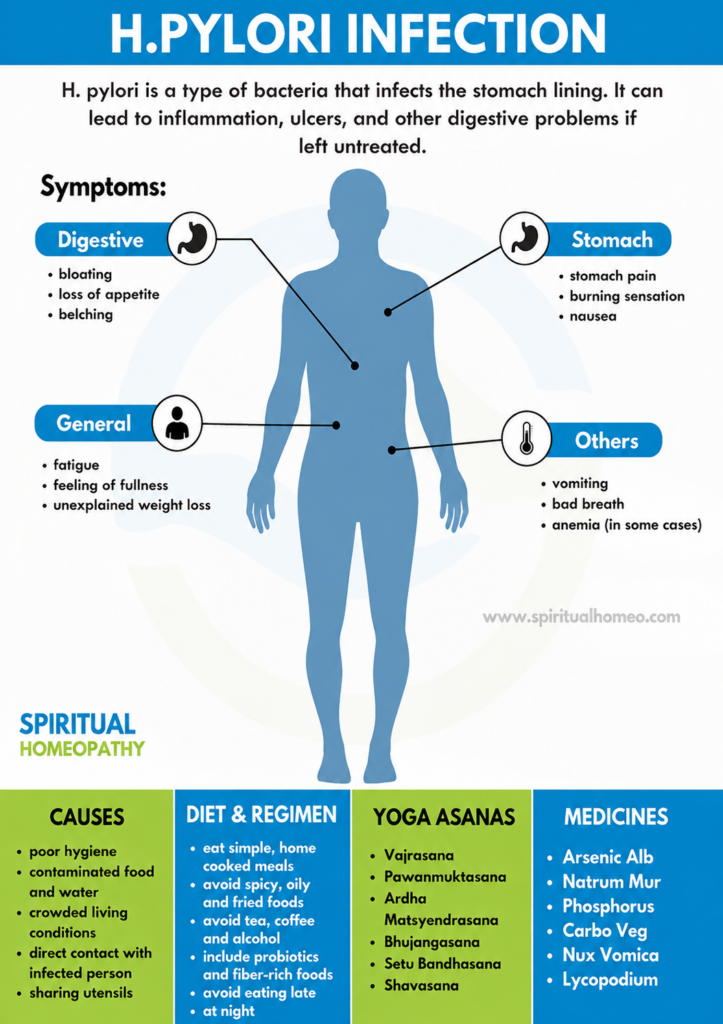
H. pylori infection is a bacterial infection caused by Helicobacter pylori, a microorganism that can colonize the protective lining of the stomach. Many people may carry H. pylori without noticeable symptoms, while others can develop ongoing digestive complaints such as upper abdominal discomfort, burning or pain, bloating, frequent burping, nausea, indigestion, and early fullness after meals.
When the infection persists, it can cause inflammation of the stomach lining, known as gastritis, and may contribute to the development of peptic ulcers. In some individuals, long-term H. pylori infection is also associated with a higher risk of certain stomach cancers. For this reason, recurring or unexplained stomach symptoms should be properly assessed rather than treated based only on symptoms.
H. pylori may spread through contaminated food or water, saliva, or contact with infected bodily fluids, although the exact route of transmission is not always clear. Infection is often acquired during childhood and may remain present for years if it is not detected and treated. Diagnosis can involve tests such as a urea breath test, stool antigen test, or other investigations recommended by a healthcare professional.
At Spiritual Homeopathy Clinic, consultations focus on understanding individual digestive symptoms, medical history, dietary habits, lifestyle, and overall wellbeing. Our clinics in KPHB, Chandanagar, Dilsukhnagar, and Nallagandla provide personalized consultations, along with online consultation options for patients across India and internationally.
Important: Confirmed H. pylori infection requires appropriate medical evaluation and evidence-based treatment to eradicate the bacteria and reduce the risk of complications. Homeopathic consultation should not replace testing or prescribed eradication therapy.
H. pylori infection occurs when Helicobacter pylori bacteria colonize the stomach lining. The infection is often acquired during childhood and can remain in the stomach for years without obvious symptoms. Several environmental, hygiene-related, and household factors may increase the likelihood of acquiring or spreading the bacteria.
Common Causes and Risk Factors of H. pylori Infection:
1. Contaminated Food or Water:
Consuming food or drinking water contaminated with H. pylori may contribute to infection, particularly in areas where sanitation and water quality are poor.
2. Inadequate Hand Hygiene:
Failing to wash hands properly after using the bathroom or before handling food can facilitate the spread of bacteria.
3. Close Household Contact:
Living closely with someone who carries H. pylori may increase exposure, as the bacteria can potentially spread through saliva or other bodily fluids.
4. Shared Utensils and Personal Items:
Sharing eating utensils, cups, or other items that come into contact with saliva may contribute to transmission.
5. Poor Sanitation:
Limited access to clean water, proper sewage systems, and hygienic living conditions is associated with a greater risk of H. pylori infection.
6. Crowded Living Conditions:
Living in crowded households or environments may increase opportunities for person-to-person transmission.
7. Childhood Exposure:
H. pylori is commonly acquired at a young age. Having close contact with infected family members during childhood may increase the likelihood of infection.
8. Previous Household Infection:
A family history of H. pylori infection, particularly among people living in the same household, may be associated with increased exposure.
9. Geographic and Socioeconomic Factors:
The infection is more common in regions where sanitation, clean water access, and living conditions are limited.
10. Untreated Long-Term Infection:
Once acquired, H. pylori can persist for many years if it is not detected and appropriately treated. Persistent infection may contribute to gastritis, peptic ulcers, and other stomach-related complications.
Identifying possible risk factors can help with prevention and encourage timely evaluation when symptoms such as persistent stomach pain, indigestion, bloating, nausea, or unexplained weight loss occur. H. pylori infection should be confirmed through appropriate medical testing rather than diagnosed from symptoms alone.
Helicobacter pylori infection can affect individuals differently depending on the condition it produces in the stomach. Some people carry the bacteria without noticeable symptoms, while others may develop inflammation, ulcers, or ongoing digestive complaints.
1. Asymptomatic H. pylori Infection:
In some individuals, H. pylori may be present without causing obvious symptoms. The infection can remain unnoticed until it is discovered during testing for another digestive concern.
2. H. pylori-Associated Gastritis:
The bacteria can irritate and inflame the stomach lining, resulting in gastritis. Symptoms may include upper abdominal discomfort, nausea, bloating, indigestion, and a feeling of fullness.
3. H. pylori-Related Peptic Ulcer Disease:
Long-standing infection can contribute to the formation of ulcers in the stomach or the first part of the small intestine. These may cause burning or aching abdominal pain, particularly when the stomach is empty.
4. Chronic H. pylori Infection:
When the bacteria remain in the stomach for an extended period, ongoing inflammation may develop. Chronic infection can increase the likelihood of complications and requires appropriate medical assessment.
5. H. pylori-Associated Dyspepsia:
Some infected individuals experience persistent indigestion, early fullness, belching, bloating, or upper abdominal discomfort without having an obvious ulcer.
6. Complicated H. pylori Infection:
In certain cases, prolonged infection may be associated with complications such as gastrointestinal bleeding or other stomach disorders. Rarely, H. pylori is linked with specific types of stomach cancer and gastric MALT lymphoma.
The presence of H. pylori does not always produce the same symptoms or complications. Appropriate testing can determine whether the bacteria are present and help healthcare professionals decide whether eradication treatment is required.
H. pylori infection can affect people differently. Some individuals may have the bacteria without experiencing noticeable problems, while others develop persistent stomach and digestive symptoms. Recognizing recurring symptoms can help encourage timely testing and appropriate medical evaluation.
Common Symptoms of H. pylori Infection:
1. Upper Abdominal Pain
A dull ache, burning feeling, or discomfort in the upper part of the abdomen may occur, particularly when the stomach lining becomes inflamed.
2. Indigestion
Ongoing indigestion may cause discomfort after eating, frequent belching, bloating, or a feeling that food is not digesting properly.
3. Bloating
Excessive fullness or abdominal bloating can accompany H. pylori-associated stomach inflammation and digestive disturbances.
4. Nausea
Some people experience persistent or recurring nausea, sometimes accompanied by reduced appetite or stomach discomfort.
5. Frequent Burping
Repeated belching may occur along with bloating and upper abdominal discomfort.
6. Early Feeling of Fullness
You may feel full sooner than usual while eating, even after consuming a relatively small amount of food.
7. Loss of Appetite
Stomach irritation and ongoing digestive discomfort may reduce interest in food or make meals less enjoyable.
8. Unexplained Weight Loss
Unintentional weight loss can occur when stomach symptoms reduce appetite or food intake. This symptom should always be medically evaluated.
9. Ulcer-Related Pain
When H. pylori contributes to a peptic ulcer, abdominal pain may become more noticeable when the stomach is empty or between meals.
10. Gastrointestinal Bleeding
In cases involving an ulcer or significant stomach damage, bleeding may lead to black, tarry stools or vomiting blood. These are medical warning signs requiring urgent attention.
H. pylori infection can sometimes exist without any symptoms, so symptoms alone cannot confirm its presence. Persistent stomach pain, recurring indigestion, unexplained weight loss, or signs of bleeding should be evaluated by a healthcare professional. Appropriate tests, such as a urea breath test or stool antigen test, can help determine whether H. pylori is present.
Diet and Regimen for H. pylori Infection: Supporting Stomach Health and Recovery
An H. pylori infection can irritate the stomach lining and contribute to symptoms such as abdominal discomfort, nausea, bloating, indigestion, and reduced appetite. Along with appropriate medical treatment, sensible food and lifestyle habits may help make meals more comfortable and support overall digestive health.
During periods of stomach irritation, choose foods that are easy to tolerate:
There is no single H. pylori diet that works for everyone. However, some foods may worsen symptoms in certain individuals:
Large meals may increase feelings of heaviness, bloating, or discomfort. Try having moderate portions at regular intervals rather than overeating at one sitting.
Adequate hydration is important for general health and digestion. Sip water regularly throughout the day and choose clean, safe drinking water.
Foods containing beneficial bacteria, such as plain yogurt or other fermented foods, may be tolerated by some people. Probiotics may have a supportive role alongside standard H. pylori treatment, but they do not eliminate the infection on their own.
Smoking can negatively affect stomach health and may interfere with ulcer healing. Alcohol can irritate the stomach lining, so avoiding it is advisable, particularly when gastritis or ulcers are present.
Long gaps between meals may increase stomach discomfort for some people. Establishing a consistent eating routine can make digestion more comfortable.
Reducing exposure to contaminated food and water is important for digestive health:
Stress does not cause H. pylori infection, but it can influence how digestive symptoms are experienced. Relaxation techniques such as deep breathing, meditation, gentle yoga, and regular physical activity may support overall wellbeing.
Dietary changes alone cannot eradicate H. pylori. If testing confirms infection, follow the treatment prescribed by your healthcare professional and complete the recommended course. Follow-up testing may be advised to confirm that the infection has been successfully cleared.
Pro Tip: Keep a simple food-and-symptom diary. Recording what you eat and how your stomach responds can help identify individual food triggers and create a more comfortable eating routine.
Important: Dietary needs differ from person to person. If you have persistent stomach pain, vomiting, unexplained weight loss, black stools, or vomiting of blood, seek medical attention promptly.
Yoga can be included as a gentle wellness practice during recovery from H. pylori-related stomach problems. It may encourage relaxation, improve general mobility, and help manage stress, which can influence how digestive discomfort is experienced. However, yoga does not eliminate H. pylori bacteria and should be used only as a supportive measure alongside appropriate medical care.
Vajrasana (Thunderbolt Pose):
This seated posture can be practiced comfortably after meals when tolerated. It encourages an upright position and a calm breathing pattern, which may support a relaxed digestive routine.
Sukhasana (Easy Pose):
A simple seated posture suitable for mindful breathing and relaxation. It can be useful for reducing tension and promoting a calmer state during periods of digestive discomfort.
Balasana (Child’s Pose):
This resting posture gently relaxes the back and body. Practice only when comfortable, particularly if there is abdominal tenderness or bloating.
Marjaryasana-Bitilasana (Cat-Cow Pose):
The gentle spinal movements encourage flexibility and light movement around the trunk. Perform slowly without placing pressure on a painful abdomen.
Tadasana (Mountain Pose):
This standing posture promotes body awareness, balance, and upright alignment while requiring relatively little physical effort.
Shavasana (Corpse Pose):
A restorative relaxation posture that can help calm the mind and body. Slow, comfortable breathing can be incorporated during the practice.
During active stomach inflammation, severe abdominal pain, vomiting, weakness, or other significant symptoms, rest should take priority over exercise. Avoid strenuous yoga, intense twists, or poses that compress the abdomen if they increase discomfort.
Yoga is not a treatment for H. pylori infection and cannot replace testing, prescribed eradication therapy, or follow-up medical care. If you have persistent stomach pain, vomiting, unexplained weight loss, black stools, or vomiting blood, seek medical attention promptly.
H. pylori infection is caused by Helicobacter pylori, a bacterium that can live in the stomach and contribute to gastritis, indigestion, abdominal discomfort, and peptic ulcers. Since an active H. pylori infection may lead to complications if left untreated, proper testing and evidence-based medical care are important.
Homeopathy uses an individualized consultation model in which the practitioner considers the person’s complete symptom picture, health history, dietary habits, lifestyle, and general wellbeing. This may help identify factors associated with ongoing digestive discomfort and guide supportive wellness care.
Homeopathic care may be considered as a complementary approach, particularly for digestive symptoms that continue after appropriate medical management. It should not be used as a substitute for treatment intended to eradicate H. pylori.
Individualized Assessment:
The consultation may include details about abdominal discomfort, bloating, appetite, bowel habits, food tolerance, previous illnesses, and current medications.
Digestive Health Support:
Personalized guidance may focus on maintaining comfortable eating patterns and supporting overall digestive wellbeing.
Lifestyle Factors:
Meal timings, food choices, sleep, physical activity, and stress levels can be discussed as part of a broader wellness plan.
Whole-Person Care:
Homeopathic consultations consider the individual’s overall health rather than concentrating exclusively on one digestive symptom.
It is important to distinguish symptom support from bacterial eradication. Homeopathy has not been established as a treatment that removes H. pylori from the stomach. If testing confirms the infection, patients should follow the treatment recommended by their healthcare professional and complete the prescribed course. Follow-up testing may be advised to confirm successful eradication.
Healthy daily habits may complement digestive care:
If you have persistent stomach pain, recurring indigestion, nausea, unexplained weight loss, black stools, or vomiting blood, seek medical evaluation promptly.
Spiritual Homeopathy Clinic offers personalized consultations through its branches in KPHB, Chandanagar, Dilsukhnagar, and Nallagandla, along with online consultations for patients across India and internationally.
For individuals with digestive concerns, our approach focuses on understanding the person’s overall health and providing individualized wellness guidance alongside appropriate medical care when required.
Persistent stomach problems should not be ignored, particularly when symptoms continue despite dietary changes or repeatedly return. H. pylori infection can cause inflammation of the stomach lining and may contribute to gastritis or peptic ulcers. Proper testing can help determine whether the bacteria are present and whether treatment is required.
If H. pylori is suspected, a healthcare professional may recommend appropriate testing, such as a urea breath test or stool antigen test. If the infection is confirmed, completing the recommended eradication treatment and any advised follow-up testing is important.
At Spiritual Homeopathy, our practitioners provide individualized consultations by considering your symptoms, medical history, dietary habits, lifestyle, and overall wellbeing. We offer consultations at our Hyderabad clinics in Kukatpally (KPHB), Chandanagar, Dilsukhnagar, and Nallagandla, as well as online consultations across India and in more than 100 countries worldwide.
Important: Homeopathy should not replace testing or evidence-based treatment for confirmed H. pylori infection.
To schedule a consultation, call 9069 176 176.
An H. pylori infection can be serious if left untreated, as it frequently causes chronic stomach inflammation and peptic ulcers, and long-term infection raises the risk of stomach cancer.
If you have an H. pylori infection, you should avoid foods and drinks that irritate the stomach lining or increase acid production.
Yes, H. pylori can be permanently cured and fully cleared from the body with the right combination of prescription medications.
An H. pylori (Helicobacter pylori) infection is caused by a spiral-shaped bacterium that infects the lining of the stomach and upper small intestine.
To reduce or clear Helicobacter pylori (H. pylori) from the oral cavity, you need a combination of professional dental care and systemic medical treatment, as standard stomach therapies alone may not clear bacteria hiding in dental plaque.
Yes, H. pylori can sometimes cause changes in your bowel habits, including loose stools or mild diarrhea, though it is not the most common symptom.